It’s not the silence that catches you off guard. It’s the noise.
You’re sitting in that cramped, drafty room, the air thick with the smell of dust and unwashed bodies. Thirty days prior, you watched your Rabbi hang on a cross, and your world collapsed into a quiet, terrifying void. You expected a king. You got a lamb. And now, you’re waiting. The instructions were vague—“Do not leave Jerusalem”—but the tension is physical. It vibrates in your teeth.
Then, the sky breaks open.
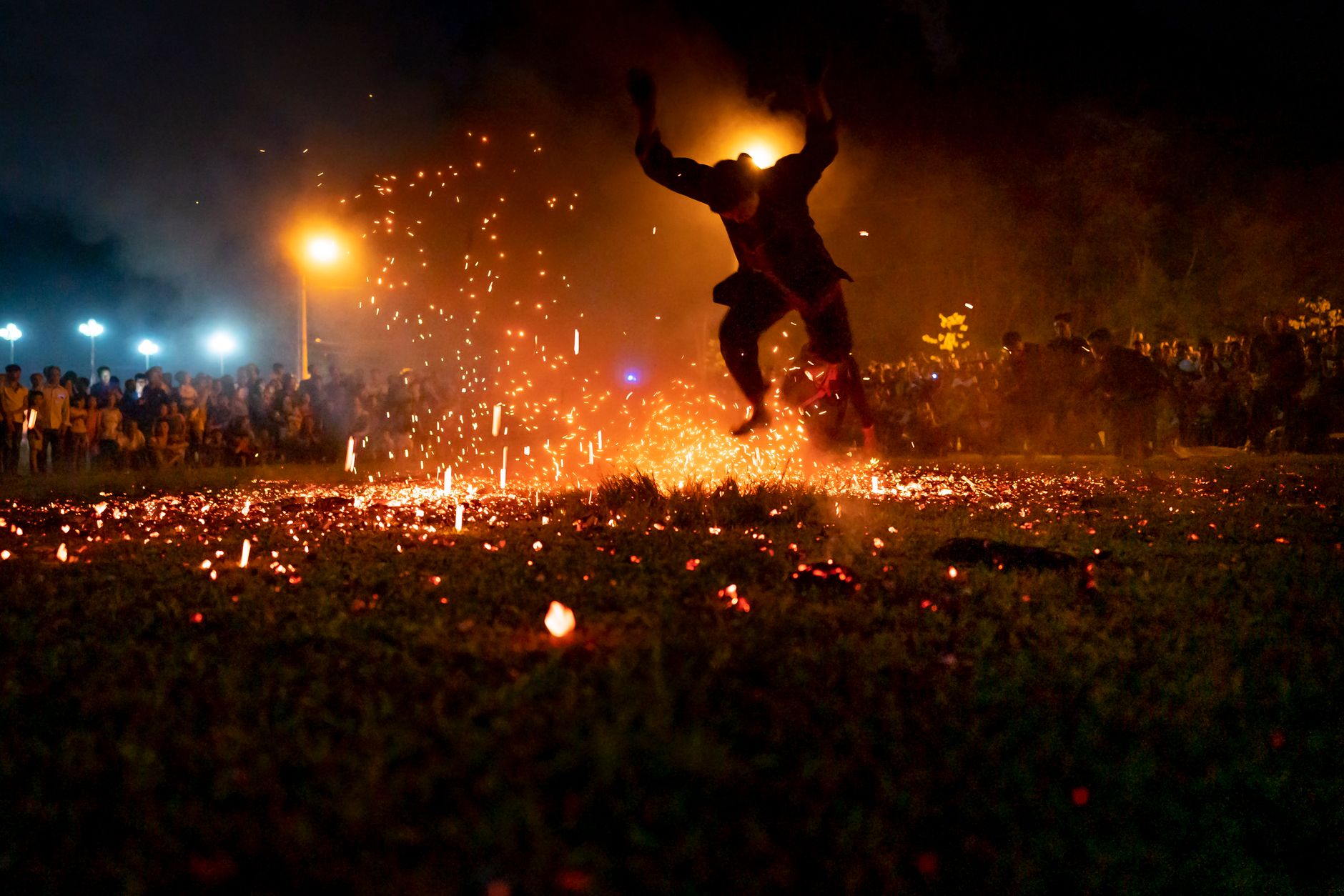
Not with rain. Not with snow. But with a sound like a driving, violent wind that rips through the stone walls of the city. It’s the kind of sound that makes dogs howl and windows shatter. And then, fire. Not the gentle glow of a candle, but tongues of flame that don’t burn skin, just ignite spirit.
That’s Pentecost. It wasn’t a polite theological update. It was an invasion.
The God Who Interrupts
We tend to sanitize Pentecost. We turn it into a birthday party for the Church, complete with hymns and potlucks, forgetting that the original event was terrifying. It was divine chaos.
In Acts 2, the Holy Spirit doesn’t knock. He kicks the door down.
And that matters because we’ve built a Christianity that fits neatly into our Sunday mornings. We like our God domesticated. We like a Spirit who stays in the pew until the sermon is over. But the God of the Bible is an interrupter. He doesn’t just bless your routine; He shatters it.
“And they were all filled with the Holy Spirit and began to speak in other tongues as the Spirit gave them utterance.” (, ESV)
Notice the immediacy. They didn’t spend three days in preparation. They didn’t attend a seminar on “How to Receive Power.” They were filled, and immediately, they spoke. The result wasn’t a quiet inner peace. It was a public, audible, bewildering proclamation that drew a crowd.
Look at the crowd in Jerusalem. They weren’t just devout Jews; they were devout Jews from every nation under heaven (). Parthians, Medes, Elamites, dwellers in Mesopotamia. The linguistic barrier that had separated humanity since Babel—the curse of confusion in Genesis 11—was reversed. For the first time in history, the distant was near. The foreigner was family.
This is the core of the Gospel: God breaks down the dividing wall of hostility.
From Fear to Fire
Think about Peter before this moment.
Just weeks earlier, the same Peter who would soon preach with such boldness that three thousand people were saved, had denied knowing Jesus three times. He was hiding. He was small. He was terrified of a servant girl’s question.
Pentecost didn’t change Peter’s genetics. It didn’t fix his anxiety disorder. It changed his source.
The Holy Spirit is not just a force; He is a Person. And His primary job, according to Jesus in , is to glorify Christ. But He does this by empowering us to do the same. He turns memory into mission.
I’ll be honest, I’ve always struggled with the idea of “power” in the Christian life. We hear it and think of lightning bolts or dramatic healings. But in the Greek, the word is dunamis. It’s where we get “dynamo.” It’s the explosive force that makes an engine run.
Peter didn’t have a new personality. He still had the same impulsive temper. But now, when he looked at the crowd, he didn’t see judges. He saw sheep who needed a shepherd. He didn’t see a threat to his safety. He saw an opportunity to tell them who Jesus really was.
The fire of Pentecost is the fire of courage. It’s the courage to speak when your voice shakes. It’s the courage to love when you’d rather retreat. It’s the courage to stand in the marketplace and say, “You killed the Prince of Life, but God raised Him up, and we are witnesses.”
The Gift for You, Not Just for Them
There’s a subtle trap we fall into when we read Acts. We treat the early church like a museum exhibit. “Oh, they had the miraculous gifts. We just have the epistles.” We compartmentalize. We say, “That was then. This is now.”
But look at Peter’s sermon in . He doesn’t say, “Repent and receive the Spirit, you first-generation apostles.” He says:
“Repent and be baptized every one of you in the name of Jesus Christ for the forgiveness of your sins, and you will receive the gift of the Holy Spirit. For the promise is for you and for your children and for all who are far off, everyone whom the Lord our God will call.” (, ESV)
The “you” is plural. The “promise” is inclusive.
The Holy Spirit isn’t a reward for the spiritual elite. He is the seal of ownership for every believer. He is the guarantee that God is not just watching you from a distance, but is actively dwelling within you.
This changes how we view community.
In our modern, individualistic culture, we often view the Holy Spirit as a personal coach. “God, help me be a better me.” But in the New Testament, the Spirit is primarily a communal uniter. He binds us together.
When the Spirit falls, the result isn’t just individual ecstasy; it’s cross-cultural unity. The Parthian understands the Jew. The Greek understands the Roman. The message of Jesus transcends ethnicity, class, and gender.
“For in one Spirit we were all baptized into one body—Jews or Greeks, slaves or free—and all were made to drink of one Spirit.” (, ESV)
This is the “Social Responsibility” of the Gospel. It’s not just about feeding the poor or voting for the right candidate. It’s about breaking the deep-seated prejudices that keep us in our silos.
The early church didn’t just preach tolerance; they practiced radical inclusion. They shared their possessions. They ate together. They prayed together. The Holy Spirit made them so obsessed with Jesus that they couldn’t help but obsess over each other.
The Wind in Your Ribs
So, what does this look like on a Tuesday in July?
It looks like patience when you want to snap. It looks like generosity when you want to hoard. It looks like speaking the truth when silence would be safer.
The Holy Spirit is the breath in your lungs. Without Him, you’re just a biological machine. With Him, you’re a temple.
But here’s the hard part: We often grieve the Spirit. We quench His fire by refusing to step out in faith. We let our fear of man override our fear of God.
I remember sitting in a hospital waiting room a few years ago, watching a young couple argue over whose turn it was to hold the baby. It was petty. It was tired. It was human. But then, the grandmother, a quiet woman who rarely spoke, leaned over and said, “Peace. Just peace.”
It wasn’t a theological treatise. It was a spark.
That’s the Spirit. He’s not always a roaring fire. Sometimes He’s the whisper that reminds you to forgive. Sometimes He’s the sudden urge to call that friend you haven’t spoken to in months. Sometimes He’s the boldness to invite your neighbor for coffee, breaking the social contract that says, “Stay in your lane.”
Pentecost is not a historical footnote. It is the ongoing reality of the Church.
Every time you choose love over logic, you are experiencing Pentecost. Every time you bridge a divide, you are experiencing Pentecost. Every time you speak life into a dead situation, you are experiencing Pentecost.
The Promise is Still Active
The season outside is shifting. The days are still long, but the light is changing. It’s a time of abundance, of rest, of harvest. But don’t let the warmth lull you into complacency.
The God who scattered the disciples into all the world is still scattering us.
He’s not waiting for us to be perfect. He’s waiting for us to be available. He’s waiting for us to stop hiding in the upper room and step into the marketplace.
The wind is still blowing. The fire is still falling. The promise is still for you.
So, ask. Don’t just wait. Ask.
And when the Spirit comes—and He will, because He promised He would—you won’t just feel better. You’ll be different. You’ll be bolder. You’ll be one with your neighbor, and together, you’ll be a light that no darkness can extinguish.
The upper room is no longer a place of hiding. It’s a launching pad.
And the world is still waiting to hear what you have to say.