The air in the valley of Mount Carmel wasn’t just hot; it was heavy. Thick with dust, thick with tension, and thick with the weight of a kingdom that had forgotten who its God was. It was late summer in Israel, that dry, brittle time of year when the grass has turned to straw and the only thing keeping you alive is a stubborn hope for rain. The long days were finally shortening, the sun dipping lower, casting long, dramatic shadows across the rocky terrain. And standing in the middle of it all was a man who looked less like a prophet and more like a man ready to burn.
Elijah.
He didn’t come with a choir. He didn’t come with a polite invitation or a committee vote. He came with a challenge that sounds almost suicidal to modern ears: “How long will you waver between two opinions? If the Lord is God, follow him; but if Baal is god, follow him.” (, NIV).
It’s a stark, brutal question. Not “Which god is nicer?” or “Which god has a bigger temple?” But “Which one actually works?”
The Setup: A Contest of Silence and Screaming
Imagine the scene. Forty-five prophets of Baal, plus maybe some prophets of Asherah hidden in the crowd, are there. Forty-five men. And Elijah. Just one.
They draw lots to decide who goes first. The prophets of Baal prepare their altar. They sacrifice a bull. And then, they begin.
From morning until noon, they danced. They shouted. They cut themselves with swords and spears, as their custom demanded, blood mixing with the dust. “Baal, answer us!” they cried. But there was no sound. No wind. No fire. Just the frantic energy of men trying to wake up a stone.
I’ve sat in meetings like that. You know the ones. You’re presenting your best idea, your most polished PowerPoint, your most sincere prayer, and the room is just… quiet. You keep talking because silence feels like failure. You think if you just shout loud enough, or cut yourself deep enough, the answer will come. But sometimes, the universe is just indifferent. Or, in this case, the god you’re worshipping is actually just a projection of your own desperate need for control.
Then it was Elijah’s turn.
And here’s the thing that trips us up. Elijah didn’t just build an altar; he dismantled it. He dug a trench. He took twelve stones, representing the twelve tribes of Israel. He arranged the wood. He placed the bull. And then, in a move that seems excessive even to us, he had the men pour twelve jars of water over the sacrifice, the wood, and the stones until the trench was filled with water. ().
It was a miracle in reverse. He wasn’t just preparing for fire; he was preparing for proof. He was eliminating every possible natural explanation. The wood wouldn’t have soaked up that much water. The fire would have to be supernatural to consume wet wood, wet stone, and wet dirt, and then eat up the water in the trench.
He didn’t just pray. He prepared the way.
The Prayer: Not a Spell, but a Relationship
Elijah didn’t recite a magic formula. He didn’t shout a specific word of power. He spoke simply.
“Lord, God of Abraham, Isaac and Israel, let it be known today that you are God in Israel and that I am your servant and have done all these things at your command.” ().
It wasn’t about getting a reaction. It was about revealing identity. “Let them know.”
And then, the fire fell.
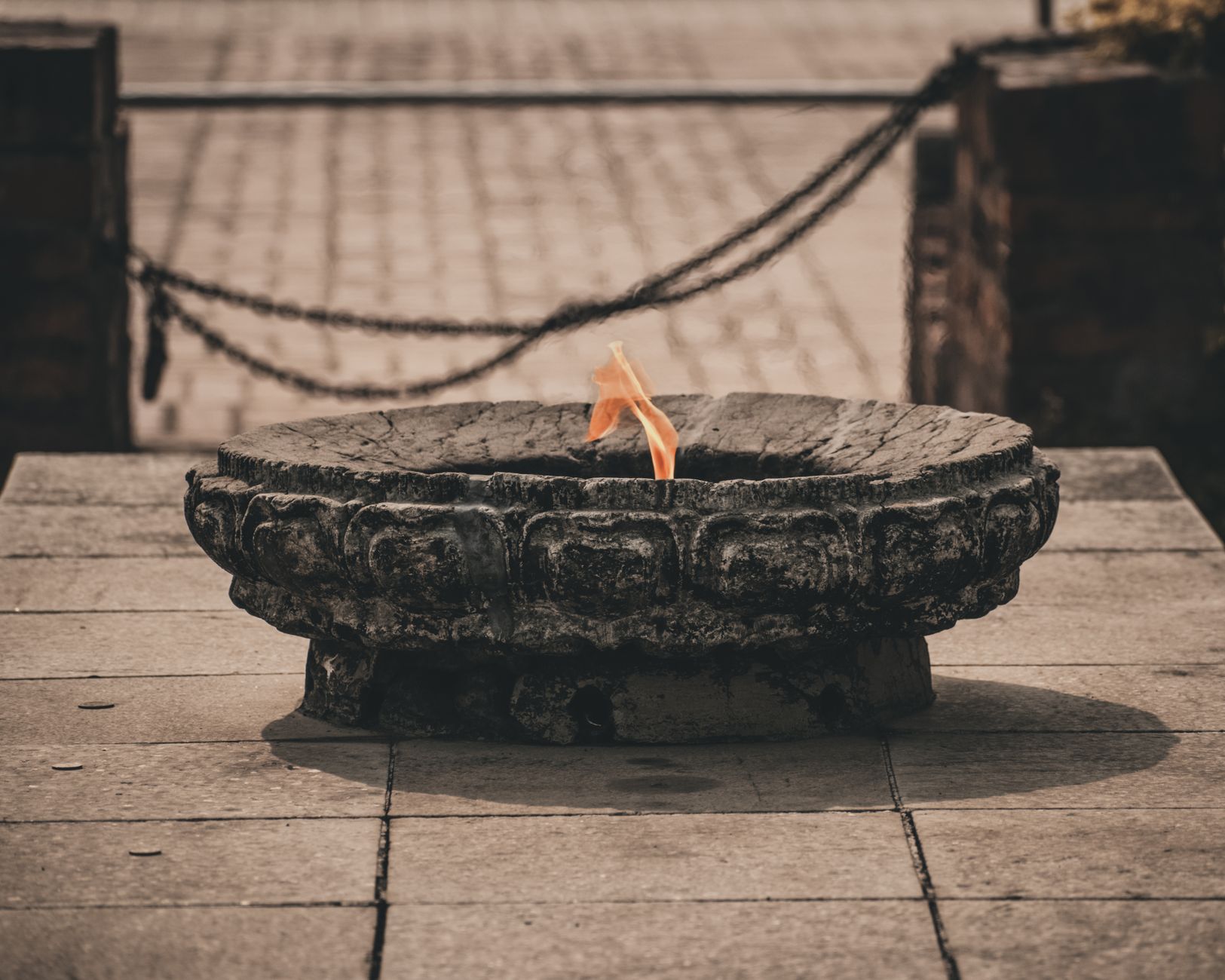
Not a trickle. Not a gentle warmth. A blast. Fire that ate the meat, the wood, the stones, and even the water in the trench. It was the kind of fire that doesn’t just burn; it transforms. The people didn’t just clap. They fell on their faces. “The Lord—he is God! The Lord—he is God!” ().
The atmosphere shifted. The heavy, dusty silence of Baal was shattered by the roaring, undeniable presence of Yahweh.
The Aftermath: What Do We Do With the Fire?
Most of us read this story and skip to the victory. We see the fire, we feel the adrenaline, and we think, “I want that fire.” We want the dramatic intervention. We want the moment when our prayer changes everything.
But look at what happens next. And this is where the story gets real.
The fire didn’t stay. The sky didn’t stay lit. The prophets of Baal were executed, yes, but the real work was about to begin. Elijah climbed to the top of Carmel, bowed down to the ground, and put his face between his knees. ().
He was praying for rain.
Not because the fire was gone, but because the fire was the means to the rain. The fire was the sign; the rain was the substance. And this is a truth we often miss. We chase the spectacle. We want the fire. But God often gives us the fire so we can endure the drought that follows.
Elijah prayed seven times. Seven times, he sent his servant up to look. Seven times, the servant said, “Nothing. There’s nothing there.”
And then, on the seventh time, “A cloud as small as a man’s hand had risen from the sea.” ().
It was tiny. A speck. Not a storm. Not a flood. Just a hint. But Elijah knew what it meant. “Go and tell Ahab, ‘Prepare your chariot and get down or the rain will stop you.’” ().
The fire had validated Elijah’s authority. The rain would validate God’s provision. And Elijah ran ahead of Ahab’s chariot, all the way to Jezreel, powered by the “hand of the Lord” ().
I’ll be honest, I’ve struggled with this part of the story. I used to think the “hand of the Lord” was a mystical force that lifted me up and carried me through. But reading it again, lately, I wonder if it just means energy. Divine energy. The kind of stamina that makes you run when your legs are tired and your lungs are burning. The fire on the mountain didn’t just consume the sacrifice; it charged Elijah for the run.
Why This Matters for Us
We live in a world obsessed with the “fire.” We watch for the viral moment, the breakthrough, the sudden shift in our circumstances. We treat God like a cosmic vending machine: insert prayer, press button, receive fire.
But Elijah’s story tells us something different.
God’s presence isn’t just about the dramatic display. It’s about the clarity it brings. When the fire fell, the confusion ended. Israel didn’t just see power; they saw direction. They knew who to follow. They knew where they stood.
In our own lives, we often feel like we’re standing on Mount Carmel, surrounded by the noise of a dozen other “gods” competing for our attention. Success. Comfort. Approval. Security. We cut ourselves. We bleed. We shout. “Baal, answer us! Why isn’t this working? Why am I still anxious? Why is my marriage still broken?”
And sometimes, God lets us wait. Sometimes, He lets the fire fall slowly, or not at all, in the way we expect.
But He is always listening.
The fire on Carmel wasn’t just for show. It was a reset. It was God saying, “I am still here. I am still capable. And I am still worthy of your total allegiance.”
When you feel like you’re waiting in the silence, when your prayers feel like they’re hitting the ceiling, remember the water. Remember how Elijah poured out everything to make the miracle undeniable. Maybe your “water” is your obedience. Maybe it’s your consistency. Maybe it’s the way you love your enemies when it hurts.
God doesn’t need our performance. But He often uses our surrender to set the stage for His power.
The Rain That Follows
The story ends with rain. A heavy, life-giving rain that broke the three-and-a-half-year drought. The land drank. The crops would return. The people would live.
But the rain didn’t come until Elijah prayed.
That’s the secret. The fire validates. The prayer sustains. The rain provides.
We don’t get the rain without the fire, and we don’t get the fire without the fire’s purpose. The fire was never the end goal. It was the bridge. It was the moment God stepped into the mess and said, “Enough. I am here.”
So, when you’re in the dry season, when the days are shortening and the heat is rising, don’t just look for the fire. Look for the One who calls it.
He’s not waiting for you to shout loud enough. He’s waiting for you to look up.
A Prayer for the Wait
Lord, I confess that I often want the fire more than I want You. I want the breakthrough, the answer, the visible proof that You’re listening. But today, I ask for the grace to stand in the dust and wait. Give me the courage to pour out my water, to lay my sacrifices bare, and to trust that when You speak, the silence will break. Let my life be a sign that You are God, not just in the big miracles, but in the quiet, steady running ahead of the storm. Amen.