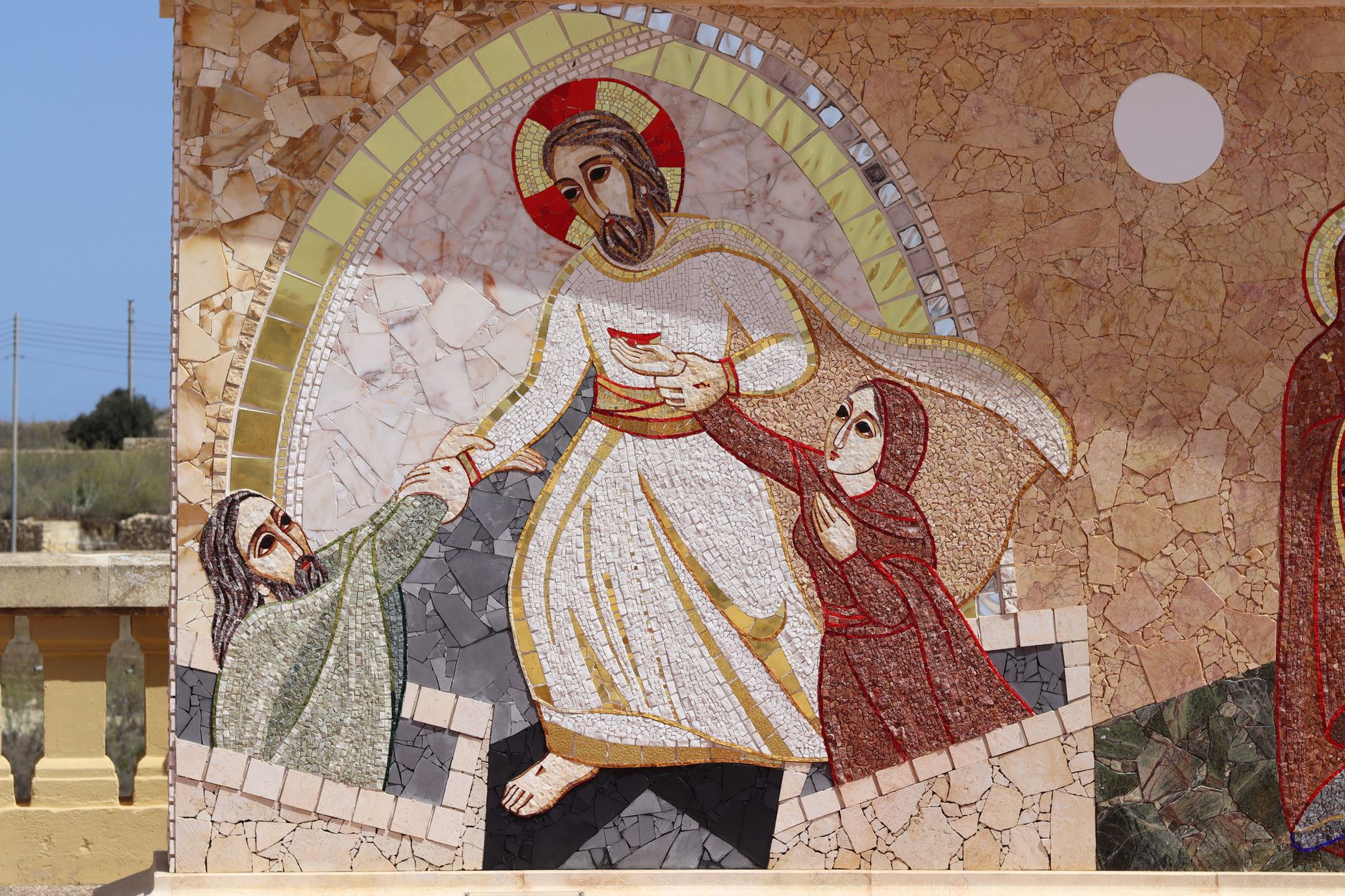
(ESV) — "And he came to him and said, 'If you will, you can make me clean.' And Jesus moved with pity, and stretched out his hand and touched him and said to him, 'I will; be clean.' And immediately the leprosy left him..."
There is a specific kind of silence that lives inside a leper. It isn’t just the absence of noise. It’s the silence of being spoken about, never to. It’s the quiet of a world that has decided you are no longer part of the community, even if you are standing right in front of them.
We tend to read this story in Mark as a quick miracle fix. Jesus heals the man. Done. But if you slow it down, if you actually sit with the texture of that moment, you realize something radical is happening. It’s not just about skin. It’s about status. It’s about who gets to decide who is "clean" enough to enter the city gates.
You’ve probably felt that. Maybe not with physical disease, but with shame. With that one failure you keep repeating in your head. With the reputation you think you’ve ruined. We wait for God to fix the problem, but we rarely expect Him to fix our access to Him.
The leper didn’t just want healing. He wanted restoration. And Jesus gave him both, in a way that made no sense to anyone watching.
Why Does God Sometimes Wait?
Look at the leper’s first words: "If you will, you can make me clean."
Notice the "if." He’s not saying, "You’re a god, so you must." He’s acknowledging Jesus’ power, but he’s unsure of His timing. He’s waiting. And here’s the thing: Jesus doesn’t immediately snap his fingers.
In verse 32 (and the parallel account in Matthew), we’re told that after healing the leper, Jesus sent him away with strict instructions, but then Jesus Himself went off to "desert places" to pray. He was exhausted. He was overwhelmed. The crowd was growing too large to manage. He needed space.
Does that mean Jesus was reluctant? No. It means He was human. It means He had limits on His energy. And it means that even the Son of God needed to withdraw to reconnect with the Father before moving to the next act.
We live in a world that thinks waiting is a sign of abandonment. If God doesn’t answer in 3.5 seconds, He’s not listening. But what if the wait isn’t about God’s inability, but about His preparation?
Think about your own "desert places." Maybe you’re in a season right now where the answer hasn’t come yet. You’re praying. You’re waiting. And it feels like silence.
Here’s a hard truth: Silence is often where God does the heavy lifting. It’s where He aligns our hearts with His timing. The leper could have been healed instantly, but he needed to be sent with a testimony. He needed to go show the priests that this was the work of God, not just magic.
So, if you’re waiting, don’t mistake the delay for denial. Jesus is still moving. He’s just clearing the room so you can see Him better.
What Does "I Am Willing" Actually Mean?
This is the moment that changes everything.
In the Old Testament, lepers didn’t just get dirty. They became unclean. And uncleanness was contagious. If a clean person touched an unclean person, the clean person became unclean. That was the rule.
But Jesus does something shocking in verse 41. "He stretched out his hand and touched him."
He didn’t just heal him from a distance. He didn’t just speak a word. He got close. He touched the untouchable.
And in doing so, He took the risk. If leprosy was contagious, Jesus should have caught it. Instead, the text says the leprosy left him. But look at the Greek word for "willing" in verse 41. It’s thelo. It’s not just "I can." It’s "I want to." It’s a deliberate choice of the will.
Jesus wasn’t forced to heal. He wasn’t obligated. He chose to enter our mess.
I’ll be honest, I’ve struggled with this concept. I used to think God was too holy to touch our dirt. Like He was a pristine white sheet and we were muddy boots. I wanted Him to blow us clean from afar. But this text says He gets his hands dirty. He enters the mess.
That’s the gospel. It’s not God fixing us from a distance. It’s God entering our chaos, touching our shame, and saying, "I am ready."
It’s a huge deal because it means God isn’t afraid of your mess. He’s not waiting for you to clean yourself up first. He’s waiting for you to ask.
Why Did Jesus Send Him to the Priests?
This is the part people often skip. Jesus tells the man to go show himself to the priest. Why?
In Leviticus 14, the priest was the one who declared someone clean again. It was a legal, religious, and social process. If the priest didn’t sign off, you were still an outcast. You still couldn’t eat with your family. You still couldn’t enter the temple.
Jesus wasn’t just healing the man’s body. He was restoring his identity.
Think about that. In our lives, we might get healed from anxiety, or depression, or addiction, but we still feel like outcasts. We still feel like we don’t belong. We still feel "unclean" in our own minds.
Jesus sends us to the community. He sends us to the church. He sends us to the people who can confirm, "Yes, you are clean. Yes, you are welcome here."
The healing was personal. The restoration was communal.
You can’t do it alone. That’s the trap of modern Christianity — we think faith is a private journey between you and Jesus. But the leper had to go to the priests. He had to be seen. He had to be reintegrated.
So, who are your priests? Who are the people who can confirm your healing to you when you forget? Perhaps it’s a mentor. Perhaps it’s a small group. Perhaps it’s just the quiet voice of the Spirit reminding you, "You are mine."
What Do You Do With the Healing?
Now, the leper has a problem. Jesus told him not to tell anyone, but the man went out and started proclaiming it anyway. "He began to talk about it freely." ().
Why? Because you can’t hold that kind of joy in.
But there’s a cost. The result was that Jesus could no longer enter a town openly. He had to stay in deserted places. The crowd was still there, but the focus had shifted.
Healing changes your trajectory.
When Jesus heals you, it doesn’t just make your life easier. It makes you different. It might push you out of the "openly" phase into the "desert" phase. It might mean you lose your reputation. It might mean you lose your comfort.
The leper lost his isolation, but he gained a new mission. He became a witness.
And that’s the question for you. What do you do with your healing?
Do you keep it to yourself? Do you use it as a badge of superiority? Or do you go out and tell people, "Look what God has done for me"?
It’s not about bragging. It’s about pointing to the source. The leper didn’t say, "Look how clean my skin is." He said, "Jesus made me clean."
We tend to focus on the result of healing (clean skin) rather than the relationship with the healer (Jesus’ touch). But the touch is the key. The touch is what changed everything.
So, if you’re feeling distant from God, if you’re feeling like an outcast in your own life, remember this: He is ready. He is able. And He is close.
Don’t wait for Him to call you out of the mess. Wait for Him to touch you in the mess.
And when He does, don’t just stay healed. Go tell someone. Because the world is full of lepers, standing in the silence, waiting for someone to say, "I am ready."
It’s late summer now. The light is changing. The days are getting shorter. It’s a time of harvest. It’s a time to gather what God has given us.
But before we gather, we must be clean. We must be touched. We must be restored.
So go. Ask. Wait. Trust. And when you’re ready, let Him touch you.