You know the nursery rhyme version. Inch by inch, a garden grows. It’s comforting. It implies that if you just keep adding up the small bits, the big thing is inevitable. It’s progress. It’s accumulation.
But that’s not what Jesus was talking about.
If you walk through the olive groves of Galilee in late July, you’ll see the mustard plant. It’s not a delicate, dainty flower you’d put in a vase on a mantle. It’s a weed, mostly. It’s aggressive. It’s root-bound and tangled, shooting up three meters (about ten feet) in a single season if you don’t curb it. It’s the kind of plant that cracks concrete sidewalks. It’s chaotic.
When Jesus told his disciples that the Kingdom of Heaven is like a mustard seed, He wasn’t talking about gentle, slow growth. He was talking about disruptive, invasive, overwhelming life breaking through the hard ground of the world.
And honestly? That terrifies us. We want the gentle garden. We want the controlled, manicured plot where we know what to expect. But God is in the weeds.
The Myth of the "Tiny" Seed
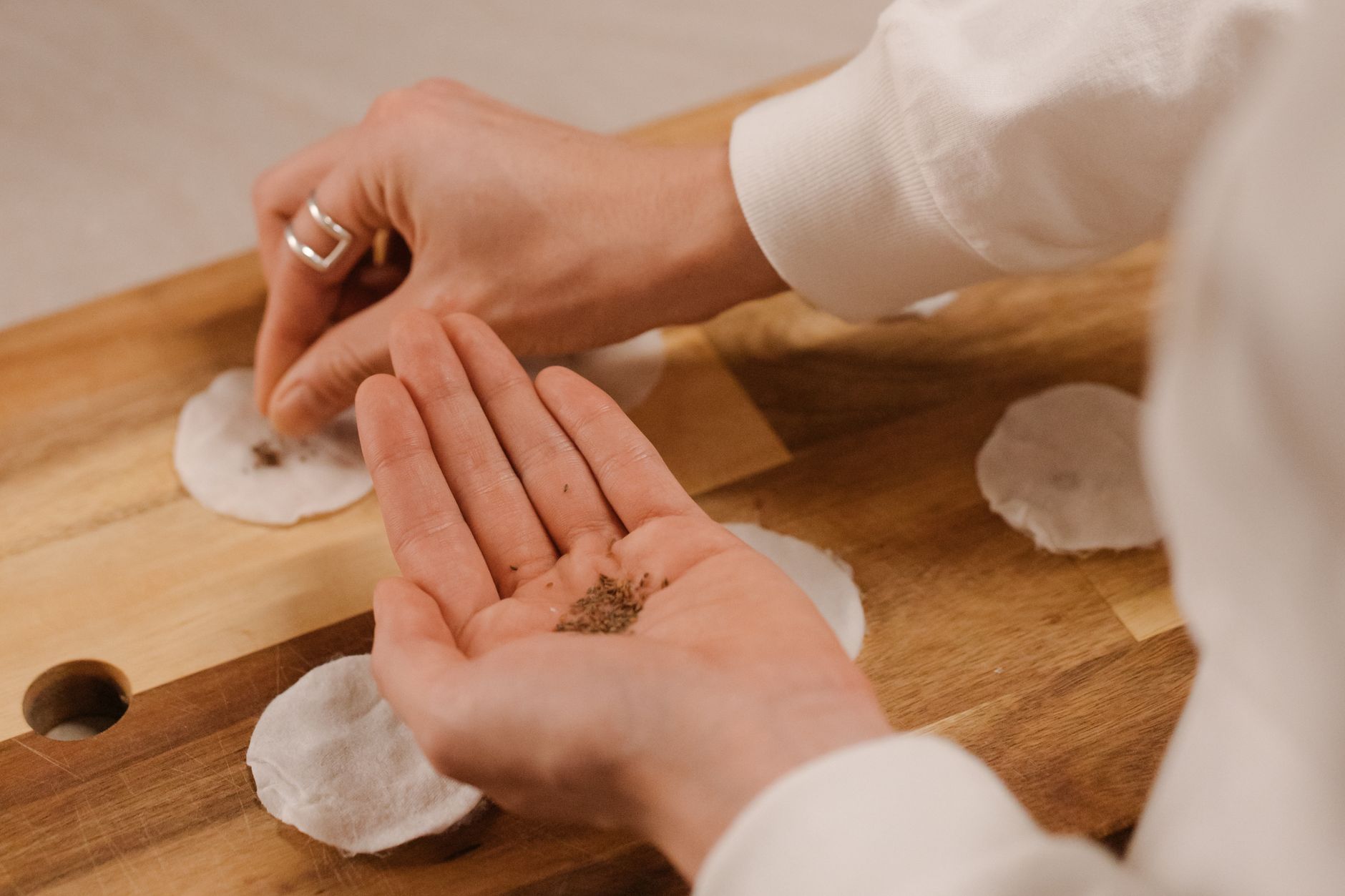
We’ve been sold a lie for centuries. We look at a mustard seed and think "tiny." We assume it’s the smallest thing there is. But in the ancient world, a mustard seed wasn’t necessarily the smallest seed available. It was just small enough to be carried in the palm of your hand, yet large enough to become a shrub.
The point wasn’t the absolute size. The point was the disparity between the beginning and the end.
In , Jesus says:
"The kingdom of heaven is like a mustard seed, which a man took and planted in his field. Though it is the smallest of all seeds, yet when it grows, it is the largest of garden plants and becomes a tree, so that the birds come and perch in its branches." (NIV)
Notice the word "yet." It’s the pivot point of the whole story. Though it is small, yet it grows.
We live in a culture obsessed with the "big break." We want the viral moment, the instant promotion, the sudden healing. We treat small faith as a placeholder, a temporary state we’re waiting to outgrow. But Jesus flips the script. He says the Kingdom doesn’t start with a bang. It starts with a seed. A seed that looks dead. A seed that looks insignificant.
Think about the agricultural reality of first-century Judea. The mustard plant was often seen as a bit of a nuisance. It spread fast. It could choke out other crops if you weren’t careful. It wasn’t the noble cedar; it was the commoner’s shrub. And yet, Jesus uses it as a metaphor for God’s reign.
Why? Because God doesn’t need our big, impressive offerings. He doesn’t need the cathedral or the celebrity pastor. He needs the small, stubborn thing you’ve tucked into the dirt of your ordinary life.
The Shade for the Weary
Here’s where it gets personal. We often read this parable and think about us. We think about our evangelism. If I just share my faith once, it will grow. We treat it like a business model. Small seed, big harvest.
But look closer at the text. The mustard seed grows into a shrub. And then, specifically, it provides shade for the birds.
In the Old Testament, the "birds of the air" often represented the nations, the Gentiles, the outsiders. Ezekiel 17 talks about the great eagle and the branches of the vine, where birds nest. But here, Jesus is saying something radical. The Kingdom isn’t just for the Jews. It’s not just for the elite. It’s for the scavengers. The outsiders. The ones who are tired.
I’ve spent years in churches where the "mustard seed" faith was measured by attendance numbers or donation totals. We looked for the giant shrub. We wanted the canopy that covered the whole city. But Jesus is talking about a shrub. A place where a bird can rest its wings. A place where you can escape the midday sun.
It’s not about dominating the culture. It’s about providing shelter.
And that’s the hard truth we miss in our busy, productive lives. We are so busy trying to grow the Kingdom that we forget to be the shade. We build big programs, tall towers, impressive ministries. But do they offer rest? Or do they just add more noise?
The mustard seed doesn’t shout. It doesn’t demand attention. It just grows. And in its growth, it creates space for the weary to find rest.
The Aggressive Nature of Grace
Now, let’s talk about the "weed" aspect. Mustard is invasive. It doesn’t wait for permission. It doesn’t ask if the soil is ready. It just pushes through the dirt.
Some theologians argue that the "birds nesting" implies peace. Others point out that in the ancient world, birds in trees could also mean chaos or judgment. I think Jesus is being intentionally ambiguous. He’s not giving us a neat, tidy theological box. He’s giving us a living, breathing organism.
Grace is aggressive.
It invades our comfort zones. It breaks up the hard ground of our pride. It sprouts in the cracks of our concrete routines.
I’ll be honest, I’ve struggled with this. I used to read the Parable of the Mustard Seed and feel like I was failing. My faith felt like a seed that hadn’t sprouted yet. I’d pray, I’d read my Bible, I’d go to church. But where was the shrub? Where was the shade? Why was I still just a tiny speck in a big, noisy world?
It took me years to realize that I was comparing my beginning to someone else’s middle.
The mustard seed doesn’t grow in a straight line. It grows in fits and starts. It pushes up, then pauses. Then it shoots again. It’s not linear. It’s organic. And sometimes, it feels like nothing is happening. But the root is going down.
Think of the summer season. It’s hot. It’s long. The days are stagnant. But if you look closely at the earth, life is moving. It’s just not always visible from the surface.
The Cultural Shift
In our modern Western context, we’ve sanitized the mustard seed. We’ve turned it into a symbol of "small beginnings" without the "disruptive end." We’ve stripped away the wildness.
But in the Middle East, the mustard plant is a reminder that God’s Kingdom is not a passive religion. It’s an active force. It changes the landscape. It alters the ecosystem.
When you live out the Gospel in a small, quiet way—when you forgive that person who hurt you, when you give when it hurts, when you stay when you want to leave—you are planting a mustard seed. You aren’t trying to be a cedar. You aren’t trying to be the tallest tree in the forest. You are just trying to be faithful in the small.
And that small faithfulness? It creates a habitat for others.
It creates a place where the anxious can rest. Where the broken can find shelter. Where the outsider can feel like they belong.
That’s the mission. Not to build a tower. But to provide shade.
A Prayer for the Small Things
Lord, thank You that You don’t need us to be big. You don’t need our applause or our perfection. You just need us to be planted. Forgive me for the times I’ve looked at my smallness and felt like a failure. Help me to trust that You are the Gardener, and that growth is Your work, not mine. Give me the courage to grow where I am planted, to be invasive in my love, and to provide shade for the weary around me. Let my life be a small, stubborn witness to Your Kingdom. Amen.