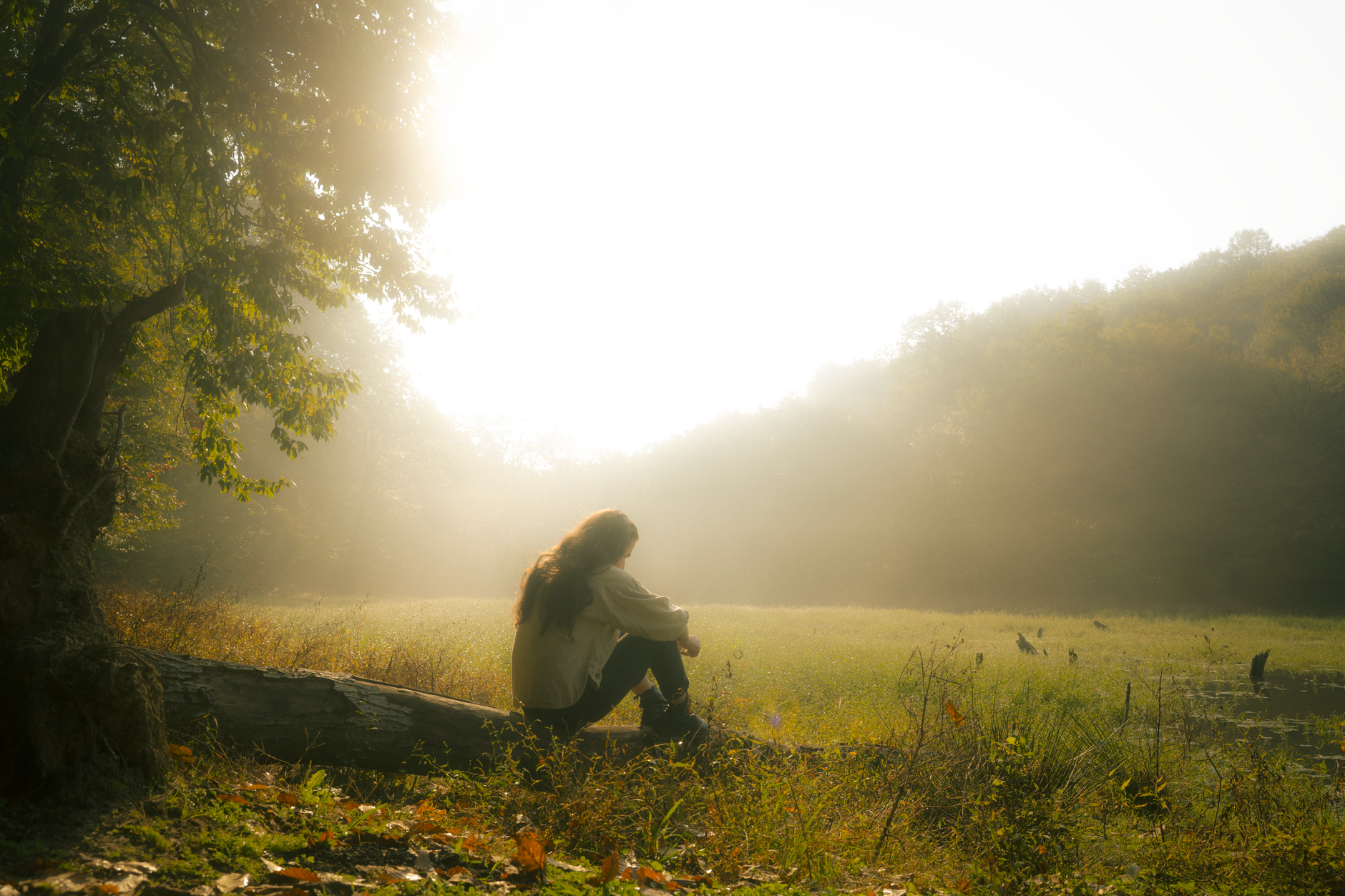
The leaves are turning that crisp, amber brown. The air smells like woodsmoke and dying grass. There’s a quietness in the season that makes you pause, maybe look up at a tree stripped of its color, and wonder if things are just... ending. We tend to think of creation as something static, a backdrop for our lives. But walk through a forest in late October and you realize the trees aren’t dead. They’re resting. They are surrendering their grip on what is no longer necessary so they can survive the winter and bloom again.
That’s a strange kind of trust, isn’t it? Letting go on purpose.
We rarely think about ourselves in those terms. We usually see our lives as a series of things we have to hold onto, fix, or control. But if you look at the very first pages of Scripture, God didn’t just fling matter into existence and walk away. He designed a system. He crafted human beings with specific instructions for how we were meant to live, love, and last. And here’s the thing: that design wasn’t broken by a single accident. It was fractured, yes, but the blueprint is still there. And it’s more practical than we give it credit for.
The Blueprint Isn’t a Suggestion
— "Then God said, 'Let us make mankind in our image, in our likeness, so that they may rule over the fish in the sea and the birds in the sky, over the livestock and all the wild animals, and over all the creatures that move along the ground.'"
Read that again. Let it sit.
We often spiritualize "image of God" (Imago Dei). We make it sound mystical, ethereal, something we only feel in a quiet prayer meeting. But the text is concrete. It’s functional. You are made to rule, or rather, to steward. You are made to have dominion over the chaos. That’s not a metaphor for your soul alone; it’s an instruction manual for your Tuesday afternoon when you’re overwhelmed by emails, or your Saturday morning when the kids are screaming because they can’t find the right sock.
God designed you to manage complexity. He didn’t design you for a life of low stakes and zero friction. If you are stressed, it might not be because you’re failing. It might be because you are operating exactly as designed — trying to bring order to a messy world with finite hands.
I’ll be honest, I’ve struggled with this distinction for years. There was a season in my life where I felt guilty every time I got tired. I’d sit on the edge of my bed after a long day, feeling hollowed out, and I’d think, If God is good, why does this cost me so much? I thought exhaustion was a sign of weak faith. I thought if I just prayed harder, the fatigue would vanish like mist in sunshine.
It didn’t. The fatigue stayed. But my understanding changed. I started to see that rest isn’t a reward you earn after the work is done; it’s part of the work.
— "Thus by the seventh day God had finished the work he had been doing; so on the seventh day he rested from all his work. Then God blessed the seventh day and made it holy, because on it he rested from all the work of creation that he had done."
Notice what God did. He didn’t stop being God to rest. He stopped working. There is a significant difference. We tend to conflate the two, thinking that if we aren’t producing, we are stagnant. But creation itself operates on a cycle of activity and dormancy. The tree lets its leaves fall not because it’s failing, but because it knows the rhythm of life.
Why We Forget Our Design
Here’s where it gets tricky for us moderns. We live in an economy that values output over being. If you’re not producing, you’re suspect. This cultural pressure warps our view of who we are. We start to think that our worth is tied to our utility. And when the "usefulness" dries up—when you’re sick, or retired, or just having a slow Sunday—you panic. You feel like you’ve lost your identity.
But that’s not the design. The design is rooted in relationship, not production.
Look at how God describes His desire for us before He even creates the sun or the stars. In , He says, "Let us make." It’s communal. Humanity wasn’t designed to be solo operators. We were designed for connection. And when we try to live in isolation, trying to be self-sufficient strongholds against the world, we are fighting our own wiring.
I used to think independence was a virtue. I prided myself on handling things alone. I’d take the call, do the work, and keep my emotions to myself because sharing them felt like leaking. It took a pretty ugly crisis for me to realize that my independence was actually just fear in a suit and tie. I wasn’t strong; I was lonely. And that loneliness was slowly corroding the very design God had built into me.
When we reconnect with our design, we don’t just feel better; we function better. We stop trying to do the work of two people (or five) and start inviting others in. We stop treating rest as a guilty pleasure and start seeing it as an obedience to the Creator’s rhythm.
Practicing the Rhythm
So, what does this look like in practice? It’s not about buying a $40 candle and lighting it while you journal. Though, sure, do that if it helps. But the practical application is about respecting the limits of your vessel.
First, honor the Sabbath principle in your daily life. Not just on Sunday, but in micro-doses. If you’re working at a computer for four hours, your brain is not human anymore; it’s a machine. Step away. Look out a window. Drink water. Let the "leaves" fall for ten minutes.
Second, stop apologizing for your limits. When someone asks for more of your time and you are already at capacity, it is okay to say no. That’s not selfishness; that’s stewardship. You are protecting the energy you need to sustain your life.
Third, look around you. Really look. The autumn air is crisp for a reason. It signals change. It signals that things are shifting. If you’re in the middle of a transition—maybe a job change, a relationship shift, or just a season of life that feels like it’s turning—you’re not off-track. You’re in the transition zone. The tree doesn’t apologize for dropping its leaves. It does it because that’s how it survives the cold so it can have new life in spring.
You don’t have to force growth right now. You just have to trust the season you’re in.
The Quiet Return
I keep coming back to that tree I saw earlier this week. It was bare, skeletal against the grey sky. At first glance, it looked stark. A bit sad, even. But then I noticed the buds forming in the branches, tight and small, hidden under a layer of bark. The life wasn’t gone. It was waiting.
That’s what God’s design is for you, too. Even when it feels like everything is falling away—when the colors of your life are draining out and the world feels cold—the design isn’t broken. It’s just entering its winter phase.
You don’t have to look productive. You don’t have to look strong. You just have to be there, trusting the One who made you, knowing that He didn’t design you for a single season. He designed you for the whole cycle. The bloom, the fruit, the fall, and the quiet, necessary sleep before it all begins again.
So take a breath. The air is cold, but it’s clean. And you are exactly where you need to be, even if it doesn’t feel like it yet. The roots are holding on. They always do.