You’ve probably heard Psalm 23 so many times it feels like wallpaper. It’s the verse read at funerals, the one whispered by anxious parents, the ink on the back of greeting cards. We treat it like a lullaby for the soul—soft, safe, and completely detached from the chaos of actual living. We assume the "valley of the shadow of death" is just a metaphor for a bad Tuesday or a mild depression.
But that’s a lie.
And honestly? It’s a dangerous one.
The Hebrew word used for "valley" here is tsalmavet. It’s not just a shadow. It’s a specific, terrifying place where the light doesn’t just dim; it vanishes. It’s the place of deep darkness, the abyss. And the promise isn’t that God will keep us out of it. The promise is that He will walk with us through it.
This matters right now. Specifically, because it’s Pentecost.
We just celebrated the birthday of the Church, the moment the Spirit exploded into the world, turning frightened disciples into bold witnesses. We remember the wind, the tongues of fire, the sudden, terrifying clarity. But often, we forget that the Spirit doesn’t just give us power to preach; He gives us the courage to endure. The same Spirit that breathed on the upper room is the one who guides us into the valley.
Let’s look at the text again. Not as a prayer card, but as a battle cry.
The God Who Doesn’t Just Watch, He Leads
"The Lord is my shepherd; I shall not want." (, ESV)
The first thing that jumps out is the shift in tense. In the Hebrew, this isn’t a static statement of fact like "The Lord exists." It’s active. It’s dynamic. Yahweh ra’ah li—The Lord shepherds me. Present continuous. He is currently shepherding me.
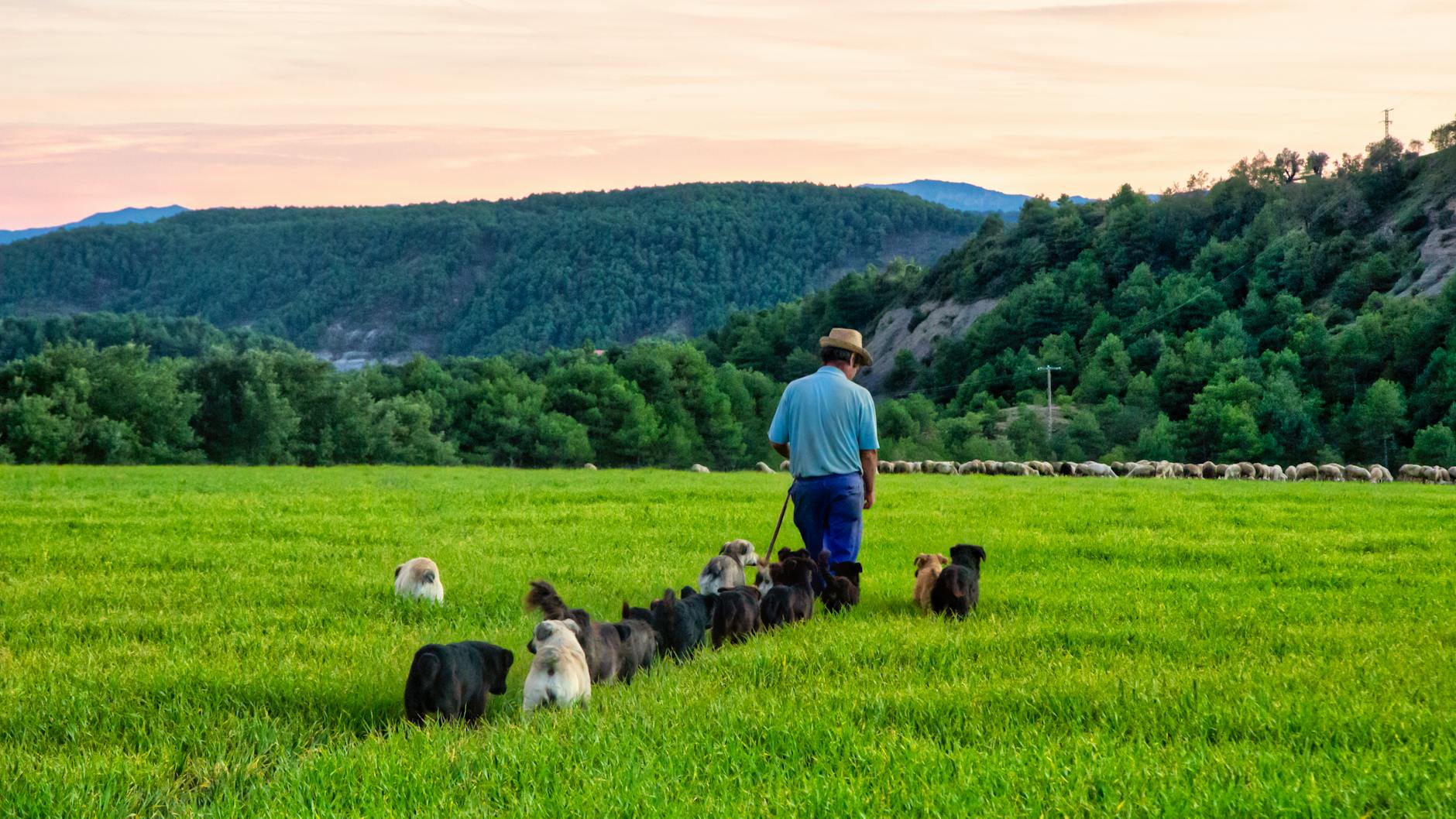
Ancient shepherds didn’t just stand on a hill and shout instructions. They were in the mud. They were covered in wool grease and dust. They walked ahead of the sheep, not behind them. They took the risks. They broke their own bones to protect the flock.
Think about that. Jesus isn’t a distant CEO overseeing the enterprise of salvation. He is the Good Shepherd who laid down His life (). And the Holy Spirit? He is the Paraclete—the one called alongside to help. The Spirit doesn’t just sit on the throne of your heart waiting for you to clean it up. He walks beside you, in the mud, in the confusion, in the silence.
This is the Pentecost reality. God isn’t waiting for you to be perfect before He shows up. He shows up in your mess.
I’ll be honest, I used to read this verse and feel a pang of guilt. "I shall not want." Does that mean I have everything? Does it mean my bank account is full, my marriage is smooth, and my kids aren’t fighting in the backseat?
No. It means I lack nothing essential for my soul.
It’s a distinction we miss. David, the author, was a king. He had wives, armies, palaces, and spices. But he also had murder, adultery, and rebellion. He knew what it was to want. He knew what it was to feel empty despite having everything. He didn’t say, "The Lord is my shepherd; therefore, I will be rich." He said, "I will not want"—meaning, I will not lack the guidance, provision, and presence of God.
That’s the difference. Security isn’t the absence of trouble. Security is the presence of the Shepherd.
The Cup and the Table: Rest in the Ruin
"He makes me lie down in green pastures. He leads me beside still waters." ()
We often rush past this. We think "green pastures" means a vacation. But in the ancient Near East, sheep didn’t lie down when they were hungry or anxious. They only lay down when they were full and safe from predators.
So, before God leads us into the valley, He feeds us.
There’s a reason this is Pentecost. The Church was founded on the promise of the Father, and the first act of the Spirit-filled community was breaking bread. says the believers "devoted themselves to the apostles' teaching and the fellowship, to the breaking of bread and the prayers."
Before the wind blew, they were eating together. Before the tongues of fire appeared, they were sharing a meal.
This is the rhythm of the Spirit-life. It’s not constant shouting. It’s not constant movement. It’s the deep, quiet rest of knowing you are fed. You can’t lead a flock if you’re starving. You can’t walk through the valley if you’re running on fumes.
I think about my own week. I try to stay busy. I fill the calendar. I think if I just do enough, I’ll feel secure. But the Shepherd stops you. He makes you lie down. Sometimes that’s a literal nap. Sometimes it’s just five minutes of silence with your coffee before the email inbox explodes. Sometimes it’s the forced pause of a flat tire.
God uses the pause to feed you. Not with information, but with presence. He leads you beside still waters—mayim nuchah in Hebrew, literally "resting waters" or "calm waters." The opposite of the turbulent, roaring sea that represented chaos in Jewish thought.
In a world that glorifies hustle, the act of lying down is radical. It’s an act of trust. It says, "I trust that while I rest, You are watching."
The Valley and the Rod: It’s Not a Detour
"Even though I walk through the valley of the shadow of death, I will fear no evil, for you are with me; your rod and your staff, they comfort me." ()
Here’s the pivot. The scenery changes.
We spend so much time in the green pastures that when the valley hits, we panic. We think we’ve been abandoned. But notice the shift in pronouns.
In verses 1-3, David talks about God in the third person: "He makes me," "He leads me," "He restores my soul." It’s observational. It’s about God’s work.
But in verse 4, when the valley appears, the pronoun changes. "You are with me."
It’s personal. It’s intimate. The distance collapses.
The "valley of the shadow of death" (tsalmavet) is not a place of punishment. It’s a place of protection. Why? Because of the rod and the staff.
In ancient shepherding, these were two different tools, yet often used interchangeably in poetry. The shovet (rod) was a club for fighting off lions and bears. It was offensive. It was violence against the enemy. The mishenet (staff) was a long stick with a crook, used for guiding and pulling sheep out of ditches. It was defensive. It was guidance.
So, in the valley, God does both. He fights the lions (the big, scary, sudden tragedies) and He pulls you out of the ditches (the slow, creeping confusion).
And here’s the part that surprises me: He uses the rod to comfort you.
We think comfort means a soft blanket. But in the Old Testament, comfort often meant strength. It meant the assurance of protection. When the Shepherd raises his rod, the predator knows who’s in charge. The fear leaves.
This is the boldness of Pentecost. The Spirit doesn’t just make you feel nice. He arms you. He gives you the authority to stand in the face of death, sickness, grief, or confusion, knowing the Lion of Judah is right there.
I remember a few years ago, sitting in a hospital waiting room at 3 a.m. My dad was in surgery. The air smelled like antiseptic and fear. I didn’t feel "peaceful." I didn’t feel like I was lying down in green pastures. I felt like I was in the valley. But then I remembered the rod.
God wasn’t just watching. He was fighting. The surgery was successful. The fear didn’t vanish instantly, but the terror did. I knew I wasn’t alone. That’s the comfort. Not the absence of pain, but the presence of the Shepherd.
The Table in the Presence of Enemies
"You prepare a feast for me in the presence of my enemies; you anoint my head with oil; my cup overflows." ()
This is the weirdest verse. Why is there a feast in the middle of the battlefield?
Why is David being anointed while his enemies are watching?
In the ancient world, anointing with oil was a sign of honor, of being chosen, of being set apart. But it was also a sign of joy. And a "feast" implies abundance.
Here’s the twist: God doesn’t wait for the enemies to leave before He feeds you. He feeds you while they are there.
Think about the early Church. They were being persecuted. They were the "enemies" of the Roman Empire. But Acts 2 and 3 show them breaking bread, sharing everything, rejoicing in the Spirit. They were feasting in the presence of their enemies.
This is the Pentecost power. It’s not a shield that blocks out the world. It’s a table that turns the world into a witness.
Your "enemies" might not be lions. They might be your anxiety, your addiction, your broken family, your boss who doesn’t understand you. God doesn’t always remove them. He often invites you to eat your dinner while they watch.
And when you eat with joy, when you serve with grace, when you love despite the threat—it confuses the enemy. It breaks their power. Because they can’t understand why you’re not bitter. They can’t understand why you’re still standing.
That’s the overflow. That’s the cup that runs over. It’s not just enough for you. It’s so full it spills onto the people around you.
The House of the Lord: A Home, Not a Hotel
"Surely goodness and mercy shall follow me all the days of my life, and I shall dwell in the house of the Lord forever." ()
The Hebrew word for "follow" here is radaph. It means to pursue. To chase down. To hunt.
It’s not that goodness and mercy are trailing behind you like a shy puppy. They are chasing you down. They are hunting you. Even when you run, they catch you.
And the ending? "I shall dwell in the house of the Lord."
The Temple was a place of sacrifice. A place of blood. But Jesus changed that. Now, the house of the Lord is wherever the Spirit is present. It’s the Church. It’s your living room. It’s the hospital room. It’s the place where God’s presence is.
We don’t just visit God. We dwell. We live there.
This is the final transformation. From the shepherd who leads, to the king who feasts, to the resident who dwells.
Why This Changes Your Tuesday
, right now, on a random Tuesday?
It means you stop trying to earn your rest. You stop trying to fix every problem before you pray. You stop treating God like a cosmic vending machine where you insert "good behavior" and receive "blessing."
It means you embrace the valley. When the diagnosis comes, when the money runs out, when the silence gets loud, don’t panic. Look for the rod. Look for the staff.
And remember the Pentecost promise. The same Spirit that raised Jesus from the dead lives in you. He is not a distant force. He is your Guide. He is your Comforter. He is the One who makes you lie down in the chaos.
You are not an orphan wandering in the dark. You are a sheep in the hand of the Shepherd. And He is chasing you down with goodness and mercy.
So, go ahead. Lie down. The world can keep spinning. You’re safe. You’re fed. You’re home.