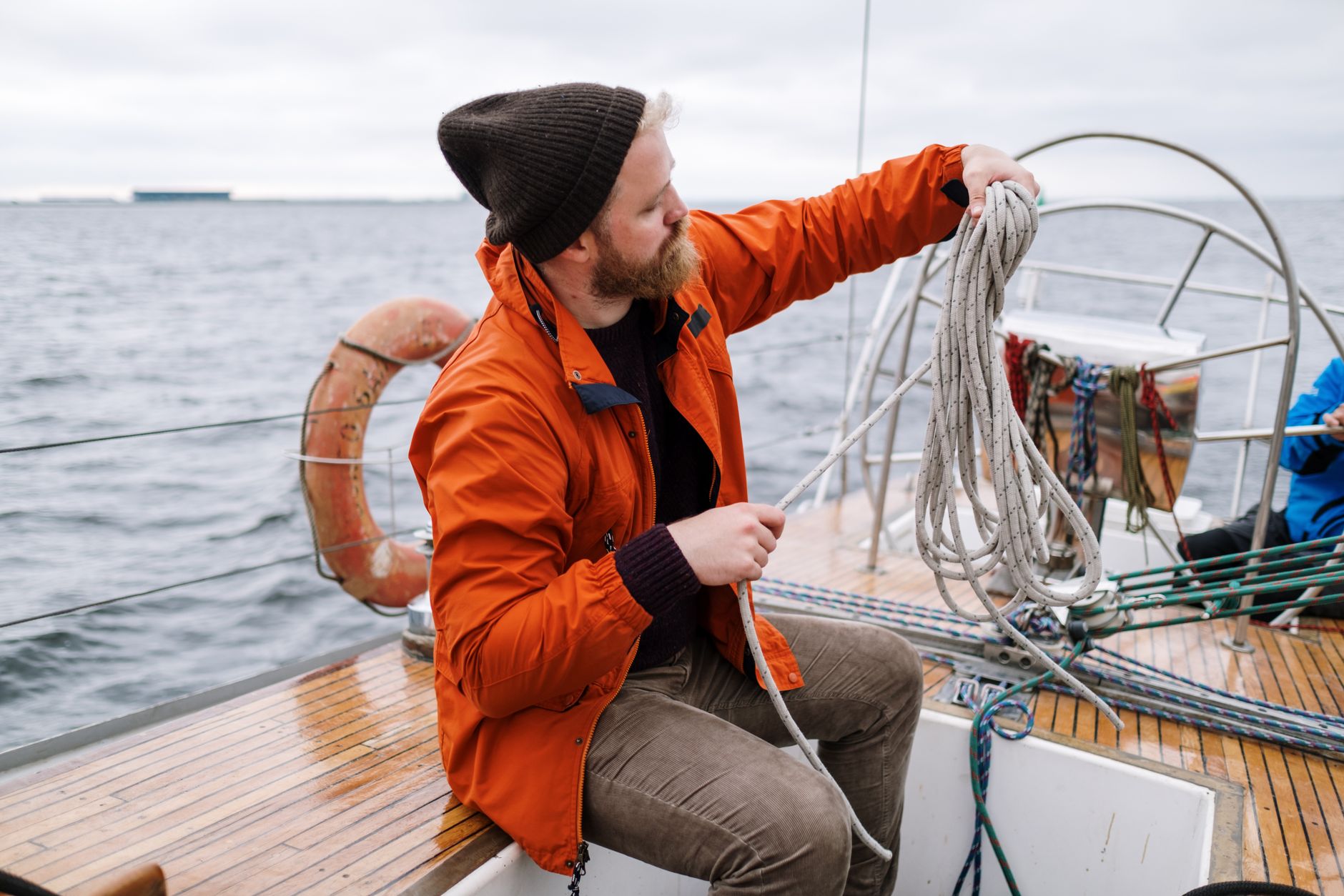
Imagine standing on the deck of a merchant ship, the salt spray stinging your face, the hull groaning under the weight of waves that look less like water and more like the shoulders of giants. It’s not a peaceful voyage. The air is thick with fear, the kind that makes your stomach turn before your brain even processes the danger. This is the setting for one of the Bible’s most misunderstood characters: Jonah.
We tend to skip over Jonah. We rush to Jesus, to Paul, to Peter. But Jonah? Jonah is the uncomfortable cousin at the family reunion. He’s loud, he’s grumpy, and he has a lot to say about how things should be. And honestly? That’s why he matters. In a season of late autumn, when the leaves are falling and the year is drawing to a close, we’re often tempted to tidy up our lives. We want to finish strong. We want to look back with gratitude. But what happens when the person we’re trying to love doesn’t make it easy? What happens when mercy looks like a mess to our eyes?
Jonah gives us permission to be annoyed. He gives us permission to ask, "God, why them?" And in doing so, he reveals that God’s mercy isn’t a tidy package. It’s messy. It’s personal. It’s aimed at nations, yes, but in the end, it reaches every heart.
The Fleeing Prophet and the Narrow Boat
To understand Jonah, you have to stop thinking of him as a hero and start seeing him as a man running.
The story opens in the port of Joppa. Jonah stands up, receives a word from the Lord, and turns around. He doesn’t head toward Nineveh, the great city of Assyria. He heads toward Tarshish, which is in the opposite direction. He’s literally running away from his assignment.
Why? Most commentators suggest it’s because Jonah didn’t like the Assyrians. They were Israel’s enemies. They had slaughtered thousands of Hebrews. So when God says, "Go and preach to them," Jonah’s instinct is, "No thanks. I’ll take my chances elsewhere."
He buys a ticket. He gets on a ship. And then, the weather changes.
This isn’t just bad luck. The text calls it a "great wind" sent by the Lord. The sailors are terrified. They cast lots to see who is responsible. The lots fall on Jonah. He tells them the truth: "I am a Hebrew, and I fear the Lord, the God of heaven, who made the sea and the dry land."
This is a stunning admission. Jonah knows exactly who is in charge. He knows who made the waters. And yet, he’s still sitting on that boat, heading in the wrong direction. He knows better. He’s just hoping the storm will blow over before he has to admit he was wrong.
The sailors, realizing Jonah has offended the Lord, ask him, "What should we do to you for the sea to calm down for us?" And Jonah says, "Pick me up and throw me into the sea, and the sea will become calm for you. For I know that it was my fault that this great storm has come upon you."
It’s a brutal self-assessment. Jonah admits guilt. He admits fault. He offers himself as the sacrifice. And then, the whale appears. Or rather, a large fish does. It swallows him. He goes down into the belly of the beast.
For three days and three nights, Jonah is in the dark. He prays. He acknowledges his distress. He says, "By my cries I came up to you, and my tears flowed before you. I thought I had been plucked out of your sight, but I must again see your holy temple."
This is the pivot point. Jonah, in the belly of the fish, realizes two things. First, he is not out of reach. God sees him. Second, the temple isn’t just in Jerusalem. It’s wherever God is. And God is everywhere.
When he comes out, he’s on dry land. The sun is hot. A plant grows over him to give shade. Then a worm eats the plant. The shade is gone. Jonah gets angry. He says to God, "I had better die than live."
God asks him, "Is it right for you to be angry?" And Jonah says, "Yes, I had better die than live."
God takes Jonah to Nineveh. He preaches. The people repent. God relents. And Jonah? He’s still angry. He’s angry that God showed mercy to the very people he hated.
This is the crux of the issue. Jonah’s anger isn’t really about the Ninevites. It’s about control. It’s about fairness. It’s about the idea that if you do the right thing, you get the reward, and if you do the wrong thing, you get the punishment. But God’s mercy disrupts that system. Mercy doesn’t fit neatly into a ledger. It’s an extra. It’s a surplus. And surplus is confusing.
Mercy That Doesn’t Fit the Mold
Let’s dig a little deeper into the theology here, because it’s easy to gloss over the implications.
When God tells Jonah to go to Nineveh, He’s not just sending a prophet. He’s sending a message. The message is: "Repent, for in forty days Nineveh will be overturned."
That’s a heavy threat. Forty days. That’s not a long time. It’s urgent. It’s immediate. And yet, when the people repent, God relents. He doesn’t destroy the city. He saves it.
Why? Because mercy is in His nature. Because love is His impulse. Because He wants the lost to be found.
But this is where it gets tricky for us. We tend to think of mercy as something soft. Something gentle. Something safe. But grace is actually quite disruptive. It challenges our assumptions. It forces us to look at the other person with new eyes. It asks us to see them not as enemies, but as neighbors. As family. As part of the human family.
And that’s hard. It’s really hard. Because it means letting go of our pride. It means admitting that we’re wrong. It means accepting that God’s ways are higher than our ways. It means trusting that He knows best, even when we don’t.
Think about it. How many times have we judged someone before we knew the full story? Do you count how often you’ve written someone off because they didn’t fit your category? Have you missed the opportunity to show grace because you were too busy keeping score?
Jonah helps us see that. He helps us see that mercy isn’t just for the good. It’s for the bad. It’s for the ugly. It’s for the messy. It’s for everyone. And that’s terrifying. And that’s beautiful.
There’s a verse that captures this well:
— "But because of his great love for us, God, who is rich in mercy, made us alive with Christ even though we were dead in our transgressions. It is by grace you have been saved."
Notice the phrase "rich in mercy." That’s not a small amount. That’s a lot. That’s an abundance. That’s a surplus. And it’s available to everyone. Not just the chosen. Not just the holy. Everyone.
That’s the scandal of grace. That’s the shock of mercy. That’s the surprise of love. And it’s the reason we can hope.
Living Like Jonah (Or Better)
So, how do we apply this? How do we live in a way that reflects this kind of mercy?
First, we need to check our motives. Are we serving God because we love Him? Or are we serving Him because we want a reward? Are we loving people because they’re valuable? Or are we loving them because they’re useful?
If it’s the latter, we’re in trouble. We’re like Jonah. We’re running. We’re hiding. We’re avoiding the hard stuff. And we’re missing the point.
Second, we need to embrace the mess. Mercy isn’t tidy. It’s chaotic. It’s personal. It’s imperfect. And that’s okay. In fact, it’s necessary. Because perfection is sterile. Perfection is cold. Perfection is distant. But mess? Mess is warm. Mess is alive. Mess is real. And that’s what God wants. He wants real. He wants true. He wants authentic. And that means making room for error. Making space for growth. Allowing room for change.
Third, we need to widen our circle. Jonah’s problem wasn’t just that he was grumpy. It was that his circle was too small. He only cared about Israel. He didn’t care about the nations. He didn’t care about the world. He was inward-looking. Self-centered. Tribal.
We need to do the opposite. We need to look outward. We need to see the world as God sees it. One big family. One human race. One destiny. And we need to act accordingly. We need to share what we have. We need to welcome who comes. We need to love who’s near. And that means crossing lines. Breaking barriers. Challenging norms. And being willing to be uncomfortable about it.
This is where environmental stewardship comes in, surprisingly. Think about it. The earth is not ours. It belongs to God. We are just tenants. Just stewards. Just caretakers. And that changes everything. If the earth is God’s house, then we treat it with respect. We manage it with care. We tend to it with gratitude. We don’t take more than we need. We avoid wasting what we have. We stop polluting what we use. We recycle what we can. We reuse what we can. We reduce what we can. And we do it not just because it’s good for the planet, but because it’s good for the Owner.
It’s a humble posture. A servant’s heart. A child’s trust. And it’s the only posture that works. Because the alternative is arrogance. The other option is greed. The third choice is waste. And none of those end well.
A Quiet Close
It’s late autumn now. The light is changing. The shadows are getting longer. The trees are bare. The ground is covered in brown leaves. And the air is crisp. Cool. Sharp.
There’s a certain peace in this time of year. A quietness. A stillness. A restfulness. A settling. A calming. A softening. A slowing. A pausing. A breathing. A sighing. A releasing. Letting go. Letting be. Letting go.
Maybe that’s what Jonah teaches us. Maybe the whale offers a lesson. Perhaps the storm holds a truth. Perhaps mercy reveals something essential. Maybe grace shows us the way. Perhaps love points to the source.
Maybe it’s just this: We’re not alone. We’ve never been alone. We were never alone. And we won’t be alone. And that’s enough. That’s plenty. That’s more than enough. That’s everything. That’s the whole thing. That’s the point. That’s the prize. That’s the gift. That’s the joy. That’s the hope. That’s the faith. That’s the love. That’s the life. That’s the pulse. That’s the bloom. That’s the blessing. That’s the beauty. That’s the best. That’s the beginning. That’s the becoming. That’s the being. That’s the belonging. That’s the bond. That’s the bridge. That’s the breath. That’s the bread. That’s the blood. That’s the body. That’s the bone. That is the very air we breathe.
And maybe that’s where we leave it. Not with a bang. Not with a shout. Not with a demand. Not with a push. Not with a pull. Not with a twist. Not with a turn. Not with a shift. Not with a move. Not with a step. Not with a stride. Not with a run. Not with a walk. Not with a pace. Not with a trot. Not with a jog. Not with a sprint. Not with a dash. Not with a bolt. Not with a leap. Not with a jump. Not with a hop. Not with a skip. Not with a bound. Not with a spring. Not with a rise. Not with a lift. Not with a raise. Not with a climb. Not with a scale. Not with an ascent. Not with an elevation. Not with an exaltation. Not with an aggrandizement. Not with a magnification. Not with an amplification. Not with an intensification. Not with an exacerbation. Not with an aggravation. Not with an irritation. Not with an inflammation. Not with a swelling. Not with a distension. Not with a bloating. Not with a puffing. Not with a blushing. Not with a reddening. Not with a flushing. Not with a glowing. Not with a shining. Not with a beaming. Not with a radiating. Not with an emanating. Not with a diffusing. Not with a spreading. Not with a scattering. Not with a dispersing. Not with a dissipating. Not with an evaporating. Not with a vanishing. Not with a disappearing. Not with a fading. Not with a dimming. Not with a waning. Not with a decreasing. Not with a diminishing. Not with a reducing. Not with a shrinking. Not with a contracting. Not with a compressing. Not with a squeezing. Not with a pressing. Not with a pushing. Not with a forcing. Not with a driving. Not with a propelling. Not with an urging. Not with an inciting. Not with a stimulating. Not with a provoking. Not with a challenging. Not with a questioning. Not with a doubting. Not with a suspecting. Not with a mistrusting. Not with a disbelieving. Not with an unbelieving. Not with an incredulous. Not with an incredulity.
Just a quiet close. A rest. A pause. A breath. A sigh. A release. A letting go. A letting be.
And maybe that’s enough.