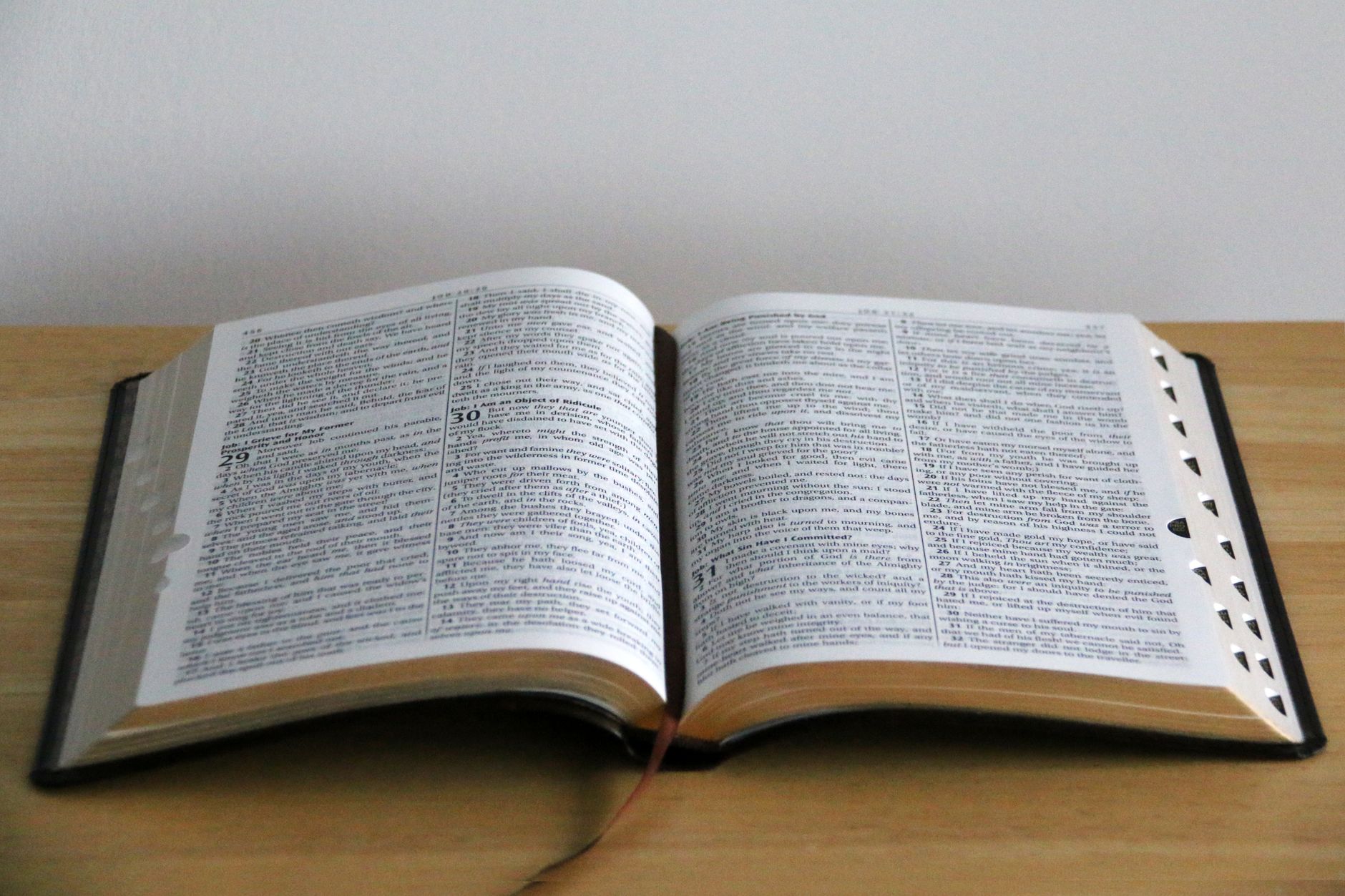
— "Therefore a man shall leave his father and his mother and hold fast to his wife, and they shall become one flesh."
Read that again. Slowly.
It is not a suggestion. It’s not a romantic ideal we try to live up to on Instagram. It is an ontological statement about human existence. God didn’t just say, "Marry someone nice." He said, "Break your primary biological loyalty to reforge a new one."
That is terrifying. And it is beautiful.
We live in late autumn now. The leaves are brown and brittle on the ground, crunching underfoot like dry static. The year is winding down. For many of us, this time of year triggers a specific kind of spiritual inventory. We look back at our marriages and ask, "Did we do it right? Did we love them well?" It is a heavy question. The air feels thinner in November, and suddenly the silence of our homes gets louder.
But let’s step back from the seasonal melancholy for a moment and look at what God actually built.
The Radical Act of Leaving
We often gloss over the first part of . We focus on "one flesh" because it sounds intimate. But the command is "leave."
In the ancient Near East, family wasn’t just a unit; it was an economic and spiritual fortress. Leaving your father and mother meant leaving the safety net that had defined your entire identity up to that point. It was a death of sorts. You were stepping out of the shadow of your origin to stand in the light of a new covenant.
I’ll be honest—I’ve struggled with this concept for years. I used to think "leaving" meant just moving out of my childhood home. Then it clicked, and honestly, it unsettled me. "Leave" means to let go of the grip. It means acknowledging that you are an adult now, not a dependent. If you are still emotionally tethered to your parents’ approval in every decision, if their voice is louder than your spouse’s in your head, you haven’t really left.
This applies to everyone, not just biological children of parents. It applies to the parents themselves. A parent’s love is meant to be a launchpad, not a cage. When we fail to let our children go—emotionally, financially, spiritually—we rob them of the capacity to become "one flesh" with their partners. We keep them in a state of perpetual adolescence, where they can never fully merge with another human being because part of them is still anchored to the family tree.
It is a painful kind of freedom. But that’s what God designed.
The Mystery of One Flesh
So, what does "one flesh" actually mean?
It’s not just sexual union. Though that is part of it. It goes deeper than anatomy. Paul picks this up in — "But are you not aware that your body is a member of Christ? ... And shall I take the members of Christ and glue them to a prostitute?" He’s making a point about unity that transcends the physical.
In marriage, "one flesh" means two distinct identities are woven together so tightly that they function as a single organism. It’s like a binary star system. Two massive stars, orbiting each other so close that they share mass and influence. You can still tell which is which, but you cannot move one without affecting the other.
This is where we get it wrong. We treat marriage like a contract between two separate entities who happen to share a roof. "I do my part, you do yours." But God’s design is not contractual; it’s covenantal. It’s a fusion of wills, emotions, and purposes.
Think about the difference between a partnership in business and a marriage. In a business, if one partner fails, the other can usually pivot or exit with minimal loss to their core self. In a marriage, if one fails, the other is wounded at the bone level. Why? Because you are no longer two people. You are one person wearing two bodies.
That is why divorce hurts so badly. It’s not just the loss of a companion; it feels like amputation. You are losing part of your own soul.
Love Is a Verb, Not a Feeling
Here is the thing that stumps most of us: We wait for love to feel good.
We expect a spark. A flutter in the stomach. The electric jolt of newness. And when that fades—and it always does—we panic. We think something is wrong with the marriage because we don’t feel that intense electricity anymore.
But look at how Jesus defined love in — "A new command I give you: Love one another. As I have loved you, so you must love one another. By this everyone will know that you are my disciples, if you love one another."
Notice what Jesus did not say. He didn’t say, "Love each other when you feel like it." He pointed to Himself. To the Cross.
Love, in God’s design, is an act of will. It is a decision made before the feelings arrive. It says, "I will honor you even when I’m annoyed with you. I will seek your good even when it conflicts with my preference. I will stay because I have committed."
I remember a week last year where I was so exhausted that talking to my spouse felt like lifting weights. Every interaction required effort. There was no romance, no warmth—just the raw, grind of daily life. I wanted to retreat into my own little bubble. But I stayed. Not because I felt love, but because I chose it. And later that week, during a quiet dinner, the tension broke, and we laughed at something stupid. The feeling returned. But it was the choice that kept us alive while the feelings were dormant.
Love is not a gas in a tank. It’s a muscle. You have to exercise it, especially when you’re tired.
The Autumn of Our Marriages
It is late autumn again. The year is almost over.
There is a certain honesty to this season. Summer was loud and full of activity. Spring was fresh and hopeful. But autumn strips things back to their bones. It reveals what is actually there.
Maybe your marriage is in the autumn of a phase right now. The novelty has worn off. The kids are older or gone. The routine is set in stone. It might feel dry. It might feel quiet.
But here’s the secret that many of us miss: God is most active in the quiet places.
When the noise stops, when the performance ends, that’s when you see who your spouse really is. And that’s when you have to decide if you can love them in their ordinary, unglamorous reality. Not the highlight reel version. The real one. The one who leaves dishes in the sink or forgets your birthday or struggles with anxiety at 3 AM.
That is where "one flesh" lives. Not in the perfect moments. In the messy, mundane, daily grind of choosing each other again and again.
We don’t need a grand romantic gesture to prove our devotion this year. We just need to look at the person across the table—the one who has seen our worst moments and stayed—and say, "I’m still here. I chose you then. I choose you now."
The leaves will fall. Winter is coming, with its cold and its silence. But the roots go deeper in the dark.
You don’t need to fix everything by December 31st. You just need to keep showing up. Keep choosing the covenant. Keep holding fast.
Because in the end, that is what God designed. Not a perfect relationship. A resilient one.