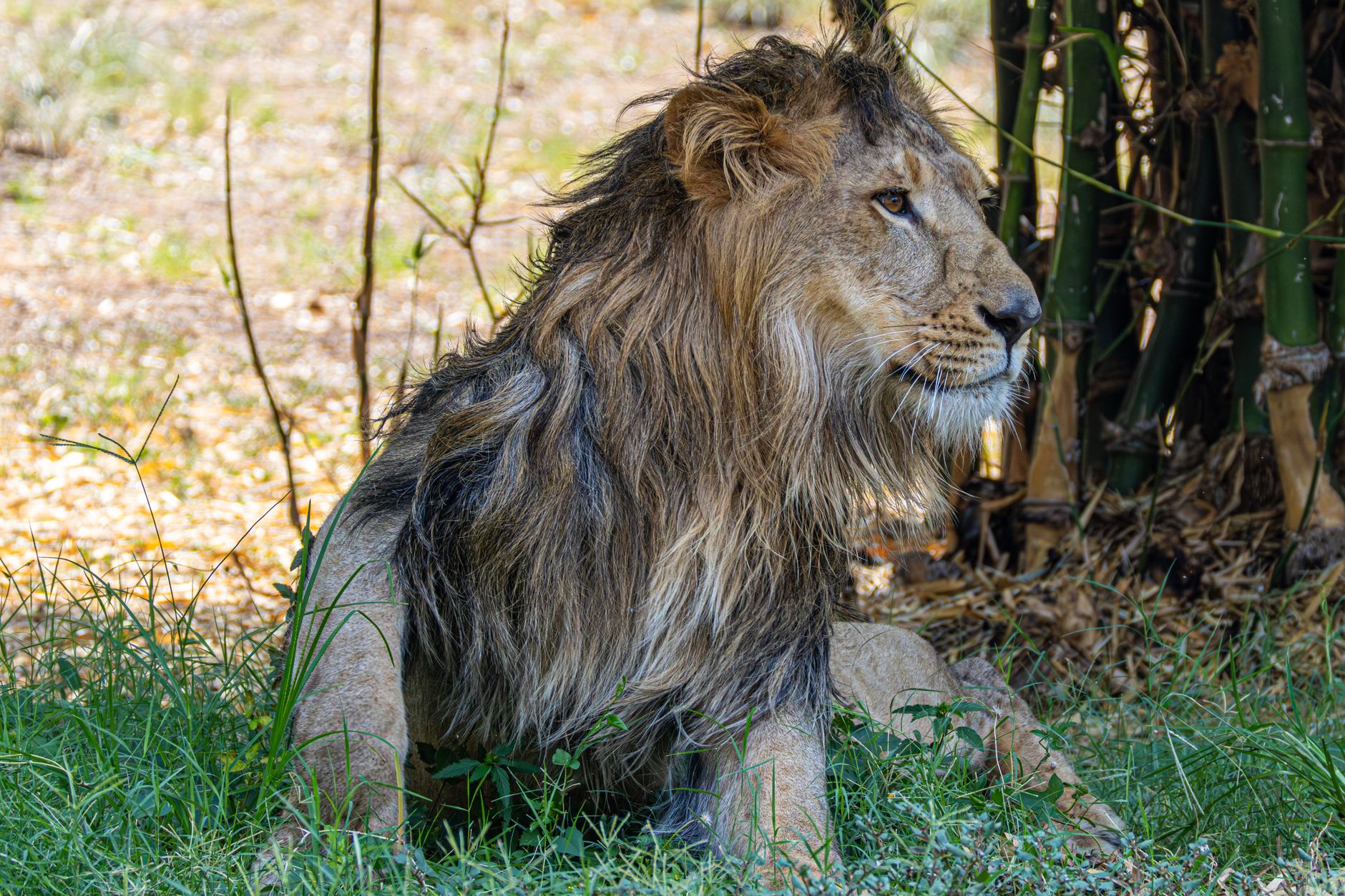
I used to think the most terrifying part of the lion’s den was the lions.
It’s a natural assumption, isn’t it? You read the story in Daniel 6, and your mind immediately jumps to the beasts. The teeth. The hunger. The sound of claws scraping against stone. We imagine Daniel sitting there in the dark, listening to the heavy breathing of predators just inches from his face, waiting for the first snap. We project our own fears onto him. We think, If I were in that pit, I’d be screaming. I’d be doubting God’s presence.
But here’s the thing about Daniel that most of us miss when we rush to the end of the chapter: he wasn’t terrified because he wasn’t alone. And he wasn’t merely waiting for rescue; he was keeping watch.
The text says he was "sealed" in the den (). That word implies a lock that could only be opened by the king’s own hand. He was trapped. But he wasn’t abandoned.
It’s late August now. The air in my neighborhood has that specific, crisp bite to it. The days are still long, but the light is changing. I watch the shadows stretch earlier across the lawn, and I feel that familiar, low-grade anxiety that comes with the turning of the year. The harvest is in, but the winter is coming. Are we ready? Is my faith ready?
We live in a culture that treats faith like a transaction. I obey, so I get blessed. I suffer, so God must be angry. We treat Daniel like a superhero who got a special "courage buff" because he was holier than everyone else. But if you look closer at the text, you realize Daniel wasn’t a superhero. He was just a man who had spent forty years practicing the habit of prayer.
The Habit of the Open Window
Let’s go back to the top of the chapter. The princes didn’t trip Daniel up because he was suddenly weak. They found him because he was consistent.
"Now when Daniel knew that the decree was published, then he went to his house; and his windows being open in his chamber toward Jerusalem, he knelt on his knees three times that day, and prayed, and gave thanks before his God, as was his custom since early days." (, NKJV)
Notice the phrase "as was his custom."
That’s the secret. It wasn’t a one-time miracle. It was a lifetime of accumulation. Daniel didn’t start praying when the lions were already in the pit. He prayed when the lions were just sleeping in the savannah. He prayed when he was young and ambitious in Babylon. He prayed when he was interpreting dreams for kings who didn’t know the true God. He prayed when it was convenient. He prayed when it was dangerous.
And then, when the decree came out—a direct order from the king himself, with the penalty of death—he didn’t negotiate. He didn’t say, "Well, I’ll just do a quick mental prayer from the car." He didn’t hide. He went to his upstairs room. He opened the windows toward Jerusalem. He got on his knees.
I’ll be honest, I struggle with this part. I’ve spent years trying to be "spiritual" in the abstract. I try to pray in the shower, in the car, while folding laundry. And that’s good. But Daniel’s example suggests something deeper: discipline creates a posture.
When the pressure hit, his body already knew what to do. His soul didn’t have to work up the energy to start; it just had to continue.
We tend to think of faith as a response to crisis. But faith is actually a rhythm of preparation. You don’t build trust in God during the crisis; you reveal the trust you’ve been building for years. The crisis just strips away the noise so you can hear if it’s real.
Not Just Survival, But Witness
Here’s where the story gets weird.
Daniel prays. The lions come out. The king, Darius, is distressed. He spends the whole night trying to find a loophole in the law (which was tricky, since the Medes and Persians couldn’t change their own decrees). He throws Daniel in.
But notice what Darius says to Daniel as he drops him in:
"May your God, whom you serve continually, rescue you from the lions." (, NIV)
It’s a polite prayer. A hopeful prayer. But it’s not confident.
Then, the next morning. The king rushes to the den, his voice shaking. "Daniel, servant of the living God, find out if you are able to be rescued by your God?" ().
And Daniel’s answer is the most understated thing in Scripture.
"My God sent his angel, and he shut the mouths of the lions. They have not hurt me, because I was found innocent in his sight." (, NIV)
He doesn’t say, "God saved me because I was good." He doesn’t give a TED Talk on theology. He simply states a fact: God sent an angel. And the result?
"The king was overjoyed and ordered that Daniel be lifted from the den... and that the men who had maliciously accused Daniel be thrown into the lions' den." (, NIV)
The result wasn’t just Daniel’s safety. The result was the conversion of the empire.
Look at the end of the chapter. King Darius writes a letter to all peoples, nations, and languages:
"He rescues and saves; he shows signs and wonders in the heavens and on the earth." (, NIV)
Daniel’s faithfulness didn’t just save his life; it revealed God to a pagan king who didn’t even know Him. The "witness" wasn’t Daniel’s speech. It was Daniel’s peace in the chaos.
We often think our job is to convince people of God through arguments. But sometimes, our job is just to be present in the fire without burning up. To be the person who can open the windows when the decree changes. To maintain the rhythm when everyone else is panicking.
The God Who Shuts Mouths
, sitting in our own modern dens?
Maybe your den isn’t a pit of lions. Maybe it’s a hospital waiting room. Maybe it’s the silence of a marriage that’s gone cold. Maybe it’s the anxiety of a recession hitting your family’s savings. Maybe it’s just the quiet, creeping dread that you’re running out of time to make something of yourself.
The enemy wants you to believe that your suffering means God has left the building. He wants you to think that because the lions are roaring, you’ve been forgotten.
But Daniel’s story tells us otherwise. God didn’t prevent the lions. He didn’t stop the decree. He didn’t skip the night of waiting. He went with Daniel.
"My God sent his angel, and he shut the mouths of the lions."
The miracle wasn’t just that the lions were quiet. The miracle was that the angels were active. We often wait for God to move the mountains. But sometimes, God moves the angels around us while we’re still in the dirt.
I used to read this verse and feel a bit cheated. "Shut the mouths of the lions." I wanted the lions gone. I wanted the pain gone. I wanted the diagnosis reversed. But God chose to shut their mouths. He contained the damage. He limited the scope of the trial.
And that is a deep comfort. God doesn’t always take us out of the den. Sometimes, He takes the teeth out of the lion. He limits the suffering so that it serves its purpose: to refine us, to witness to others, to draw us closer.
Think about the harvest season we’re in now. You plant seeds in the spring. You water them. You wait. And then, the storms come. The hail comes. The locusts come. If you only looked at the storm, you’d think the harvest was ruined. But the farmer knows that the storm is part of the process. It’s part of the growth.
Daniel’s faithfulness wasn’t about avoiding the storm. It was about trusting the Gardener.
Living in the Open Window
So, how do we live this out?
It starts with the "custom." It’s easy to have a custom of prayer when life is good. It’s easy to open the windows when the sun is shining. But the test of faith is whether you keep the rhythm when the decree changes.
When the boss says, "Do it your way or leave." Do you still kneel? When the bank account drops. Do you still open the windows toward Jerusalem? When the diagnosis comes back. Do you still give thanks?
It’s not about perfection. It’s about direction. Daniel wasn’t perfect. He ate the king’s food. He served a pagan empire. He was an exile. But his heart was fixed.
And here’s the beautiful twist: Daniel’s faithfulness didn’t just save him. It saved the king. Darius was distressed all night. He cared about Daniel. He wanted to rescue him. And when Daniel was rescued, Darius praised God.
Your faithfulness might be the only bridge some people have to God. Not your perfect life. Not your polished theology. But your steady, unshakable, "open window" faithfulness in the face of the roar.
When you pray through the pain, you show the world that God is real. When you keep the rhythm, you show the world that God is trustworthy. You become a living sermon.
The Wider Lens
We often read biblical narratives as individual success stories. But Daniel’s story was always part of a larger arc. He was one of the exiles. He was part of the remnant. His faithfulness in Babylon was preparing the way for the return to Jerusalem. It was preserving the line of promise through the centuries.
And now, we are part of that same story.
We are the exiles in our own cultures. We are living in the "already but not yet." The kingdom has come, but the lion is still roaring. The world is still hostile to the cross. The decree is still in place.
But we have a better hope than Daniel did. Daniel’s lions were shut. Jesus’ tomb was opened. Death didn’t just lose its teeth; it lost its sting.
Because Jesus lived, died, and rose, we know that the den is not the end. We know that the angel is real. We know that the God who shut the mouths of the lions is the God who raised Jesus from the dead.
So, when you feel the weight of the stone on your chest today, don’t just look up for rescue. Look around for the witness. Look for the opportunity to show the world that your God is worth serving, even when the laws of the land say otherwise.
Keep your windows open. Keep your knees bent. And trust that He is with you.
Not because you’re good. But because He is.