God is often standing right next to you, waiting for you to stop looking down long enough to see Him.
We tend to imagine holiness as something distant. Something up there, behind the clouds, or in a cathedral with acoustics that make your knees ache. We picture it as loud—trumpets, thunder, maybe a choir that hasn’t yet been invented. But if you’ve ever felt completely invisible in your own existence, stuck in the mundane grind of daily living, this story isn’t just about ancient Israel. It’s about you. It’s about the specific, heavy silence of being ordinary while God is trying to speak.
Moses was not having a good life when that bush caught fire. He wasn’t leading armies or standing before Pharaoh. He was hiding in Midian, working as a shepherd for his father-in-law Jethro. Forty years he’d been running from the heat of Egypt, only to trade a palace for a desert. Instead of ruling, he was herding sheep. Instead of being important, he was irrelevant.
Imagine the weight of that. You spent two decades preparing to be a giant, and now you’re just… here. Watching dust kick up in the heat. Listening to bleats. Wondering if you missed your window. If God forgot you.
That is the problem most of us face today, isn’t it? We feel buried by routine. By bills that don’t shrink and responsibilities that grow teeth. We sit in our cars after work, not wanting to go inside, wondering if this was all there was. We are tired of being the person who just gets things done and not the person God called us to be. We think holiness requires a mountain top experience, or a dramatic conversion moment that silences the noise.
But God doesn’t always shout from the peak. Sometimes He whispers in the pasture.
The Bush That Wouldn’t Consume Itself
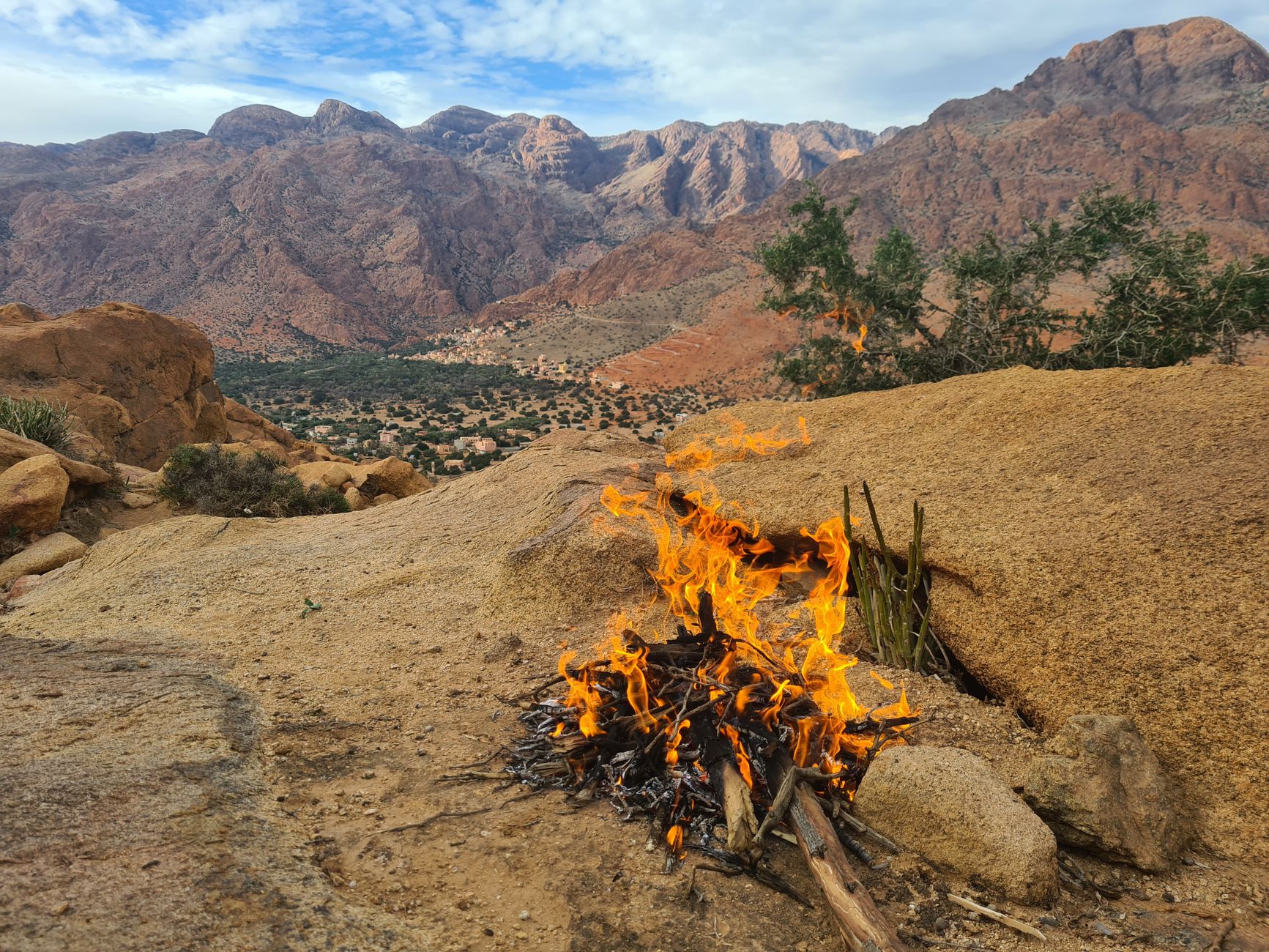
gives us the scene. Moses sees a bush burning with fire, yet it does not burn up. The Hebrew phrase here is key. It doesn’t just mean the bush survived the fire. The word used for "burning" is sarap. It implies churning, boiling, or seething. This wasn’t a gentle candle flame. This was an active, consuming fire. And yet, the wood remained intact.
Think about that for a second. Normally, when fire meets wood, the wood disappears. It turns to ash. It’s gone. But here? The fire and the fuel coexist. They don’t cancel each other out.
This is a preview of what God does with us when we step into His presence. We are fragile, dusty things. We crack under pressure. But when the Holy Spirit burns within us, we don’t necessarily get destroyed. We get sustained.
I’ll be honest—I used to read this part and feel nothing. Just "cool miracle." But lately, reading it as a parent who is perpetually exhausted, I see something different. God isn’t just showing off power. He’s showing us His nature. He is the divine presence who remains present in the heat, not just above it.
The text says Moses looked at it closely. The text says the Lord called to him from within the bush, "Moses! Moses!"
He didn’t call from a thundercloud. He called from the bush that was already there, in the middle of the dirt, where Moses was already working.
This is the promise for your burnout: You are not too close to God because you are ordinary. You are not too far away because you are tired. The divine presence is found in the place where you are, not where you think you should be.
Why It Matters (The Human Mess)
So what do we do with a burning bush in a Tuesday afternoon?
We tend to romanticize Moses. But remember: when God spoke, Moses didn’t leap up with joy. He hid his face. He was afraid. Why? Because he realized that seeing God changes everything, and nothing will ever be the same again.
We feel that fear too. Not necessarily terror, but the dread of being seen. Really seen.
God asks Moses—and us—to take off his sandals because he is standing on holy ground. In the ancient Near East, shoes were practical. They were made of leather or woven fibers, caked with the mud and dung of the road. You didn’t bring your street filth into a holy place. You left it at the threshold.
God is asking Moses—and us—to take off the mud of our day-to-day grind. To pause the "I have to" and just stand in the "I am."
This is where we get stuck. We think God wants us to do more before He meets with us. We think we need to clean up our act, or finish the project, or fix the marriage before we can experience His presence. But holy ground isn’t a place you earn. It’s a place God makes available when you stop running.
The burning bush is God’s way of saying: I am here. I am with you. And I will not be consumed by your circumstances, nor will my presence consume you.
Three Ways to Stand on Holy Ground
If you’re feeling buried in the dust of your own existence, here’s how you might actually live this out. Not as a religious ritual, but as a posture of the heart.
1. Look Closer at What’s Already There
Moses was distracted by the work of herding. He was focused on the task, not the miracle. God had to get his attention by making something impossible out of the ordinary.
Try this: Stop scanning your life for big signs. Start looking at what is already in front of you. The beauty of a cup of coffee. The sound of rain on the roof. The way your child laughs at something stupid. These aren’t just "nice moments." They are the bush. They are God’s fire burning in the material world.
When you feel bored or stagnant, ask yourself: Where is the fire in this routine? Maybe it’s in the patience required to fold laundry. Maybe it’s in the silence of a morning before the house wakes up. Look closer. The ordinary is often where the extraordinary hides, waiting for us to notice it.
2. Take Off Your Sandals (and Stop Running)
We are chronic runners. We run from our pasts, from our failures, and sometimes, ironically, from God’s calling because it feels too heavy. We fill the space with noise—podcasts, scrolling, busywork—because if we stop moving, we might have to feel something.
God’s invitation in Exodus is a call to stillness. To stop the frantic pacing. It’s okay to just stand there.
When anxiety tightens your chest, that urge to check your phone or start another task, pause. Just stand. Breathe. Acknowledge that you are in God’s presence right now, in your kitchen, or your office, or your car. You don’t need to be anywhere else. The ground beneath you is holy because He is there. Remove the "mud" of your stress for five minutes. Let it sit.
3. Listen to the Name, Not Just the Voice
When God speaks to Moses, He doesn’t just say "Hello." He identifies Himself. In verses 13-15, God reveals His name as YHWH—often translated "I AM WHO I AM." It’s not a static label. It’s a declaration of dynamic existence. I am that I am.
God is telling Moses: I am the God who was with your fathers, and I am here now. I exist independently of your circumstances.
When you feel small, remind yourself of who He is. Not just "God in heaven," but the One who steps into the dust with you. Memorize that name. Let it anchor you when the fire feels too hot, or the bush too ordinary. He is not distant. He is present-tense existence itself.
The Call to Step Forward
Moses didn’t immediately become the leader of a nation. He stumbled. He made excuses. He said he was slow of speech. He was scared.
But God didn’t reject him because he was imperfect. God met him in his imperfection and equipped him for the task.
Your burnout isn’t a sign that God has left you. It’s often the signal that He is drawing near, asking you to look up from your work and see Him.
So, next time you feel buried under the weight of your own daily living, don’t wait for a mountain top. Don’t wait to be fixed. Just look at the bush. The fire is there. He is calling your name.
And when you’re ready, take off your shoes. Stand on sacred earth. And listen.
"And He said, 'Do not come near here; take your sandals off your feet, for the place on which you are standing is holy ground.'" —