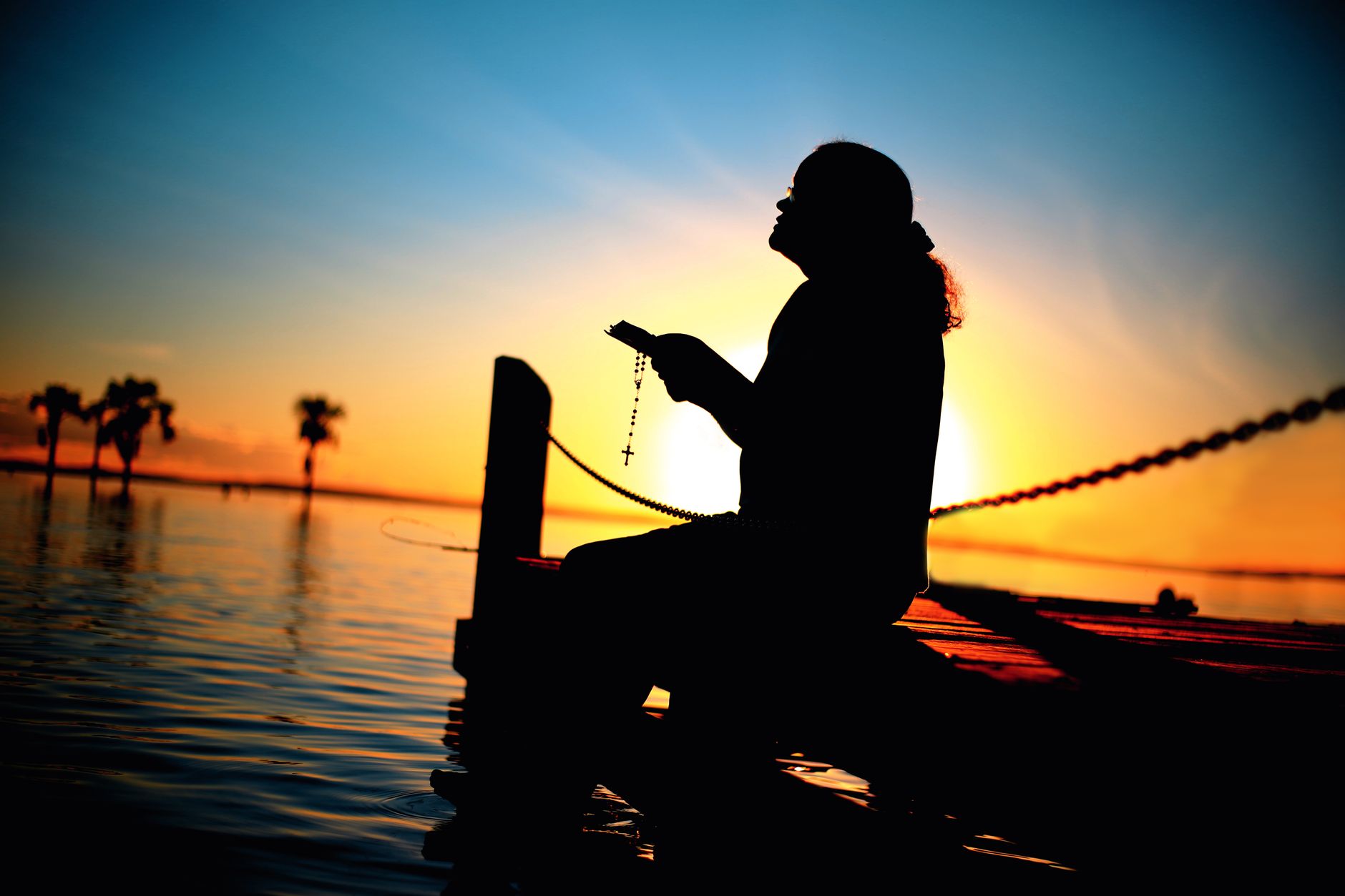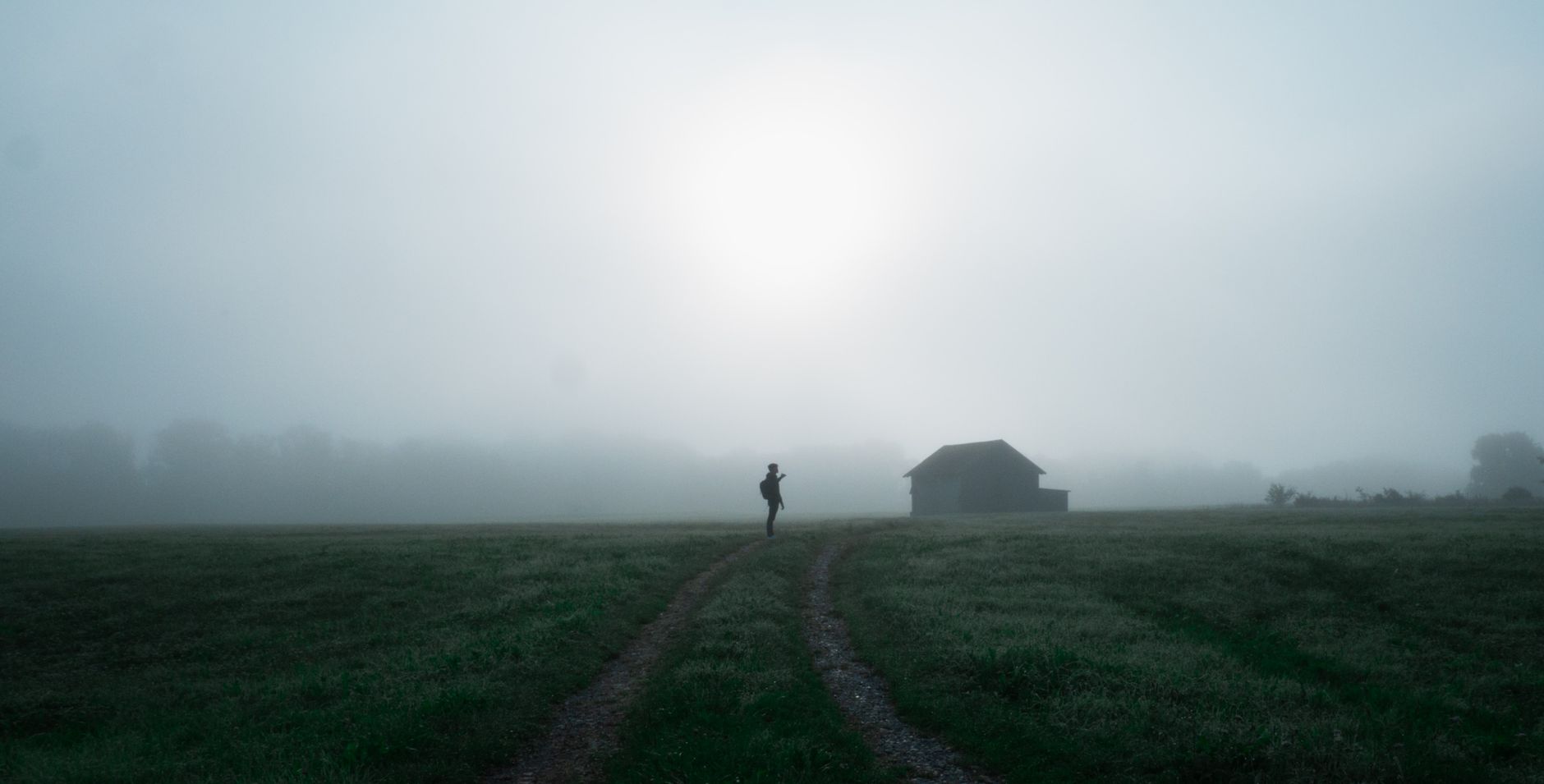
“Go from your country and your kindred and your father’s house to the land that I will show you.” ()
That’s it. No map. No itinerary. No guarantee of success, or even survival. Just a command and a promise that stretches further than the eye can see.
It’s easy to read this verse when you’re sitting in a warm room with your Bibles open. It feels noble. Patriotic, even. But try standing in Ur of the Chaldeans with nothing but a sack of clothes and a voice you hope is God’s.
Abraham didn’t know where he was going. He only knew Who called him.
That distinction matters. It’s the difference between a tourist and a pilgrim. A tourist looks at a map. A pilgrim listens for the Guide.
We live in an era obsessed with orientation. We want coordinates before we commit. We want the five-year plan before we say yes to marriage, or a career, or ministry. We treat faith like a risk management strategy — minimize the downside, maximize the upside.
Abraham’s story isn’t about planning. It’s about presence.
Let’s walk through Genesis 12, verse by verse. Not to memorize history, but to catch the fire of what happens when a human being decides to trust the Voice over the view.
The Cost of Leaving:
“The Lord said to Abram, ‘Go from your country and your kindred and your father’s house to the land that I will show you. And I will make of you a great nation, and I will bless you, and make your name great, so that you will be a blessing. I will bless those who bless you, and him who dishonors you I will curse, and by you all the families of the earth shall be blessed.’” ()
Three things to leave. Country. Kindred. Father’s house.
In the ancient Near East, your identity wasn’t yours alone. It was borrowed from your tribe, your soil, your ancestors. To leave was to become a social orphan. You lost your safety net. You lost your history. You became nobody.
Abraham was about seventy years old when this happened. He wasn’t a young man with time to waste. He was an older man with established roots, deep connections, and probably plenty of reason to stay put.
So why go?
The text says God said. It was personal. Intimate. Not a broadcast to all of humanity, but a whisper to one man.
And notice the promise. “I will make.” Not “if you succeed,” not “provided you perform well enough.” I will.
God takes responsibility for the outcome. Abraham’s job is to go. God’s job is to build.
I’ll be honest, I’ve struggled with this part too. I used to read “go” and think it meant moving geographically. But what if God is asking you to leave behind the version of yourself that feels safe? The resume you’ve built. The reputation you’ve curated. The grief you’ve gotten comfortable with.
Sometimes faith isn’t about changing your location. It’s about shedding the skin of who you were before God spoke to you.
And here’s the kicker in verse 3: “By you all the families of the earth shall be blessed.”
This isn’t just about Abraham’s happiness. It’s global. It’s cosmic. The blessing flows through his obedience, not just to him.
Think about that. Your simple act of listening can ripple outward in ways you’ll never see. You might plant a seed in the desert, and decades later, strangers will drink from the well you dug.
You don’t need to know where it goes. You just need to be the vessel.
The Altar of Memory:
“So Abram went, as the Lord had told him, and Lot went with him. Abram was seventy-five years old when he departed from Haran. And Abram took Sarai his wife, and Lot his brother’s son, and all their possessions that they had gathered, and the persons that they had acquired in Haran, and they went forth to go into the land of Canaan. They came to the land of Canaan... And Abram built there an altar to the Lord, who had appeared to him.” ()
They went. Past tense. Done deal.
Then, immediately, he built an altar.
Why? He hadn’t arrived at the final destination yet. He was just passing through Canaan, pitching tents in Shechem and Bethel. But he stopped to build.
An altar is a statement of ownership. It says, “This land belongs to God, even if I’m just passing through.”
It’s also a memory marker. In a nomadic culture, stone piles were GPS coordinates for the soul. Here is where God spoke. Here is where I listened.
There’s a real spiritual discipline here: Pause to worship, even when you’re not there yet.
We often wait until we “arrive” to celebrate or give thanks. We think, Once I get the job, then I’ll praise God. Once my kids are settled, then I’ll rest. Once the healing comes, then I’ll thank Him.
But Abraham built altars en route. He acknowledged God’s presence in the transit, not just the destination.
And look at verse 8: “He removed from there to the mountains to the east of Bethel and pitched his tent, with Bethel on the west and Ai on the east. And there he built an altar to the Lord and called upon the name of the Lord.”
He calls on the Name. He invokes the character of God. He reminds himself — and anyone listening — who God is.
This wasn’t religious ritual. It was relational anchor.
In a world that shifts constantly, God is the fixed point. Abraham knew this. So he marked it with stone and song.
Maybe your altar today is a journal entry. A morning walk without your phone. A sudden act of kindness to someone who doesn’t owe you anything. These are altars. These are declarations that God is real, and He is here.
Don’t skip the altar building just because you’re still in the wilderness. The wilderness is often where God speaks clearest.
The Hunger and the Hallucination:
“And Abram journeyed on, continuing toward the Negeb. And there was a famine in the land. So Abram went down to Egypt to sojourn there, for the famine was severe in the land.” ()
Wait. What?
One minute, he’s building altars and calling on the Name of the Lord. The next, there’s a famine, and he heads south to Egypt — the superpower of the age.
It feels like a plot twist. A regression.
Did he forget God? Did the promise run out when the barley ran low?
Scripture doesn’t condemn him here. It just records it. He went down.
This is where the story gets human. This is where Abraham stops being a statue and starts being a man who got scared.
A famine hit. Food was scarce. Logic dictated that he go to Egypt, where the Nile was overflowing and granaries were full. It made sense.
But remember the promise? “To the land I will show you.” Egypt was not that land. It was the place of slavery, of Pharaohs, of gods who swallowed people whole.
So Abraham went to Egypt for survival. But in doing so, he left the place of promise.
There’s a tension here that haunts me. We often trade our God-given promises for earthly security.
Abraham traded his integrity for safety later in this chapter (he lies about Sarah), and he traded the promised land for a full belly.
Does this mean his faith was fake? No. It means it was fragile. Faith isn’t the absence of fear; it’s the decision to keep moving even when your knees are shaking.
We do this too, don’t we? We say “God is faithful” on Sunday and then panic-buy toilet paper and worry about our 401(k) on Monday. We forget that the God who called us is the same God who sustains us, even when the world looks bleak.
Abraham’s journey wasn’t a straight line up to heaven. It was a zigzag through the dirt.
He stumbled in Egypt. He lied. He caused tragedy for his wife. But God still protected him. Still kept the promise.
Grace is vast enough to hold our failures without dropping us.
The Modern Mirror: Your Ur, Your Canaan
today?
We aren’t ancient nomads with flocks of sheep. But we all have an Ur. We all have a “father’s house” — the place where our identity was formed, whether by birth, by trauma, or by tradition.
God might be saying, “Leave it.”
Maybe you’re carrying a burden from your childhood that God has already paid for, but you keep paying interest on.
Maybe you’re holding onto a career that looks good to others but feels hollow in your spirit because it’s not aligned with the calling you heard ten years ago.
Maybe you’re staying in a relationship out of duty, not love, because leaving feels like losing your standing.
“Go,” God says. Not to a specific place, but out of the comfort zone that has become your cage.
And when you go? Build an altar. Mark the moments. Remember who God is.
Because the famine will come again. The food will run out. The logic of the world will tell you to go back down to Egypt — to seek validation in money, in status, in control.
But remember the Altar. Remember that your blessing is tied to your obedience, not your comfort.
Abraham’s story ends with him wandering under the open sky, looking at stars he couldn’t count, trusting a God he couldn’t fully see.
That’s us too.
We are the wanderers. The altar builders. The ones who sometimes lie and sometimes leap.
And God is still saying, “Go.”
Not because you’re ready. But because He is there.