It’s that time of year. The air is starting to crisp up just enough that you’ll actually reach for a light jacket in the evening. You’re packing away the summer sandals, scrolling through your phone while waiting for your coffee to brew, and thinking about how fast the days are slipping by. Maybe you’re tired. Not the kind of tired that sleep fixes, but the deeper, humdrum fatigue of carrying on.
You know the kind. It’s that heavy feeling behind your eyes when you’re standing in line at the grocery store, wondering if this was all there was.
That was likely the state of her world, too.
We often rush past the story of the woman at the well because we know the ending. We’ve heard it in Sunday school. She drinks, she believes, her whole town comes running. It’s a neat little package of salvation history. But if we slow down and look at the dirt on her sandals, we see something much more relevant for our mental health today.
We see a woman who was emotionally exhausted, socially marginalized, and spiritually thirsty, sitting by a rock while Jesus did something radically simple: He asked her for water.
The Weight of the Bucket
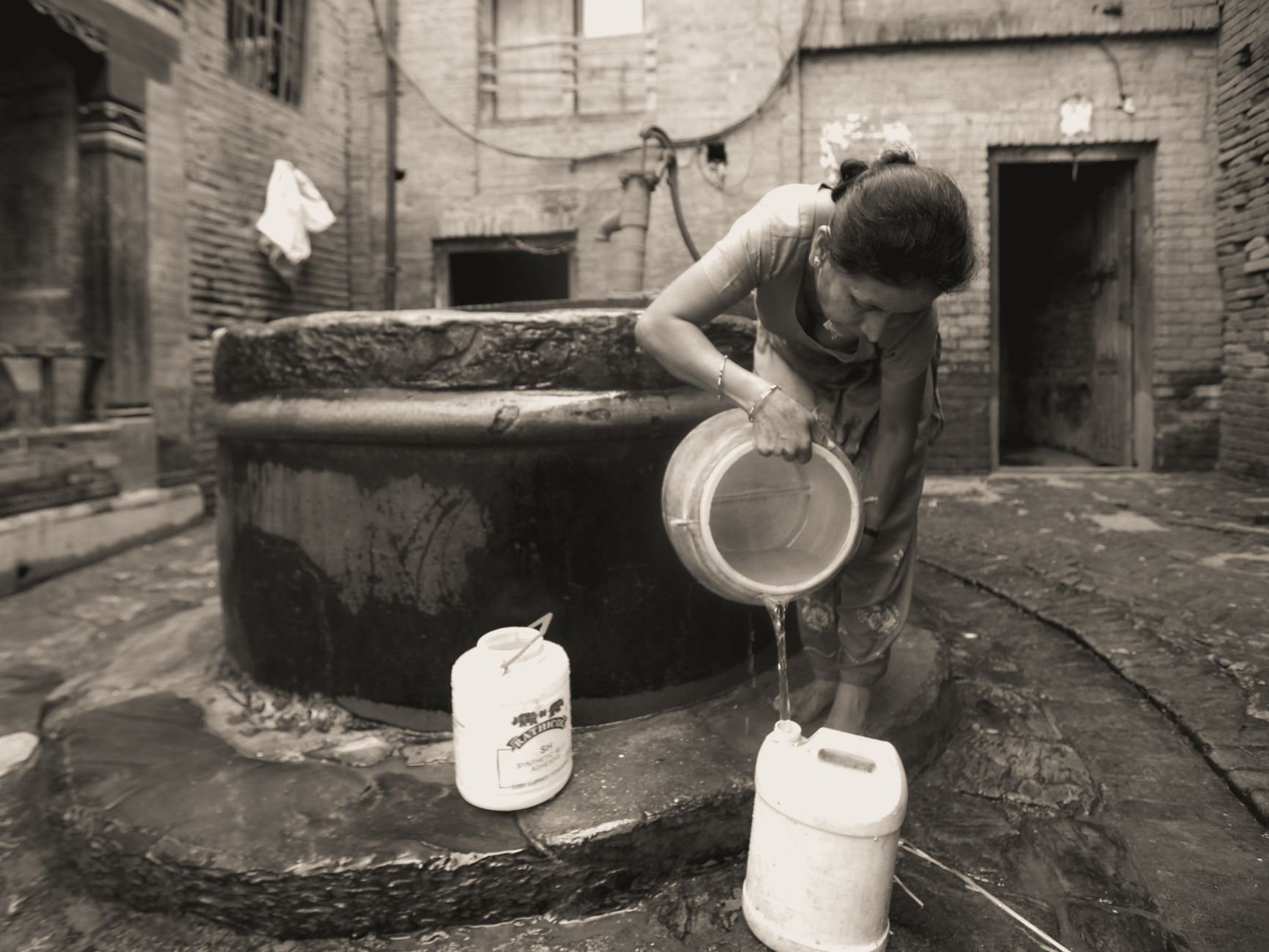
Let’s set the scene properly. It’s noon. Not 10 AM, not even 4 PM. High noon. The sun is hammering down on Judea, beating against the stone and the skin. For a woman of that time, drawing water at this hour wasn’t just about hydration; it was an act of social strategy.
Most women drew water in the cool of the morning, in groups. It was a time for gossip, for community, for checking in on who was married to whom and who was caught doing what. But this woman came alone, at the hottest part of the day, when the other women were safe in their homes or already done with their chores.
She wasn’t just avoiding the heat. She was avoiding judgment.
Her history was complicated. Five husbands, and now a sixth man who wasn’t her husband. In the cultural context of first-century Judea, that was a lot of failure. That was a lot of shame. She had likely been divorced or widowed multiple times, perhaps viewed as cursed by God for her inability to keep a marriage. Or maybe she was just living in sin, constantly whispered about by the women who drew water at dawn.
So she came out when everyone else was gone. She carried a heavy clay jar on her head, walking miles to get what kept them all alive.
Sound familiar?
Think about your own "noon" hours. That time when you’re trying to manage work emails, household noise, social expectations, and your own internal critic all at once. You feel the burden of your past mistakes—the relationships that didn’t work, the choices you regret, the labels people have pinned on you. Divorced. Single parent. Overworked. Not enough.
You carry that jar every day. You’re exhausted from being viewed as a project or a problem. You’re weary of explaining yourself. You’re tired of being viewed as a person who has to give, not just a person who needs fixing.
And then, this stranger sits down by your well.
He Asked for Water
Jesus was tired. We forget that part of the story. The text says he "was weary from his journey" (). He had walked for hours without water, under that same relentless sun. A rabbi should be resting. A teacher should be teaching. He could have sat there in silence, waiting for someone to bring him a cup. That was the expected protocol.
But he didn’t wait. He spoke first.
"Give me a drink." ()
It sounds simple, even trivial. Why does it matter?
Because in a culture where men didn’t typically speak to women in public, and certainly not those with "questionable" reputations, this was a radical act of dignity. By asking for water, Jesus placed her on equal footing with him. He wasn’t taking from her; he was giving her an opportunity to give.
He validated her presence. He acknowledged her capacity.
Have you ever noticed how much energy we spend trying to prove our worth? We polish our resumes, curate our social media, hide our messes, and strive to be "enough" so that people will like us. We build walls around ourselves to protect our reputations.
Jesus didn’t ask about her reputation first. He didn’t start with a lecture on morality or a demand for repentance. He started with a need. I am thirsty.
There is profound healing in being viewed as a person who has the ability to give, not just a person who needs fixing. When Jesus asked for water, he was saying, You matter enough to share my thirst.
The Water That Doesn’t Work
The woman, startled by this breach of protocol, responds with a bit of sarcasm. "How is it that you, a Jew, ask for a drink from me, a woman of Samaria?" ()
She’s sharp. She’s defensive. And then, she gets to the heart of her exhaustion.
Jesus turns it around and offers her something better: "Living water." She thinks he’s talking about the physical well right there, with its deep shaft and worn rope. So she brings up her practical life. She’s got a bucket. She’s got to do the work. She’s tired of the cycle of drawing, carrying, drinking, and repeating.
"Sir," she says, "you have nothing to draw with and the well is deep. Where did you get that living water? Are you greater than our father Jacob?" ()
She’s stuck in the old way of thinking. She believes that well-being comes from her own effort. If I just work hard enough, if I just keep pulling the bucket up, I’ll be okay.
This is the trap so many of us fall into. We treat our spiritual and mental health like a well we have to constantly tend. We try to manage our emotions, our health, our finances, and our relationships all by our own strength. We become the master of our own little stone circle.
But Jesus says, "Everyone who drinks from this well will be thirsty again." ()
That’s the hard truth. The bucket water runs out. It satisfies for a few hours, then the thirst returns. We buy the new phone, get the promotion, lose the weight, find a partner, and yet... there’s still that low-level hum of anxiety. That quiet longing. Is this all there is?
Jesus offers water that becomes a spring within you, gushing up to eternal life. ()
It’s not a one-time fix. It’s a continuous flow. It’s the peace that doesn’t depend on whether your five marriages worked out. It’s the joy that remains even when the sun is beating down at noon.
Speaking Truth to Shame
Here’s where it gets personal for her—and for us. Jesus doesn’t leave her in the abstract theology of "living water." He gently brings up the elephant in the room. Her life.
"Go, call your husband and come back." ()
She tells him she has no husband. Jesus says, "You are right in saying, 'I have no husband'; for you have had five husbands, and the man you now have is not your husband." ()
He knows. He sees the messy, complicated reality of her life without flinching. He doesn’t stare at her with disgust. He doesn’t turn away in shame. He looks her in the eye and tells her the truth, clearly and kindly.
And what does she do? She doesn’t run away. She doesn’t get defensive and shout, "So what if I have five husbands?"
She becomes a teacher. She says, "Sir, I see that you are a prophet." ()
Her focus shifts. She starts asking big questions about worship and place. But more importantly, she realizes that Jesus sees her totally. He knows the history, and he still offers the water.
This is huge for our mental health. We often hide our pasts, our traumas, and our "failures" because we’re afraid they’ll disqualify us from God’s love. We think, If He knew everything about me—the secrets, the scars, the weird habits—He would reject me.
But Jesus’ knowledge of her story didn’t push him away. It drew him closer. He sat with her in the mess.
I’ll be honest, I’ve struggled with this too. For years, I felt like my anxiety was a sign of weak faith. I thought God wanted me to be calm, collected, and spiritually polished. When my mind raced or my emotions spiked, I felt like a failure. I was trying to draw water from the well of my own performance.
Then I realized that Jesus didn’t come for the polished. He came for the thirsty. And sometimes, being thirsty looks a lot like anxiety. It’s that deep, dry ache for something real.
The Invitation to Rest
By the end of their conversation, something has shifted in her posture. She leaves her water jar behind.
Think about that detail. She had come to draw water, but now she leaves the jar on the ground and runs back into town. Why?
Because she has found something more satisfying than the water in the well. She doesn’t need to carry her burden anymore. The living water is inside her, so she can travel light.
She goes to the city and tells everyone, "Come, see a man who told me all that I ever did." ()
She becomes an evangelist, not because she has a perfect theology degree, but because she has experienced grace. And because of her testimony, "many Samaritans from that town believed in him" ().
Her life, once isolated and heavy at noon, becomes a bridge for others.
, sitting here in our late summer, feeling the burden of the harvest season?
It means you don’t have to wait until you’re fixed to be used by God. You don’t have to clean up your life before Jesus sits down with you at the well. He’s already there. He’s tired, too. And he’s ready to share his cup with you.
Stop trying to haul your own water. Stop worrying about what time of day it is or who is watching you. Sit by the rock. Listen to him speak.
He sees your five husbands, your current partner, your past regrets, and your present fears. And he says, I know all that you have done. And I still offer you living water.
Drink from it. Let it well up inside you until your thirst is no longer a problem, but a promise.
A Prayer for the Thirsty
Jesus, I’m tired. Not just from today’s work, but from carrying the weight of who I am supposed to be. You see my history. You know the messes, the mistakes, and the moments I’ve tried to hide. Thank you that you didn’t look away. Thank you for asking me for water, for treating me like someone who can give and receive your grace.
Please, give me that living water today. Let it wash away the shame of my past and the anxiety of my present. Help me to leave my heavy water jar behind, to travel light in your presence, and to share the hope I’ve found with those around me. I trust you. Amen.