The Midnight Tremor: What Paul and Silas Did When the Walls Caved In
— “About midnight Paul and Silas were praying and singing hymns to God, and the other prisoners were listening to them. Suddenly there was such a violent earthquake that the foundations of the prison were shaken. At once all the doors flew open, and everyone’s chains came loose.”
It is early autumn. The air has that crisp bite to it, the kind that makes you pull your collar up and realize the summer is officially gone. You’re settling into new routines—maybe a new job, maybe back-to-school chaos, or just the quiet realization that the calendar is turning again. It’s a season of harvest, but also of letting go.
Most people expect suffering to look like the earthquake. The sudden shake. The shattering of what you thought was solid ground. But the two apostles? They didn’t wait for the shake to start singing.
The Smell of the Cell
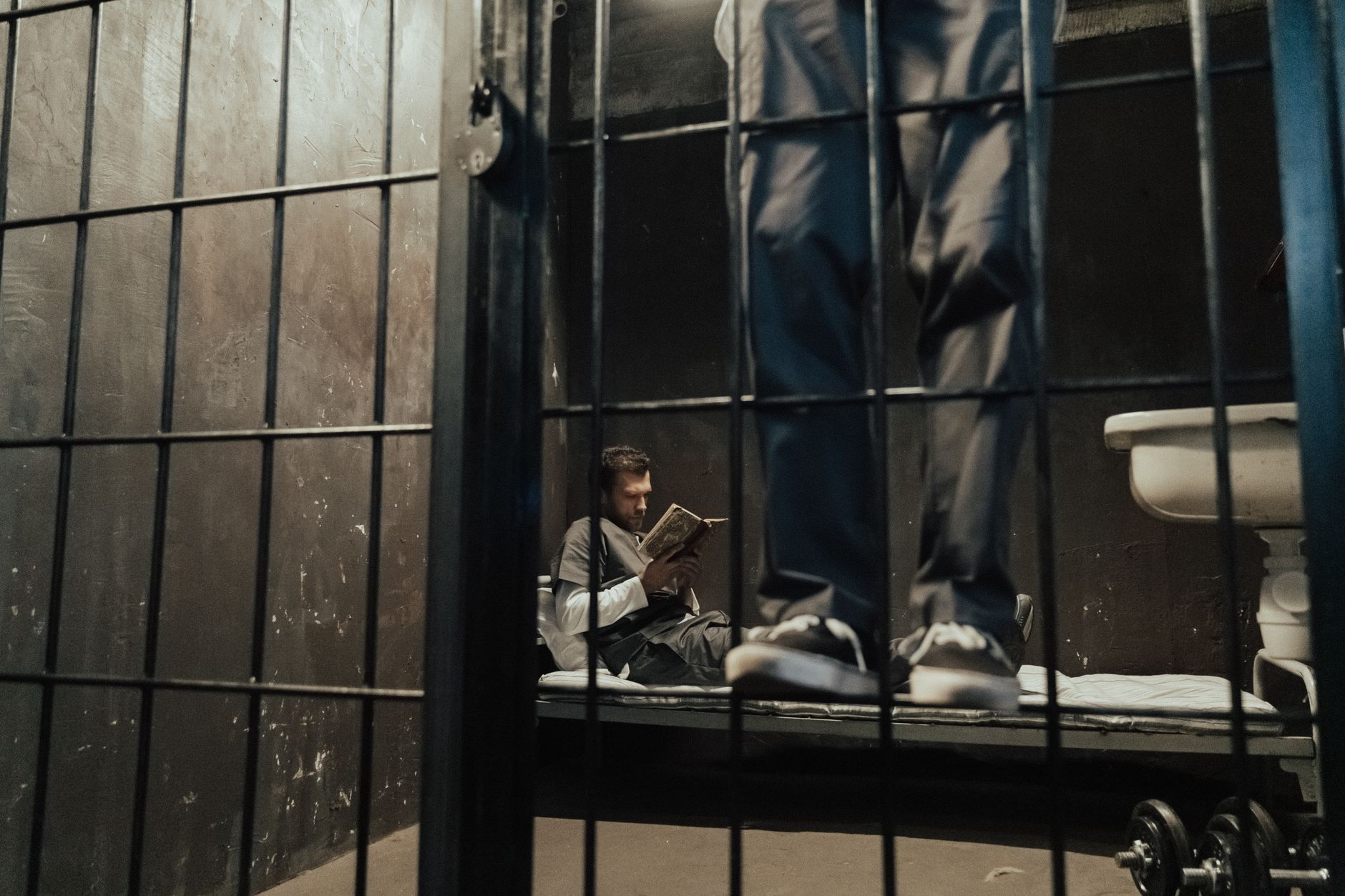
Let’s get this straight: Paul and Silas were not in a five-star hotel. They were in the inner jail of Philippi, a Roman garrison town known for its harshness. After being beaten and stripped, they were thrown into a cell with their legs fastened in stocks—not just ankle shackles, but the heavy iron bands that dug into the shins and calves.
Imagine the smell. Damp stone. Mold. The metallic tang of old blood from their wounds. No windows in the inner cells, meaning no light, just a dim glow if you were lucky, or total darkness. Their legs would have throbbed with every shift in weight. The floor was likely cold and slick.
And yet, at midnight—when the world is quiet and pain usually feels loudest—they started singing.
Not a hymn of distress. A hymn to God. Hymns to God.
I’ll be honest with you: I’ve read this passage a hundred times. And for years, I felt a bit of irritation. Like a kid who’s told to eat their vegetables but wants the ice cream first. I’d think, Sure, they’re singing now, but look at how God rewards them—the earthquake! The open doors! I used to read this verse and wait for the payoff. I thought the singing was a setup. A trade. Sing, God, and then break us out.
It took me a long time to realize I had the sequence backward.
Joy Wasn’t the Reward; It Was the Reality
The earthquake didn’t cause the singing. The singing was happening before the walls moved.
This is a crucial distinction, and it’s where my theology used to wobble. I wanted joy to be the result of comfort. If life is good, I’ll praise God. If life is bad, I’ll complain until it gets better. That’s a transactional faith. It works when the sun is shining, but it crumbles in the stock-prison-darkness of a difficult season.
The apostles were singing because their identity was anchored in Christ, not in their circumstances. They knew who they belonged to. And that knowledge created a joy so resilient it didn’t care if their ankles were bleeding or if the jailer was snoring three cells down.
There’s a line in their story that often gets overlooked: “and the other prisoners were listening to them.”
Think about that. The other inmates—probably thieves, debtors, or political dissidents who had no reason to sing joyfully in a dark hole—were listening. Why? Because there was something different about the noise. It wasn’t despair. It wasn’t rage. It was praise. And it changed the atmosphere of that cell.
This isn’t just about individual happiness. It’s about witness. When you praise God in the middle of a mess, you disrupt the narrative that pain is the only truth. You tell your neighbors—your coworkers, your family, your friends—that there is something bigger than the current crisis.
The Jailer’s Crisis and Our Daily Grind
The earthquake opens the doors. Chains fall off. The jailer wakes up, sees the empty cells, and assumes everyone has escaped. He draws his sword to kill himself because he’s going to be executed for their loss.
But Paul shouts, “Don’t hurt yourself! We’re all here!”
The jailer is sent back to the cell. He sees Paul and Silas still there, chains loose but bodies present. And he asks the question that every human being eventually asks God: “What must I do to be saved?”
We often skip over the jailer. We focus on the earthquake because it’s dramatic. But the real miracle wasn’t the shaking ground. It was a man in a dark place, facing his own mortality, finding peace because two prisoners chose to sing instead of scream.
Here’s where this hits home for the rest of us, way outside Philippi.
You don’t need an earthquake to test your faith. You don’t need a literal prison wall to shake.
Perhaps your “earthquake” is a medical diagnosis that changed everything. Perhaps it’s the quiet grief of a marriage falling apart, or the loneliness of a career that no longer fits. Perhaps it’s just the heavy, grinding weight of ordinary life—the bills, the fatigue, the sense that you’re running on empty.
We often think we need a dramatic rescue to start praising God. We wait for the door to fly open before we feel okay. But Paul and Silas teach us that praise is a posture, not just a reaction. It’s how we orient ourselves when the world feels unstable.
I’ve struggled with this too. There have been seasons where I wanted to wait for the “fix” before I felt grateful. I’d sit in my living room, coffee going cold, and think, I’ll be thankful once this is over. But “over” is a moving target. The next problem is always loading its cannon.
Singing before the earthquake is an act of trust. It’s saying, “I don’t know what happens next, but I know Who holds the next thing.”
Stewardship in the Dark: Caring for What You Have
This brings us to a tricky concept: environmental stewardship. It feels weird to talk about nature and creation when talking about jail cells, right?
But consider this: Paul and Silas were in a confined space. Their world was the size of that room. And they responded by praising in that space. They didn’t rage against the walls. They didn’t try to tear down the stone with their bare hands (though they could have, if they’d wanted). They filled the space with something that transcended it.
Stewardship isn’t just about recycling or saving polar bears (though those are good things!). At its core, stewardship is the recognition that everything you have—your time, your energy, your specific location in life—is a gift you are managing on God’s behalf.
When we face suffering, our first instinct is often to want more. More comfort. More control. More options. We look at our current limitations and feel robbed. But a steward looks at what is here—this specific Tuesday, this specific struggle—and asks, “How can I use what God has given me right now to honor Him?”
If you’re in a “prison” of circumstance—a job you hate, a health issue, a relationship season—stewardship looks like this:
You take care of your body. You eat the food in front of you, even if it’s simple. You rest when your legs ache (or your heart aches). You listen to the quiet. And you offer it all up.
It’s an act of radical faithfulness. It says, “God, this is all I have right now. This specific pain, this specific place. Take it. Use it.”
A Practice for the Ordinary Tuesday
So, how does this look on a random Wednesday in autumn?
It looks like pausing before you check your phone. Before the noise of the day starts, you take one breath. You acknowledge where you are. Maybe it’s a good place. Or perhaps, it is a hard one. And then, instead of reacting to the discomfort, you offer a small word of thanks or praise.
It doesn’t have to be loud. It doesn’t have to sound like a choir.
Perhaps it’s just thinking, “Thank you for this breath,” while waiting for the kettle to boil.
Or perhaps it is saying, “I’m struggling today, Lord, but I trust You with this,” before you walk into a difficult meeting.
This is the “midnight prayer.” It’s the quiet, internal singing that happens when nobody else is watching. And just like in Philippi, it changes the atmosphere of your day. It stops you from spiraling into victimhood and moves you toward participation in God’s story.
We live in a culture that tells us to be resilient by being strong. By gritting our teeth. By looking unbothered. But the Bible gives us a different model. The model of Paul and Silas is not stoicism. It’s praise in the presence of pain.
It’s messy. It’s human. And it works.
The earthquake comes eventually. The doors open. Chains fall away. But you don’t have to wait for the shaking to start singing. You can start right now, in the quiet of your own room, with the walls still standing and the chains still on.
Just start.
Prayer: Lord, I don’t always know what I’m doing in this season. My legs ache a little—maybe physically, maybe just spiritually—and I want to wait for the walls to break before I praise You. Help me to start now. Give me the grace to sing a little song in the dark, even if my voice is shaky. Remind me that You are with me in the cell, and that Your joy isn’t dependent on my circumstances. Thank You for the breath I have right now. Amen.