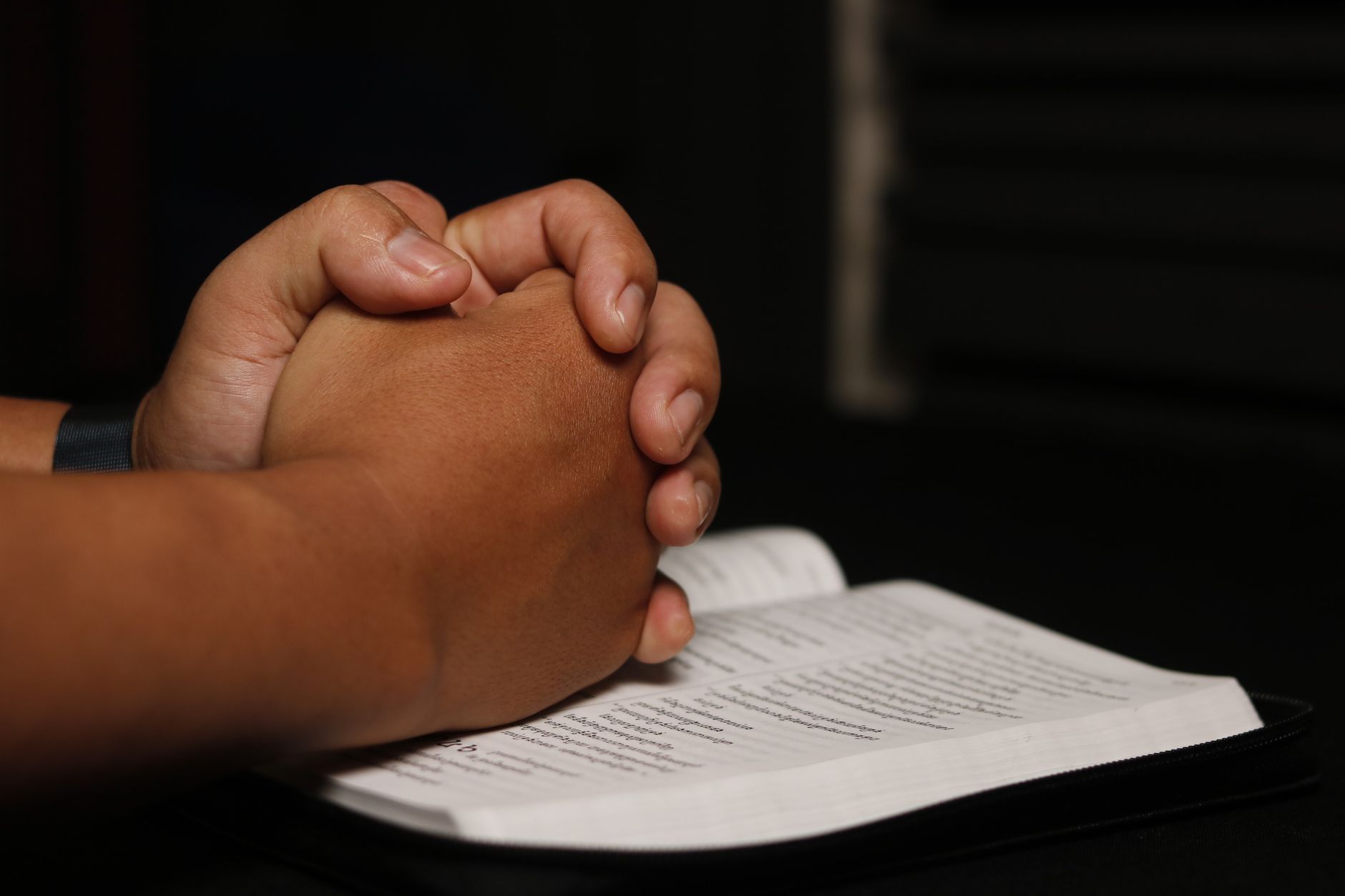
I’ll be honest. I used to think overcoming temptation was a matter of better discipline.
You know the type. You tighten your belt. You fix your posture. You stare down the distraction until it blinks.
It’s the "try harder" theology. And I find it completely exhausting.
It’s summer, and the days are long. The light stays up late, giving you just enough time to sit on the porch, drink something cold, and feel like you’ve got this whole spiritual life figured out. But then the phone buzzes. Or the email notification pings. Or that familiar, quiet urge to scroll through social media and compare your messy interior to someone else’s curated exterior creeps in.
And suddenly, you’re back to square one.
We treat temptation like a monster under the bed. We think if we just shine the flashlight bright enough, it’ll vanish. But the devil lurks in every detail. He resides in the half-empty inbox. He dwells within the unspoken resentment toward a spouse. He hides in the quick, sharp judgment we project onto a stranger.
The truth that changes everything: You cannot overcome temptation by staring at it. You overcome it by staring at something else.
This isn’t about willpower; it’s about worship.
The Trap of the Single Lens
Most of us look at temptation through a single lens: moral failure.
We see a sin, and we think, "I need to stop doing that." So we set rules. We create guardrails. We say, "No more than one cookie," or "No checking the phone after 9 PM."
This approach works. For a while.
But rules are brittle. They break under pressure. And pressure is coming.
Think about your own life. When was the last time you gave in to something you had a strict rule against? This could have been anger. This could have been lust. This could have been the quiet sin of pride—thinking you’re better than the person serving your coffee.
Did you fail because you forgot the rule? No. You failed because the rule wasn’t compelling enough to hold your attention.
This is what the Apostle Paul understood when he wrote to the Corinthians. He didn’t just list a bunch of "don’ts." He pivoted to a "do."
"Therefore, if anyone is in Christ, the new creation has come: The old has gone, the new is here!" ()
Notice the tense. It’s not "you will become." It’s "the new has come." It’s a present reality.
The problem with the "try harder" approach is that it keeps our eyes on the effort. We are exhausted because we are working for salvation instead of resting in it. We are trying to clean the outside of the cup while the inside is full of rot.
Jesus pointed this out in Matthew 23. He didn’t say, "Clean up your attitude." He said, "First clean the inside of the cup, and then the outside will be clean also." ().
The outside follows the inside. Always.
So, when temptation knocks, don’t just push it away. Ask yourself: What idol does this craving serve?
Is the craving of scrolling protecting you from loneliness? Is the craving of anger protecting you from vulnerability? Is the craving of greed protecting you from insecurity?
Identify the idol. Then, replace it.
The Historical Precedent: Not Just for Monks
We often romanticize the early church. We imagine them as super-saints who never struggled. But read their letters. Read the letters of the Desert Fathers. Read the journals of the Puritans.
They were messy. They were tired. They were tempted daily.
But they had a secret weapon that we’ve largely forgotten. It wasn’t just prayer; it was presence.
In the third century, a man named Origen wrote a commentary on Leviticus. He talked about the "storehouse of memories." He believed that our minds were like warehouses, filled with images, words, and experiences. Temptation, he argued, was just the mind pulling the wrong item off the shelf.
So, how do you stop it? You don’t combat the item; you change the shelf.
"Finally, brothers, whatever is true, whatever is honorable, whatever is just, whatever is pure, whatever is lovely, whatever is commendable, if there is any excellence, if there is anything worthy of praise, think about these things." ()
Paul didn’t say "ignore the bad"; he said "think about the good."
It’s a cognitive shift. It’s a deliberate redirection of attention.
Think about it like a garden. You can’t just pull weeds; you have to plant flowers. If you just pull the dandelions, they’ll come back. But if you plant hydrangeas, the dandelions will struggle to survive.
The ancient Christians practiced habits of attention. They didn’t just pray when they were in trouble; they prayed when they were fine. They memorized Scripture not to recite it at death, but to have it ready for Tuesday afternoon when the boss yelled at them.
They knew that temptation thrives in the vacuum of boredom.
And let’s be real. We are bored. We are distracted. We are overstimulated.
Our phones are the new idols. Not because they are evil, but because they are always available. They are the god of "just one more minute." They are the god of "what if I’m missing out?"
When you feel the urge to check your phone, pause. Just for ten seconds. Ask yourself: "What emotion am I trying to avoid feeling right now?"
Is it anxiety? Boredom? Loneliness?
Then, offer that feeling to God. Not as a problem to solve, but as a space to fill.
"The Lord is my shepherd; I shall not want." ()
The Lord provides. He gives us Himself. And that is sufficient.
The Practical Pivot: What It Looks Like Today
So, how do you actually do this?
This isn’t about having a theological breakthrough; it’s about having a practical one.
The key to overcoming temptation lies in active surrender.
It’s the difference between fighting a current and swimming with it.
When you fight the current, you exhaust yourself. When you swim with it, you move faster.
Temptation is the current; grace is the river.
Start small. Pick one area of struggle. Just one.
This could relate to your mouth. This could relate to your eyes. This could relate to your wallet.
Now, set a "grace trigger."
This is a specific, concrete action you take the moment you sense the pull of temptation.
For me, it’s a physical gesture. When I feel the urge to snap at my kids, I stop. I take my hand off the steering wheel. I place it on my heart. I take one deep breath. I say, "Jesus, I need You."
It takes three seconds.
It’s not a magic spell; it’s a reset button.
"Be anxious for nothing, but in everything by prayer and supplication, with thanksgiving, let your requests be made known to God; and the peace of God, which surpasses all understanding, will guard your hearts and minds through Christ Jesus." ()
Notice the sequence. Prayer. Supplication. Thanksgiving. Peace.
You don’t get the peace until you’ve done the work. And the work is simple; it’s just turning your attention.
But here’s the hard part. You will fail.
You will slip. You will check the phone. You will eat the cookie. You will judge the neighbor.
And that’s okay.
Because God’s kindness isn’t just for the big sins; it’s for the small ones. It’s for the moments when you’re tired and weak and just want to be loved.
"My grace is sufficient for you, for My strength is made perfect in weakness." ()
The Lord provides. His strength shines brightest in our weakness.
This becomes our foundation. This becomes our hope.
So, stop trying to be perfect. Start trying to be present.
The One Thing to Do This Week
Here is your concrete action.
For the next seven days, practice the "Three-Second Pause."
Every time you sense the pull of your primary distraction or sin, stop. Wait three seconds. Don’t act. Don’t scroll. Don’t snap. Just breathe.
In that silence, whisper one word: "Jesus."
Not a prayer. Not a sermon. Just the name.
This simple gesture shifts your attention. This simple gesture reminds you that you are not alone. This simple gesture reminds you that you are not your own master. This simple gesture reminds you that the battle is already won.
You don’t have to fight the devil; you just have to fix your eyes on Jesus.
And that, friends, is the only victory that matters.