The Messy Miracle of Raising Humans
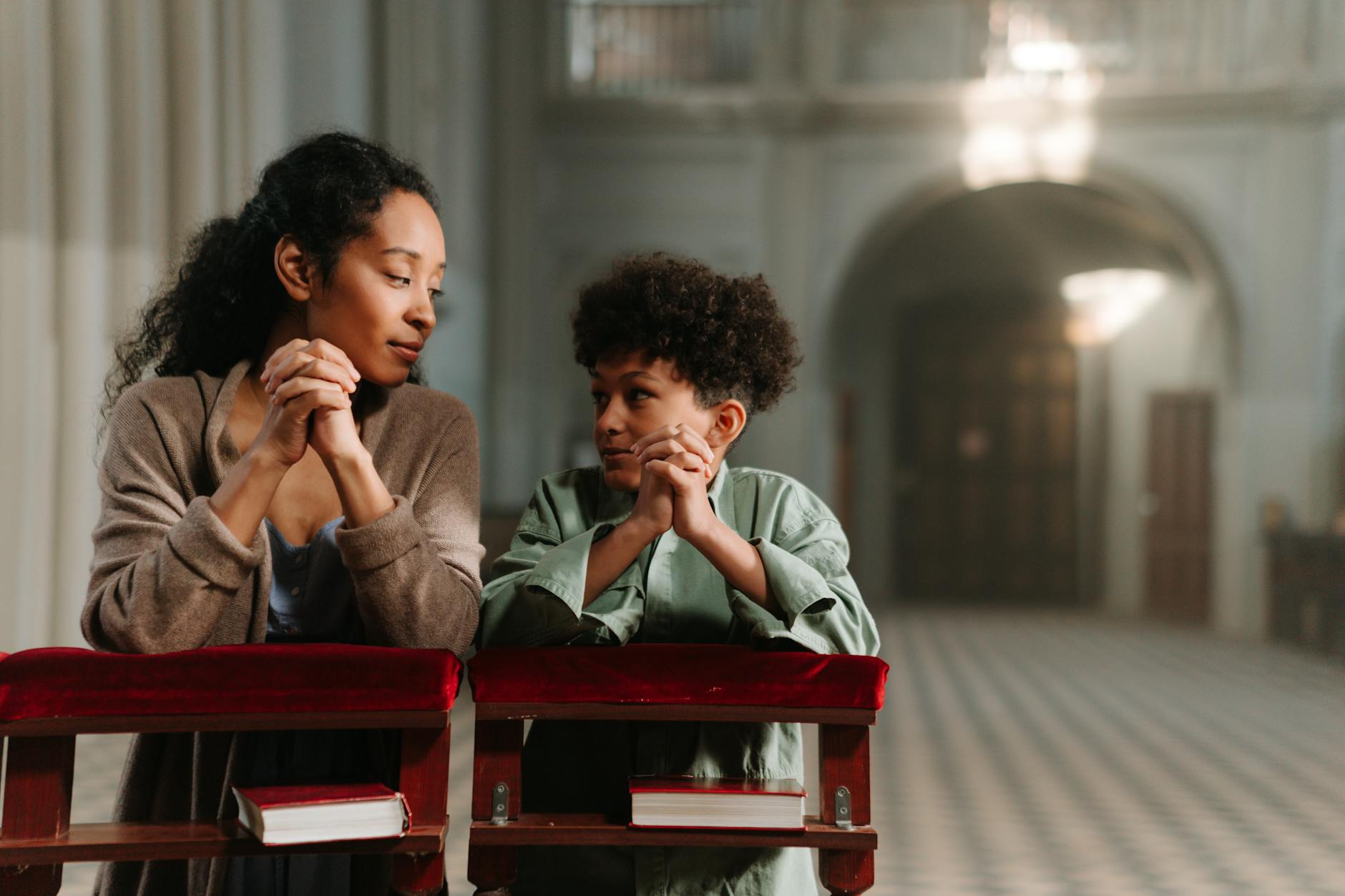
It is late spring, and the air smells like damp earth and cut grass. You are sitting on the floor of a living room that looks like a bomb went off in a toy store. There is a half-eaten sandwich under the sofa. A tantrum is echoing from the kitchen, fueled by the fact that the blue cup is "wrong" because it has a handle. You are tired. Not just sleepy-tired, but soul-tired. You look at your child—this small, fierce creature who is currently screaming about the wrong cup—and you wonder if you are failing. You wonder if the God who commanded Abraham to raise Isaac actually knows how to handle a toddler who won’t eat his peas.
Here is the bold truth: You are not raising a project. You are stewarding a soul. And God has been in the business of raising humans for a long time. He didn’t send Jesus into the world to create perfect, polished statues of piety. He sent Him to live among messy people, to eat with sinners, and to love imperfectly. Parenting, in the biblical sense, isn’t about manufacturing good behavior. It’s about pointing a broken, beautiful human toward the One who fixes everything else.
The Long Game of Abraham
We often think of Abraham as the giant of faith, the man who stepped out when God said "Go." But let’s be honest about what that faith looked like in the living room. Abraham was eighty-six when Isaac was promised. He was one hundred when Isaac was born. That is a long time to wait. And once Isaac was here, the text doesn’t say he was an easy kid. Genesis tells us Isaac grew up, and then, at some point, God told Abraham to take him to the land of Moriah and offer him as a sacrifice.
Did Isaac just pack his bags? Did he say, "Sure, Dad, I’ve been waiting for this"? The text is silent on his internal monologue, but we can guess. He was a young man, strong enough to carry the wood, old enough to question. He trusted his father, but he also had to carry the weight of the unknown.
Think about that. Abraham didn’t just shout commands at Isaac from a distance. He spent decades eating with him, walking with him, maybe even arguing with him. He modeled faith not by being perfect, but by being present through the waiting.
( — "Fathers, do not provoke your children to anger, but bring them up in the discipline and instruction of the Lord.")
This verse is often read as a command for strictness. But look at the context. "Do not provoke." In the ancient world, fathers had absolute power. They could be harsh, distant, or arbitrary. Paul is saying, "Don’t just rule over them. Walk with them." The Hebrew word for "bring them up" (paideuo) is where we get "pedagogy." It implies a tutor, a guide, someone who spends time with the child, correcting and guiding, not just commanding from a throne.
Abraham’s parenting wasn’t about instant obedience. It was about a legacy of trust that survived the silence of the journey. He didn’t have all the answers on day one. He had to learn how to listen to God while holding a squirming toddler. That is your life. That is my life. We are not called to be flawless managers of our children’s futures. We are called to be faithful guides who point them to the true Shepherd.
The Quiet Work of Mary
If Abraham represents the loud, active faith of the patriarch, Mary represents the quiet, internal faith of the mother. Luke 2 gives us a glimpse of Jesus’ childhood that is surprisingly mundane. He is twelve years old. He stays behind in the temple. Mary and Joseph don’t notice until they’ve been traveling a whole day.
Imagine the panic. Imagine the shame. In that culture, a child wandering off was a disaster. But notice what happens. They find Him. They scold Him. And then, the text says something strange.
( — "And he went down with them and came to Nazareth, and was submissive to them. And his mother treasured up all these things in her heart.")
"Treasured up." The Greek word is syntereo, which means to keep safe, to guard, to observe closely. Mary didn’t just hear the words and forget them. She held them. She watched. She waited. She didn’t force Jesus to explain everything right then. She trusted that the mystery would unravel in time.
This is the hard part of parenting, isn’t it? The waiting. The not knowing why they did what they did. The sleepless nights wondering if you said the right thing, if you prayed enough, if you loved them enough. Mary teaches us that faith isn’t always a shout. Sometimes, faith is a whisper. It’s the ability to hold the tension between "my child is driving me crazy" and "my child is God’s gift."
I remember a season when my daughter was four. She would wake up at 3:00 AM every night and ask, "Why?" Just "Why?" Over and over. I was exhausted. I wanted to say, "Because I said so." But I realized I was trying to control the narrative. Mary teaches us to just hold the story. To treasure it. To let the mystery of our children’s growth unfold without forcing it into our own little boxes of success or failure.
The Daily Grind of Timothy
Now, let’s get practical. We have Abraham’s long game and Mary’s quiet trust. But what about the Tuesday morning rush? What about the school run, the packed lunches, the scraped knees, the biblical arguments over who touched whom?
Paul writes to Timothy, a young pastor and son figure, and reminds him of his heritage.
( — "I am reminded of your sincere faith, a faith that dwelt first in your grandmother Lois and your mother Eunice and now I am convinced dwells in you also.")
Lois and Eunice. We know almost nothing about them except their names and their faith. They weren’t famous. They weren’t kings or prophets. They were likely Jewish women living in a pagan world, raising a boy who would become a pillar of the early church. They didn’t have Instagram. They didn’t have parenting books. They had the Scriptures. They had the example of Jesus. And they had each other.
Notice the transmission. It wasn’t a one-time sermon. It was a lifestyle. It was the way Lois prayed over Eunice. It was the way Eunice loved Timothy. It was the cumulative effect of a thousand small moments of grace.
This is the "daily grind" of faith. It’s not the big spiritual highs. It’s the patience you show when the milk spills. It’s the forgiveness you offer when they snap at you. It’s the way you talk about God when you’re tired. Timothy’s faith didn’t appear out of nowhere. It was caught, not just taught.
We live in an age that obsesses over metrics. We want our kids to have the right grades, the right extracurriculars, the right college acceptances. But Paul is talking about sincere faith. A faith that works. A faith that endures. That is the only thing that matters in the end. The rest is just noise.
The Spring Rain
It is late spring again. The rain has come, gentle and steady, nourishing the green that is already everywhere. You are sitting on the floor. The sandwich is still under the sofa. The tantrum has ended, and your child is now asleep, curled up in a heap of limbs and dreams.
You are tired. But you are not alone.
Abraham waited. Mary treasured. Lois and Eunice loved. And Jesus? Jesus grew in wisdom and stature, and in favor with God and man. He didn’t skip the mess. He didn’t skip the pain. He went through it. And now, He is with you in the mess.
You don’t have to have it all figured out. You don’t have to be perfect. You just have to be present. Point them to Him. Let them see your faith in your fatigue. Let them see your love in your patience. Let them see that God is good, even when the cup is wrong.
The miracle isn’t that they will grow up perfect. The miracle is that they will grow up human, loved by the Father, and known by you. And that is enough. More than enough. It is everything.