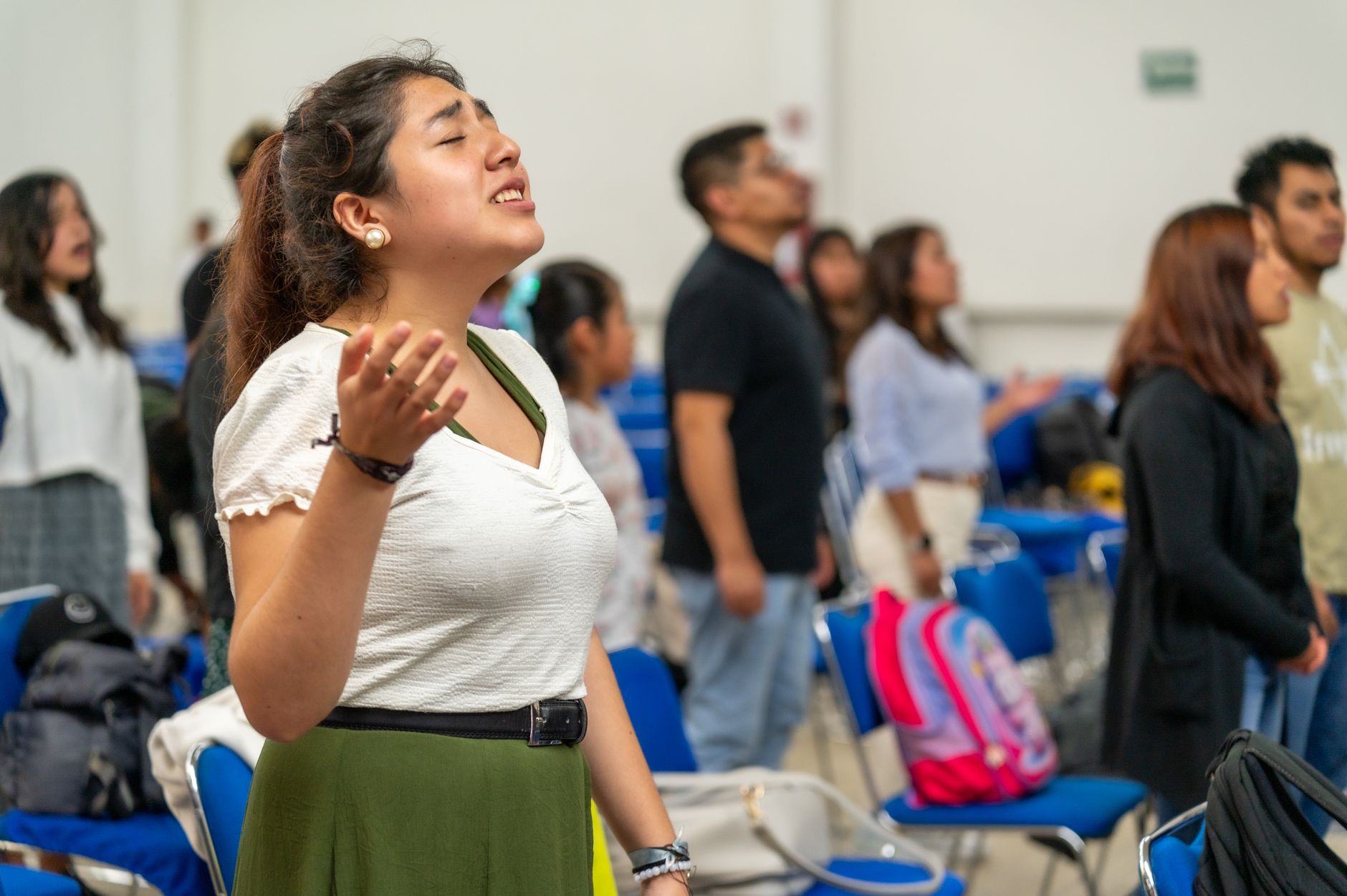
Let’s be honest for a second. We have this funny habit of thinking the divine Breath is mostly a "power-up" button. You know the kind of thing I mean. You’re facing a big presentation, or a tough conversation, or a spiritual battle that’s been dragging on for weeks, and you mentally hit the switch. Click. Suddenly you’re bold. You’re eloquent. You’re winning.
And when it works? Great. You feel like a spiritual superhero.
But what happens when the switch doesn’t flip? What happens when you’re sitting in your car in the driveway, engine off, just staring at the steering wheel because the grief or the anxiety or the sheer exhaustion is too heavy to carry into the house? What if the "power" feels distant, like a radio signal that’s gone staticky?
That’s where most of us actually live. Not in the highlight reel of miraculous empowerment, but in the messy, quiet, exhausting middle. And that’s exactly why Jesus didn’t just promise us a battery pack; He promised us a person.
In the weeks following Easter, it’s easy to get caught up in the high of the resurrection. But the weeks after Easter—the ones where the confetti is gone and you have to go back to work, to school, to your aching knees—are where the real work happens. This is where the divine Breath stops being a theological concept and starts being your home base.
Not an Energy, But a Person
We tend to treat the divine Breath like a force. Like electricity. Like divine Wi-Fi. We pray, "Lord, fill me with your Spirit," hoping for a voltage boost to get us through the day. But if you look closely at what Jesus actually said in John 14, the language shifts. He doesn’t call the Spirit "it." He calls Him a specific kind of "it"—the Paraclete.
Most Bibles translate this as "Comforter" or "Helper." But those words are a bit too soft. They make the Advocate sound like a gentle aunt who brings you tea when you’re sad. The Greek word Paraklētos is much more robust. It means "one called alongside to help." It’s the word used for a lawyer in a courtroom, or a coach on the sideline, or a companion in battle. It implies presence. It implies standing next to someone so they don’t have to face the pressure alone.
Jesus said in (ESV):
"And I will ask the Father, and he will give you another helper, to be with you forever, even the Spirit of truth, whom the world cannot receive, because it neither sees him nor knows him. You know him, for he dwells with you and will be in you. I will not leave you as orphans; the Father will give you life."
Notice the emphasis on presence. "He dwells with you." "He will be in you."
The divine Breath isn’t just God’s energy flowing through you; He is God’s presence anchored in you. Think of it like this: If faith is the boat, the Advocate isn’t the wind that occasionally pushes you forward. The Advocate is the anchor that holds the boat steady when the storm hits. You don’t always feel the anchor pulling; you just know the boat isn’t drifting away.
I’ll be honest, I’ve struggled with this distinction for years. I used to think that if I wasn’t "feeling" the Advocate, I was failing. I’d read a verse and feel nothing. I’d pray and hear only silence. I thought I was doing it wrong. But then I realized I was treating the Breath like a mood ring. I was waiting for a feeling to confirm His presence, rather than trusting His promise of it.
The Advocate’s job isn’t to make you feel dramatic. His job is to make you real. To remind you of who you are when the world tries to rewrite your identity. To guide you into truth when your emotions are lying to you. To intercede for you when you don’t have the words left.
The Ministry of Remembrance
One of the primary jobs of the Advocate, according to Jesus, is memory.
In , Jesus says, "But the Helper, the Holy Spirit, whom the Father will send in my name, he will teach you all things and bring to your remembrance all that I have said to you."
Think about how much of your life is governed by what you forget. You forget that you are loved. You forget that you are forgiven. You forget that the worst thing that happened to you is not the last thing that will happen. You forget that God is good.
The Advocate is the divine reminder.
When you’re lying awake at 3 a.m., your mind racing through a list of your failures, the Breath isn’t just sitting there passively. He is actively pulling truth from the archives of Scripture and dropping it into your heart. He brings to mind the promise that "neither death nor life... nor anything else in all creation, will be able to separate us from the love of God" ().
He doesn’t just give you new information; He helps you remember the old, true information that you’ve forgotten in the noise.
This is why reading the Bible is so crucial. The Breath uses the written word to illuminate the living word. You can’t just wait for a whisper; you have to open the book. But when you do, and you feel that tug in your chest, that’s Him. That’s the Advocate saying, "Remember this? Remember this?"
It’s not magic. It’s relationship. And relationships require attention.
Abiding in the Storm
So, how do we live this out in the messy middle? How do we stop chasing feelings and start abiding in the Breath’s steady presence?
First, stop trying to manufacture His presence. You can’t pray harder to get the Breath; you’re already indwelt by Him. Instead, stop fighting the reality of His nearness. When anxiety hits, don’t just throw another prayer point at the ceiling. Pause. Breathe. Acknowledge that He is there.
Try this simple practice: When you feel the weight of the world pressing down, don’t immediately ask for a solution. Ask for presence. Say, "Holy Breath, just be here. I don’t need You to fix this right now. I just need You to be here with me."
It sounds counterintuitive, doesn’t it? We want fixes. We want breakthroughs. We want the storm to stop. But Jesus said, "Peace I leave with you; my peace I give to you." Not the same as the world gives. The world’s peace is the absence of trouble. Jesus’ peace is His presence in the trouble.
Second, listen for the "still small voice." In 1 Kings 19, Elijah encounters God not in the earthquake, not in the fire, but in the gentle whisper. We live in a loud world. Notifications, news, noise. The Breath rarely shouts over the noise. He whispers. And to hear Him, we have to quiet the noise.
This doesn’t mean you need to retreat to a monastery. It means carving out five minutes of silence. No phone. No music. Just you and God. And in that silence, invite the Advocate to speak. He might not give you a new scripture. He might just give you a sense of calm. A sense that you are held. That is enough.
Third, let Him change your perspective on suffering. We often view pain as a sign of God’s absence. But the Breath is the "Spirit of Truth," and He tells us that suffering is part of the package. In fact, tells us that "the Breath himself bears witness with our spirit that we are children of God."
Notice that bearing witness doesn’t mean we’re free from suffering. It means we’re free in suffering. The Breath doesn’t promise us a life without tears; He promises us a Companion who weeps with us. Jesus wept. The Breath prays with groans too deep for words (). You are never alone in your pain because God Himself is in the pain with you.
The Assurance of "Another"
There’s a beautiful word in that Greek text. Allos Paraclete. "Another" Helper. Not a different kind of helper, but another of the same kind. Jesus was going away, but He wasn’t leaving us alone. He was sending the Breath, who would be Jesus in us.
This is the great comfort of the resurrection season. The Jesus who walked on water, who healed the sick, who died and rose again, is now with us in a new way. He is no longer limited by geography or time. He is in you. He is in me.
So, when you wake up tomorrow and the coffee isn’t quite strong enough to kickstart your day, remember this. You are not trying to figure it out on your own. You are not waiting for a feeling. You are anchored. You are held. You are accompanied.
The Breath is not a force to be activated. He is a Person to be trusted.
And that trust changes everything. It alters how we face our fears. It alters how we treat our neighbors. It alters how we view our own worth. We are not orphans. We are children, sealed by the Breath.
So take a deep breath. Feel the air in your lungs. That’s the same Breath who raised Christ from the dead, dwelling in you right now.
(ESV) "The Spirit himself bears witness with our spirit that we are children of God,"