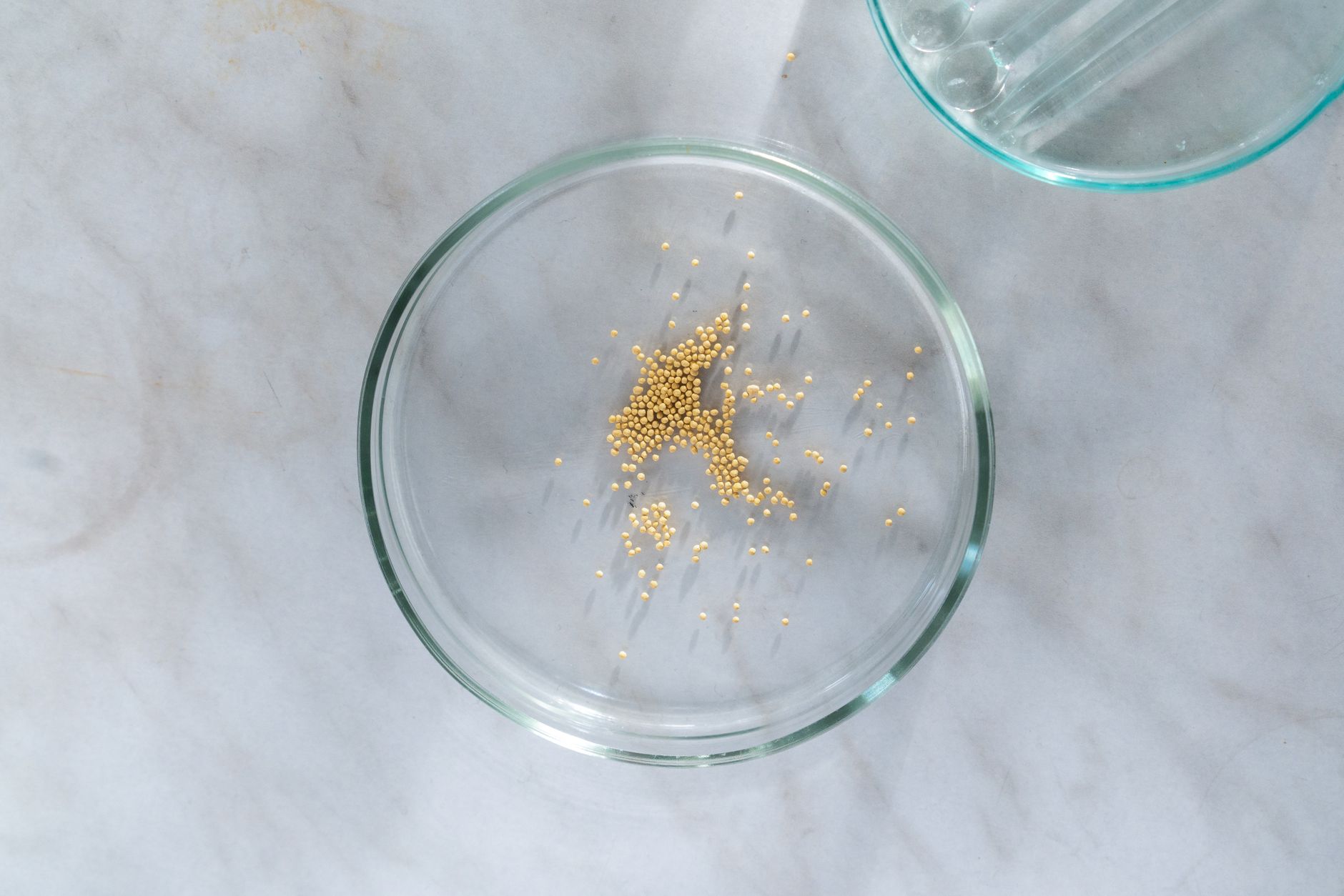
Here is a detail about the ancient Near East that might surprise you. In biblical times, mustard wasn’t just a seasoning for fish stew or a pickled condiment. It was one of the most common seeds in the region, found almost everywhere. Farmers sowed it in rocky soil. It grew in wild fields. You didn’t need a specialized garden to plant mustard; you just needed dirt.
This matters because we often imagine the "mustard seed" in as some mythical, microscopic speck. We picture it as the smallest thing in existence—so tiny it’s practically nonexistent. But to a first-century listener, it wasn’t unique. It was ordinary. It was the common weed that grew in the cracks of a stone wall.
That distinction changes everything about how we view our own spiritual lives.
We live in a culture that demands grand narratives. We want our testimonies to be epic. We want visible, dramatic miracles. And when we look at our own prayer lives—short, repetitive, often distracted by what’s for lunch—we feel a deep sense of inadequacy. We think if our faith isn’t loud, it doesn’t count. If it’s not consistent, it’s fake.
But Jesus didn’t say you need a mountain of faith. He pointed to the common weed.
"But I feel like my faith is just... there."
This is the question that haunts most of us. It’s 10 PM, you’re in bed, and the day has drained every ounce of your energy. You try to pray, but your mind wanders. You mention a name, ask for grace, and then you’re thinking about tomorrow’s meeting.
You feel the distance between who God says you are and who you actually were in that two-minute prayer.
It’s easy to interpret that gap as a lack of faith. We’ve bought into the idea that "faith" is volume or intensity. If I’m not shouting, I don’t have faith. If I’m not weeping with joy or conviction, I’m spiritually dry.
But look at the context of . Jesus is speaking to disciples who are frustrated because they couldn’t cast out a demon. They had tried. They were zealous. And yet, the result didn’t match their effort.
Jesus says: "If you have faith like a mustard seed, you can say to this mountain, 'Move from here,' and it will move, and nothing will be impossible for you."
Notice He doesn’t praise their size. He points to the nature of the seed. A mustard seed is small, yes. But inside that tiny casing is a genetic blueprint for a tree. It contains the potential for shade, for height, for life.
Your faith doesn’t need to be big right now. It just needs to be real. A tiny, genuine trust in God has more power than a massive, performative one. The seed works because it is alive, not because of its volume.
I’ll be honest with you: I’ve struggled with this for years. There are seasons where my "mustard seed" feels more like a dust mote. I read the verse and feel nothing. No spark. No fire. Just... static. And I’d beat myself up for it. I’d think, How can you call this faith?
But the static is part of the process. The seed sits in the dark soil for a while before it cracks open. Sometimes, your faith is just sitting there, in the soil of your exhaustion, waiting for its season to break ground.
"Does faith actually move mountains?"
This is where the metaphor gets tricky, and I want to be careful here. We tend to fixate on the literal mountain. Did Jesus mean a physical ridge? A geological feature?
Most scholars agree that "mountain" is a metaphor for an insurmountable obstacle. It’s the thing that looks impossible. The diagnosis. The broken relationship. The debt. The fear that won’t leave your chest cavity.
But here’s the thing people miss: Jesus didn’t say you will physically push the mountain. He said, "You can say to this mountain..."
The power isn’t in your muscle. It’s not in your willpower. It’s in the alignment of your word with God’s character.
Think about it like a radio signal. A tiny transmitter can broadcast across miles if the frequency is right. Your prayer doesn’t have to be a loud shout to register in Heaven’s "receiver." It just has to be tuned correctly.
When you pray, even with that tiny, tired voice, you are aligning your perspective with God’s. You are saying, "God, I see this mountain. It looks impossible to me. But I trust that You are bigger than it."
That shift in perspective is what moves the mountain. Not because God was asleep and woke up, but because you stopped looking at the obstacle as the final word.
In autumn, we see leaves falling off trees. It looks like death. Like the end. But if you dig up a maple leaf, you don’t find a dead plant; you find the energy of that tree being banked for next spring. Our "mountains" often look like endings, but our faith—no matter how small—is the root system that holds us together until the season shifts.
"What if I don't have enough faith to do what He asks?"
This is the fear that keeps us paralyzed. We hear a call—a ministry, a hard conversation, a sacrifice—and our first instinct is to measure ourselves against the task. I’m not strong enough. I’m not wise enough. I’m not faithful enough.
We measure the task by its size, but we measure our faith by our capacity. And when we compare a giant task to a tiny capacity, we fail.
But Jesus flips the metric. He doesn’t ask you to measure your strength against the mountain. He asks you to measure your connection to God against the mountain.
A mustard seed is small because it relies entirely on external conditions to grow. It needs soil, water, sun. It has no independent power. And that’s the point.
Faith is not self-reliance. It is God-reliance.
The smaller the seed, the more it depends on the environment? No, actually, the smaller the seed, the more vulnerable it is. And that vulnerability is where God meets us. When we admit, "I can’t do this on my own," we make room for the Holy Spirit to step in.
I used to think faith was a battery I had to keep charged. High voltage, always on. If it dipped below 50%, I felt like a fake Christian. Now I see faith more like the roots of that mustard plant. They aren’t doing anything dramatic on the surface. They’re just... holding on. Gripping the soil. Doing their quiet, invisible work in the dark.
You don’t need to be on fire. You just need to be attached to the Truth.
"How do I grow from a seed into something that actually helps?"
This is the practical question. If my faith is this small, how do I make it useful? How do I get from a speck to something that casts shade for others?
The answer is counter-intuitive. You don’t grow faith by trying to be more impressive. You grow it by being honest.
The mustard seed grows because it is planted in dirt. Not in a vase on a shelf. Dirt is messy. It’s dark. Sometimes it’s rocky.
To grow your faith this week, you have to stop polishing your spiritual resume and start digging into the dirt of your actual life.
Bring God into the mess. Don’t just pray about the big stuff; pray about the annoying coworker. Pray about your irritation at the traffic. Bring God into the mundane, so He can sanctify it.
When you invite Jesus into the small, gritty details of your day, you are watering the seed. You are giving it the nutrients it needs to sprout.
You don’t need a dramatic breakthrough to grow. You just need consistency with the ordinary.
So, here is your assignment for this week. It’s not a sermon series or a retreat. It’s one thing.
Next time you feel that familiar pang of spiritual inadequacy—when you think your prayer was too short, or your kindness was too quiet, or your faith was too small—don’t try to inflate it. Don’t try to scream louder at heaven.
Instead, acknowledge the size of the seed. Say it out loud if you have to. "Lord, my faith is small. It’s just a speck right now." And then, trust the soil.
Pick one specific, small interaction this week where you can show love without expecting a miracle in return. A genuine compliment to a cashier. A patient breath when your child throws a tantrum. A text of encouragement to a friend who is struggling, sent before you feel "ready" for it.
That’s the mustard seed in action. It doesn’t roar. It just grows. And if you keep planting, keeping it watered with honesty and love, I promise you this: the shade will come. You won’t see it today. But it’s already in the roots.