Picture the dust. It wasn’t just dirt; it was a living, breathing part of life in first-century Judea. It coated your eyelashes, ground between your teeth, and turned the white linen of a tunic into a map of where you’d walked. And in that dust, Jesus leaned forward to make one of the most audacious claims in all of Scripture.
He didn’t point to a massive oak tree or a towering cedar. He pointed to the smallest, most overlooked shrub in the field.
"If you have faith as small as a mustard seed, you can say to this mountain, ‘Move from here to there,’ and it will move. Nothing will be impossible for you." ()
Most of us hear this verse and immediately feel a quiet shame. Why? Because we look at our lives—the debt, the sick child, the broken marriage, the gnawing anxiety—and we see mountains. Then we look at our faith and see a speck of dust. Or worse, no speck at all. We think we need more faith. Bigger faith. Louder faith.
But history tells a different story. One that is far more encouraging, and frankly, much more human.
The Mustard Seed Wasn’t Tiny—It Was Tenacious
We tend to think of "small" as a synonym for "weak." But in the agricultural context of Jesus’ day, the mustard seed ( sinapis ) was a powerhouse. It wasn’t just small; it was explosive in its potential.
To understand the weight of this metaphor, you have to step out of your modern grocery store, where seeds are vacuum-sealed in plastic and printed with perfect typography. Raw mustard seeds were rough, hard, and often discarded by the poor who couldn’t afford better spices. They were cheap. Abundant. Everywhere.
But here’s the surprising part: mustard plants in that region could grow up to ten or even fifteen feet tall. That’s not a plant; that’s a shrub you can actually shelter under. In fact, the word for "shelter" or "take refuge" in the New Testament is often linked to this image.
So when Jesus talks about faith, He isn’t talking about the size of your belief. He’s talking about its nature.
A mustard seed doesn’t try to be a mighty oak. It doesn’t compete with the big trees for sunlight by growing wider. It grows by pushing through hard ground, cracking rocks, and reaching upward with relentless, quiet force.
Think about the last time you tried to start a garden in rocky soil. You know that feeling when you push the seed into the earth, and it disappears completely. It looks like nothing is happening. But underneath, roots are tearing through the stone.
That’s what Jesus was describing. Faith isn’t about how much you know or how loudly you pray. It’s about the resiliency of that tiny, hidden thing.
The Misunderstanding of "Small"
I’ll be honest: I’ve struggled with this verse for years. Not because I didn’t believe it, but because I kept interpreting "small" as a deficit.
When my faith felt small, I thought it was broken. When I prayed for healing and didn’t get it immediately, my faith shrank. It felt like a balloon losing air. I would pray harder, strive more, and try to inflate that tiny seed until it felt like a soccer ball. If I could just get my faith "big enough," the mountain would move.
But that’s not what Jesus said.
Notice He didn’t say, "If you have a lot of faith..." or "If your faith is strong and robust..." He said, "as small as a mustard seed."
This implies that even the smallest amount of faith counts. It’s not about quantity. It’s about quality.
A mustard seed, no matter how small, contains the entire blueprint of the tree. It has everything it needs to become what God designed it to be. It doesn’t need to be larger; it just needs to be planted in the right soil and allowed to grow.
Too often, we confuse faith with feeling. We think that if we don’t feel a surge of emotion or a dramatic vision, our faith is absent. But the mustard seed works in the dark, underground, away from the eyes of men. It doesn’t need an audience.
It just needs to be alive.
The Mountain Doesn't Have to Be Big
Let’s go back to the mountain. In Aramaic, Jesus might have used a word that simply meant "obstacle" or "hindrance." It didn’t necessarily mean Mount Everest.
For a peasant walking from Galilee to Jerusalem, the mountain could be the steep, rocky pass that slowed down their donkey. It could be the financial debt piling up in the marketplace. It could be the chronic illness that kept them from working the fields.
The mountain was whatever stood between you and your calling.
And here is where the historical context shifts our perspective entirely: The mustard seed faith doesn’t demand that you move the mountain. It says you can say to the mountain, "Move."
There is a subtle but profound difference. Moving a mountain requires immense physical strength—think of the pyramids, built by slave labor and sheer muscle power. But speaking to a mountain? That requires authority.
Jesus was teaching His disciples that they didn’t need to be strong enough to lift the world’s weight. They needed to be connected enough to speak with the voice of Heaven.
Faith, then, is not a muscle we flex. It’s a connection we maintain.
It’s the difference between pushing a boulder (which is exhausting and often fails) and speaking a decree (which shifts the atmosphere). A mustard seed faith is quiet. It doesn’t shout. It doesn’t stress. It simply aligns itself with the truth of who God is, and acts accordingly.
What This Looks Like in Real Life
So what does a mustard seed faith look like on a Tuesday afternoon?
It’s not the dramatic revival meeting where everyone falls to their knees. It’s the mother who, despite her exhaustion and doubt, gets up one more time to soothe a crying child. She doesn’t feel like a spiritual giant. She feels tired. But she does it anyway.
It’s the employee who, despite being overlooked for promotion, continues to work with integrity and kindness. She doesn’t wait for the title to validate her worth.
It’s the person who, when faced with a diagnosis that doesn’t make sense, whispers, "God is still good."
It’s simple. It’s small. But it’s real.
I remember a season in my own life when everything felt like it was collapsing. My finances were tight, my health was shaky, and the future looked like a foggy window. I wanted faith that could clear the fog instantly. I wanted a miracle, big and loud.
Instead, God gave me a mustard seed.
It was just one small act of obedience: a decision to forgive someone who had hurt me seriously. It wasn’t a huge gesture. It didn’t make the news. But inside, something shifted. The resentment that had been a heavy stone in my chest began to crack. It didn’t disappear all at once, but it moved.
That’s the thing about mustard seed faith. It doesn’t always move the mountain in the way we expect, or on the timeline we prefer. But it moves something.
The Paradox of Little and Much
One of the most comforting aspects of this teaching is that it levels the playing field.
The wealthy merchant with vast resources and the widow with two copper coins both have access to the same kind of faith. The difference isn’t their bank account; it’s their posture.
Faith is not reserved for the spiritual elite or those who can quote deep theology. It’s available to anyone willing to trust God with what they have, not just what they lack.
You might be sitting there thinking, "But my faith is so small. I doubt. I get distracted."
Good. That’s okay.
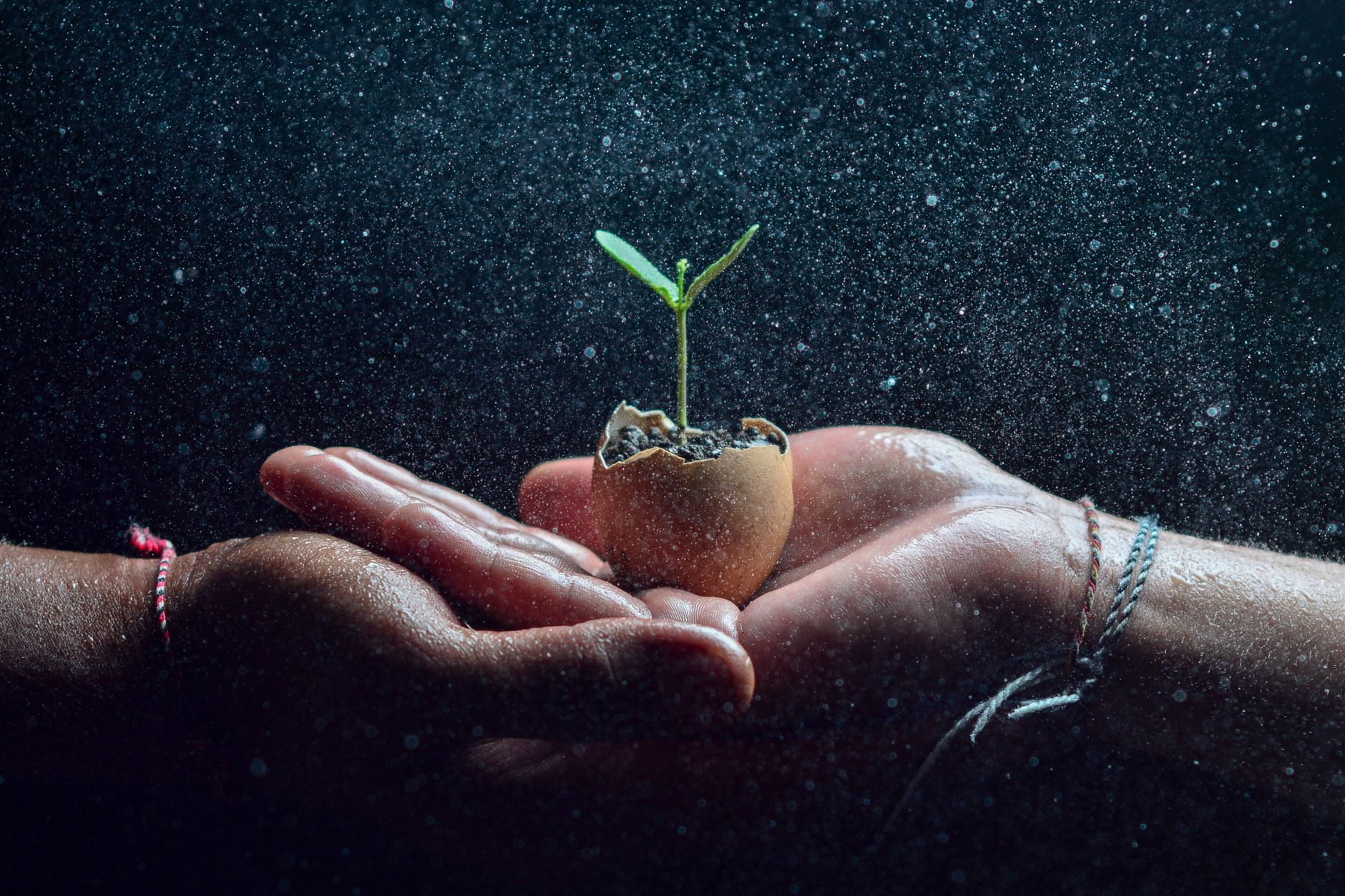
A mustard seed is often buried under debris. It gets covered by leaves, dirt, and rain. But it doesn’t rot. It waits. And when the conditions are right—when the warmth comes, when the water falls—it bursts forth with a life that defies its starting size.
Don’t despise the day of small beginnings, as the prophet Haggai reminded us. (). Your small faith is not a failed faith. It is a starting faith. And it is enough.
A Question to Carry With You
As we close, and the summer air settles around us, I want to leave you with a question—not one that demands an immediate answer, but one that sits quietly in your mind like a stone in your pocket.
When you look at the "mountains" in your life right now—the stress, the uncertainty, the things that feel too heavy to carry—do you see them as problems that need your strength, or as obstacles that are waiting for your voice?
Do you believe that what matters isn’t how big your faith is, but where it’s planted?
Go gently. Trust genuinely. And watch what happens when the small thing begins to grow.