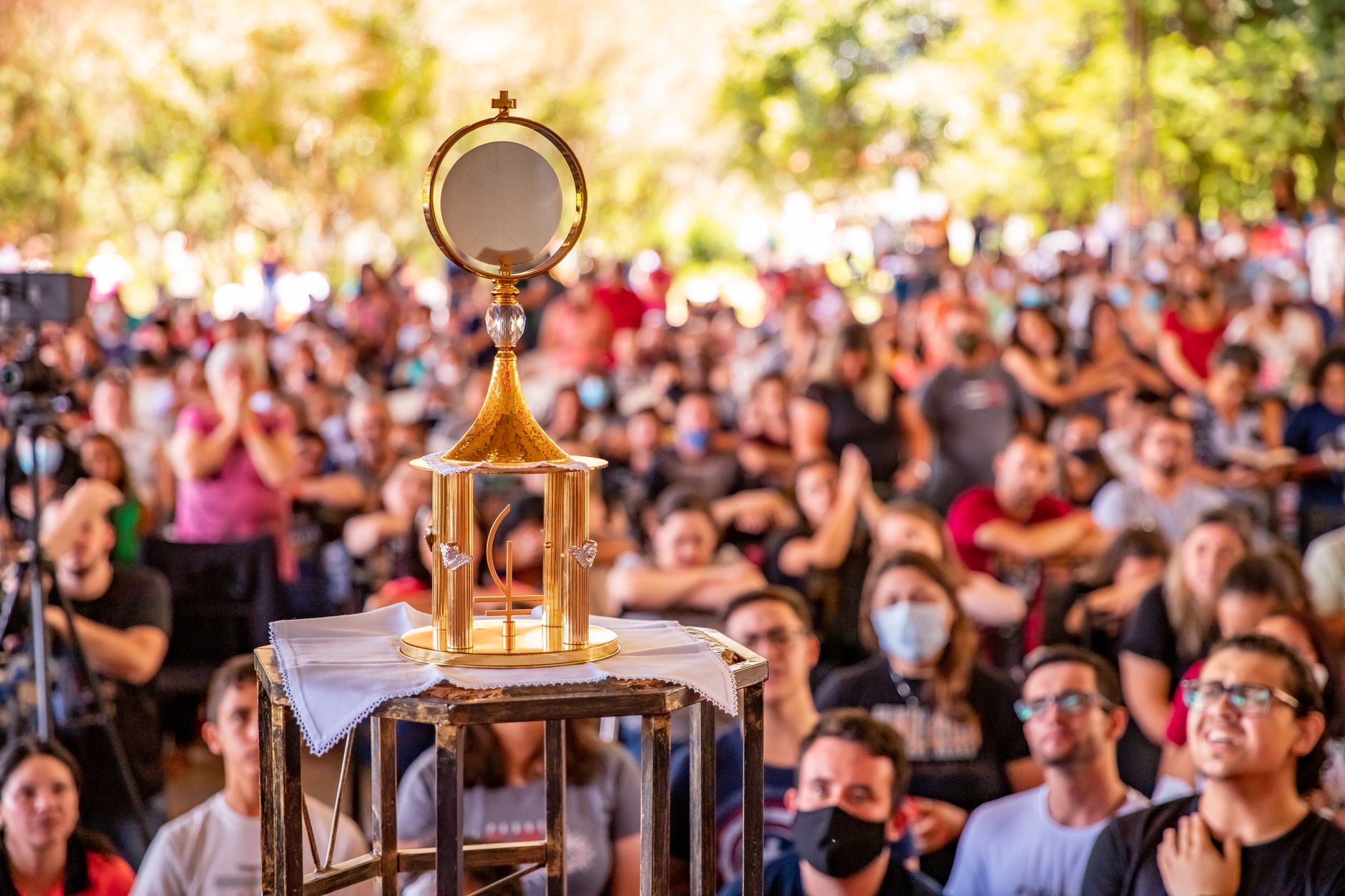
There’s a strange thing in the history of biblical worship. When we think of it, we usually picture robes, trumpets, and a specific place—Temple or Tabernacle. But if you look closely at the Hebrew word shachah, it doesn’t just mean "to bow down." It means to prostrate oneself. To fall flat on your face in the dirt.
It’s not a polite nod. It’s an admission of who is God and who is not.
And yet, most of us have reduced worship to an hour on Sunday. We put on our best clothes, sit in a chair that doesn’t require much effort, sing songs we’ve sung before, and then wake up Monday morning to life as if God has gone back into the building we left behind.
I’ve been guilty of this. I’ll be honest, there are weeks when my worship feels like a transaction: I give God my time and attention, He gives me peace. Fair trade. But that’s not what Scripture points us toward. That’s consumer Christianity.
Worship, in its deepest sense, isn’t an event you attend. It’s a posture you maintain. It’s how you view everything, from the traffic jam to the triumph, from the empty bank account to the overflowing glass.
So, let’s look at what happens when we stop treating worship as a religious duty and start seeing it as our native language. We’re going to identify the problem we face, look at God’s promise that fixes it, and then walk through three concrete ways to make this shift from Sunday-only to 24/7.
The Problem: We Worship What Moves Us
Here is the hard truth about human hearts: they are idol factories.
We don’t just have idols; we function as if they exist.
The apostle Paul puts this sharply in . He doesn’t talk about murder or adultery as the primary sins. He talks about greed, which he calls "idolatry." Why? Because when we chase after something—money, approval, comfort, status—we are bowing low. We are offering it the awe and fear that belong only to God.
The problem isn’t that we love things. The problem is that we let those things move us.
If your mood depends entirely on how the day goes, you are worshipping circumstance. If your worth is tied to your productivity, you are worshipping output. You might be singing "Hosanna" on Sunday, but by Wednesday, you’re screaming at your phone because the Wi-Fi is slow.
That’s not worship. That’s reaction.
We’ve built a life where God is the backup plan. He’s the one we call when the insurance runs out, or the diagnosis gets worse, or the silence becomes too loud. He’s not the author of our story; He’s the editor in the margins.
But God has a better offer for us. A promise that doesn’t rely on how we feel, but on who He is.
The Promise: A Throne That Doesn’t Move
Look at . It’s short, but it carries the weight of a mountain.
"God reigns over the nations; God is seated on his holy throne."
This isn’t poetry. It’s geography. It’s theology. It’s fact.
When you are stressed, God is seated. When the economy crashes, God is seated. When your child rebels, when your body aches, when the silence stretches thin and tight—God is seated.
This promise is revolutionary because it stabilizes our worship. If God’s reign depends on your performance, your worship will be sporadic. But if His reign is anchored in His character, then your worship can be constant.
You don’t have to wait for a breakthrough to bow low. You bow because He is already on the throne.
This changes everything. It means you can worship in the waiting room. You can worship while doing the dishes. You can worship when nothing is happening, simply because God is happening.
So how do we live this? How do we move from knowing this truth to breathing it out in the dust and heat of a Tuesday afternoon?
Practice 1: The Pause of Recognition
The first step is simple, though not easy. It’s the practice of pausing to recognize God’s presence in the mundane.
Most of us rush through our days like we’re late for a meeting with ourselves. We drink coffee standing up, shower while checking emails, and eat lunch at our desks. We are physically present but spiritually absent.
Try this: Insert "micro-worships" into your routine.
It’s not about stopping everything to go to church. It’s about shifting your eye contact with reality. When you look out the window, see it as God’s creation. When you feel tired, acknowledge Him as your strength. When you look at a stranger, see them as someone God loves.
This is what the Psalms do constantly. They move from a description of nature to a declaration of God’s goodness.
"The heavens declare the glory of God; the skies proclaim the work of his hands." ()
You don’t need a sermon to hear the heavens. You just need to look up.
I used to read this verse and feel nothing. It seemed too big, too abstract. But then I started noticing the light through my kitchen blinds in July—a specific, warm, golden angle that made the dust motes look like suspended gold. I stopped and whispered, "Thank you."
That was worship. It wasn’t loud. It wasn’t musical. But it was real. It was me, bowing my mind to the fact that God was there before I got out of bed.
Start small. Name three things today where you see God’s hand. Not miracles. Just His presence. The coffee. The commute. The text message from a friend. These are holy ground if you look closely enough.
Practice 2: Offering Your Work, Not Just Your Words
Here’s a counter-intuitive idea: your job is your altar.
We tend to split our lives into "spiritual" and "secular." The spiritual stuff happens in the church, in prayer, in reading. The secular stuff happens at work, in the grocery store, on the drive home. We think God only cares about what happens in the first category.
But gives us a different directive.
"Whatever you do, work at it with all your heart, as working for the Lord, not for human masters."
Notice the phrase "as working for the Lord." It’s a translation of how we should view our labor. When you write that report, when you fix that leaky faucet, when you listen to a complaint from your spouse—you are offering it to God.
This is what the ancient Israelites did with their sacrifices. They didn’t just bring an animal to be killed; they brought it as a gift, an act of love. Your work can be your gift.
I remember a season in my life when I was burned out, working double shifts just to keep the lights on. I felt like God was watching me struggle from a distance, waiting for me to get it together before He appreciated my effort. One day, I realized God wasn’t waiting for me to finish. He was sitting in the chair next to me, helping me hold the tools.
Worship isn’t just singing high notes. It’s enduring low ones with grace.
So, the next time you feel resentment rising in your chest as you deal with a difficult task or person, pause and reframe it. Ask yourself: "How can I offer this to God?"
Maybe you’re cleaning the house. Don’t clean it to impress your spouse. Clean it as an act of stewardship, honoring the home God has given you. Maybe you’re leading a meeting. Lead it with humility and clarity, reflecting the character of Christ in your leadership style.
Your work becomes worship when you do it for His eyes, not just for the paycheck or the praise.
Practice 3: The Posture of Surrender in Loss
Finally, let’s talk about the hard stuff. The moments when God seems far away, or worse, when He says "no."
Worship is easy when life is good. It’s much harder when the diagnosis comes back, or the job is lost, or the relationship ends. This is where many of us stop worshipping. We feel betrayed, and so we withdraw.
But consider the story of Job. Or better yet, look at Jesus in Gethsemane.
"My Father, if it is possible, may this cup be taken from me. Yet not as I will, but as you will." ()
This is the ultimate act of worship. It’s not singing a hymn while smiling. It’s saying, "God, I don’t understand this pain, but I trust Your character."
Surrender is not resignation. Resignation says, "I guess this is it." Surrender says, "God, I give you this mess. You can do something with it."
When we surrender our plans, our expectations, and even our suffering to God, we are acknowledging that He is still King. We are refusing to let our circumstances dictate His worthiness.
This doesn’t mean we don’t feel pain. It means we don’t let our pain prevent us from loving God.
Try this: When something goes wrong, don’t immediately rush to fix it or complain about it. Sit with it for a moment. Say, "God, I don’t like this. But You are still good."
That simple act of alignment with God’s goodness, even in the badness, is a powerful form of worship. It’s quiet. It’s steady. And it’s genuinely biblical.
A Question for Your Week
So, as you step out into this summer air—where the days are longer and the light is golden and there’s just a bit more room to breathe—ask yourself this:
Where have I been worshipping my circumstances instead of God?
Is it your comfort? Your approval? Your productivity? Or perhaps your need to be right?
Don’t rush the answer. Just sit with it for a moment. And then, decide to bow low—not because life is perfect, but because God is.
That’s the lifestyle. That’s the worship.