The Foundation You Can’t See: Digging Deep for Faith
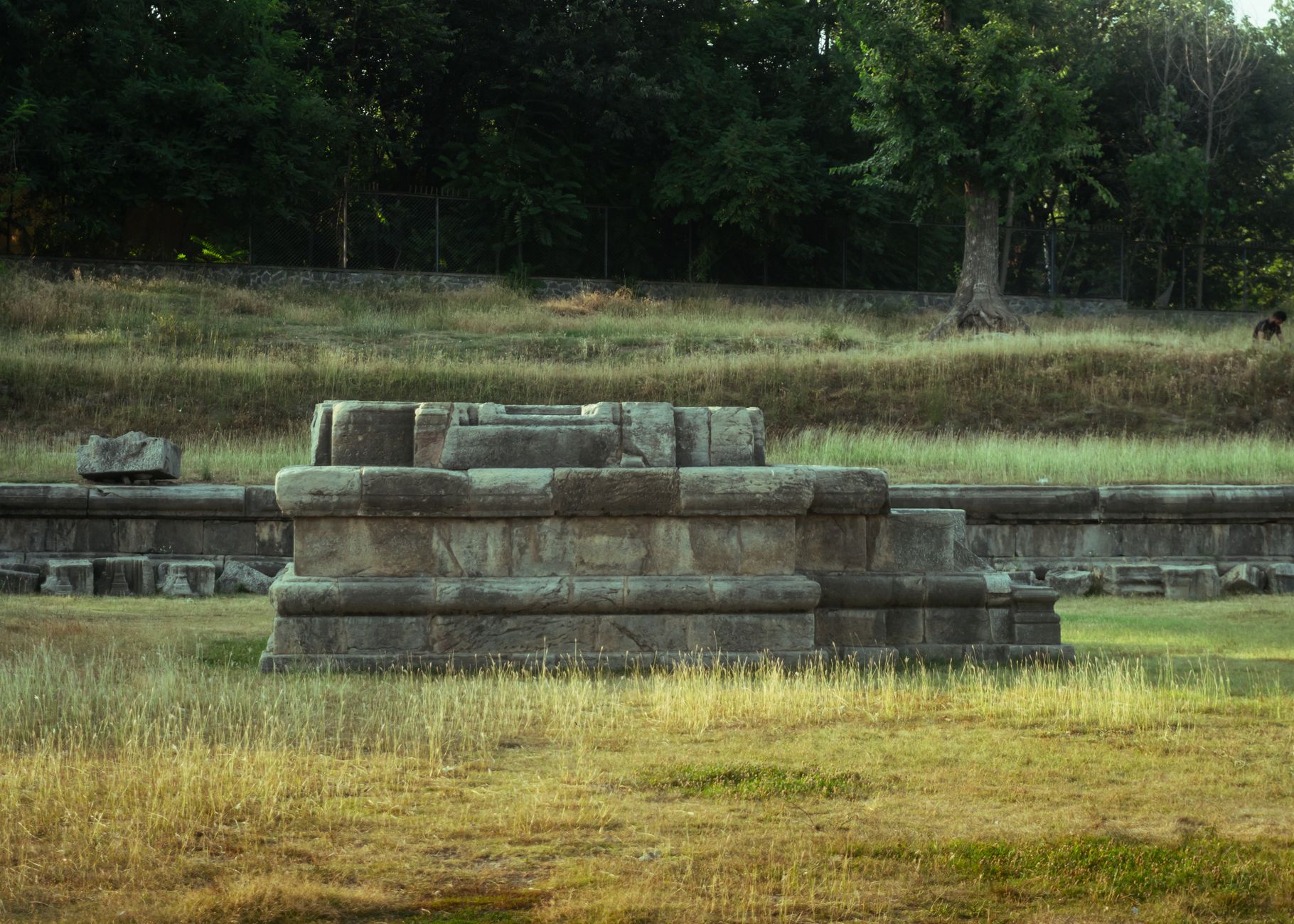
You probably think the foundation is the boring part.
It’s buried. It’s hidden under dirt, under concrete, under the weight of the house itself. You walk past it every day. You don’t look at it. You don’t thank it. You just live above it.
But here’s the thing about foundations: they are the only part of the building that actually matters.
The roof might leak. The paint might peel. The windows might rattle in a stiff breeze. But if the base is cracked, the whole thing collapses. Not eventually. Immediately.
I’ve been thinking about this as the days stretch out long and warm. It’s early summer. The light lingers past seven in the evening, casting long, golden shadows across the grass. There’s a heaviness in the air, the kind that promises storms but holds its breath. It’s the season of abundance, sure. But it’s also the season of testing. How much wind can your roof take?
Jesus knew this. That’s why He didn’t talk about the roof. He didn’t give us a parable about the beauty of the shingles or the elegance of the windows. He talked about the dirt. He talked about the digging.
Let’s look at the text, slowly.
(ESV)
“Everyone then who hears these words of mine and does them will be like a wise man who built his house on the rock. And the rain fell, and the floods came, and the winds blew and beat on that house. But it did not collapse, because it had been founded on the rock. And everyone who hears these words of mine and does not do them will be like a foolish man who built his house on the sand. And the rain fell, and the floods came, and the winds blew and beat against that house, and it collapsed, and great was the fall of it.”
I’ll be honest, I used to read this and feel a bit cheated.
We’re told to be “wise” and “foolish.” Those are big words. They feel heavy. They feel like we’re being graded on a curve we didn’t know we were on. And the imagery? Rain. Floods. Wind. It’s dramatic. It’s cinematic. But it’s also scary.
We live in a culture that worships the finish. We love the “before and after” photos. We love the reveal. We want the house that looks good on Instagram, the life that looks good on paper. We spend years painting, decorating, staging. We polish the brass and fluff the pillows.
And then the wind hits.
The problem isn’t the wind. The wind is inevitable. It’s the weather. It’s the economy. It’s the diagnosis. It’s the sudden death of a parent. It’s the divorce that comes out of nowhere. It’s the anxiety that wakes you up at 3 AM. The wind is just the wind. It’s neutral. It doesn’t care about your paint job.
The problem is the foundation.
And here’s the counter-intuitive part that most preachers skip: The foundation isn’t the rock. The foundation is the digging.
Look at the text again. It doesn’t just say “built on the rock.” It says, “who dug down deep.”
You don’t find the rock by standing on the surface. You don’t find it by looking at the grass. You have to move the dirt. You have to move the loose sand. You have to break your back in the heat, sweating, getting your hands dirty, until you hit something solid. Something unmovable.
In our culture, we’ve confused hearing with digging.
We listen to a sermon. We nod. We say, “Amen.” We go home. We sit on the couch. We let the word wash over us like rain on a tin roof—noisy, temporary, draining away quickly. But we haven’t dug. We haven’t moved the loose soil of our daily habits, our cultural compromises, our shallow fears.
We’ve built on sand.
What is the sand? It’s the idea that if you’re nice enough, God will bless you. It’s the idea that if you work hard enough, you’ll be secure. It’s the idea that your identity is your career, or your marriage, or your bank account. It’s loose. It shifts. It slides.
When the storm comes—and it will come—the sand house doesn’t just leak. It vanishes.
Jesus says the fall was “great.” Not a crack. Not a settling. A collapse. Total.
I remember a few years ago, I lost my job. It wasn’t a slow fade. It was a Tuesday email. “Restructuring.” Just like that.
My house was still standing. My car was still running. But the foundation I’d been walking on for ten years—the foundation of “I am successful because I am employed”—crumbled instantly.
And I realized I hadn’t dug deep. I had built my house on the loose sand of my own competence. I hadn’t moved the dirt. I hadn’t hit the rock.
What is the rock?
It’s easy to say “Jesus.” And that’s true. But it’s lazy.
The rock is His words. Specifically, His words that you do.
Notice the parallel structure in verse 24 and 26.
“Everyone then who hears these words of mine and does them…” “And everyone who hears these words of mine and does not do them…”
It’s not just hearing. It’s doing.
We live in an age of information overload. We have the Bible on our phones. We have commentaries in our ears while we drive. We have podcasts that explain theology in twenty minutes. We are drowning in knowledge.
But are we digging?
Digging is hard. It’s slow. It’s unglamorous. It’s reading one chapter and asking, “What does this actually look like in my kitchen?” It’s forgiving your spouse when you’re tired. It’s giving when you’re tight. It’s staying faithful in the small things when no one is watching.
It’s moving the sand.
I think about the ancient builders. They didn’t have cranes. They didn’t have power tools. They had picks and shovels. They had sweat. They had time. They understood that the deeper you dig, the stronger the house.
Today, we want the fast track. We want the “prosperity gospel” version of foundation—where you speak and it appears, where you confess and it lands. But Jesus talks about the storm. He talks about the rain. He talks about the flood.
Why?
Because the storm reveals the foundation.
That’s the purpose of the trial. It’s not to punish you. It’s to show you where you’ve built.
I’ve noticed this in my own life. When things are calm, I feel spiritual. I feel solid. I think, “Wow, I’m doing great. I’m on rock.”
Then the storm comes.
And suddenly, I’m not on rock. I’m on sand. I’m frantic. I’m trying to hold the house up with my own hands. I’m trying to fix it with more effort, more planning, more control.
But the wind doesn’t care about my planning.
The wind only respects the rock.
So, what do we do?
We start digging.
Not in a panic. Not in a frenzy. But in the quiet, steady rhythm of obedience.
It’s easy to think digging means suffering. It doesn’t. It means discipline. It means the daily, unsexy work of aligning your life with the words of Jesus.
It means when you read, “Love your enemies,” you don’t just nod. You send the text. You make the call. You swallow your pride. That’s digging.
It means when you read, “Do not worry,” you don’t just repeat it like a mantra. You look at your bank account. You look at your calendar. You look at your fear. And you choose trust. That’s digging.
It’s slow. It’s boring. It’s invisible to the world.
But it’s the only thing that holds.
Think about the summer heat. The days are long. The air is thick. It’s easy to be lazy. It’s easy to sit in the shade and let the grass grow. But the builder who wants a house that stands knows he has to dig while the sun is high. He knows that if he waits for the storm to hit, it will be too late.
We are building right now.
Every choice is a shovel full of dirt.
Every prayer is a bucket of sand removed.
Every act of obedience is another foot of depth.
And one day, the sky will turn dark. The wind will howl. The rain will fall in sheets. The floods will rise.
And your house will stand.
Not because you’re special. Not because you’re smart. Not because you worked harder than the other guy.
But because you dug.
You hit the rock.
And the rock is Jesus.
So, don’t worry about the storm. Worry about the foundation.
Stop looking at the roof. Stop polishing the windows. Stop worrying about how your house looks to your neighbors.
Look down.
Are you on sand? Or are you on rock?
If you’re on sand, it’s not too late to dig.
Start today.
Pick one word of Jesus. One command. One promise. And do it.
Do it when it’s hard. Do it when it’s inconvenient. Do it when no one is watching.
Dig deep.
And when the wind comes—and it will—you won’t just survive.
You’ll stand.
“Everyone then who hears these words of mine and does them will be like a wise man who built his house on the rock.”