The giant isn’t the problem. Your perception of him is.
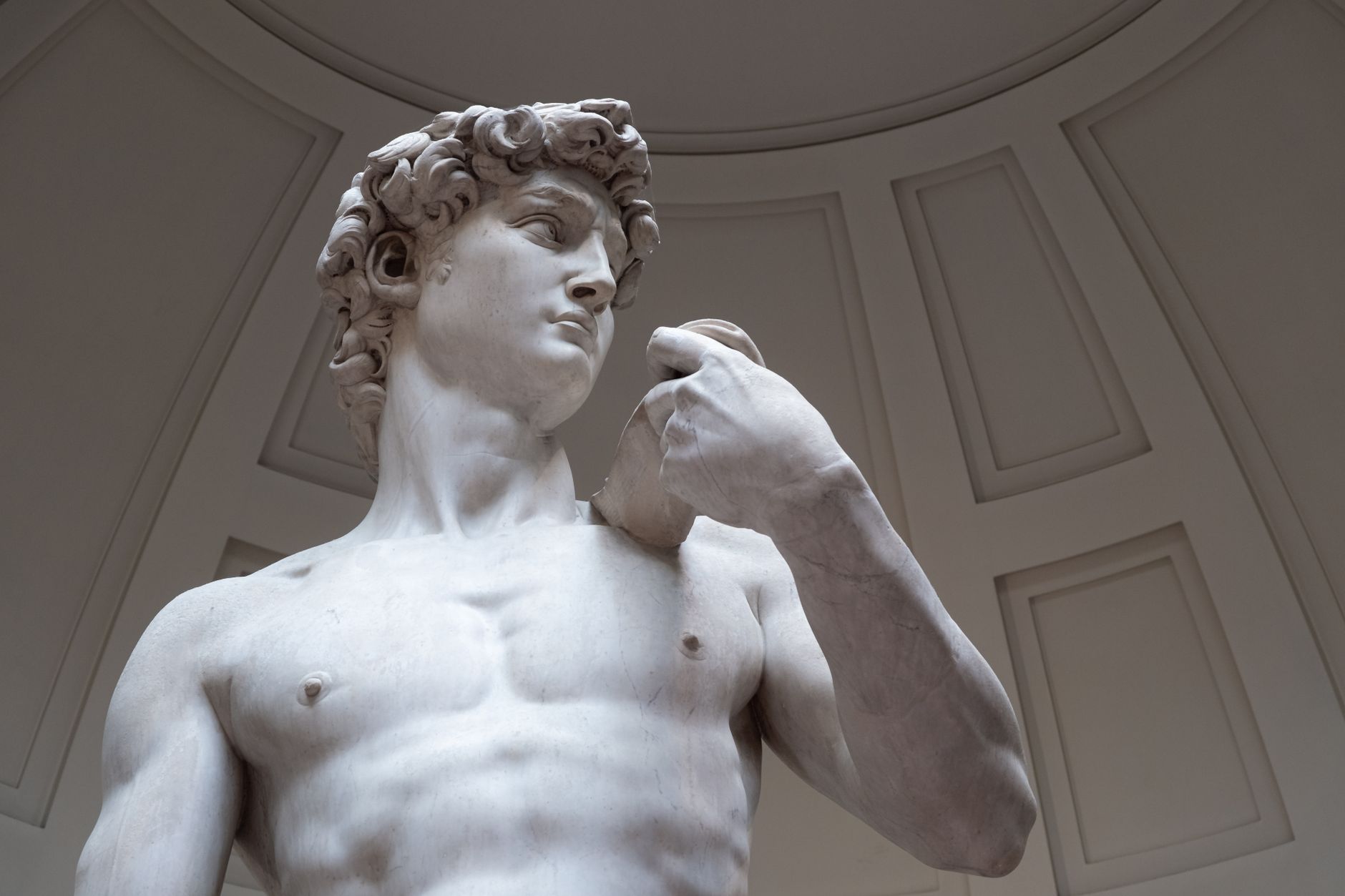
We love the David and Goliath story because it’s clean. It’s tidy. One shepherd kid with a sling takes down a nine-foot warrior in bronze armor. We love it because we want our battles to look like that. We want the enemy to be a single, monolithic figure standing at the end of the road, so we can just aim true and throw.
But here’s the thing about Goliath: he wasn’t just a guy in armor. He was a system of fear.
In 1 Samuel 17, the Philistine champion steps out into the valley for forty days. Forty days he taunts Israel. That’s two months of dread. Two months of waking up with your heart hammering against your ribs, knowing that if you step onto the field, you’re dead. And the Israelites? They didn’t just fear Goliath’s height. They feared what he represented: the inevitability of defeat.
This is early autumn. The air is crisp, the leaves are starting to turn that brittle gold color, and there’s a weird energy in the air. We’re settling into new routines, new school years, new chapters that feel both exciting and terrifyingly unknown. If you’re reading this, you’ve probably got a "Goliath" on your heart right now. Perhaps it’s a diagnosis you’re waiting for. Or a relationship that feels like it’s falling apart no matter how hard you try to hold it together. Or the quiet, gnawing voice that says, You’re not enough.
We look at David and think, "If he could do that, I can too." But we miss the point. David didn’t win because he was brave in the way we usually think of bravery. He didn’t win because he ignored his fear. He won because he knew whose name was over the battlefield.
The Sling Was Never About Strength
Let’s look at what David actually did. He didn’t take a sword. He didn’t take a shield. He took a river stone. A smooth, round pebble from the bank.
— "The Lord who delivered me from the claws of a lion and from the claws of a bear will also deliver me from the hand of this Philistine." Then David said to the Philistine, "You come against me with sword and spear and javelin, but I come against you in the name of the Lord Almighty, the God of the armies of Israel."
Notice what he didn’t say. He didn’t claim, "I am stronger than you." Nor did he boast, "My aim is better than yours."
He talked about lions and bears.
This is crucial. David was a kid. He was the youngest of eight brothers (or maybe nine, depending on the count). He was a nobody in military terms. But he had survived things that should have killed him before the age of twenty. He had wrestled a lion in a cave when he was protecting his sheep. He had grappled with a bear and crushed it by the head.
Those weren’t victories for David’s ego. They were testimony to God’s faithfulness.
When Goliath stepped out, David didn’t look at the giant and ask, "Can I do this?" He looked back at the river stones and said, "God did that in the cave. God is here now."
I’ll be honest with you. I’ve struggled with this distinction. For years, I read this passage and thought David’s confidence was the key. I thought if I just pumped myself up, if I just believed hard enough in my own potential, the giant would fall. And then life gave me a Goliath—a season of depression that lasted three years—and I realized my "confidence" was paper-thin. It tore apart the second things got hard.
But David’s confidence wasn’t in himself. It was in a track record. He had receipts.
That’s what faith is. It’s not wishful thinking. It’s memory. It’s remembering who God was when you were in the pit, so you can trust Him when you’re on the peak.
The Armor That Doesn’t Fit
Here’s a detail that gets overlooked. Saul, the king of Israel, offers David his own armor. The breastplate. The helmet. The sword.
— "Saul armed David with his armor, giving him a helmet of bronze. Over his regular clothes he put on a coat of mail, and David slung his sword over the coat of mail. He walked back and forth in it to see if he could handle it, for he had not tested it."
David tried it on. He walked around in it. And then? He took it off.
Why? Because it wasn’t his. It didn’t fit the way he fought. Saul was a soldier. David was a shepherd. The armor was heavy, clanking, restrictive. It was designed for a different kind of war.
We do this all the time in our faith lives. We attempt to wear other people’s armor. We attempt to pray the way our pastors pray. We attempt to serve in the way our parents served. We pick up a heavy, clanking breastplate of religious performance and walk around in it, wondering why we’re exhausted. Why we feel like we’re falling over our own feet.
David said, "No thanks." He went back to the river. He picked up five smooth stones.
Five. Not one.
He didn’t go with a "one-time fix." He went prepared for the fight of his life. He knew that spiritual warfare isn’t a single event; it’s a posture. It’s a daily discipline of picking up the stones of Scripture, the stones of prayer, the stones of obedience.
Perhaps your Goliath is making you feel like you need to fix everything in one giant, explosive moment. Perhaps you think if you just have that big breakthrough, the war is over. But David’s preparation was quiet. It was unglamorous. He spent time by the water, smoothing out jagged edges until he had something solid in his hand.
That’s where the courage lives. Not in the throw, but in the picking up.
The Name Over the Valley
Goliath was a physical threat, yes. But he was also a spiritual one. He challenged the armies of Israel. He mocked their God.
— "Then David asked the men standing near him, 'What will be done for the man who kills this Philistine and takes away the disgrace from Israel? For who is this uncircumcised Philistine that he should taunt the armies of the living God?'"
David wasn’t just fighting for his life. He was fighting for reputation. For honor. For the name of God.
This is where it gets real. Your Goliath isn’t just a problem you need to solve. It’s an accusation against God’s goodness. When you’re sick, it feels like a taunt: Is He really good? When you’re lonely, it screams: Does He really love you?
The courage we need isn’t just to kill the giant. It’s to refuse the taunt.
I remember a time when I was going through a financial crisis. Every bill that came in felt like Goliath shouting, "God doesn’t provide!" I was angry. I was defensive. I wasn’t praying; I was arguing with God.
One day, sitting on my kitchen floor at 2 AM, I stopped fighting the fear and started confessing it. I said, "Lord, I’m afraid. But I believe You are here." And in that silence, the panic didn’t vanish instantly. But it shifted. The weight of the accusation lifted. I realized that my fear was louder than my faith, but it wasn’t stronger.
When David threw the stone, he declared, "You advance with sword and spear... but I advance under the banner of the Lord Almighty."
He didn’t declare, "I advance with my skill." Nor did he declare, "I advance with my experience."
He advanced under a Name.
That’s the power source. It’s not your grit. It’s not your resilience. It’s His authority.
The Stone Is on Your Side
We often think of courage as the absence of fear. But biblical courage is different. It’s action in the presence of fear, anchored in a trust that outlasts your emotions.
David was afraid. He was a kid facing the most intimidating man in the known world. But he knew something Goliath didn’t: he wasn’t alone on that battlefield.
So here’s what I want you to hear today, in this crisp autumn air: You don’t have to feel ready. You don’t have to have the perfect plan. You don’t even have to understand why God is letting this fight happen right now.
You just have to pick up the stone.
What’s your stone? It might be a specific verse you’ve meditated on for weeks. Or the quiet, consistent habit of prayer before you check your phone in the morning. Or a conversation with a friend who reminds you of who you are in Christ when the noise gets too loud.
Five stones. Be prepared. The fight is real, but it’s not the final word.
Goliath fell because he was arrogant and unconnected to a source of power that wasn’t his. He relied on bronze and iron. David relied on the Living God.
When you step out into your valley this week, don’t stare at the size of the giant. Stare at the God who delivered David from the lion. He hasn’t changed. He’s still in the cave. He’s still by the river.
He is looking at you with the same eyes He looked at that young shepherd boy. And He says, "Go."
— For God has not given us a spirit of fear, but of power and love and a sound mind.