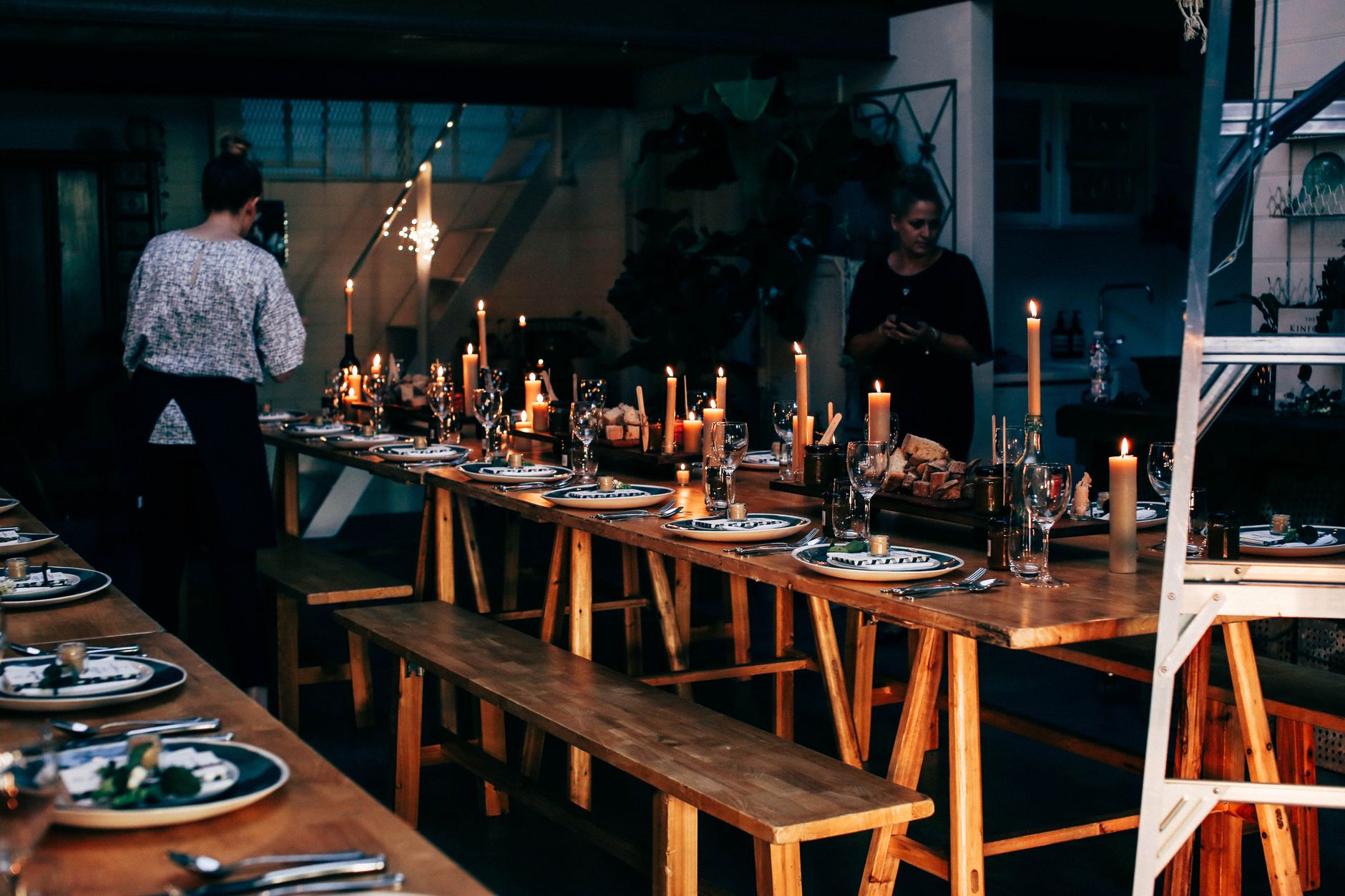
You are already invited. You don’t have to earn the plate, or the wine, or the place at the table.
That’s the first thing that trips us up. We hear "wedding feast" and our shoulders tense. Suddenly, the invitation feels conditional. It feels like a test we’re failing before we’ve even started.
We imagine God standing at the door with a clipboard, checking our resume for sin stains and moral polish. But look closer at Jesus’ story in Matthew 22. The problem wasn’t that the guests couldn’t afford the seat. The problem was that they didn’t think the seat belonged to them.
It’s late August now. The light is changing, shifting from that heavy, golden heat of summer into something sharper, clearer. The days are shortening just a fraction. There’s a kind of quiet urgency in the air, like we’re being asked to settle our accounts before winter sets in.
That’s a good time to sit with this parable. Not as a rulebook, but as an invitation to exhale.
The Invitation That Wasn't Enough
Jesus tells this story in response to a question about the Kingdom of Heaven. He paints a picture of a ruler who throws a party so big, you can smell the roasting meat from three streets away.
The key is in the opening lines: "Then he told them this parable: 'The kingdom of heaven is like a king who prepared a wedding banquet for his son. He sent out his servants to call those invited to the feast to come, but they wouldn't come.'" (, NIV)
Notice the detail there. Prepared. The food was ready. The wine was poured. The servants went out to get the guests.
And what did they do? They ignored it.
One guy was in his field, busy with the harvest. Another was at his business, negotiating a deal that probably seemed more urgent than royal hospitality. Others grabbed the king’s servants and mistreated them, killing some. It wasn’t just indifference; it was active rejection.
Here’s the thing that hits me when I read this: They didn’t think the banquet was for them.
Or maybe they did, but they thought it would cost them too much to show up. To leave the field meant leaving the crops. To leave the market meant losing a sale. The cost of attendance felt higher than the value of the seat.
So they stayed home. And the king, in his anger, destroyed those murderers and burned their city. ().
But then, the king gets practical. He tells his servants, "The banquet is prepared, but those I invited did not deserve a place... So go to the street corners and invite to the feast anyone you find." ().
This is the part we love. The open door. The people from everywhere, good and bad, rich and poor, messy and clean—they all fill the hall.
But then comes the curveball. The part that makes us sit up straighter in our chairs.
The Man Without the Wedding Clothes
The hall is full. The music is playing. And suddenly, the king notices a man standing there.
This guy made it inside. He wasn’t killed by the army. He didn’t stay in his field. He crossed the threshold. He has a plate of food. He is holding a cup of wine.
But something is wrong.
"When the king came in to view the guests, he noticed a man there who was not dressed for a wedding. 'Friend,' he asked, 'how is it that you are here without wedding clothes?' And the man was speechless.'" (, NIV)
The king orders him thrown out into the darkness. Outside, there is weeping and gnashing of teeth.
We often read this and think: Oh, no. He didn’t have the right clothes. He was dressed casually. He looked sloppy.
But look at the text again. The king asks, "How is it that you are here without wedding clothes?"
In the ancient Near East, a king who provided a feast would often provide the wedding garments for his guests. It was customary for the host to supply the clothes, especially if he wanted everyone to look like family.
So this man didn’t show up in rags because he was poor. He showed up in his own clothes—his trade clothes, his field clothes, the clothes he’d worn all day—because he assumed he had to bring his own outfit.
He thought the invitation was about his status, or his effort, or his ability to dress the part. He didn’t realize he was supposed to wear what the King gave him.
He is inside, but he is still outside in his heart. He is physically present, but spiritually self-reliant.
Why This Hurts (And Why It Helps)
I’ll be honest, I’ve struggled with this man.
For years, I read the "open invitation" part of Jesus’ story and felt safe. Then I hit the "wedding clothes" part and felt unsafe again.
I started treating Christianity like a dress code. If I prayed enough, if I gave enough, if I didn’t say the wrong things in church, I had my "wedding clothes." If I messed up? Well, then I was risking being thrown into the outer darkness.
It made faith feel like wearing a stiff, itchy suit that cost too much to maintain.
But here’s the quiet truth I’m trying to learn: The wedding clothes are free. They were provided by the King.
The man in the story didn’t lose his seat because he was poor. He lost it because he refused to take off his old clothes and put on the King’s gift.
He clung to his own righteousness, his own history, his own narrative. And in doing so, he rejected the King’s provision.
It’s a bit like when your mother buys you that beautiful sweater, but you keep wearing your old, faded t-shirt because it’s "comfortable." You’re warm. You’re covered. But you’re not wearing what was given to you.
God isn’t angry at the man for being in his own clothes. He’s grieving that the man wouldn’t accept the gift.
This changes everything about how we approach prayer, how we handle failure, and how we rest.
If the clothes are provided by grace, then our performance doesn’t determine our position at the table. Our response to that provision does.
Preparing for the Feast (Without the Stress)
So, how do we live this out? How do we prepare for a feast that’s already happened, is happening now, and is yet to come?
It’s not about striving. It’s about receiving.
Think of it like breathing. You don’t have to work hard to inhale. You just open yourself up and let the air in.
"For it is by grace you have been saved, through faith—and this is not from yourselves, it is the gift of God." (, NIV)
Grace is the wedding garment. Faith is the act of putting it on.
When we feel that tug of anxiety—that whisper that says, "You’re not doing enough"—we can pause. We can look at our hands. Are they holding onto our own efforts, our own history, our own "field" and "market"?
Or are we holding out to receive the gift?
It’s a simple shift, but it’s not always easy. I’ve sat in church, listening to the sermon, and felt a distinct coldness in my chest. I was dressed perfectly for the occasion. My moral record was intact. But I wasn’t wearing the King’s gift. I was walking around in my own self-righteousness, thinking it was enough.
And then, just as the man in the story, I ended up standing outside of joy, even while inside the hall.
So, what does preparation look like in our daily lives?
It looks like humility. It’s the willingness to say, "I can’t do this alone. I need His clothes. I need His righteousness."
It looks like gratitude. When we realize the feast was prepared before we even arrived, our anxiety drops. We stop eating like paupers and start feasting like heirs.
It looks like presence. The man was speechless (). He had no excuse. He couldn’t blame the King for not inviting him. He couldn’t blame the servants for not knocking hard enough. He could only look down at his sleeves and see that they were wrong.
In our own lives, preparation isn’t about cleaning up the house before God comes in. It’s about recognizing that He has already cleaned it for us.
The Invitation Stands Open
As the summer days grow shorter and the light turns gold, there’s a gentle reminder in the air. The harvest is here.
God has prepared the banquet. He has killed the fatted calf. He has poured the wine. He has sent the servants to your street corner, to your office, to your kitchen table.
He is not waiting for you to be perfect. He is waiting for you to come.
And when you arrive, don’t worry about your outfit. Don’t worry about whether you’re dressed well enough for the King’s son.
Look at His hands. He is holding out the garment.
Take it. Put it on. Sit down.
The feast is ready. And you are welcome here, exactly as you are, covered in the grace that was provided for you long before you knew your name.