You’re at the mile marker. Or maybe it’s the ten-kilometer mark. You’ve got your hydration station. You’ve got the cheering sections. You’ve got the medal hanging around your neck waiting to be won. But here’s the thing nobody tells you about the race: the hardest part isn’t the sprint at the end. It’s the middle. The long, unglamorous, sweaty middle where your lungs burn, your calves scream, and you wonder if you even signed up for this.
I remember standing in my driveway last July, watching my neighbor jog past. He didn’t look like an athlete. He was fifty-something, pausing every few blocks to adjust his socks. He wasn’t racing for a prize. He was just running. And I thought, Why? Why do we do it? Why do we strap on shoes and throw ourselves into the grind when we could just sit on the porch and drink iced tea?
Because we’re wired for movement. And because, somehow, in the rhythm of our footsteps, we find a strange kind of peace.
The Apostle Paul didn’t invent the metaphor of the Christian life as a race. He inherited it. He was standing in a stadium in Ephesus, probably smelling the sweat and dust of the arena, looking out at a crowd of thousands. He didn’t say, "Hey, let’s play chess." He said, "Let’s run."
puts it plainly: "Therefore, since we are surrounded by such a great cloud of witnesses, let us throw off everything that hinders and the sin that easily entangles, and let us run with perseverance the race marked out for us."
Notice the imagery. A cloud. Not just one witness, but thousands. A haze of people who have gone before us. Abraham. Ruth. Paul. Peter. Us. They are there, cheering from the stands of history, their voices a blur of white noise. And yet, here we are, alone in our lane, dealing with our own specific aches and pains.
It’s early summer now. The days are long, heavy with warmth. The air smells like cut grass and sunscreen. It’s the season of abundance, of fullness. But it’s also the season of fatigue. We’ve been busy. We’ve been serving. We’ve been pretending we have it all together while our internal batteries flicker on low power.
And that’s where the metaphor breaks down, if we aren’t careful.
We live in a culture that loves the finish line. We love the marathon medal. We love the Instagram post of the exhausted but glowing face holding up the trophy. But God doesn’t seem to care about the medal. He cares about the runner. He cares about the posture. He cares about whether you’re looking at Him or looking at your own feet.
Paul goes on to say in : "Do you not know that in a race all the runners run, but only one gets the prize? Run in such a way as to get the prize. Everyone who competes in the Games goes into strict training. They do it to get a crown of gold, gold that fades. But we do it to get a crown that never fades."
Think about that. Strict training. The Greek word here is baslizō, which means to exercise oneself, to train rigorously. It’s not a casual jog. It’s not a leisurely stroll through the park. It’s discipline. It’s waking up when you don’t want to. It’s eating when you’re not hungry. It’s praying when you’re dry.
I used to read this verse and feel nothing but guilt. I’d imagine God standing over me with a stopwatch, yelling, "Faster!" I thought faith was a performance metric. If I was praying less than an hour a day, I was losing. If I wasn’t serving in three different ministries, I was sluggish. I was so busy trying to win the race that I forgot who I was running for.
But look closer at the "crown that never fades." In the ancient games, the victor received a wreath of celery or pine—something green and fresh, but it would wilt in days. It was beautiful, but temporary. It was a symbol of honor, not a permanent possession. The Christian crown? It’s eternal. It’s not just a trophy; it’s a transformation.
So why does it feel so hard?
Because we’re running with "everything that hinders."
The text doesn’t just say "sin." It says everything. That’s the scary part. It’s not just the big moral failures. It’s the small things. The pride that whispers when you succeed. The fear that shouts when you fail. The distraction of your phone. The exhaustion from trying to be perfect. The need for approval from people who don’t even know you.
We carry these weights like rocks in our pockets. We think we can run faster if we just drop one. Then another. But we keep picking them up. We keep thinking, I can handle this. I can multitask holiness.
And honestly? I’m still doing it. Just last week, I sat down to write this article, and I found myself scrolling through emails. Just five minutes. Ten. I told myself it was research. It was networking. It was necessary. But it was a weight. It was a hindrance. It was the sin that easily entangles—not because it was a mortal sin, but because it was easy. It was comfortable. It was familiar.
We need to drop the weights.
But how? How do you drop a weight you’ve been carrying for twenty years?
You don’t just drop it all at once. That’s not how racing works. You adjust your stride. You focus on the next step. You look up.
Paul says in : "Brothers and sisters, I do not consider myself yet to have taken possession of what Christ Jesus is saying to me. But one thing I do: forgetting what is behind and straining toward what is ahead, I press on toward the goal to win the prize for which God has called me heavenward in Christ Jesus."
"Forgetting what is behind." That’s the hard part. Forgetting the failures. Forgetting the successes. Forgetting the identity you built in your own strength. If you’re running based on your past performance, you’ll either be arrogant or anxious. If you’re running based on your past failures, you’ll be defeated before you start.
You have to forget. Not by erasing your memory, but by changing your reference point. Your reference point isn’t your last race. It’s the One who called you.
And here’s the beautiful, counter-intuitive truth: The race isn’t about speed. It’s about endurance.
In a 100-meter dash, speed is everything. But in a marathon, speed is secondary to pacing. If you sprint the first mile, you’ll gas out by mile five. You’ll walk. You’ll quit. You’ll drop out.
God isn’t asking you to sprint. He’s asking you to keep going.
He’s asking you to trust that the finish line is real, even if you can’t see it. Even if the road is still long. Even if your legs are heavy.
This is where the season comes in. It’s early summer. The days are long. There’s a sense of abundance in the air. But abundance can be a trap. We think, I have enough time. I have enough energy. I can do this my way.
But the race requires dependence.
Think of it like this: When you’re running a marathon, your body eventually hits a wall. Your glycogen stores deplete. Your brain starts sending signals: Stop. Eat. Rest. If you ignore those signals, you crash. If you listen to them, you refuel. You keep going.
God is the refueler. He is the water station. He is the pace car. He is the voice in your head that says, Keep going. You’re not alone.
We live in a world that celebrates the highlight reel. We see the finish line photos. We don’t see the blisters. We don’t see the vomiting. We don’t see the tears in the locker room. But God sees the training. He sees the early mornings. He sees the quiet moments when you chose to pray instead of scroll. He sees the times you fell and got back up.
And He is pleased.
Not because you ran fast. But because you ran.
So, what do we do with this? How do we live this out in the heat of July?
Stop trying to win. Start trying to stay in the race.
Drop the weights. Not all at once. Just the ones that are slowing you down today. The weight of other people’s opinions. The weight of your own perfectionism. The weight of worry about tomorrow.
Look up.
The cloud of witnesses is watching. They’re not judging you. They’re cheering for you. They know what it’s like to struggle. They know what it’s like to doubt. They know what it’s like to fall. And they’re still here. Still running. Still faithful.
And Jesus? He’s at the finish line. Not waiting to slap you with a stopwatch. Waiting to embrace you. Waiting to say, Well done, good and faithful servant.
It’s not about the medal. It’s about the relationship. It’s about the running.
So today, when you feel like quitting, when you feel like the weight is too heavy, when you feel like you’re falling behind—remember this: You’re not racing against them. You’re racing with Him.
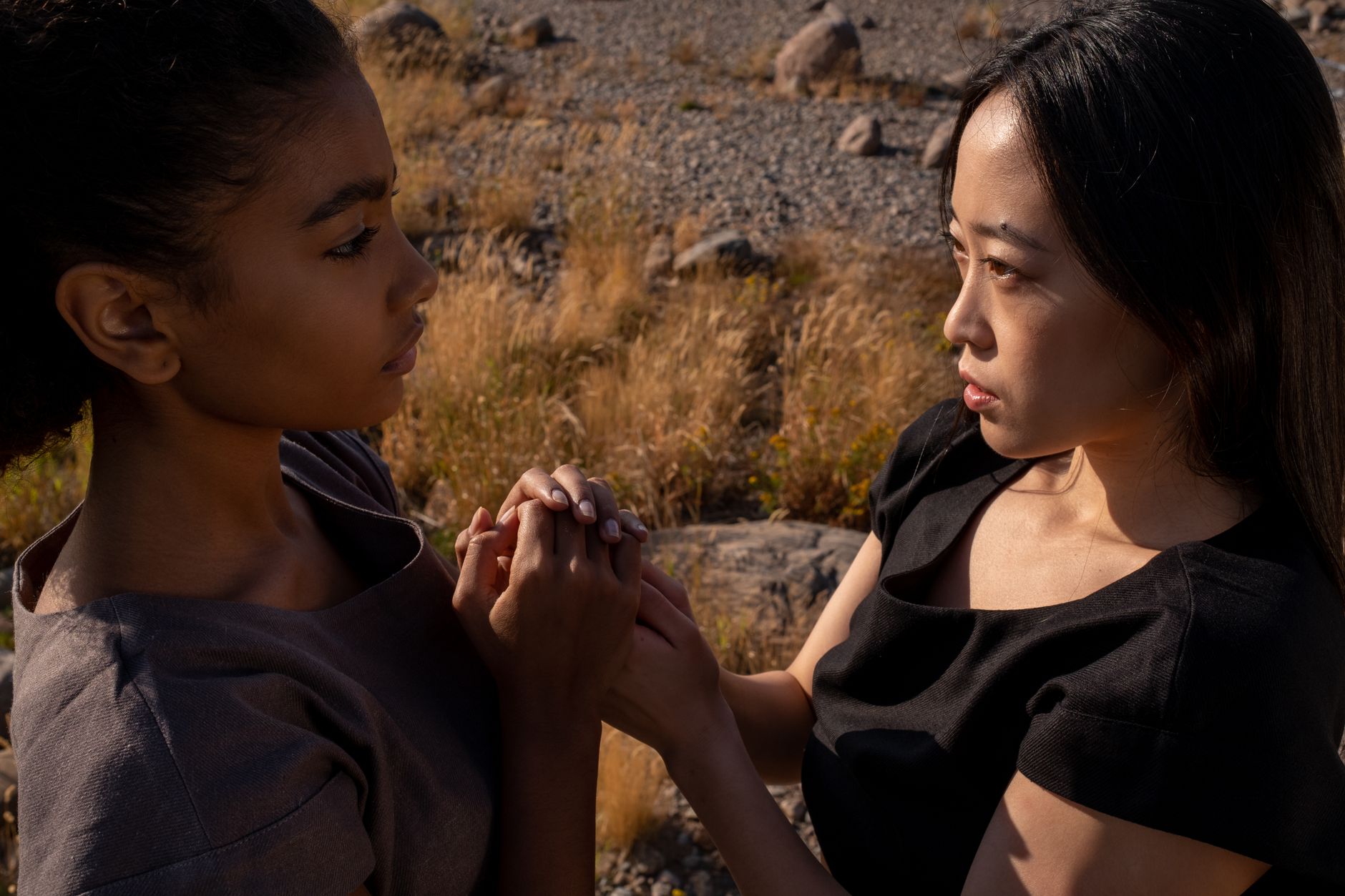
And He’s holding your hand.
Take a deep breath. Adjust your shoes. Look up. And take the next step. Just one. Then another.
That’s the race. That’s the life. That’s the grace.