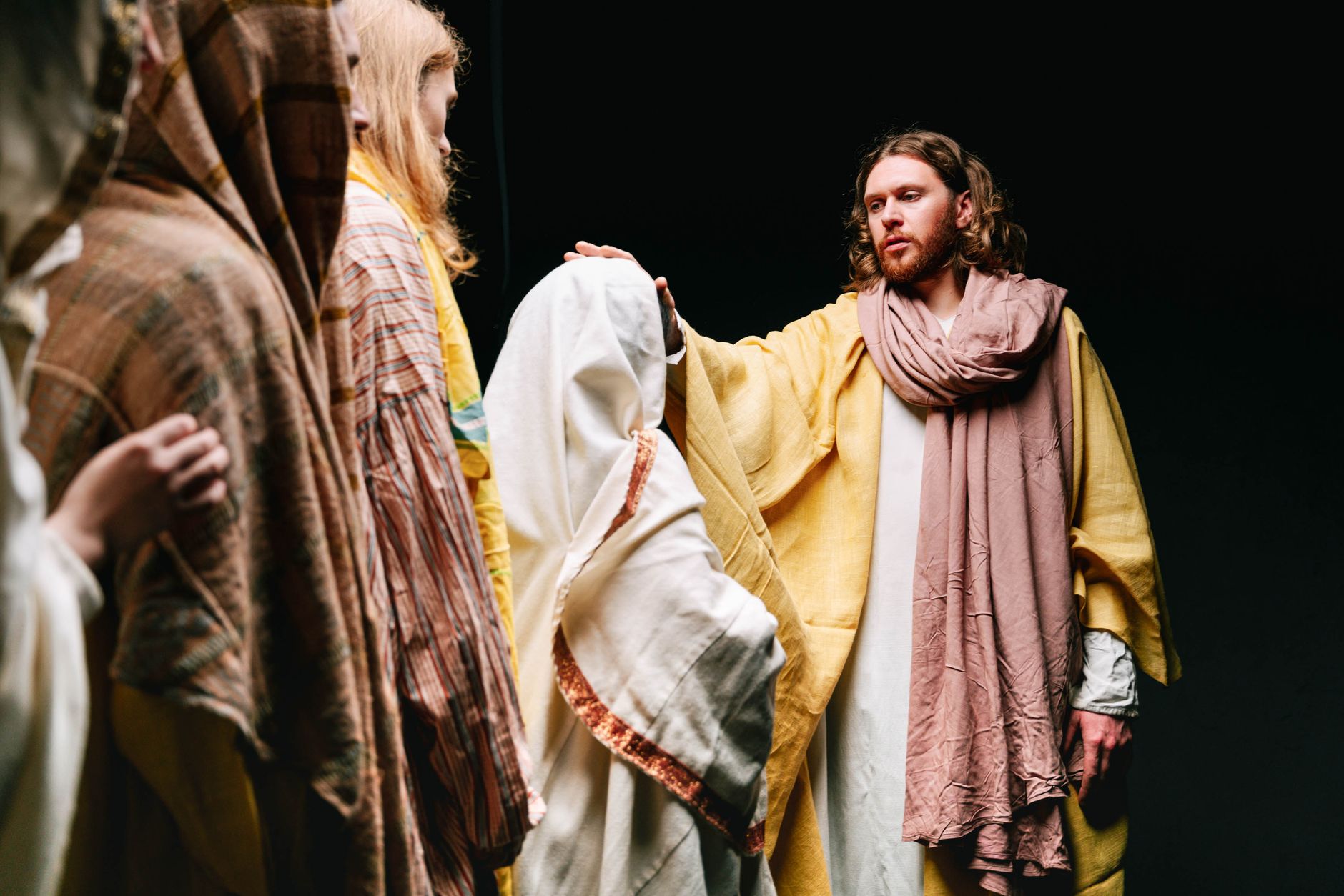
Mark 1:40-42: How Jesus Touched the Leper
The air in a first-century hospital ward didn’t just smell like sickness. It smelled like stale sweat, unwashed linen, and the heavy, metallic tang of decay. You didn’t just see a leper; you heard him before you saw him. Unclean. Unclean. The shout was a reflex, a survival instinct honed by generations of isolation. He wasn’t begging for a cure. He wasn’t begging to be let back into the human race.
Most of us think of healing as a medical event. A diagnosis changes, the medicine kicks in, and life resumes. But in the Gospel accounts, healing is a social explosion. It’s a disruption of order. It’s the moment the outcast steps into the center of the crowd and dares to touch the holy.
I’ll be honest, I’ve struggled with this passage because I usually read it from the perspective of the crowd, not the leper. We’re the ones standing at a safe distance, holding our breath, waiting to see if Jesus will just say the word or if He’ll actually get dirty. We like our miracles clean. We like our Jesus wiping his hands with a sterile cloth afterward. But leprosy wasn’t merely a skin condition. It was a total system failure. It was exile.
This summer, when the days stretch long and the house is quiet, I’ve been sitting with that man. Not analyzing his theology. Just feeling the weight of his desperation. And honestly? It’s terrifying how much we still live like we’re afraid of getting close to God.
The Distance Between Us
Leprosy in the Old Testament wasn’t merely a disease; it was a visual representation of sin. Leviticus 13 made it clear: if you had the condition, you lived outside the camp. You were severed from the temple, severed from your family, severed from worship. You were alive, but you weren’t really living. You were a ghost in your own life.
So when the leper in Mark 1 approaches Jesus, he’s breaking every protocol. He’s crossing the threshold. And here’s the thing that trips us up: he doesn’t just ask for healing. He touches Jesus.
"And a leper came to him, imploring him, and kneeling before him, saying to him, 'If you will, you can make me clean.' And Jesus moved with compassion, and stretched out his hand and touched him and said to him, 'I will; be clean.'" (, ESV)
Notice the rhythm there. If you will, you can. It’s a humble assumption. The leper believes Jesus has the power, but he’s unsure of the willingness. He’s used to rejection. He’s used to being pushed away with a wave of a hand.
Then Jesus does something radical. He touches him.
In the Jewish mindset, touching a leper made you unclean. It was contagious. It was risky. If Jesus touched him, He was taking on the impurity. He was entering the mess. But the text says the opposite happened. The holiness of Jesus flowed into the uncleanness of the leper, like pure water flushing a stagnant pond. The contagion stopped. The disease vanished.
It’s a perfect picture of grace. Grace isn’t God reaching down from a safe distance to flick a healing finger at us. Grace is God stepping into the mud, getting His hands dirty, and pulling us out.
I used to think I needed to clean myself up before I could approach Jesus. I thought I needed to fix my marriage, pay off my debt, and stop scrolling through my phone for an hour before I could pray. I treated faith like a transaction: I offer my best self; God offers His blessing.
But this leper didn’t wait to be clean to touch Jesus. He touched Jesus to become clean.
The Cost of Compassion
We love the miracle. We skip the paperwork. But look at what Jesus tells the man to do immediately after the touch.
"And Jesus strictly charged him to tell no one to them, but go, show yourself to the priest and offer for your cleansing what Moses commanded, for a proof to them." (, ESV)
Why the secrecy? Why the trip to the temple?
It wasn’t merely a medical check-up. The priest’s testimony was the legal ticket back into society. Without that stamp, the man remained an outcast, even if his skin was perfect. Jesus wasn’t just healing his body; He was restoring his identity. He was giving him a future.
But there’s a deeper layer here. Jesus sends him to the priests—the very people who often opposed Him—with the message, "Look what God did for this man." It was a public relations stunt, if you will. A living sermon. The man became a walking, talking evidence of the Kingdom of God.
And yet, the man couldn’t contain it. "But he went out and began to talk freely about it, and to spread the news, so that Jesus could no longer openly enter a town, but was out in desolate places, and people were coming to him from every quarter." (, ESV)
His gratitude overrode his obedience. He told the story. And because of that story, Jesus was pushed further into the margins, to the places where the broken really lived.
This is the paradox of Christian living. We seek healing, but healing often leads to a mission. We seek comfort, but comfort often leads to service. You can’t be healed and stay the same. The touch of Jesus changes your trajectory.
Three Ways to Live in the Touch
So, how do we take this ancient story and live it out in our modern, sterile, sanitized lives? It’s easy to feel like the leper today. Not necessarily with skin disease, but with the social, emotional, or spiritual isolation that comes from shame, failure, or simply feeling "less than."
Here are three practical ways to lean into that touch.
1. Stop Waiting to Be "Clean Enough"
We have a tendency to hoard our brokenness. We keep it in the back of the closet until it’s manageable. Until it’s a "small" sin. Until we’ve prayed about it for three weeks and journaling about it for two. Then, and only then, do we bring it to God.
The leper didn’t wait. He didn’t scrub himself first. He didn’t polish his reputation. He went while he was still visibly broken.
Try this: Identify one area of your life where you feel exposed. Maybe it’s a recurring anxiety, a secret resentment, or a failure you’re embarrassed to admit. Don’t fix it first. Just go to Jesus as is. Tell Him, "I’m messy. I’m stuck. I lack the answer to this."
It’s counter-intuitive. We think God wants our best. He wants our all. And often, our "all" is just a messy, trembling hand reaching out in the dark.
2. Let Your Healing Be a Witness, Not a Secret
Notice how the leper’s healing wasn’t just for him. It was a testimony to the priests. It was a sign to the crowds. Jesus didn’t hide the miracle.
In our individualistic culture, we tend to privatize our faith. "God healed my back." "God provided that job." "God gave me peace in that crisis." We keep it to ourselves to avoid looking boastful or to avoid the hassle of explaining it to non-believers.
But healing is meant to be public. Not to brag, but to point. When you are restored, you become evidence. You become a walking proof that grace is real.
This doesn’t mean you need to preach on street corners. It means sharing your story. Telling your friend, "I was struggling with this for years, and here’s what happened when I finally let God in." It’s vulnerable. It’s risky. But it’s how the Gospel spreads. Your brokenness, redeemed, is the most powerful apologetic you have.
3. Embrace the "Strict Charge" of Secrecy
Jesus told the leper to tell no one immediately. Why? Because the noise of fame can distract from the focus of faith. If the leper started chasing crowds, he might have lost his center. He might have become a spectacle rather than a worshiper.
In a world that demands we broadcast every victory, every meal, and every milestone on social media, Jesus’ instruction feels radical. Sometimes, the holiest thing you can do is keep your healing quiet.
Try a "fast" from your own story. For a week, don’t post about your breakthrough. Don’t mention your answered prayer in every conversation. Let it sit in your heart. Let it deepen your intimacy with God before it expands your influence. There’s a sweetness in keeping a secret with God. It builds trust. It reminds you that He is the source, not the audience.
The Return to the Scene
The summer heat is still here. The cicadas are humming their electric song in the trees. The house is quiet again.
I imagine the leper standing there, his skin smooth, his clothes clean, the crowd parting not with fear but with awe. He looks at his hands. They’re the same hands that trembled in the dust, but now they’re whole. He looks at Jesus. Jesus isn’t looking at the crowd. He’s looking at him.
And in that look, there’s no judgment. No "I told you so." No "You should have waited." Just a quiet, steady gaze that says, "I knew you could. I knew you were mine."
That’s the promise. We don’t have to wait for the perfect moment. We don’t have to clean ourselves up first. We just have to reach out.
And when we do, the rules change. The distance closes. The touch breaks the isolation.
So go. Show yourself to the priest. Tell the story. But first, take a breath. Feel the warmth of the touch. And let it change you.