The Transfiguration: Seeing Jesus in the Storm
— "After six days Jesus took with him Peter, James and John the brother of James, and led them up a high mountain by themselves. There he was transfigured before them. His face shone like the sun, and his clothes became as white as the light. Just then there appeared before them two men, Moses and Elijah, talking with Jesus... While Peter was still speaking, a bright cloud covered them, and a voice from the cloud said, 'This is my Son, whom I love; with him I am well pleased. Listen to him!'"
Read that again.
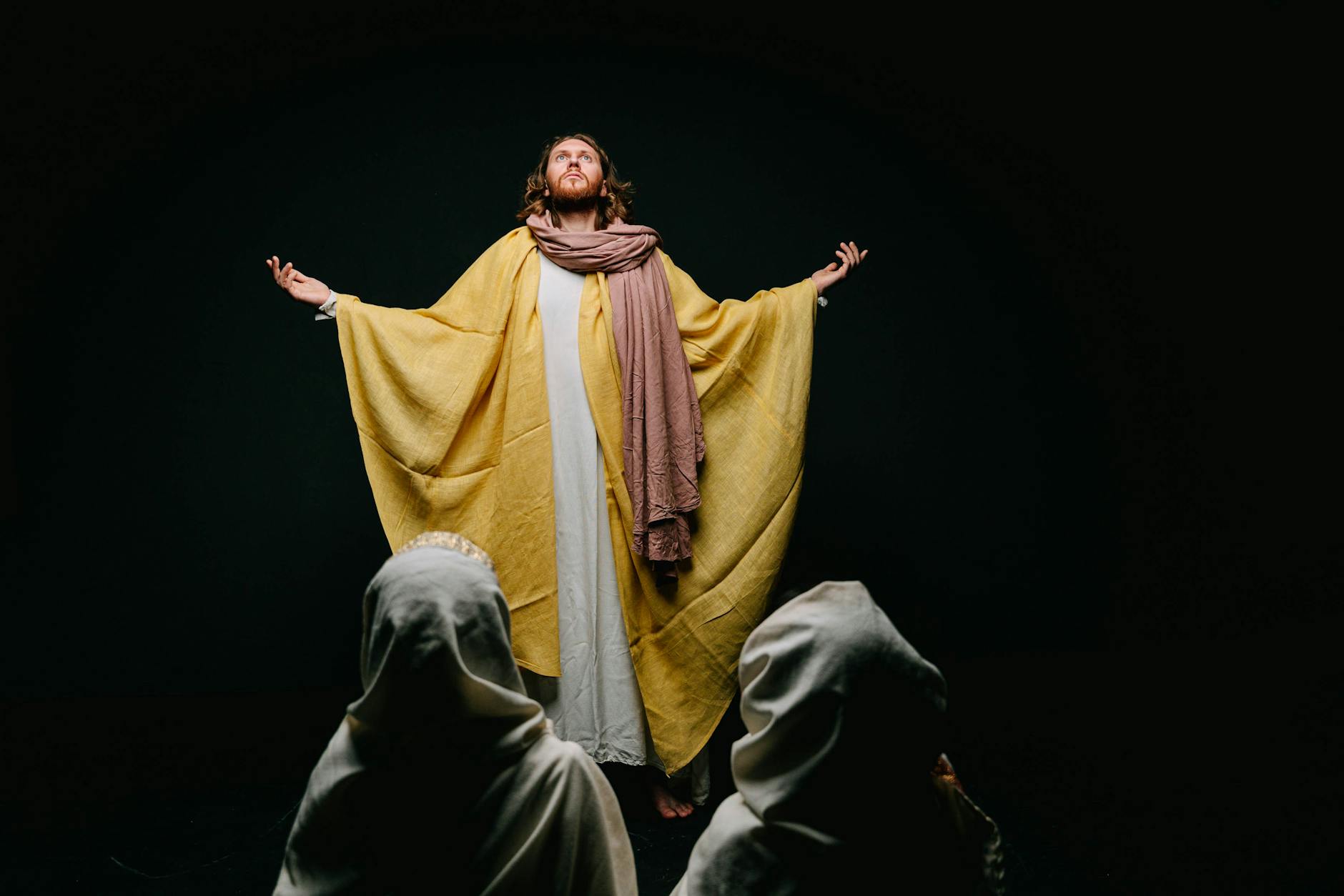
White as the light. Not bright. Not glowing. White. Like the sun itself had broken through the atmosphere and settled on Jesus’ tunic.
It’s easy to skim past this. We file it away under "Miracles of Jesus" or "Old Testament References." We nod along because it’s in the Bible. But if you actually stop and picture it, it’s terrifying. It’s overwhelming. It’s the kind of moment that makes your knees weak and your mind race.
Why did Jesus take just three guys up a mountain? Why then? And why did it look like that?
Most of us don’t expect glory to hit us like a physical blow. We expect peace. We expect a gentle whisper. We expect the "still small voice" of 1 Kings 19. But sometimes, God doesn’t whisper. Sometimes He shouts in light.
This isn’t just history. It’s a mirror. And right now, in the weeks after Easter, when the excitement of the empty tomb is settling into the routine of Tuesday mornings, we need to see what this light is for.
Why Do We Need a Preview of Glory?
Look at the timing. Mark tells us this happened "six days" after Peter’s confession. Six days. That’s a blink.
Just days earlier, Jesus had started laying out the cost. "If anyone would come after me, let him deny himself and take up his cross and follow me" (). The cross. Death. Suffering. The heavy, grinding weight of what was coming in Jerusalem.
Peter got it. He confessed Jesus was the Messiah. But he didn’t get the kind of Messiah who dies. He was still thinking in terms of conquest, not sacrifice.
So Jesus takes them up the mountain. He gives them a preview.
Think of it like a movie trailer for a war film. You’ve seen the hero. You know he’s good. But now the director shows you the special effects. The explosions. The sheer scale of the power he has. It doesn’t change the fact that he’s going to get beaten. But it changes how you watch him get beaten.
If you only see the cross, it looks like defeat. It looks like a tragedy. It looks like God lost.
But if you see the Transfiguration first, you see the cross through the lens of glory. The man on the cross is the same man whose face shone like the sun. The one who bled is the one who holds the universe together.
We struggle with this today. We look at our own suffering—our chronic pain, our job loss, our grief—and we ask, "Where is God?" We feel like we’re in the dark.
The Transfiguration says: The dark is temporary. The glory is real.
It’s not that the pain stops. Jesus still went down the mountain. He still walked to Calvary. But now, when you look at your own "cross," you’re not just looking at wood and nails. You’re looking at the same Jesus who was transfigured. You’re looking at the victory that was secured before the foundation of the world.
And honestly? That changes everything. It turns endurance into worship.
Why Did Moses and Elijah Appear?
Here’s a detail we often miss. Jesus isn’t alone up there. He’s talking to two guys. Moses. Elijah.
Moses represents the Law. Elijah represents the Prophets. Together, they cover the whole Old Testament. The entire history of Israel, the promises, the rituals, the warnings—it all converges on Jesus.
But notice what happens. They don’t just stand there. They talk. The Greek word implies a conversation, a discussion. What were they discussing? is the spoiler. It says they spoke of "his departure, which he was about to bring to fulfillment at Jerusalem."
They weren’t debating theology. They were planning the endgame.
This is huge for us. It means Jesus didn’t die by accident. It wasn’t Plan B because Plan A (Israel’s rebellion) failed. It was the divine strategy. The Law and the Prophets weren’t discarded; they were fulfilled. They were the blueprint.
Think about your own life. You have a history. You have your own "Law"—the rules you grew up with, the expectations, the guilt. You have your "Prophets"—the voices that told you who you should be, the warnings about failure, the cultural pressures.
Sometimes we feel torn between the two. We feel like we’re stuck in a museum of old rules and old expectations.
But Jesus pulls them both into the conversation. And He is the center.
The Law doesn’t save you. The Prophets don’t save you. But they point to Him. And when you see Him, the Law and the Prophets find their rest. They aren’t gone; they’re fulfilled in Him.
I’ll be honest, I used to read this and feel a bit confused. Why Moses? Why Elijah? Why not Abraham? Why not David?
It’s because they are the two most famous figures from the Old Testament. They are the pillars. And they are disappearing. As Jesus talks, the focus shifts. Moses fades. Elijah fades. Jesus remains.
That’s the point. We love to look at the greats. We love to look at the heroes of the faith. But they are just shadows. Jesus is the substance.
When you’re trying to figure out who you are, stop looking at the rules. Stop looking at the prophets. Look at the Light. Everything else is just context.
Why Did Peter Say That?
Peter’s reaction is the most human part of the story.
"Lord, it is good for us to be here. If you wish, I will make three here—one for you, one for Moses, and one for Elijah" ().
He’s excited. He’s overwhelmed. He wants to stay. He wants to build a tent and camp out in the glory.
It’s a classic spiritual mistake. We want the mountaintop without the descent. We want the vision without the mission. We want the miracle without the ministry.
Peter thinks he can capture God. He thinks if he builds three booths, he can keep the glory contained.
But God isn’t a resource to be mined. He’s a Person to be followed.
And notice what happens next. A cloud covers them. Not a soft, fluffy cloud. A bright cloud. The hypochys—the heavy, dense cloud of God’s presence. And a voice.
"Listen to him."
Not Moses. Not Elijah. Him.
This is the pivot point. The entire Old Testament points to Jesus. The Law points to Him. The Prophets point to Him. But the Law and the Prophets are not the final word. Jesus is.
We make this mistake all the time. We build "booths" for our favorite teachers, our favorite books, our favorite traditions. We say, "If we just had more of this, we’d be fine."
But God says, "Stop looking at the tents. Look at the Son."
It’s a call to simplicity. It’s a call to focus.
In a world of information overload, of podcasts and books and sermons and opinions, it’s easy to get distracted by the "Moses and Elijah" of our faith. The big names. The loud voices.
But the command is simple. Listen to Him.
What does that look like? It looks like slowing down. It looks like reading the Gospels not as history, but as life. It looks like trusting that the One who shone on the mountain is the same One walking beside you in the valley.
Peter’s tent-building was well-intentioned. But it was idolatry. It was trying to control the divine.
Are you trying to control your spiritual life? Are you building booths for your own righteousness? For your own understanding? For your own comfort?
Drop the tents. Look up.
Why Does This Matter for Us Now?
The Transfiguration isn’t just a pretty story for Easter Sunday. It’s a survival tool for the rest of the year.
We live in a world that feels increasingly dark. Politically. Socially. Personally. The light seems dim. The noise is loud. And it’s easy to feel like we’re drifting.
But this event tells us that the light hasn’t gone out. It’s just been hidden in the humanity of Jesus.
He veiled His glory. He covered the sun with flesh. He went to the cross so that we could see Him in the ordinary.
That’s the mystery. The God who shone like the sun became a carpenter. He became a refugee. He became a servant. He became a sacrifice.
And now, because He rose, He is with us.
The weeks after Easter are a time to live in that reality. It’s not about excitement. It’s about stability. It’s about knowing that the same power that raised Jesus from the dead is at work in you ().
It means your suffering has meaning. Your work has purpose. Your love has eternal weight.
You don’t need to build a tent. You don’t need to chase a vision. You just need to listen.
Listen to the One who said, "I am with you always, to the end of the age."
The light is still there. It’s just in the details.
It’s in the coffee cup in the morning. It’s in the hard conversation with your spouse. It’s in the quiet prayer when you can’t sleep. It’s in the courage to say "yes" when you want to say "no."
That’s the Transfiguration. It’s not a one-time event on a mountain. It’s a way of seeing.
It’s seeing Jesus in the ordinary.
And when you start seeing Him there, everything changes.
The darkness doesn’t disappear. But it loses its power. Because the Light has entered the room.
So don’t rush to the next miracle. Don’t chase the next high. Just stay. Listen. Watch.
He is there.
And He is enough.