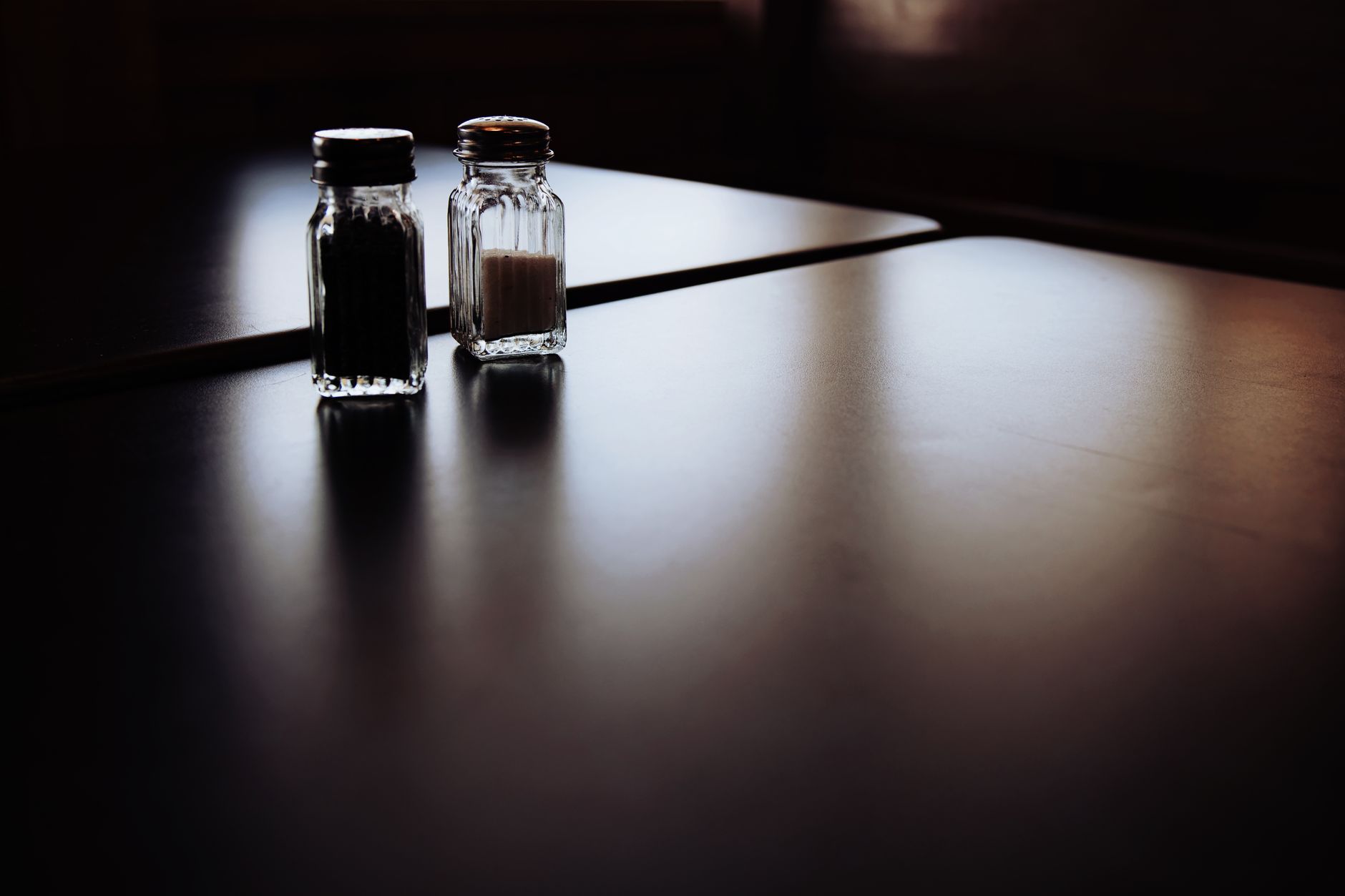
What happens when the salt loses its taste?
It becomes useless.
Not harmful. Not evil. Just… inert. A white powder that looks like it should be doing something, but isn’t.
That is the image Jesus paints in the Sermon on the Mount. It’s a quiet, terrifying picture for anyone who thinks they are "doing church" but hasn’t actually touched the world in a meaningful way for a while.
— "You are the salt of the earth. But if the salt has lost its taste, how shall its saltiness be restored? It is of no use then except to be thrown out and trampled underfoot."
We like to skip the second part of that verse. We love "You are the salt." It sounds noble. It sounds essential. We clip that out, put it on a cardstock paper, and hang it in the hallway. But Jesus didn't stop there. He followed the promise with a warning. A stark, practical observation about chemistry and decay.
And honestly? That’s where I usually stumble.
I’ve sat in pews and sung hymns for decades, yet there are weeks where I feel like my saltiness is zero. The flavor is gone. I’m just white noise.
The Chemistry of Decadence
To understand why Jesus used this metaphor, we have to look at the salt itself. In first-century Judea, salt didn’t come from evaporated oceans in neat little packets. It was harvested from the earth or dried out of springs. It was often mixed with dirt, minerals, and impurities.
When you used that salt—when it did its job of preserving meat or seasoning a meal—the pure sodium chloride would leach out. What was left behind? The dirt. The rock dust.
It still looked like salt to the naked eye. But it had no preserving power. It had no taste. If you put it on a roast, the meat would still rot because the actual agent of preservation had washed away.
This is a specific, physical process. It’s not mystical. It’s mechanical.
For centuries, the Church has debated what "salt" means symbolically—doctrinal truth, moral influence, preservation of culture. And those interpretations have merit. But the mechanism Jesus described is simpler and more personal than that. It’s about purity of contact.
Salt works by touching. By permeating. If you keep the salt in a sealed jar, it never preserves anything. It just sits there, accumulating dust.
We often think of our faith as something internal. A private relationship with God that needs to be protected from the messy outside world. We build walls. We keep our "salt" in the pantry of our private devotion. But the moment we seal it off from life, the impurities settle in. The flavor fades.
It’s a subtle death. You don’t die all at once. You just become harder to taste.
The Historical Weight of "Light"
Then there is the light.
— "You are the light of the world. A city built on a hill cannot be hidden. Neither do people light a lamp and put it under a bowl. Instead they place it on its stand, and it gives light to everyone in the house."
History remembers light differently than it remembers salt. Salt is about preservation; it’s slow, invisible work. Light is immediate. It reveals.
In the ancient world, a lamp wasn’t just for seeing. It was a social signal. To light your lamp and leave it on the porch was to say, I am here. I am awake. You are welcome. To put it under a bowl was an act of shame or secrecy.
There is a loneliness in hiding your light that is harder to admit than it is to show. We tell ourselves we hide our faith because of persecution, or fear of judgment, or social awkwardness. And sometimes that’s true. But often? We hide it because we’re tired of being seen.
I’ll be honest with you. I’ve struggled with this more than I’d like to admit. There are times when I walk into a room and immediately calculate the "spiritual cost" of speaking up. If I mention God, will they think I’m weird? If I pray aloud, will they judge me?
So the lamp goes under the bowl. The light dims to a pilot flame. And we wonder why the room feels so dark.
The city built on a hill cannot be hidden. That’s not a suggestion. It’s geography. If you are built on that hill, gravity does the rest. You cannot hide your height. But you can choose to turn off the lamp that illuminates it.
The "Three Lenses" approach often asks: What does Scripture say? What did history show? What does it mean now?
Scripture says we are essential, but fragile. History shows that communities of faith have repeatedly chosen the convenience of obscurity over the risk of visibility. And today? It means that being "salt and light" is not a performance. It’s a maintenance task.
The Autumn of the Soul
It is autumn here. The leaves are turning that rusty, specific shade of orange before they fall.
There is a kind of surrender in watching the trees let go. They don’t hold onto their green with white-knuckled fear. They release it. They trust that the branch is bare for a reason—that the weight of the leaf would break it if held too long.
We often think of "salt and light" as constant output. A relentless giving. More love! More service! More witness!
But the season suggests something else. Maybe being "salt and light" is less about adding to our lives and more about releasing the things that dilute us.
If your salt has lost its taste, it’s not because you haven’t done enough good deeds. It’s probably because the impurities of bitterness, resentment, or fear have seeped in and clogged the mechanism.
You don’t need more salt. You need to rinse the dirt out of what you already have.
This is where the quiet work happens. It’s not a sermon on Sunday morning. It’s that Tuesday evening when you catch yourself being cynical about a coworker, and instead of letting the cynicism sit there like sediment in a jar, you name it. You pray over it. You let the pure element of grace wash through the mix again.
It’s tedious work. It doesn’t make for a great social media caption. But it restores the flavor.
An Ordinary Week
So, what does this look like for you? Not in a crisis. Not at the hospital bedside or during a natural disaster. Just… this week?
It means paying attention to your own dilution.
You might notice that you’ve stopped praying because it feels repetitive. The "impurity" is boredom or a sense of futility. So you pray one short, honest prayer. Not a long one. Just: God, I’m tired of performing faith. Stay with me. That’s the rinsing.
Perhaps you realize that you’re avoiding a difficult conversation because you want to be "nice." The light is under the bowl. So you have the conversation. It might be awkward. That’s the cost of visibility. You let the lamp stay on the stand, even if it flickers.
Maybe you see that you’re consuming too much media that feeds your fear, and not enough time in the quiet presence of God that feeds your hope. The salt is getting wet with worry. So you turn off the screen for an hour. You sit in silence. You let the dry, pure element of trust re-establish itself.
It’s not about becoming a super-spiritual person who never stumbles. It’s about noticing when the flavor is gone and doing something small to restore it.
The leaves are falling outside my window right now. They look heavy, dark, and a bit sad. But they’re not dead. They’re preparing for the root system to work in the quiet dark of winter, so that next spring comes back with more vigor than before.
Your faith is likely in the same place right now. It’s just settling into a season where you have to trust the root system instead of watching the leaves.
Don’t worry about being "on" all the time. Just check your salt. Rinse it if it’s gritty. Keep your lamp on, even if the flame is small.
The world doesn’t need a perfect Christian. It needs one who is real. One whose salt still tastes like grace, even if it’s mixed with a little dirt from an ordinary, messy Tuesday.
That’s enough. That is the light.