God’s Plan Isn’t a Map: Finding Purpose in the Detours

The dust hadn’t even settled on the hill of Golgotha before Peter was running. Not toward the cross, but away from it. I’ve always loved that detail in Mark’s Gospel—the raw, unpolished panic of a man who thought he had the script memorized. Peter, the rock, the bold Confessor of Caesarea Philippi, was sprinting into the dark of a servant’s courtyard because fear tasted like ash in his mouth. He wasn’t plotting a grand resurrection strategy. He was just trying to survive the night. And when it was over, he wept bitterly. Not because he had a theology of suffering figured out, but because his plan for Jesus had shattered, and now he didn’t know who he was without it.
We spend a lot of time in the church talking about God’s "perfect will" as if it were a GPS that never loses signal. But let’s be honest for a second. Life rarely feels like a smooth drive on the highway. It feels more like Peter’s sprint—heart pounding, lungs burning, looking back to see if the enemy is following.
Summer has a way of exposing that gap between expectation and reality. When you have more time, when the usual busyness of work and school slows down to a crawl, you start hearing your own thoughts. And those thoughts often scream: If God is good, why does this hurt? If He has a plan, why am I lost?
We live in a culture that treats purpose like a destination you reach once you’ve checked off the right boxes. Degree. Job. Marriage. House. Dog. But what happens when life hands you a detour that looks more like a dead end? What if your purpose isn’t a place, but a person?
Here’s the thing about divine plans: they are rarely linear. They are messy. They are often written in the margins of our failures, not on the triumphal parade route.
Is My Purpose Something I Find Or Something I Follow?
We tend to treat "purpose" like a hidden treasure map. We think there’s a specific job title, a specific city, or a specific spouse that, once found, will unlock the rest of the puzzle. If I just find it, everything clicks. The static stops. The noise clears.
But that’s not what Scripture says. That’s what commerce says.
Look at Abraham. Genesis 12 is one of the most famous passages in the Bible, but we often skim over how terrifying it must have been. God didn’t give him a zip code. He gave him a command: "Go from your country, your people and your father’s household to the land I will show you." ().
Notice the promise that follows: "I will make you into a great nation... and all peoples on earth will be blessed through you." ().
That sounds huge, right? A global blessing. But look at the immediate aftermath. Abraham goes to Egypt because of a famine (which God didn’t predict in the initial call). He lies about his wife Sarah being his sister to save his own skin. He builds altars, sure, but he also builds doubts.
Abraham’s purpose wasn’t found in a single perfect moment of obedience. It was forged in the friction between God’s promise and Abraham’s fear. His calling wasn’t a destination; it was a relationship of trust built over decades of stumbles, lies, and eventual surrender.
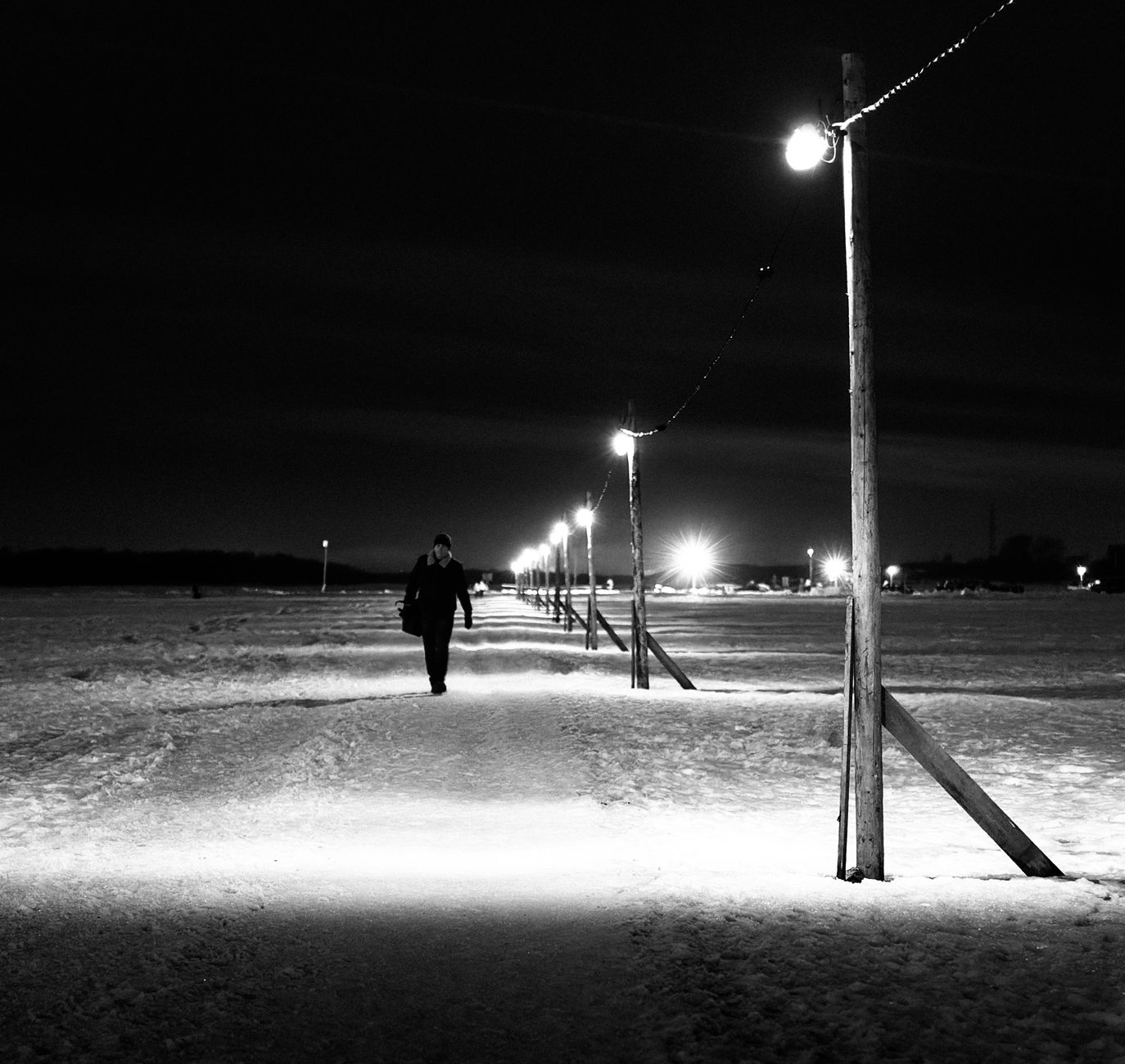
We want to believe that if we just look hard enough, we’ll see the path laid out before our feet. But more often, God asks us to take one step into the dark, trusting that He’ll light the next footfall.
I used to think I had to have my whole life mapped out to be "on purpose." If I was confused, I was off track. But looking at the Psalms, I see a different picture. The Psalmist isn’t always confident. Sometimes he’s angry. Sometimes he feels abandoned. "My God, my God, why have you forsaken me?" (). That’s not the language of someone who has it all figured out. That’s the language of someone wrestling with God in real-time.
Calling isn’t a static state of clarity. It’s the active process of walking with Someone who knows where you’re going, even when you don’t.
Why Does My Story Feel Smaller Than I Thought It Would Be?
This is the question that keeps me up at night sometimes. Or at least, it used to.
We grow up hearing stories of prophets who split seas and kings who conquered empires. We look at our own lives—paying bills, commuting in traffic, dealing with a leaky faucet—and we wonder: Is this it? Is my calling just... existing?
There’s a quiet grief in realizing you might not be the main character of history. You’re probably going to die without your name being on a building. Your impact might be limited to three or four people who remember how you made them feel.
And that’s okay. Actually, that’s beautiful.
Consider Mary of Bethany. In Luke 10, she sits at Jesus’ feet while her sister Martha bustles around serving. Martha is productive. She’s doing "great works." Mary is sitting still. And Jesus defends her choice, saying, "Mary has chosen what is better, and it will not be taken away from her." ().
Sitting still. Doing nothing. And Jesus calls that "better."
We live in a world that worships output. Productivity is our god. If you aren’t producing, you’re worthless. But God’s economy works differently. He doesn’t measure worth by scale; He measures it by proximity.
A mother holding a sick child in the middle of the night isn’t building an empire. A teacher staying late to help one student who doesn’t quite get it isn’t changing the global GDP. But in the Kingdom, these moments are heavy with glory. They are acts of worship.
I remember sitting in my car in the parking lot of a grocery store, just staring at the steering wheel. I had just been passed over for a promotion I thought was God’s will for my life. I felt small. Forgotten. Like my story had been truncated before it really began.
And then, just this quiet sense of peace came over me. Not because the promotion was coming now. But because I realized God hadn’t left me. He was right there in the disappointment. His calling for me wasn’t tied to that job title. It was tied to my presence in that parking lot, offering my frustration up to Him.
Your story doesn’t have to be epic to be essential. Sometimes, being faithful in the small, unseen moments is the most radical thing you can do.
How Do I Trust God When My Plans Make Sense but His Don’t?
This is the hardest part. The part that makes us want to grab the steering wheel back from God and drive ourselves home.
Sometimes, our plans make sense. They are logical. They are safe. And then God does something completely illogical.
Jonah is the poster child for this. He had a plan. Stay in Tarshish (Spain, basically). Live comfortably. Avoid Nineveh. It made sense. But God called him to go North, to the enemy city of Israel’s arch-nemesis, to preach repentance.
Jonah didn’t just disagree; he ran. He went down to Joppa, found a ship, and paid the fare.
Why? Because he knew God was gracious. "I knew that you are a gracious and compassionate God, slow to anger and abounding in love, a God who relents from sending calamity." ().
Wait. That’s a good thing, right? A merciful God is good! So why was Jonah mad?
Because if God forgives Nineveh, then Jonah’s special treatment as "God’s prophet" is less special. His plan for his own comfort and status was threatened by God’s generosity to others.
We do this all the time. We want a God who validates our preferences, not one who disrupts them.
When the job falls through, we panic because it didn’t fit our five-year plan. When a relationship ends, we spiral because it wasn’t the "one" we pictured in our heads. We treat God’s sovereignty like an inconvenience to our autonomy.
But look at what happens to Jonah in the fish. He doesn’t get a lecture on strategy. He gets a lesson on dependence. And when he finally preaches to Nineveh, and they repent, and God spares them... Jonah gets mad. He pouts in the heat.
God doesn’t strike him dead for his anger. God asks him, "Have you been right to be angry?" ().
It’s a gentle question. A loving rebuke. God is saying, My plan for these enemies is bigger than your pride.
Trusting God’s plan doesn’t mean we stop making plans. It means we hold them loosely. It means we say, "Lord, here is what I think should happen. But if You have something else in mind—even if it hurts, even if it’s confusing—I trust You more than I trust my logic."
That’s a scary trust. It requires admitting that we might be wrong about how our story should end. But it’s also the only way to find peace in the chaos.
So What Do I Actually Do Today?
If you’re reading this, maybe your map is blurry. Maybe you feel like you’ve been waiting for a sign that never comes. Or maybe the sign came, and you ignored it, and now you’re wondering if God is still talking.
This is the practical stuff. The "so what?"
Stop trying to figure out the next fifty years. Figure out the next hour.
God rarely gives us a 50,000-foot view until we’ve walked the first ten feet faithfully. He gave Moses a staff and a promise. That was it. No PowerPoint presentation. No job description. Just, "Take off your sandals. You are on holy ground." ().
Your "holy ground" is wherever you are right now. It’s not just the church building or the mission field. It’s your kitchen table. It’s your cubicle. It’s the hospital waiting room.
Love next to you. That’s usually where the calling is hiding.
Forgive that person who hurt you, not because they deserve it, but because you want to be free.
Show up for the people God has placed in your path, even when it’s inconvenient. Even when they are difficult. Especially then.
Keep showing up. Keep loving. Keep trusting. The details will fill in as you go. You don’t need to see the whole staircase; you just need to take the first step.
And when you stumble—and you will, Peter did, Jonah did, you and I do—don’t run away. Stay in the conversation. Let God meet you there.
Your calling isn’t a trophy to be won. It’s a life to be lived, honest and faithful, right where you are.
So take a breath. Look around. Who needs your love today? Go be that person. That’s enough. That’s everything.