Your House Won’t Survive the Rain: Building Family on Rock, Not Rituals
— “Everyone then who hears these words of mine and does them will be like a wise man who built his house on the rock. And the rain fell, and the floods came, and the winds blew and beat against that house, but it did not fall, because it had its foundation on the rock.”
Let that sit for a second. Read it again.
The rain fell. The floods came. The winds blew. And yet, the house didn’t fall.
It’s late October where I live. The air has that specific, biting chill that tells you the year is almost over, and if you look up from your screen, you’ll see branches bare against a gray sky. It’s the time of year when we naturally look back. We audit our lives. Did we grow? Did we connect? Or did we just… survive the months?
Most of us think this parable is about theology. It’s about hearing Jesus and obeying him. And it is. But when you read Matthew 7 with fresh eyes, specifically looking at the context of relationships and family, something else jumps out. Jesus isn’t just talking about your personal prayer life. He’s talking about the structural integrity of your home. Your marriage. Your parent-child bond. The way you speak to each other when the lights go down and there’s no audience left.
The Illusion of the Strong Foundation
We’re bad at this, aren’t we? We build our lives on things that look solid.
I’ll be honest—I’ve been guilty of this. I used to read this verse and picture a massive, concrete slab. Immovable. Cold. Hard as stone. I’d think, “Okay, if I pray enough, read my Bible every morning, and keep my head down at work, I’m on rock.”
But then the rain would come. You know what I mean? Not a biblical flood, just… Tuesday night. The kid is screaming because they’re tired and hungry. Your spouse gives you a look that says, “Are you even here?” The stress of the week hits all at once, like a pressure valve bursting. And suddenly, that “rock” I built on? It felt more like sand. Or worse, like quicksand.
Why? Because I had built on duty, not relationship.
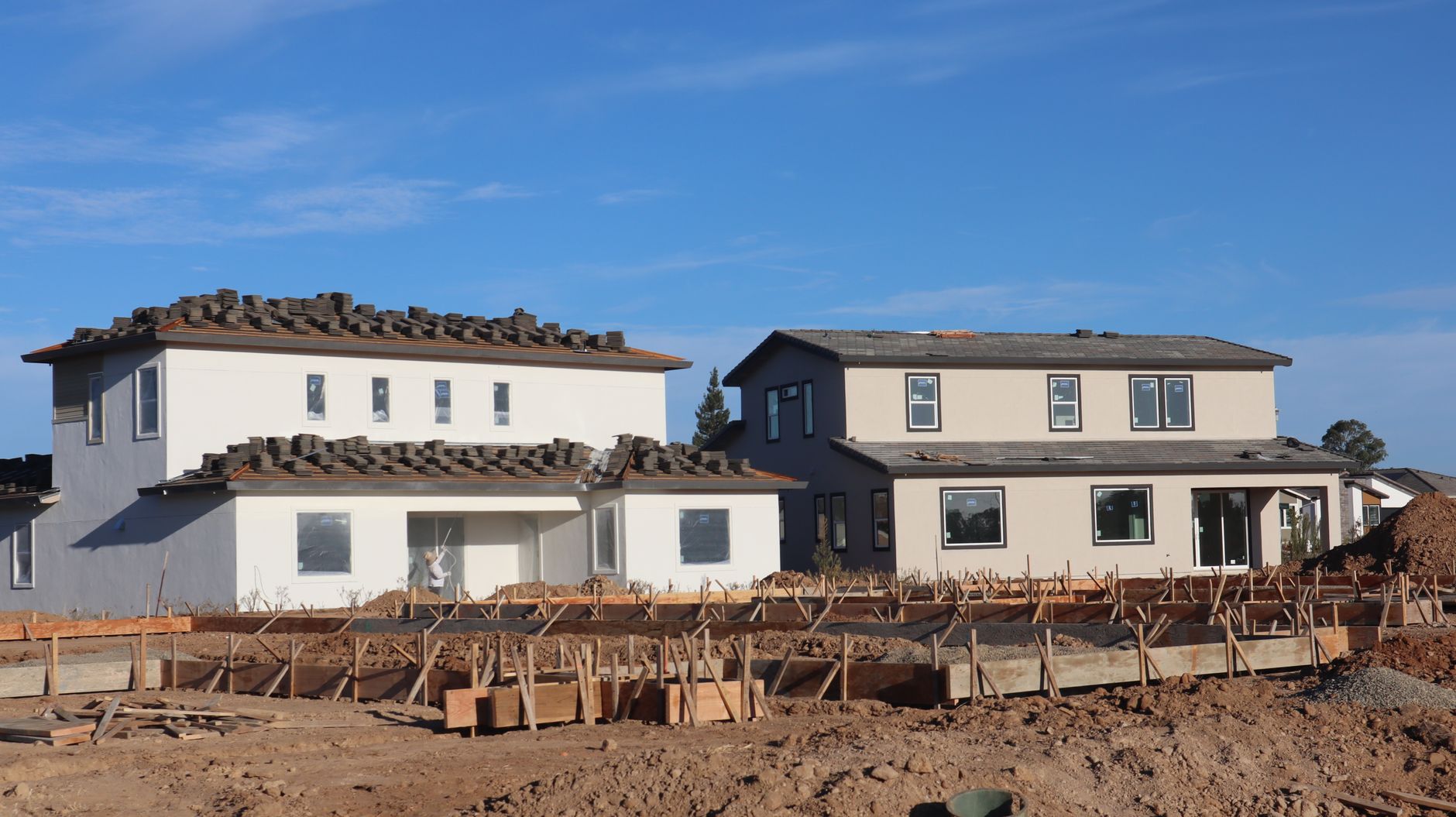
The foolish builder in the parable () built his house on sand. Why? Probably because sand is easier to work with than rock. It’s soft. You can pour a foundation into it quickly. It doesn’t require you to dig down deep, breaking through the topsoil to find the hard stone beneath. It requires less effort in the beginning, which makes it tempting.
In our families, “sand” looks a lot like routine without presence. It’s the Sunday morning church attendance where you’re checking your phone during the sermon. It’s saying “I love you” while looking at a tablet. It’s keeping up appearances for the neighbors, for the church body, or for our own pride, while the actual emotional connection between us is eroding grain by grain.
Sand holds together when it’s dry and packed tight. It looks good from a distance. But the moment water hits—the stress, the grief, the conflict—it liquefies. It shifts. The house leans.
Digging for What’s Real
The wise builder didn’t just pour concrete on top of dirt. He dug.
That’s the part we skip. We want the result (the house) without the labor (the digging). We want a strong marriage, a connected family, and spiritual peace, but we’re willing to build it on the surface level of “we go to church together” or “we share a roof.”
But Jesus says the house survives because it is on rock. What is rock in the context of a Christian family?
It’s not just intellectual agreement on doctrine. It’s shared vulnerability.
When you dig to rock, you hit hard material. You have to break it, or chip away at it, to make a level base. In relationship terms, that means you have to get down into the dirt of your own brokenness and let someone else see it. You have to say, “I’m not okay. I’m angry. I’m afraid I’m failing them.”
That’s scary. That’s why we prefer sand. Sand is safe. It’s easy to walk on. Rock is jagged. It can cut you if you’re not careful.
I remember a night last winter—no, not this one, but the previous year. My son was going through a phase of deep withdrawal. He’d lock his door for hours. I wanted to knock and ask, “How was school?” But I didn’t want to interrupt his “vibe.” So I left a snack on the door. We ate dinner in silence that night. Two people under one roof, miles apart emotionally.
It was a sand foundation moment. I was prioritizing comfort over connection. I was afraid of the jagged rock of his actual feelings.
It wasn’t until later, after a long, awkward conversation where he finally said, “I just feel like I’m not enough for you,” that we hit bedrock. It was painful. It was messy. There were tears. But after that night, the house held when the storms hit later in the year.
The Rain Is Coming (And It’s Not Always Dramatic)
Here is the thing about the parable that we often miss: The rain falls on both houses.
— “And the storm came, and its rain fell on both houses…”
The foolish builder’s house was in the same storm. The wise builder’s house was in the same storm. God didn’t shield one family from pain and give another a sunny day. The difference wasn’t the weather; it was the foundation.
This is crucial for how we view our families right now, as this year winds down. We tend to think that if a marriage is “strong,” it means there’s no conflict. If a family is “faithful,” it means everyone gets along.
Nope.
The storm comes to both. The bills come due for both families. The illness hits both households. The grief of loss enters both homes.
The only difference is whether the house stands when the water recedes.
If your family is going through a “storm” right now—and I suspect many of you are, whether it’s a health crisis, a financial tightrope, or just the slow erosion of distance—look at your foundation. Are you still building on sand? Are you still maintaining the image of a happy family while ignoring the cracks in your communication?
Or are you digging into rock? Are you using this quiet, autumn season to get real with each other?
Practical Steps for the Final Stretch of the Year
We have a few weeks left. The year is closing its ledger. This is not the time for superficial fixes. It’s the time to check your footing.
Here is what building on rock looks like in an ordinary week, not just on Sunday morning:
1. Name the Storm. Stop pretending everything is fine if it isn’t. If your spouse is distant, say so. “I’ve noticed we’ve been drifting apart lately. I’m scared.” That’s digging into rock. It’s uncomfortable, but it creates a foundation that can support weight.
2. Prioritize Presence Over Performance. Put the phone in a drawer. Not just during dinner, but for an hour on Saturday morning. Sit with your kids or your partner. Do nothing productive. Just be there. Rock is stillness. Sand is motion without direction.
3. Listen to Understand, Not to Reply. When your child vents about school, or your friend shares a burden, resist the urge to fix it immediately. Just sit in their pain with them. That shared silence is often where the true binding of a relationship happens.
4. Forgive Early. Sand accumulates with every grudge you hold onto. Rock is cleared of debris. Don’t let small resentments settle in your foundation over the next month. Clean them out now, before winter sets in.
A Note for Your Ordinary Week
I don’t know what your house looks like. I don’t know if you’re a single parent working two jobs, or a couple trying to work through the empty nest, or a young family surviving on fumes.
But I know this: The rain is going to come. It’s inevitable. Life is messy, and the world is loud.
You don’t need a perfect house. You don’t need a grand mansion with marble floors. You just need a foundation that won’t shift when the pressure drops.
So, as you close out this year, ask yourself one simple question: Am I building on what is easy, or am I digging into what is true?
If it feels like sand—soft, shifting, easy to work with but unstable—start digging. It’s hard. It takes sweat and tears and the willingness to look ugly in front of people you love.
But it’s the only way your home will stand when the next storm hits. And trust me, the next storm is already brewing on the horizon.
Build it well.