Most people picture the Battle of Jericho as a sudden, explosive collapse. You imagine the Israelites shouting, "Hooray!" and then crash—the mighty walls tumble into the dust like a house of cards. It’s a satisfying image. It feels like justice served instantly.
But here is the detail that often gets missed in the Sunday school retellings: The ramparts didn’t crumble on day one. Nor on day two. In fact, for five days, absolutely nothing seemed to happen.
If you were standing on that ridge looking down at the city, you would have felt the weight of that silence. You’d see the gates open. You’d see the merchants setting up their stalls. You’d hear the clatter of carts. Life in Jericho went on, oblivious to the army camped on the outskirts. And then, on the seventh day, the wall crumbled.
Why did it take so long? Why did God require them to circle the fortress seven times before they could raise a weapon? This story isn’t just about military strategy. It’s about the discipline of faith. And right now, as we settle into the routine of a new season—autumn air, shorter days, the hum of a new schedule starting—it might be exactly the kind of lesson we need to hear again.
Why did they have to walk around the city seven times?
Let’s examine the text itself. Joshua 6 gives us the instructions.
— "March around the city once with all the armed men, and do this for six days. On the seventh day march around the city seven times, while the priests carry the seven ram’s horn trumpets. When you hear the long blast of the trumpets, when all the people give a great shout, the wall of the city will crash down."
Seven is the number of completeness in the biblical world. It’s the number of days in the creation week. It’s the number of years in a sabbatical cycle. By making the Israelites walk seven times, God was marking this event as a completed work. It wasn’t a partial victory. It was total.
But why march? Why not just charge in?
Think about it like a musical performance. Imagine a choir preparing to sing a complex hymn. They don’t just start singing the first note and hope the rest works out. They count the time. They follow the conductor’s baton. They move together in a specific rhythm. If one person rushes ahead, the harmony breaks. If everyone stops too early, the song feels unfinished.
The march was the rhythm of their faith. Each lap was a chance to choose trust over fear. Each time they passed the gates, they had the option to stop. They could say, "This is ridiculous. Let’s just go in now." But they kept going. They let the silence stretch. They let the tension build.
I’ll be honest—I’ve struggled with this part of the story myself. There are times in my own life when I feel like I’m just going through the motions. I pray, I read, I serve, but I don’t feel anything changing. I wonder if I’m wasting my time. I want to see the wall fall now. I want instant proof that God is listening.
But the march teaches me that the waiting is part of the work. The silence isn’t empty. It’s full of promise. Every step is an act of worship. Even when I can’t see the result, I am moving closer to the breakthrough.
How does this story connect to gratitude and spiritual wellness?
At first glance, a battle story doesn’t seem like the place to look for gratitude. Battles are chaotic, loud, and often frightening. But if you look closely, Jericho is a masterclass in thanksgiving.
Consider the perspective of the Israelites. They were still, in many ways, a people shaped by Egypt. They knew what it was like to be slaves. They knew what it was like to be trapped. So when they stood before the walls of Jericho, they weren’t just looking at bricks. They were looking at their own past. The wall was a mirror. It showed them how far they had come.
Gratitude, in this context, isn’t just a polite feeling. It’s a recognition of rescue. It’s saying, "I am not here by my own power. I am here because someone broke the door down."
This connects to spiritual wellness in a specific way. In our modern lives, we often measure our health by what we lack. We check our bank accounts. We count our calories. We tally our mistakes. We are constantly auditing our deficits.
But the Jericho mindset flips the ledger. It asks, "What has already been delivered?"
When you stand before the wall, you realize you are already on the outside. You are already free. The fact that the wall is still standing doesn’t mean you are still a prisoner. It means the final formalities are being processed.
Practicing this kind of gratitude changes your nervous system. It shifts you from a state of threat-detection to a state of safe-arrival. You begin to breathe deeper. Your shoulders drop. You start to notice the small blessings around you—the warmth of the sun, the sound of birds, the kindness of a stranger. These small notices accumulate. They build a foundation of peace that no external crisis can easily shake.
Think of it like harvesting. Right now, in the autumn, we are gathering what has been grown. We are picking the fruit. We are storing the grain. We are preserving the food for the winter. It’s a season of tangible thanks. You can hold the produce in your hands. You can taste the sweetness. It makes the abstract concept of "blessing" feel very real.
What role did the priests and the trumpet play in the victory?
This is a detail that often gets overlooked in popular culture, but it’s crucial to understanding the theology of the event. The text specifies that priests were carrying seven ram’s horn trumpets.
— "On the seventh day march around the city seven times, while the priests carry the seven ram’s horn trumpets."
Who were these priests? In the Old Testament, the priesthood was a specific office. These men were responsible for maintaining the sanctuary, offering sacrifices, and mediating between God and the people. They were the spiritual leaders of the nation.
So, why were they leading the march?
In ancient Near Eastern warfare, commanders usually led from the front. Generals rode at the head of the army, giving orders and inspiring troops. But here, the spiritual leaders were walking ahead of the soldiers. They were setting the pace. They were the focus of attention.
This suggests that the victory was not primarily a military achievement. It was a liturgical one. The Israelites were not acting as an army conquering a city. They were acting as a congregation entering a holy space. The city of Jericho was, in a sense, a temple. It was a place of worship. And the priests were leading their people into that place to offer praise.
The trumpet blast was the signal. In biblical times, trumpets were used to announce important events. They called people to assembly. They sounded alarms. They celebrated victories. In this case, the long blast was the announcement that the time was ripe. It was the sound of God saying, "Now."
This has profound implications for how we view our own spiritual lives. We often think of ourselves as the protagonists of our faith stories. We think our prayers are the main event. Our good deeds are the key to success.
But the Jericho model suggests that we are part of a larger procession. We are walking alongside others who are also seeking God. We are following the lead of those who have gone before us. We are responding to the call of the Holy Spirit, which is like the trumpet sounding in our ears.
When we recognize this, we feel less alone. We feel less burdened. We know that we don’t have to carry everything by ourselves. We just have to keep walking. We just have to listen for the sound.
How can we apply this "marching" discipline in our busy modern lives?
This is where the story moves from history to habit. How do we actually "march" around our own Jerichos?
First, we have to identify our walls. What is the barrier keeping us from the next step in our faith? Is it fear of failure? Is it guilt over past sins? Is it apathy? Is it a specific relationship that needs healing?
Once you’ve identified the wall, you have to commit to the process. You have to agree to go around it. You have to agree to the repetition.
Here are some practical ways to do this:
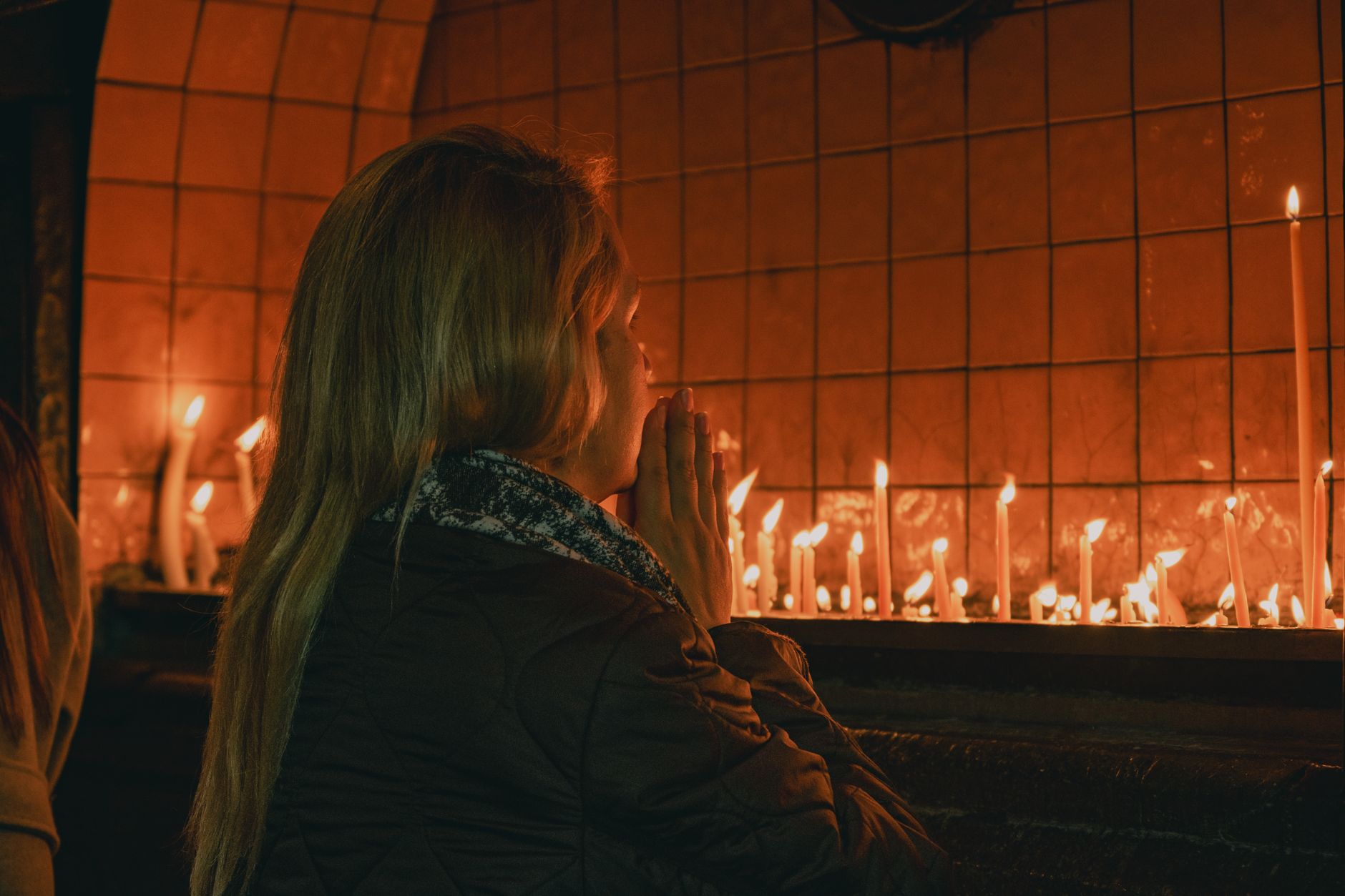
Create a Ritual of Remembrance. Just as the Israelites marched, you need a physical or mental action that reminds you of your dependence on God. This could be lighting a candle each morning. It could be reading a specific Psalm before bed. It could be taking a ten-minute walk in nature where you intentionally listen for signs of God’s presence. The key is consistency. You do it even when you don’t feel like it. You do it especially when you don’t feel like it.
Practice "Silent Observation." The Israelites watched the city for days. They saw the daily life of the Jerichoites. You can do the same with your own life. For one week, try to observe your habits without judging them. Notice when you get angry. Notice when you feel anxious. Notice when you feel grateful. Notice what triggers your stress. Notice what brings you peace. This observation is the first step toward understanding your own patterns. It’s like standing on the ridge and watching the city. You are gathering data. You are learning the layout of the terrain.
Invite Community. The Israelites didn’t march alone. They were a community. You don’t have to do this journey in isolation. Find one or two trusted friends who are also on a spiritual path. Share your struggles with them. Share your victories with them. Ask them to pray for you. Let them hold you accountable. Sometimes, the "wall" we are trying to get around is the wall of our own pride. We think we can do it all by ourselves. But the march requires unity. It requires synchrony. It requires the group to move as one.
Wait for the Signal. This is the hardest part. We want to act immediately. We want to fix everything right away. But the Jericho story teaches us to wait for the trumpet. We have to learn to discern when God is ready to move. This might mean pausing a project. It might mean delaying a decision. It might mean staying quiet when you want to speak. It requires humility. It requires trust. It means believing that the timing is perfect, even if it doesn’t make logical sense to us.
Does the order of the march matter?
Yes, it does. The sequence is critical.
- The First Six Days: One lap per day. This establishes the baseline. It creates the expectation. It builds the momentum. It allows for reflection. It prevents burnout. It ensures that the effort is sustainable.
- The Seventh Day: Seven laps in one day. This is the climax. It is the surge. It is the release of energy. It is the moment of resolution.
If you skip the first six days and go straight to the seventh, you won’t have the stamina. If you do the seventh day but forget the first six, you won’t have the context. The order matters because it reflects the nature of spiritual growth. It is gradual. It is cumulative. It is climactic.
Think of it like training for a marathon. You don’t run 26 miles on day one. You build up. You run 5 miles, then 10, then 15. Then, on race day, you run the full distance. The preparation is essential. Without it, you crumble.
Similarly, in our spiritual lives, we need to build up our capacity for faith. We need to practice small acts of trust. We need to endure small periods of uncertainty. Then, when the big test comes, we will be ready. We will have the strength to finish.
What happens after the wall falls?
After the wall crashes, the Israelites enter the city. But the story doesn’t end there. There are consequences. There are judgments.
The city is devoted to destruction. Everything in it is consecrated to the Lord. The people, the livestock, the trees—all are destroyed. This is a severe judgment. It shows that Jericho was not just a random city. It was a symbol of something. Perhaps it represented the old order. The pagan religion. The entrenched sin.
For the Israelites, this was a warning. It showed them what happens when a people refuse to listen to God. It showed them the cost of stubbornness. It reminded them that mercy has limits. That patience runs out.
But it was also a gift. Because the destruction of Jericho cleared the way for the Promised Land. It removed the obstacle. It opened the path. It allowed the people to move forward into their inheritance.
So, the falling of the wall was both a judgment and a liberation. It was a destruction that enabled a birth. It was a death that facilitated a life.
This duality is present in our own lives. Often, the things that break us are the things that free us. The painful breakup that forces you to find yourself. The job loss that pushes you to pursue your passion. The illness that teaches you to value health. The loss that deepens your empathy.
We tend to focus on the pain. We focus on the destruction. But we miss the liberation. We miss the opening. We miss the path.
To practice gratitude in this context, we need to look beyond the immediate damage. We need to look for the hidden benefit. We need to ask, "What is this clearing the way for?" "What am I being freed from?" "What am I being prepared for?"
It’s a shift in perspective. It’s a widening of the lens. It’s a move from the micro to the macro.
How does this truth echo across the whole story of God's people?
Zoom out. Look at the whole canvas.
The story of Jericho is not an isolated incident. It is a chapter in a much larger book. It is a scene in a dramatic play. It is a verse in a poetic song.
When you look at the entire biblical narrative, you see a recurring pattern. You see a chosen group. You see a promised territory. You see tests by barriers. You see salvation by divine intervention.
The Israelites leaving Egypt was a Jericho moment. The Red Sea was the wall. The parting of the waters was the collapse. The crossing was the entry.
The conquest of Canaan was a series of Jericho moments. Each city was a barrier. Each battle was a test. Each victory was a step toward fulfillment.
Even Jesus’ life had Jericho moments. His entry into Jerusalem was a procession. He was riding a donkey. He was being welcomed. But he was also heading toward the cross. The cross was his wall. The resurrection was the collapse. The empty tomb was the entry.
Paul’s conversion on the road to Damascus was a Jericho moment. The blinding light was the shock. The three days in darkness were the waiting. The regaining of sight was the breakthrough. Ananias laying hands on him was the priestly touch.
Peter’s calling was a Jericho moment. Leaving the nets was the decision. Following Jesus was the march. The transformation from fisherman to apostle was the result.
You see the pattern? It’s consistent. It’s universal. It’s timeless.
God’s people have faced walls throughout history. They have had to march. They have had to wait. They have had to listen.
And in every case, the result has been the same. The wall has fallen. The path has opened. The promise has been fulfilled.
This is the communal echo. It’s the shared experience. It’s the collective memory. It’s the common heritage.
We are not alone in this. We are part of a long line of believers who have walked this path before us. We are standing on their shoulders. We are benefiting from their faith. We are continuing their journey.
This gives us a sense of belonging. It gives us a sense of purpose. It gives us a sense of hope.
We know that the wall will fall. We know because others have seen it fall. We know because God has done it before. We know because it is His character.
So, as we sit in this autumn, reflecting on our own journeys, let us take heart. Let us remember that we are marching. Let us remember that we are not alone. Let us remember that the wall is not permanent. Let us remember that the trumpet is coming.
And when it sounds, we will be ready. We will shout. We will enter. We will inherit.
The walls didn’t fall because they were weak. They fell because they were strong enough to hold for six days. And then, on the seventh, they gave way to the power that had been patiently accumulating.
Your wall is holding. Good. It means you’re still in the process. Keep walking. Keep listening. The sound is close.