You are not a mistake. You belong at the table.
It’s autumn out here. The light is getting shorter, and if you’re like me, that triggers a low-level hum of anxiety in your chest. We start counting down the days until winter hits, or we look at our calendars and see how much has already slipped through our fingers. It’s a season for pulling up roots, isn’t it? For letting go of things that no longer nourish us.
That’s where Peter comes in. Not the confident, fish-casting Peter we read about earlier in Acts. This is a different Peter. He’s sitting on a rooftop, probably freezing his tail off, trying to figure out why God hasn’t given him the next move. And what he gets isn’t a map. It’s a vision that makes absolutely no sense.
Why did God show Peter dirty animals?
You’d think the vision of a sheet coming down from heaven, filled with all kinds of four-footed animals, winged creatures, and crawling things, would be a comfort. But for Peter, it was a shock to the system. He saw clean animals—sheep, cows, pigs—and he also saw unclean ones: rabbits, lizards, snakes.
His gut reaction? “No, Lord.”
Peter says to himself, “I have never eaten anything common or unclean” (). He’s holding onto the rules. The boundaries. The clear lines between what is acceptable and what isn’t. For a Jewish man in the first century, those dietary laws weren’t just about food; they were identity. To eat a “clean” animal was to say, I am part of this covenant. To mix it with the “unclean” was to blur who you were.
And honestly? I get that instinct. We love our boundaries. In our mental health circles, we talk about “boundaries” like they’re a vitamin. We set them to protect our peace. And we should! But Peter’s mistake wasn’t having boundaries; it was treating them as walls instead of gates. He saw the vision, recognized the divine command to “kill and eat,” and his natural reaction was to reject the new reality because it didn’t fit his old category.
Have you ever felt that pull? You know a truth in your spirit, but your flesh screams no because it disrupts the order you’ve built? That’s Peter. That’s us when we’re afraid that God’s expansion will destroy our stability.
How does this challenge the idea of "normal"?
Here’s the hard part. The voice from heaven tells him, “What God has made clean, you must not call common” ().
This isn’t just about pork and shellfish. This is a theological earthquake. God is saying that His goodness isn’t limited to the people you consider “safe,” “relatable,” or “spiritually qualified.”
Let’s be real for a second. Church can be a place where we sort people into boxes. There are the “in-group” folks—people who dress a certain way, pray in a certain style, or have it all together. Then there’s everyone else: the ones struggling with depression, the addicts in recovery, the singles who seem to never settle down, the ones whose marriages are on life support.
We often unconsciously treat those outsiders as “unclean” in a social sense. We keep our distance to protect our own comfort. Peter’s vision shatters that. God is saying, Stop sorting My people by your standards of hygiene and success.
I’ll be honest. I’ve struggled with this too. There have been seasons where I looked at a friend wrestling with severe anxiety and felt a weird mix of pity and… distance. Like I was afraid their chaos would infect my calm. It’s a humble thing to admit, but it happens. We want our faith to feel tidy. But God’s love is messy. It’s inclusive in a way that makes us squirm because it demands we look at the person, not their performance.
What does this mean for your mental health?
If you’re reading this and feeling like a “crawling thing” in that sheet—something God made, but something the world tells you is strange or broken—hear this: You are clean.
Your diagnosis does not disqualify you. Your past doesn’t make you unclean in His sight.
This is crucial for mental health because so much of our suffering comes from shame. Shame whispers, You are a burden. You don’t belong here. It tells you that if God loved everyone equally, He’d probably skip over the ones who are “messy.”
But look at what God did. He didn’t just say, “Come as you are.” He actively brought the sheet down to show Peter that he was wrong for excluding. The initiative was divine. God moved first.
Think about the last time you felt excluded from a community of faith. Maybe it was a small group that seemed to have a specific vibe you didn’t fit, or a church culture that valued loud enthusiasm over quiet struggle. That feeling of being an outsider? It’s not a spiritual failure. It’s often a mismatch between your current season and their specific expression of faith.
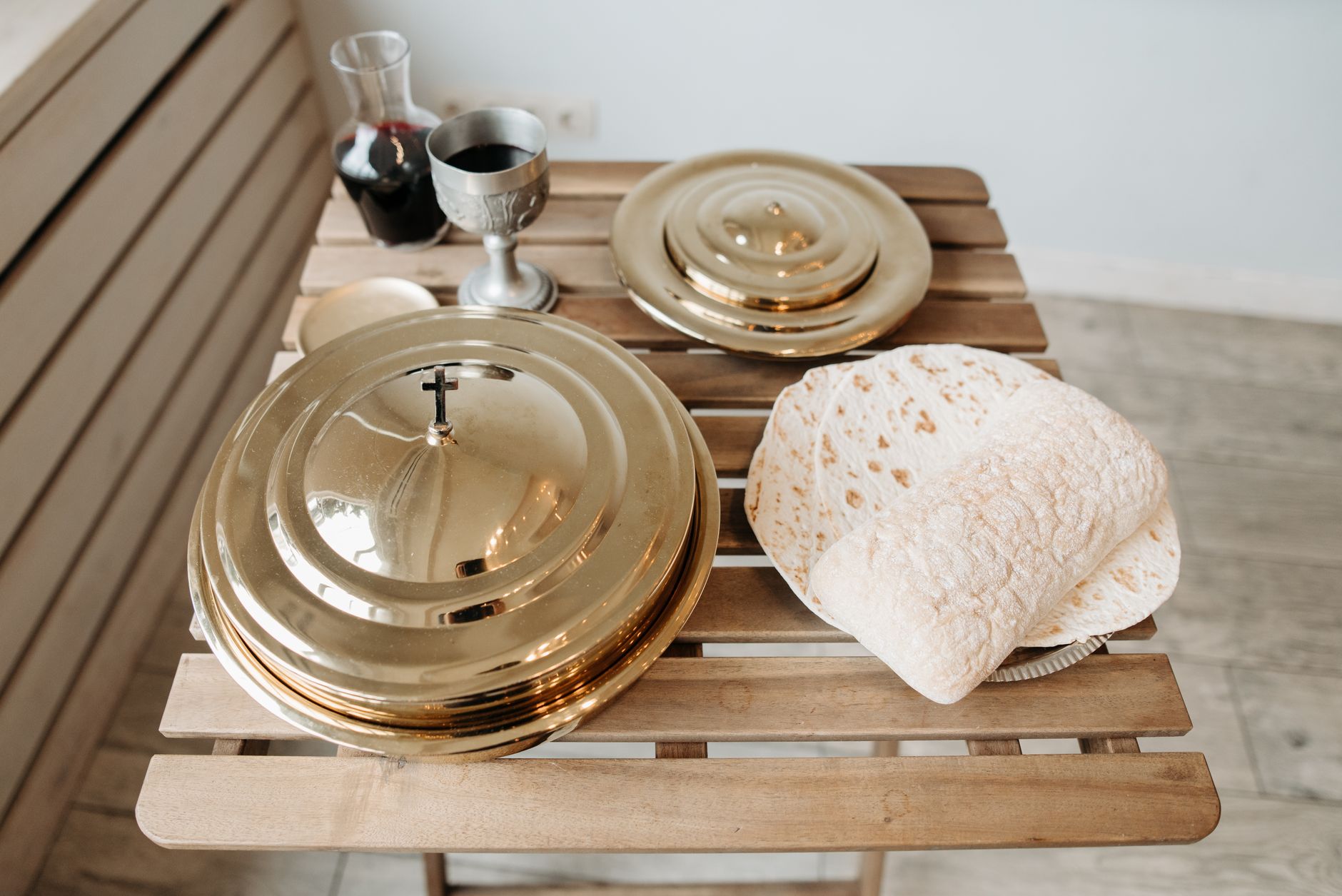
God is inviting you to the table, regardless of what’s in your plate right now. Whether that plate is full of bread and fish or empty because you can’t find the appetite, He’s still laying out the food.
Is it okay to feel confused by God’s will?
Peter was confused. He didn’t fully understand the vision until Cornelius showed up at his door later that day. The “unclean” man from the vision was a Roman centurion, a Gentile, and a believer.
Sometimes we want God to explain the “why” before He shows us the “what.” We want the sermon that goes with the vision. But often, God gives us a nudge—a feeling, a prompt, a person—and expects us to take the step before we have all the answers.
That can be terrifying when you’re already dealing with anxiety. Trust is hard when the ground feels unstable. But here’s a thought that might help: Confusion is not condemnation.
Just because you don’t understand why God is leading you into a new relationship, or a new job, or a different way of praying, doesn’t mean you’re going the wrong way. It might just mean your “Peter” is still processing the sheet coming down from heaven.
Take a breath. You don’t have to explain everything right now. You just have to keep your eyes open.
Back on that rooftop, the wind must have been cold against Peter’s neck. The sheet was still there in his mind’s eye, full of life he hadn’t been allowed to see before. He had to kill and eat. He had to let go of the old menu, the old rules, the safe list of things that belonged.
It’s autumn now. The leaves are falling off the trees we’ve been looking at all year. It looks like loss, but it’s actually preparation. The tree isn’t dying; it’s surrendering what it can no longer hold so it can survive the winter and bloom again.
You are not a mistake in that sheet. You are part of the clean creation God has made. And He is still preparing a place for you at the table, even if your hands are shaking right now.