The smell is distinct. Wet wood, sheep wool, and the metallic tang of rain hitting hot iron. Noah stands on the deck of a vessel that defies logic—a 450-foot box floating in an ocean that shouldn’t exist. The water is still rising, or maybe it’s just standing there, holding its breath. Below the hull, everything he knew is gone. His neighbors, his vineyard, his history. All submerged in a silence so heavy it feels like pressure against the eardrums.
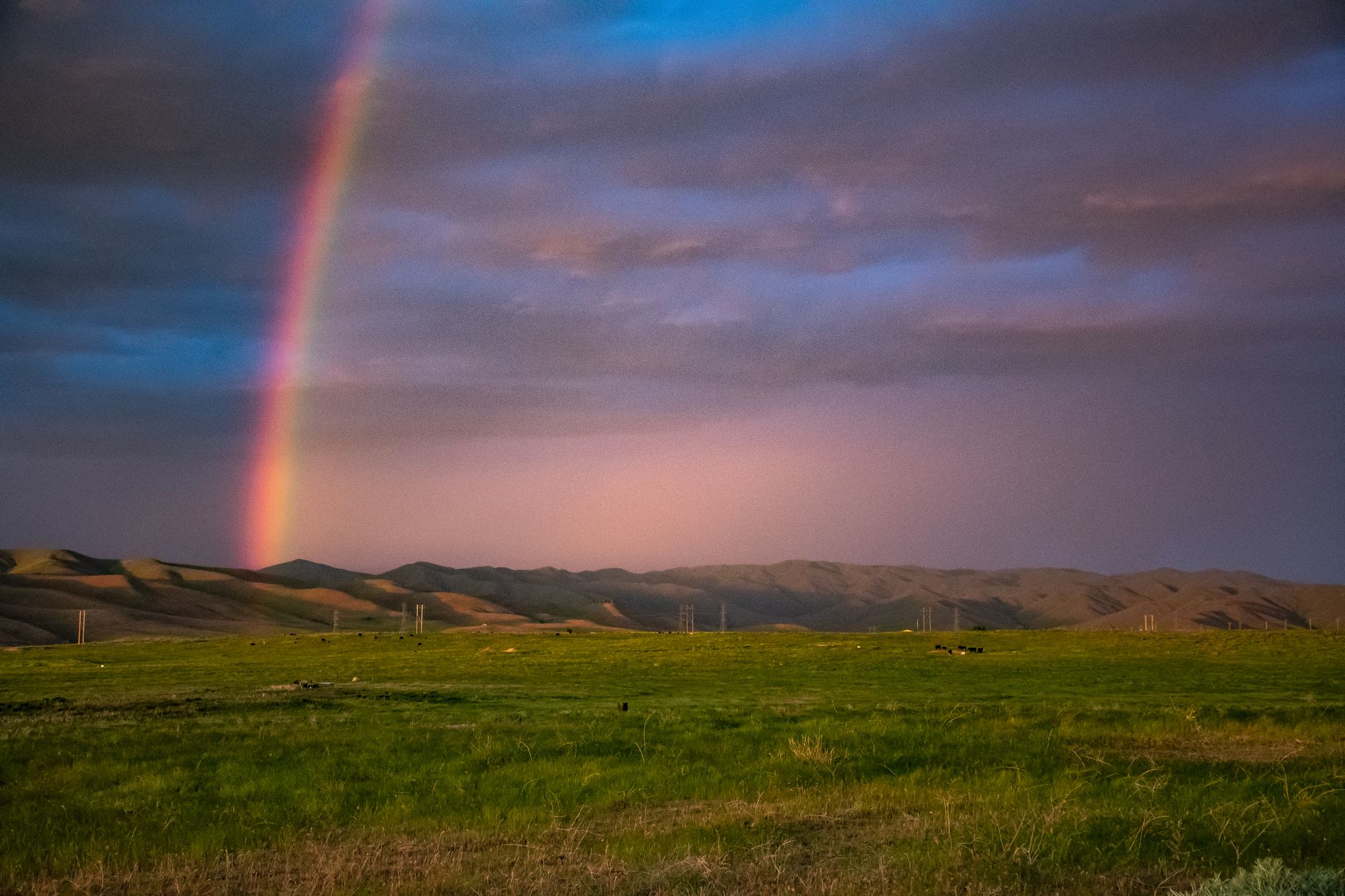
He looks up. The clouds are parting, just slightly. And there it is. Not a rainbow, exactly—not the crisp arc we see on sunny days after a summer storm—but a spectral band of light refracting through the mist. It’s fragile. It looks like it could shatter if he breathed too hard.
But God speaks. And the words are startlingly specific.
Most of us think of Noah’s Ark as a story about obedience or judgment. We picture the floodwaters as God’s angry finger pointed at human sin. And that part is true. But if you only read Genesis 9 with those eyes, you miss the emotional core of the story. You miss what God actually felt when He looked at His creation after wiping it out with water.
This isn’t just a story about survival. It’s the first recorded instance of God making a unilateral covenant with humanity—and it changes how we understand divine grief.
The Anatomy of Divine Grief
Before the flood, God wept about human wickedness. says, “The Lord regretted that he had made man on the earth, and he was grieved in his heart.” The Hebrew word for regret here is nāḥam. It’s a visceral term. It implies a change of mind, a deep emotional shift, almost like a physical ache in the chest.
God wasn’t just angry at our sin; He was heartbroken by it.
When Noah steps out of the ark, God makes a promise that sounds almost shocking in its specificity. He isn’t just saying, “I’ll be nicer from now on.” No. says,
“I set my rainbow in the clouds, and it shall be the sign of the covenant between me and the earth. Whenever I bring clouds over the earth and the rain falls upon the earth and the rainbow appears in the clouds, I will remember my covenant between me and you and every living creature of all flesh that is with you, and the waters shall never again become a flood to destroy all flesh.”
Notice what God says He will do. “I will remember my covenant.”
That’s a striking theological statement. In the ancient Near East, covenants were often bilateral—“I’ll do X if you do Y.” But this is unilateral. God binds Himself to His own character. He says, “When I see the rainbow, I will remember.”
Why does an omniscient God need to remember? He can’t forget. But this wasn’t about memory in the cognitive sense; it was about intention. God is saying, “When I see that light, I am going to choose mercy again. I am choosing not to judge.”
I used to read that verse and think, “Well, obviously He remembers.” But then I started thinking about my own habits. How often do I fall into the same cycle? I promise to stop snapping at my kids when I’m tired. Then, three weeks later, I’m back in that same reactive loop, wondering why the promise felt so easy to make and so hard to keep.
God is saying He won’t be like that with us. When the storms come—and they will, because we live in a fallen world—He isn’t going to gaze at the chaos and say, “Maybe I should just wipe the slate clean again.” He’s going to look at His promise and hold fast.
The Color of Mercy
Here is where it gets weird, and I mean that in a good way.
In ancient Israelite culture, the rainbow didn’t exist as we know it today in the same way. The word for “rainbow” in Hebrew is qāṭanās. It’s a rare word, appearing only twice in the Old Testament. One of those times is here. The other is in , where God asks Job, “Have you ever given orders to the rainbow, or told the morning mist what to do?”
Some scholars argue that qāṭanās doesn’t mean “rainbow” but rather a “bond” or a “covenant seal.” It’s the visual manifestation of a legal agreement.
But let’s step away from the linguistics for a second and talk about the psychology of it.
We live in an era that is obsessed with “new beginnings.” It’s autumn now. The leaves are turning. Schools have started, or they’re starting soon. There’s a cultural rhythm that says, “September is fresh.” We buy new planners. We set new routines. We tell ourselves that the person who struggled in August is dead, and this new month brings a cleaner self.
But here’s the honest truth: New beginnings don’t always feel like fresh starts. Sometimes, they just feel like a new way to fail the same test.
If you’re reading this right now, maybe you’re sitting in a quiet room after a long day. Maybe the house is finally silent. And you’re thinking about that one interaction from lunch where you lost your temper, or the email you sent in frustration that you now wish you could take back. You’re wondering if God is looking at you with disappointment. If He’s thinking, Again? Really?
No.
The covenant of the rainbow is a counter-culture to our fear of being “too much” for God. It’s not that we haven’t broken things. We have. The flood wasn’t a hypothetical; it was a historical reality in the biblical narrative, and our spiritual condition is always under pressure. But God’s response isn’t, “I’m done with you.” It’s, “I am bound to you by my own word.”
I used to read that verse and think, “Well, obviously He remembers.” But then I started thinking about my own habits. How often do I fall into the same cycle? I promise to stop snapping at my kids when I’m tired. Then, three weeks later, I’m back in that same reactive loop, wondering why the promise felt so easy to make and so hard to keep.
God is saying He won’t be like that with us. When the storms come—and they will, because we live in a fallen world—He isn’t going to gaze at the chaos and say, “Maybe I should just wipe the slate clean again.” He’s going to look at His promise and hold fast.
When the Water Is Rising
Let’s get practical for a moment, because faith that doesn’t land in your Tuesday afternoon feels like fiction.
You’re dealing with something right now that makes you feel small. It could be health, it could be a relationship, or it could just be the sheer weight of fatigue. You stare at the problem and you think, This is a flood. It’s rising faster than I can bail.
The temptation is to view the water line as judgment. You assume that because things are bad, God is angry. That He’s about to pull the plug again.
But the ark wasn’t a place of punishment; it was a place of preservation. God didn’t throw Noah into the flood to suffer; He closed the door to save him from it.
So, when you feel like you’re drowning in your responsibilities or your emotions, try to shift the narrative. Are you being punished? Or are you being preserved?
There is a massive difference in how you sleep at night.
If I believe God is angry, I feel guilty. If I believe He is preserving me, I can rest. Even amidst the turbulence. Especially amidst the turbulence.
I’ll be honest with you: I struggle with this flip. When my anxiety spikes, it’s hard to convince my brain that the pressure is protection. My instinct screams danger. But the rainbow covenant says, “The very thing that looks like destruction (the rain/clouds) is actually the medium through which I am displaying My faithfulness.”
That’s a hard truth to swallow. It means the weather isn’t always the enemy. Sometimes, it’s just the context in which God is working on your character.
A Question for Your Day
We don’t always see the rainbow immediately after the rain stops. Sometimes, you have to look up. You have to tilt your head back and face the sun while it’s still raining on you. That’s an awkward posture for a human being to hold, isn’t it? To stand in the wet and look up at the sky simultaneously.
It’s a posture of trust that is uncomfortable. It says, “I am caught in the downpour, and I am looking for the sign.”
So here is a question to carry with you today. Not one that demands an immediate answer, but one that might soften the edges of your worry a little.
When you stare at the current chaos in your life, what does it mean about God’s heart toward you?
Is He the One who is causing the storm to get your attention? Or is He the One standing at the edge of the water, holding the door shut, waiting for you to step out?
Take a breath. Look up. The light is still there, even if you can’t see the arc yet.