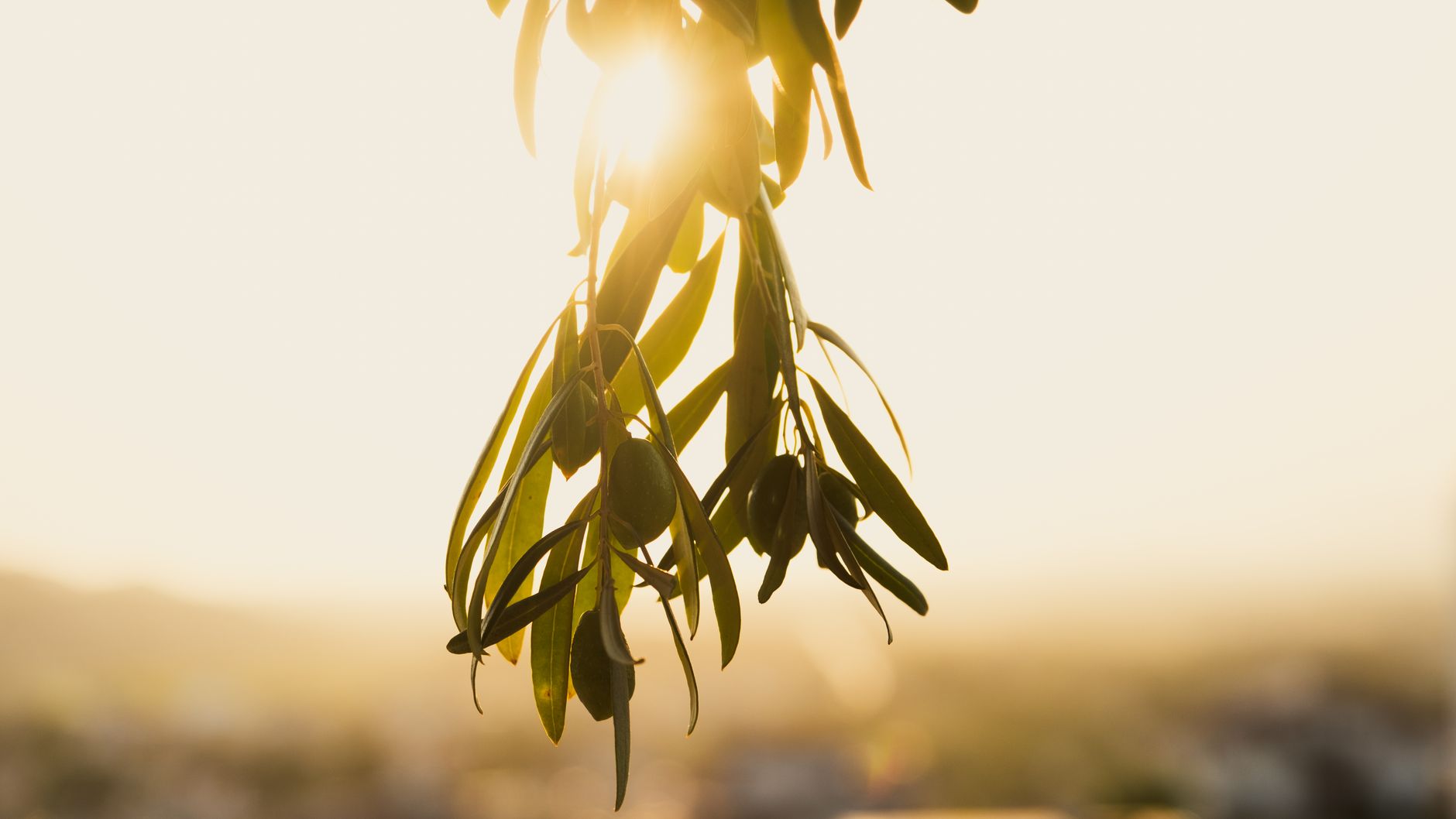
In the ancient Near East, olive trees were not just plants; they were property lines. If you wanted to know who owned a plot of land, you didn’t look for a fence. You looked for the olive grove. These trees could live for centuries, their trunks twisting into gnarled shapes that looked like they were fighting the wind. But here is the detail most people miss: an olive tree does not give fruit every year. In fact, it often rests for a full cycle, producing nothing but leaves and silence while the neighbors’ trees burst into green abundance.
It’s a strange kind of quiet. And it’s frustrating.
If you’ve been waiting on God for something specific—a healing, a job, a relationship to turn the corner—you know this feeling. You look around and see others thriving while you seem stuck in a holding pattern. It feels less like faith and more like being held hostage by time.
The Trap of Spiritual Productivity
We love to talk about patience as if it’s a passive virtue. Like sitting still is the hard part. But biblically, patience is active endurance. It’s holding on when let go would be easier. And it’s terrifying because we’ve been conditioned to believe that if you’re not producing, you’re failing.
Consider the story of Hagar in Genesis 16. She was pregnant. The evidence was physical, undeniable, and right there in her body. Yet when Sarah’s attitude turned sharp and judgmental, Hagar fled into the wilderness. Why? Because she couldn’t handle the tension of waiting to be accepted, even though the child was already growing inside her.
Hagar found an angel in the wilderness. And what did God tell her? Not to run back immediately. Not that everything was fixed.
— "The angel of the Lord said to her, 'I will increase your descendants so much that they cannot be counted. . . .' The angel also said, 'You are pregnant and will conceive a son. You shall name him Ishmael, because the Lord has heard your cry while you were in distress.'"
God didn’t change her circumstances instantly. He named the child. He validated her pain ("He has heard your cry"). And He promised a future that required time to unfold.
I’ll be honest, I’ve struggled with this distinction. For years, I treated waiting as a test of my spiritual maturity. If I felt anxious, it meant my faith was weak. So I gritted my teeth and tried to force a sense of peace through sheer willpower. It didn’t work. I was just suppressing the data.
But looking at Hagar, and later at Jesus in Gethsemane, I realize something different. Waiting isn’t about feeling calm. It’s about trusting that the One who holds the timeline is more reliable than my own desperate need for a "right now."
The Season of Resting Leaves
There’s a reason the olive tree rests. If it bore fruit every single year without pause, it would exhaust its root system. It would die of overproduction. The rest is necessary for the survival of the tree, even if it appears as death to those watching from the outside.
This is where the autumn metaphor starts to feel less forced and more real. The leaves are changing color. They’re not dying; they’re letting go to preserve the tree for winter. There is a kind of holy surrender in that process. The tree doesn’t fight the cold by clinging tighter to its leaves. It releases them, trusting that the roots are still alive underground, even when the top is bare.
When we wait on God, we often want to hold onto our plans like the tree holds onto its leaves in a gale. We clutch them tight, shaking and shivering, hoping the wind will stop so we can keep our shape. But God often asks us to let go of the plan, not because He hates it, but because He wants us to survive its absence.
This is the hard theology of rest. It’s not doing nothing. It’s acknowledging that your effort has limits.
A Practical Shift: From Watching to Trusting
So how does this look in real life? It looks like a shift in attention.
When I’m waiting, my eyes are usually fixed on the horizon, scanning for the thing I want to arrive. A text message. A diagnosis change. An offer letter. And every time the horizon stays empty, my anxiety spikes. I start questioning God’s goodness. Does He even see me?
The antidote isn’t to look harder at the horizon. It’s to look down. To check on your roots.
What are you doing with the time that is here? Not the future time, but today. The next four hours.
— "Trust in the Lord with all your heart and lean not on your own understanding; in all your ways submit to him, and he will make your paths straight."
Notice the verb. It says "lean," not "struggle" or "agonize." Leaning is a weight transfer. It’s allowing gravity to do its job. When I try to carry the entire outcome of a season on my shoulders, I get crushed. But when I lean into God’s provision for today—the meal in front of me, the prayer that comes easily, the kindness from a stranger—I find I can endure.
I used to read this verse and feel nothing. It felt like a platitude. "Just trust Him." Easy to say from a place of comfort. But recently, I’ve started to treat it like a physical instruction. When the anxiety hits, I literally ask myself: Am I trying to do God’s job? Am I trying to force the fruit before it’s ready? And then I pull back. I let go of the outcome for an hour. Just one hour.
It doesn’t fix everything. But it stops the bleeding.
The Hidden Work of Waiting
We tend to think of waiting as empty space. A void between "I want" and "I have." But if you look closely at Scripture, waiting is often where the character is forged.
Think about Joseph in Genesis. He spent years in a pit, then a slave house, then prison. Years of waiting for the throne. If you were sitting in that Egyptian dungeon, would you have thought it was "good"? Probably not. You’d have called it waste.
But those years weren’t wasted. They were the kiln. The heat that hardened the clay so it could hold water later, without cracking. Joseph’s ability to lead Egypt through famine wasn’t born in the palace. It was built in the dirt of his waiting years. He learned to manage resources when he had none. He learned to speak with dignity when he was a slave.
Waiting is where the "how" gets worked out, even if the "what" is still hidden.
It’s a bit like baking bread. The dough sits in the bowl, looking puffy and messy, doing absolutely nothing visible. But down at the cellular level, the yeast is working. The gluten is strengthening. If you pull it out too early and bake it, you get a dense, gummy mess. It resembles failure. But if you trust the timer, it rises into something light and life-giving.
You are in the bowl right now. It’s quiet. It smells a bit sour. But it’s working.
Letting the Silence Speak
There is real freedom in realizing that your waiting is not a sign of God’s absence. Sometimes, the silence is His voice saying, Hold on.
We live in a culture that hates a pause. Silence is awkward. We fill it with noise, with opinions, with frantic activity. But the Bible suggests that God speaks in a "still small voice" (). He doesn’t usually shout over the storm. He waits for the shouting to stop so you can hear Him.
This season, as the year turns and the light gets shorter, try to resist the urge to fill every quiet moment with productivity. Sit in it. Let the discomfort be there. Don’t try to argue with your feelings. Just acknowledge them, and then turn your face toward God in the quiet.
You don’t have to understand why you’re waiting. You just have to know Who is holding the clock.
And He’s not running late. He’s on time. Which, honestly, is the only timeline that matters in the end.