Baklava's Rich History
4 min readPastor West
My Experience with Baklava
The phyllo dough is technically supposed to consist of 33 layers, one for each year in the life of Jesus Christ. However, when and where the treat was invented is up for debate.
You'll find many variations of this treat. Here's one that I thought was pretty simple to make.
Ingredients
Syrup:
- 1 1/2 cups water
- 1 1/2 cups granulated sugar
- 3/4 cup honey
- 2 teaspoons vanilla extract
Baklava:
- 16 ounces phyllo dough
- 1 pound walnuts (raw)
- 1/2 cup salted butter (I used Kerry Gold (more may be needed))
- 1 teaspoon cinnamon (I used pumpkin pie spice)
Instructions
- To make the syrup, combine water, sugar, honey and vanilla in a medium sized saucepan. Bring to a boil, stir to dissolve sugar, and then reduce heat so that it can maintain a simmer. Maintain simmer and cook uncovered for about 25-30 minutes. Transfer to a glass measuring cup and allow to fully cool.
- Preheat oven to 325 degrees F.
- Spread walnuts onto baking sheet into single layer. Toast in preheated oven for 15-20 minutes, stirring occasionally to prevent burning. Remove from oven and allow to fully cool. Use a large knife to chop them into small pieces or pulse in food processor (my preferred method). Combine with cinnamon and set aside. I still remember the first time I made this, my kitchen was filled with the aroma of toasted walnuts and it brought back memories of my grandmother's baking, where the smell of sweet pastries would fill our home on Sundays. As I worked, my kids would often gather around the kitchen island, watching with curiosity as the layers of phyllo and nuts came together - it was a special moment for us to share, and one that I'll always treasure.
To assemble and bake baklava:
- Unroll phyllo dough. Cut all sheets in half so that they fit perfectly in a 9x13 baking dish. Dampen and ring out two clean kitchen towels or large sheets of paper towels and place them above and below the phyllo dough. Keep the dough covered at all times so that it doesn't dry out.
- Using a pastry brush, paint the bottom of the baking dish with butter. Add two sheets of dough, spread a thin layer of butter on top, then repeat with two more sheets of dough, butter, dough, butter, etc. until you have a base layer of 8 sheets.
- Now, you will lay down a thin layer of melted butter, 2-3 tablespoons of the crushed toasted cinnamon nuts, and top with a pair of phyllo layers. Repeat this butter/nut/phyllo layering process until you are left with 8 remaining phyllo pieces.
- The top layer will consist of a double layer of phyllo, a brushing of butter, another double layer of phyllo, and a final brushing of butter. If you run out of butter, you may need to melt more, but the goal is to have a very thin layer every time you add it and I like to paint the top with the last bit of butter.
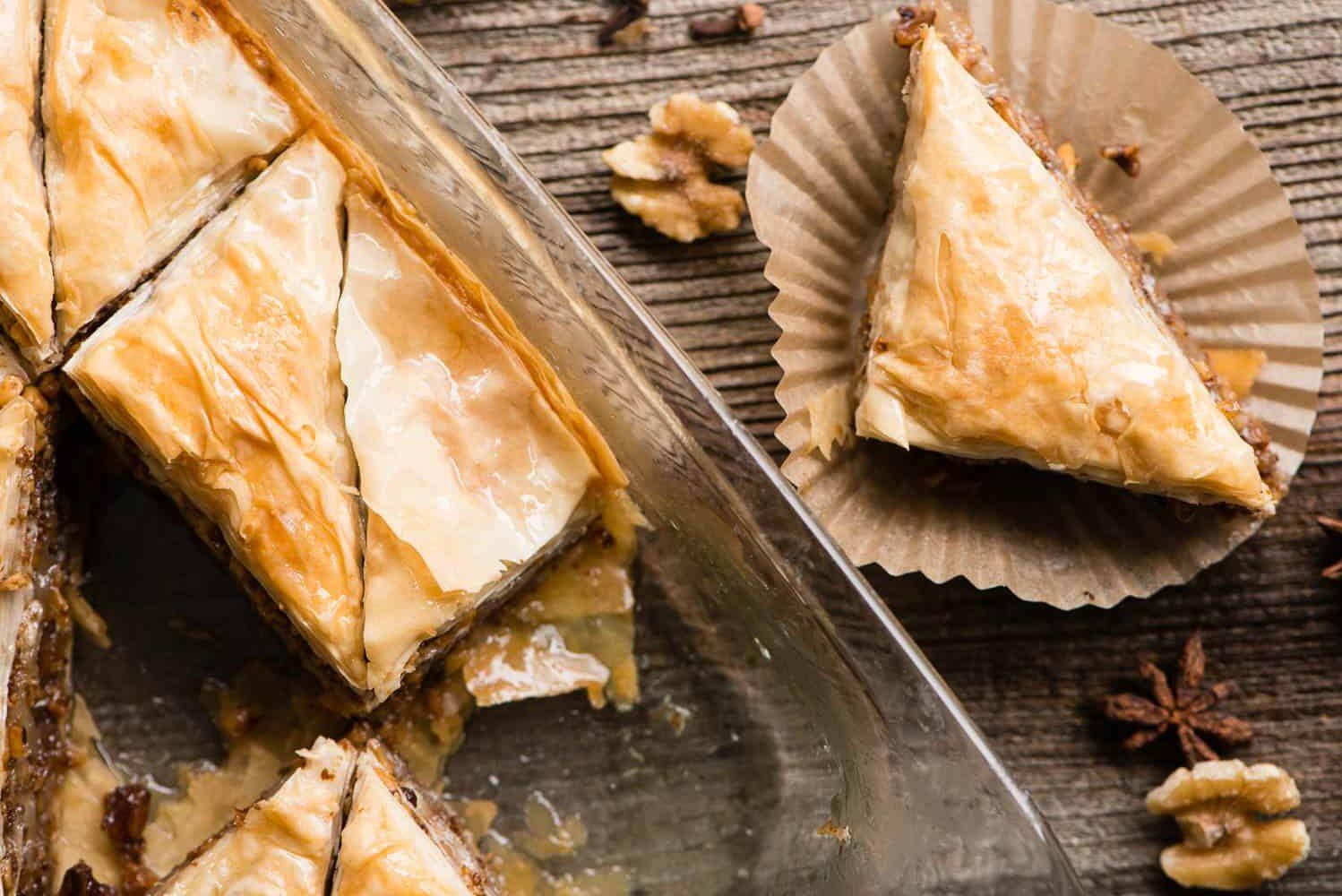
- Cut the baklava prior to baking with a very sharp knife. Cut through the top layer but do not go all the way through to the bottom. You want the bottom layer to remain in tact. I prefer triangles so I cut rectangles first and then cut across on a diagonal.
- Bake in preheated 325 degree F oven for about 50 minutes until the top is crisp and golden.
- As soon as you remove it from the oven, pour the cooled syrup over the entire top, allowing it to sink down through all the layers. This is why you didn't cut all the way through. By leaving that bottom layer whole, it won't make your baklava soggy. Allow to cool.
- Best if served same day, but can be stored for several days at room temperature. I prefer to cover loosely to keep it clean, however air flow is needed to prevent the baklava from getting soggy. I recall serving this at a family gathering, and it was amazing to see how something so delicate could bring so much joy to the people I love. One of my relatives, who's a bit of a skeptic when it comes to trying new foods, surprised me by asking for seconds - it was a small victory, but it made all the effort worth it.