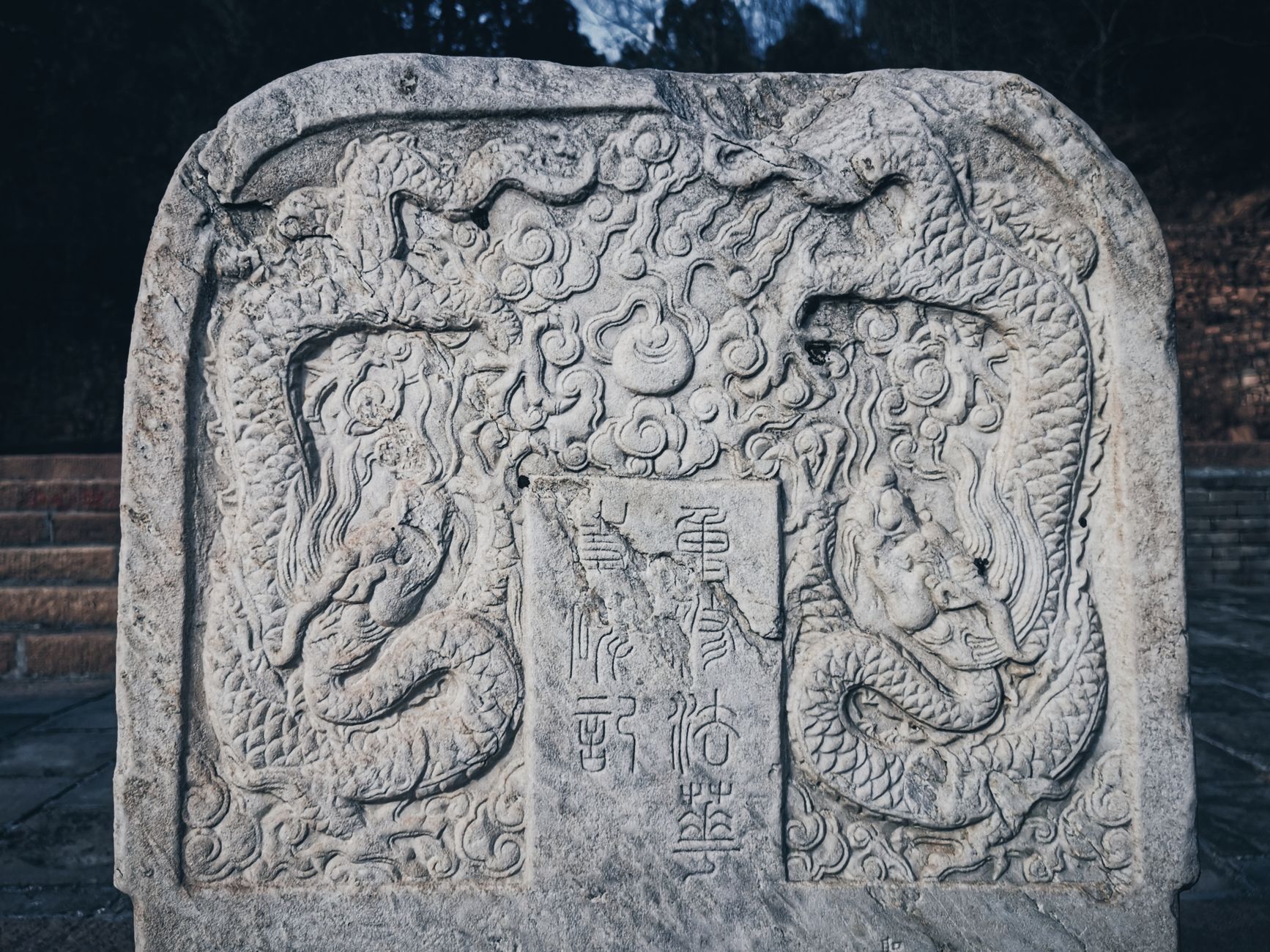
The Stone Tablet vs. The Living Relationship: What the Decalogue Actually Does to You
“You shall have no other gods before me.” —
Read that again. Slowly.
It’s not a rule about idol worship in the ancient sense of burning incense to carved statues. It’s a declaration about priority. God is saying, “I am first. I am the only one who gets to be your highest good.”
We tend to think of these laws as a list of "don'ts." Don’t steal. Don’t lie. Don’t cheat on your spouse. It feels like a legal code, cold and distant. But when you peel back the layers, they aren’t just restrictions. They are the architecture of a life that actually works.
It’s late autumn now. The leaves have mostly fallen, and the days are getting shorter. There’s a natural rhythm to this time of year that forces us to look back. To inventory what we have. To ask if the foundation is solid before winter sets in.
If you’re like me, you’ve spent parts of your life trying to “be good” by checking boxes. Pray this amount. Read that many chapters. Serve in that ministry. And when you missed a box, you felt guilty. When you hit one, you felt smug.
But the Decalogue isn’t about performance metrics. They’re about who you are in relation to God and your neighbor.
Let’s look at a story that shows the difference between two very different approaches to this same Law.
The King and the Man Who Wasn’t
In 2 Samuel, we meet David. He is a giant. King of Israel. A man after God’s own heart (at least, that’s what the text says). He defeats Goliath. He unites the tribes. He writes poems that make theologians weep two thousand years later.
Then, one day, he stays in bed while it rains. He’s supposed to be with his soldiers at the front lines, but he’s lounging around. And from his palace roof, he sees a woman bathing.
Bathsheba.
David’s eyes lock onto her. Then his heart does something dangerous. It moves from appreciation to possession. To desire. To acquisition.
He sends for her. He makes her his wife. And when she gets pregnant, he tries to hide it by calling Uriah, the soldier, home. But Uriah is too honorable to go in and lie with his wife while his brothers are sleeping in the dirt. So David gets Uriah killed in a battle that’s meant to be a victory.
David, the giant, commits adultery and murder. And he does it while sitting on a palace roof in the rain.
Here’s the shock: David breaks Commandment Six (“You shall not murder”) and Commandment Seven (“You shall not commit adultery”). He breaks the law. Big time.
But look at what happens next. Nathan the Prophet comes to him and tells him a story about a rich man who steals a poor man’s only lamb. David gets angry. He says, “The man shall die!”
Nathan turns to him and says, “You are the man.”
David didn’t argue. He didn’t make excuses. He said, “I have sinned against the Lord.”
That’s the turning point. Not because he was perfect before, but because when he failed, he didn’t hide behind his resume. He fell back on God’s mercy.
Contrast this with a man named Ananias and Sapphira, recorded in Acts 5. They sell property for the church. They keep some of the money and bring a portion to the apostles, claiming it’s all of it. They’re lying about their giving.
Peter looks at them and says, “Why has Satan filled your hearts to lie to the Holy Spirit?”
And they drop dead.
Wait, what? David commits adultery and murder and gets a promise of forgiveness? Ananias and Sapphira lie about money, and they die?
It feels unfair. It feels like the statutes are a trap that kills you for small stuff and spares you for big stuff.
But that’s not what’s happening.
The Heart Behind the Stone
The Ten Commandments were never meant to be a checklist for salvation. They are a mirror.
When God gave the tablets to Moses on Mount Sinai, He didn’t hand down a set of rules for people who were already in right standing with Him. He gave them to people who had just been enslaved, then redeemed, and now needed to learn how to live as a free people.
The law reveals sin. It shows us where we’ve made idols of our own making.
David’s problem wasn’t just the sex or the murder. It was that he had made himself a god. He thought his desires were the final authority. He thought he could manage God’s people without submitting to God’s will.
The couple’s problem was that they had made appearance a god. They wanted to look holy. They wanted the community to see them as generous, but their hearts weren’t aligned with that image.
The Commandments strip away the pretense. They say, “You can’t perform your way into God’s favor. You have to be in a relationship with Him.”
This is where it gets personal for me. I’ll admit, I’ve struggled with this. There was a season in my life where I thought faith was about output. If I wasn’t serving, I wasn’t faithful. If I wasn’t reading my Bible in a certain way, I were drifting.
I felt like an employee trying to meet a quota. And when life got messy—when the kids were sick, or work was brutal, or my mind was loud—I felt like I’d failed the "Don’t be anxious" test (which isn’t even a commandment, but I treated it like one).
I was living under the law, not in its grace.
And then I read .
“For what the law was powerless to do, weak through the flesh, God did by sending his own Son in the likeness of sinful flesh to deal with the sin of the flesh: to make its requirement our very life, so that we who do not live according to the flesh but according to the Spirit may fulfill the requirement of the law.”
That verse hit me like a truck.
The Spirit doesn’t help us keep these rules by willpower. He makes them our nature. You stop stealing because you’re afraid of jail? No. You stop stealing because you’ve been so flooded with God’s generosity that greed feels unnatural. You don’t love your neighbor because you have to. You do it because God’s love is so big in you that it spills over.
The Decalogue isn’t a cage. It’s a container. And the Spirit is the water that fills it.
Living It Out When the Year Is Ending
It’s November. The year is winding down. We’re all in a kind of spiritual inventory mode.
Maybe you’ve felt the weight of this. Maybe you’ve looked back at your last twelve months and seen places where you fell short. Where you were selfish. Where you gossiped. Where you let pride get the better of you.
Here’s the thing about these precepts in late autumn: they’re not meant to make you feel guilty about what’s left. They’re meant to orient you for what’s coming.
Look at the first four commandments. They are all about God.
- No other gods.
- No idols.
- Do not take the name of the Lord in vain.
- Remember the Sabbath day.
These four are the foundation. If you get these right, everything else flows from them. You don’t serve God because you want to feel good. You serve Him because He is worthy of your worship, and rest is a gift from Him, not something you earn.
Then the last six commandments are about your neighbor. 5. Honor your father and mother. 6. You shall not murder. 7. You shall not commit adultery. 8. You shall not steal. 9. You shall not bear false witness. 10. You shall not covet.
Notice the progression. It goes from family, to life, to marriage, to property, to speech, to the inner heart (coveting). It’s a map for community.
If you are in a season of volunteerism, or community work, or just trying to be a better neighbor this winter, the statutes are your compass.
They say: honor your parents (or your mentors/elders). Protect life (physically and emotionally). Be faithful in your relationships. Don’t take what isn’t yours. Speak truth. And watch your heart, because that’s where it all starts.
Coveting is the root of it all. It’s the little voice that says, “I want what they have.” And when you start coveting—whether it’s a house, a spouse, or a title—you’ll do almost anything to get it. You’ll lie. You’ll steal. You’ll hurt people.
But when you stop coveting, something shifts. You start seeing your neighbor not as a competitor for God’s favor, but as a fellow recipient of His grace.
That reshapes how you volunteer. It reshapes how you listen. It reshapes how you forgive.
The Quiet Return to the Roof
I keep coming back to David on that roof in the rain.
He had it all. The kingdom, the wealth, the power. But he was lonely. He was disconnected. And when that disconnect hit him, he didn’t turn to God first. He turned to his own eyes. To his own desires.
That’s the danger of these laws if we treat them as just rules. They can become a mirror that only reflects our failures, making us feel like we’re always falling short.
But they don’t have to be that.
They can be a mirror that shows us where we need to turn back to God. Where we need to say, “I don’t have this in me. I need Your Spirit. I need Your love.”
David did that. And God restored him. Not because David was perfect, but because he was honest.
As the year ends, maybe you’re sitting in your own “palace roof.” Maybe it’s not a literal palace. Maybe it’s your home office, or your car in the driveway after work. And you’re looking out at a life that looks good on the surface, but feels hollow underneath.
Don’t rush to fix it with more activity. Don’t add another task to your plate just because you feel guilty about the last few months.
Sit with it. Look at the Decalogue not as a list of things you’ve failed to do, but as a description of who God wants you to be. A person whose first love is for Him, and whose second love flows naturally from that.
The leaves are gone now. The branches are bare. It looks stark, a bit cold. But that’s when you see the shape of the tree clearly. No leaves to hide behind. Just the structure.
So, what is your structure?
Is it built on stone? Or is it built on sand, hoping the winter doesn’t come too hard?
You don’t have to fix it by Friday. You just have to start turning your eyes off the world and back to Him.
“I have sinned against the Lord.”
It’s a short sentence. But it changes everything.