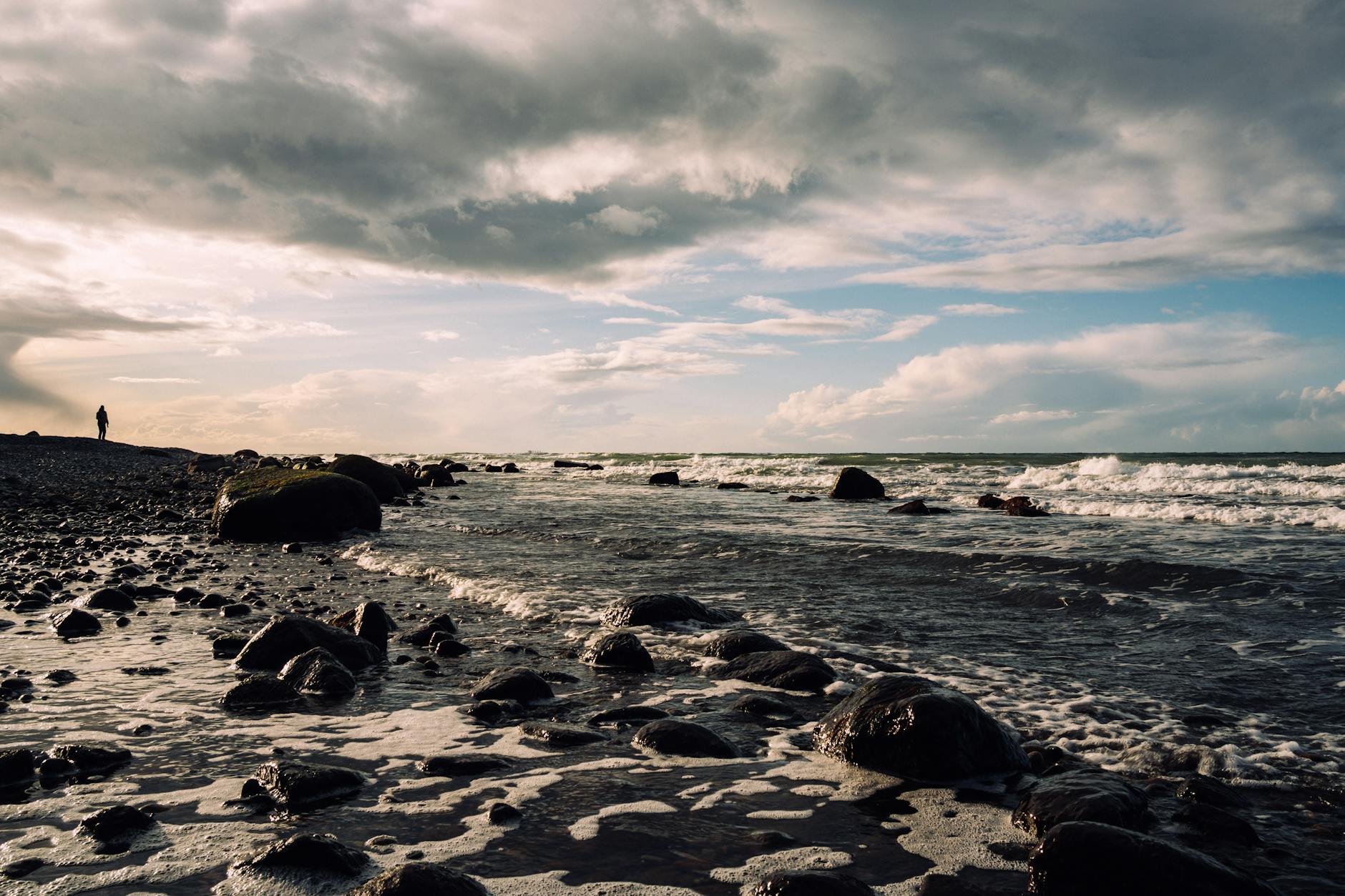
— "Immediately Jesus made the disciples get into the boat and go on ahead of him to the other side, while he dismissed the crowd. After talking with them, he went up on a hill privately to pray. When evening came, he was there alone, but the boat was already numerous miles from shore, battered by the waves; the wind was against it. Late at night, he was coming toward them in the fourth watch of the night, walking on the sea... Peter then got down out of the boat, walked on the water, and came toward Jesus. But when he saw the strength of the wind, he was afraid and, beginning to sink, cried out, 'Lord, save me!'"
That’s the verse. The whole scene. The chaos. The miracle. The failure.
It’s one of those stories we hear so often in Sunday school that we stop seeing the grit in it. We glide past the freezing water, the six-hour storm, the panic of men who had fished for a living suddenly losing their grip on reality. We skim over it to get to the "Jesus calms the sea" part. But this isn’t that story. This is the story of a man who stepped out, made it halfway, and then started to drown.
And honestly? It’s the most honest spiritual story in the New Testament.
The Illusion of Control
Look at Peter. Just hours before this, he’d walked out of the boat. He’d felt the water hold him. He’d looked Jesus in the eye and kept moving. It was a moment of pure, unadulterated faith. Or so he thought.
But then he looked away.
The text says, "But when he saw the wind..."
It wasn’t the wind that sank him. The wind was still there. It was still cold. It was still blowing. What changed was Peter’s focus. He shifted his gaze from the One who called him to the force that threatened to crush him.
We do this all the time. We treat faith like a contract: If I believe hard enough, the storm stops. But Jesus doesn’t always stop the storm. Sometimes, he just walks on it. Sometimes, he’s right there in the chaos, and you have to learn to walk toward him while the waves are still crashing around your ankles.
I remember sitting in a hospital waiting room a few years back. My dad was in surgery. The doctors said it was routine, but it wasn’t. I had read the scriptures about peace that surpasses understanding. I had the verses ready. I had the theology locked and loaded. But when the clock hit 2:00 AM and the silence in the hallway felt heavy enough to break ribs, my faith didn’t feel like a shield. It felt like a thin sheet of glass.
I wasn’t afraid of death. I was afraid of the uncertainty. And that’s where Peter was. Not afraid of the storm itself, but afraid of losing control of it.
The boat was small. The wind was strong. The disciples had been rowing for hours. They were exhausted. And then, in the darkness, a figure appeared. Not walking through the water, but on it. Defying gravity. Defying logic.
"It is a ghost," they cried out in terror.
Peter, the impulsive one, the one who always spoke first, didn’t wait for Jesus to explain. He didn’t wait for a theological lecture. He blurted it out. "Lord, if it’s you, tell me to come to you."
That’s the thing about real faith. It’s not a calm lake. It’s a request made in the middle of the gale. "If it’s you..." Peter was testing. He was checking the credentials. And Jesus didn’t give a sermon. He didn’t say, "Peter, have you been praying enough?" He said, "Come."
Just one word.
And Peter stepped out.
The Physics of Faith
Here’s the awkward part. Peter sank.
He didn’t sink because Jesus let go of him. He didn’t sink because his faith was "weak" in a moral sense. He sank because he looked at the wind.
We tend to spiritualize fear. We act like being afraid is a sin. But Peter wasn’t sinful for being afraid. He was human. The fear came when he shifted his eyes from the source of stability to the source of turbulence.
Think about it like this: When you’re walking on a tightrope, you don’t look at your feet. You don’t look at the wind blowing your shirt. You look at the anchor point. For Peter, that anchor point was Jesus. As long as he kept his eyes on the voice that called him, the water held him. The moment he started auditing the storm—is the wind strong? is the boat far enough away? am I safe?—the magic broke.
This is where so many of us get stuck. We think faith means ignoring reality. We think we’re supposed to pretend the wind isn’t blowing. But Jesus didn’t tell Peter, "Ignore the wind." He told him, "Come."
Faith isn’t the absence of fear. Faith is moving forward while you’re afraid. It’s looking at the terrifying reality of your life—your debt, your diagnosis, your marriage, your grief—and deciding that the voice of Jesus is louder than the noise of the storm.
Peter’s mistake wasn’t that he doubted Jesus existed. It’s that he doubted Jesus’s power to sustain him in the storm. He thought faith was about controlling the outcome. Jesus was showing him that faith is about trusting the Person.
The Two-Step Dance
Notice the rhythm of the miracle.
Step one: Peter steps out. Step two: He starts to sink. Step three: Jesus catches him.
It’s a two-step dance. And it’s messy.
We want the miracle to be a permanent state. We want to walk on water and never get wet again. But that’s not how it works. You step out. You wobble. You might even sink a bit. And Jesus is there, not to scold you for slipping, but to pull you up.
"You of little faith," Jesus said, "why did you doubt?"
It wasn’t a harsh rebuke. It was a gentle correction. Why did you doubt? Because you looked at the wind.
This is the core of our spiritual wellness. It’s not about achieving a state of constant euphoria. It’s about the direction of your gaze. Are you looking at the six-hour storm of your anxiety? Or are you looking at the One who made the stars?
I used to think that if I was truly spiritual, I wouldn’t feel the chill of the night. I wouldn’t feel the exhaustion. But the disciples were exhausted. They were cold. And Jesus was with them. His presence didn’t remove the elements; it gave them the strength to endure them.
So, what does this look like on a Tuesday morning?
It looks like getting out of the boat.
We all have boats. Your boat might be your career. Your comfort zone. Your reputation. Your need to be right. It’s the thing that keeps you safe, dry, and predictable. But it’s also where you stay stuck.
Stepping out doesn’t mean quitting your job today. It doesn’t mean selling your house. It means stepping out of the illusion that you can control the outcome. It means praying the prayer that starts with "Lord, I’m scared, but I trust You."
It means looking at the "wind"—the bill, the diagnosis, the awkward conversation with your spouse—and not letting it become the master of your attention.
The Aftermath
When they got into the boat, the wind stopped.
That’s the promise. Not that the storm will never come. But that when you walk toward Jesus, the storm loses its power to terrorize you.
And here’s the beautiful, counter-intuitive part: The disciples worshiped him. "Truly you are the Son of God," they said.
Why? Because of the walking? Or because of the catching?
It was probably both. But mostly, it was because they realized that the One who calmed the sea was the same One who held them up when they fell.
We live in a world that celebrates competence. We celebrate the person who never slips, never fails, never shows weakness. But the Gospel is built on the person who slips, sinks, and is caught by grace.
Your weakness is not a disqualification. It’s the very place where Jesus shows up.
What To Do This Week
So, how do you live this?
You don’t need to find a quiet hill to pray for six hours. You don’t need to quit your job. You just need to pick one "wind" this week and look at it differently.
Here’s your action step: Identify one specific fear that has been dominating your thoughts. Maybe it’s the email you’re afraid to send. The medical results you’re avoiding. The apology you haven’t made.
This week, every time you feel that fear rise, don’t try to suppress it. Don’t try to "pray it away" with buzzwords. Instead, say out loud: "Lord, I see the wind. But I’m looking at You. Come."
Say it when you’re driving. Say it when you’re lying in bed. Say it when your chest tightens.
Don’t wait for the wind to stop. Walk toward him while it’s still blowing.
That’s it. That’s the whole sermon.
You’re not sinking because you’re failing. You’re sinking because you’re looking at the wrong thing. Shift your gaze. The water will hold you. And if it doesn’t? He’s already reaching for your hand.