Christian Community: Why We Can’t Do Faith Alone

It’s Tuesday. You’re sitting in your car in the grocery store parking lot. The engine is off, but you haven’t moved yet. You’re not praying. You’re just breathing. Maybe trying to remember if you bought milk. Trying to figure out how to tell your teenager that their grades are slipping without starting a war before dinner.
It’s quiet here. But it’s also lonely.
We talk a lot about our relationship with God in individual terms. "My prayer life." "My Bible reading." "My walk with Jesus." And those things matter. They absolutely do. But there’s a danger in imagining faith as a solo sport. A private conviction. A spiritual VIP lounge where you sit with God and nobody else is allowed in unless they’ve paid the cover charge.
That’s not how it works. Not really.
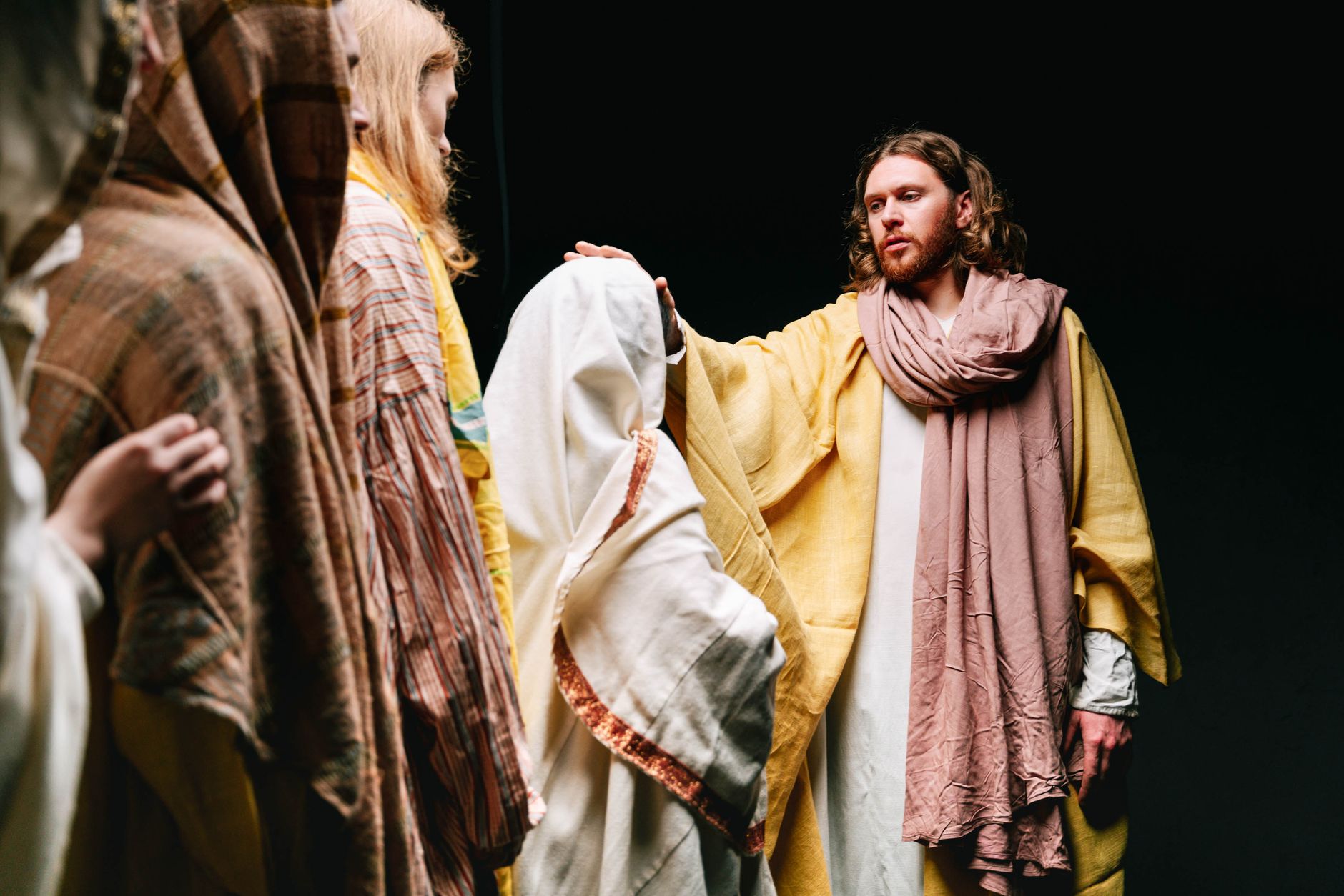
If you look at Jesus, He never ate dinner alone unless He was eating with His disciples. He didn’t build a movement in isolation. He built it around a table. With people. Messy, annoying, inconsistent people who didn’t always get what He was saying. People who bickered and betrayed Him and denied Him.
We are wired for connection. Not just socially, but spiritually. God didn’t create us to be solitary creatures. He created community because He is a Trinity—Father, Son, and Holy Spirit—in eternal, perfect relationship. If God Himself is relational at His core, why would we expect to be whole in isolation?
It’s exhausting being the strong one. It’s draining pretending you have it all figured out when your internal monologue is just static and noise.
So let’s look at what the Bible actually says about having other people around you. Not just as background characters in your story, but as essential to the faith itself.
The Problem: The Myth of Self-Sufficiency
We live in a culture that prizes independence. If you need help, you’re weak. If you ask for advice, you’re unsure of yourself. So we curate our lives to look stable. We show up to church on Sunday, smile politely, and go home to our separate lives until next week.
But this isolation creates a fragile faith.
When you don’t have anyone to see your cracks, you start to believe your own hype. Or worse, you start to hide them so well that no one knows what’s actually breaking inside you. You carry burdens alone that were never meant to be carried by one set of shoulders.
Look at (ESV). It’s one of the clearest passages on this, and it’s practical, not poetic fluff.
"Two are better than one because they have a good return for their labor: If they fall, one will lift up his companion. But woe to one who is alone when he falls and has not another to help him up... Again, if two lie together, they keep warm, but how can one be alone? And although a man might prevail against one who is alone, two will withstand him—a threefold cord is not quickly broken."
Think about the "threefold cord" image. A single rope can snap under tension. Two ropes, braided together, are stronger. But a threefold cord? That’s industrial strength. That’s durability.
The third strand, implicitly, is God. But He chose to tie us into that cord with other humans.
I’ll be honest, I used to read this verse and feel nothing. I thought it was just advice for having a gym buddy or someone to help you move couches. But I’ve gotten older, and my back hurts, and I’ve realized that moving life’s heavy things alone is brutal.
When you’re sick, who brings soup? When your marriage hits a wall, who listens without trying to "fix" it immediately? When you doubt God’s goodness in a dark season, who sits with you in the dark without turning on the lights and telling you to cheer up?
Solitude is fine for retreat. But for sustenance, we need community. We need the friction of other believers who challenge us, love us, and keep us honest.
The Promise: We Are Members of One Another
This isn’t just about emotional support. It’s theological.
The Apostle Paul uses a biological metaphor because it’s the only one that fits. We aren’t just friends who happen to like the same music. We are attached.
(ESV) says:
"For as in one body we have many members, and the members do not all have the same function, so we, though many, are one body in Christ, and individually members one of another."
And (ESV) adds:
"From whom the whole body, joined and held together by every joint with which it is equipped, when each part is working properly, makes the growth of the body for the building up of itself in love."
Notice the language: "joined," "held together," "working properly."
If one part of your body stops working, the whole system feels it. If your hand is numb, you don’t feel pain there, but you still need that hand to hold the cup. If your leg gives out, you can’t stand.
In faith, we are interdependent. Your gift might be encouragement. Mine might be teaching. Another person’s gift could be serving. Yet another might be giving away their last dollar to a homeless man they’ll never see again.
When we try to function alone, we become stunted. We lack perspective. We think our way is the only way because no one else is there to show us another.
There’s a Greek word here that matters: oikodome. It means "building up" or "house-building." In Ephesians 4, Paul is talking about construction. We are building a house together. And you can’t build a house with one hammer. You need the saws, the nails, the wood, the eyes to measure twice.
God designed us to need each other’s specific contributions. Your weakness might be the exact place where someone else’s strength fits perfectly. That’s not a flaw in your character; that’s the design.
The Practice: Three Ways to Build the Cord
Okay, so we know we need people. We know isolation is dangerous. But how do you actually do this? Especially if you’re shy, or busy, or tired of superficial small talk?
Community isn’t just showing up to a big service on Sunday. That’s attendance, not community. Community is messy. It’s vulnerable. It’s consistent.
Here are three concrete ways to start building that threefold cord, starting this week.
1. Move from "Hi" to "How Are You Really?"
Most of our relationships live in the shallow end. We exchange weather reports and sports scores. We are fine, thanks. You? Fine.
But faith lives in the deep end.
Make a contract with yourself: Ask one person this week, "What’s weighing heavy on your heart?" And then listen. Don’t fix it. Don’t offer a Bible verse immediately unless they ask. Just hear them.
And then, be brave enough to answer it yourself.
I remember a Tuesday in 2018 when my friend Sarah looked at me and said, "I don't know if I can keep pretending everything is okay." I was in the middle of my own crisis, so I just nodded. We sat in silence for ten minutes. No advice. Just presence.
That ten minutes saved us both.
Start small. Invite one person for coffee—not to talk about the sermon, but to talk about life. Real life. The kind that keeps you up at night.
2. Embrace the Friction of Difference
We like community that agrees with us. It’s comfortable. But comfort doesn’t build character.
(ESV) says, "As iron sharpens iron, so one person sharpens another."
Iron doesn’t sharpen iron by being soft. It sharpens it by rubbing against it. By creating friction.
If everyone in your circle has the same background, the same political view, and the same theology, you’re not being sharpened. You’re being mirrored.
Look for someone who disagrees with you on something minor, or lives a different life than you do. A younger person. An older person. Someone from a different culture or economic background. Ask them what they see in your life that you miss.
It stings a little when someone points out your blind spots. It’s supposed to. That sting is growth.
Don’t run from the friction. Lean into it. That’s how you lose your ego and gain wisdom.
3. Show Up When It’s Inconvenient
Anyone can be a friend when things are good. The real test of community is showing up when life falls apart.
Jesus didn’t just hang out with His disciples when the crowds were cheering. He was with them in the boat during the storm. He was with them in Gethsemane when they fell asleep. He stood by Peter after he denied Him, not to scold him, but to restore him ().
Be that person. And let people be that for you.
If your neighbor’s husband dies, bring a meal on Thursday, not when the funeral is over. If your friend’s child gets sick, text them a specific offer: "Can I pick up groceries for you on Tuesday?" Not "Let me know if you need anything." (Because they won’t tell you.)
And when your own house is on fire, let them bring the water.
I’ve learned that accepting help is just as important as giving it. For a long time, I thought asking for prayer was weakness. Now I see it as an act of faith. It says, "I believe God works through you."
The Invitation: Don’t Wait for Perfect People
You might be thinking, "But my church family is disappointing. My friends are flaky. My spouse doesn’t get it."
True. They won’t be perfect. No one is. (We talked about tamim—mature, blameless in purpose—not perfect—in a previous article. There’s a difference.)
If you wait for the perfect community, you’ll die alone.
Faith community is a hospital for sinners, not a museum for saints. It’s messy. People hurt us. We hurt people. We make plans and cancel them. We forget birthdays.
But God is faithful. And He uses these imperfect people to draw us closer to Him and to each other.
So here’s your challenge for this week. It’s simple, but it’s hard.
Find one person. Just one. And tell them the truth about where you are. Not the polished version for social media. The real version.
Ask them to pray with you. Or just sit with them while the house is quiet and the sun goes down.
We were made for this. We weren’t meant to carry the weight of glory alone. There is warmth in lying together, as Ecclesiastes says. A strength in braiding our stories together.
It’s summer now. The days are long. There’s space to breathe, and there’s room to connect.
Don’t waste it on isolation. Step out of your car. Go inside. Knock on a door. Sit at the table.
The cord is waiting to be tied.