In the first century, status wasn’t just about money; it was about cleanliness. Specifically, about whose hands touched yours. A wealthy man might sit in a garden, surrounded by olive trees, but he wouldn’t shake hands with the servant who had just poured the wine. The servant’s hands were considered “unclean” because they had touched clay pots, animal skins, and the rough ground. To touch them was to risk spiritual contamination. It was a rigid, invisible wall built out of social anxiety.
Jesus broke that wall with a towel.
The Towel as a Disruptor
We tend to romanticize the washing of feet in John 13. We see it as a gentle act of humility, a quiet moment before the storm of the Passion. And it is that. But if you stop and look at the physical reality of the scene, it’s messy. It’s gritty.
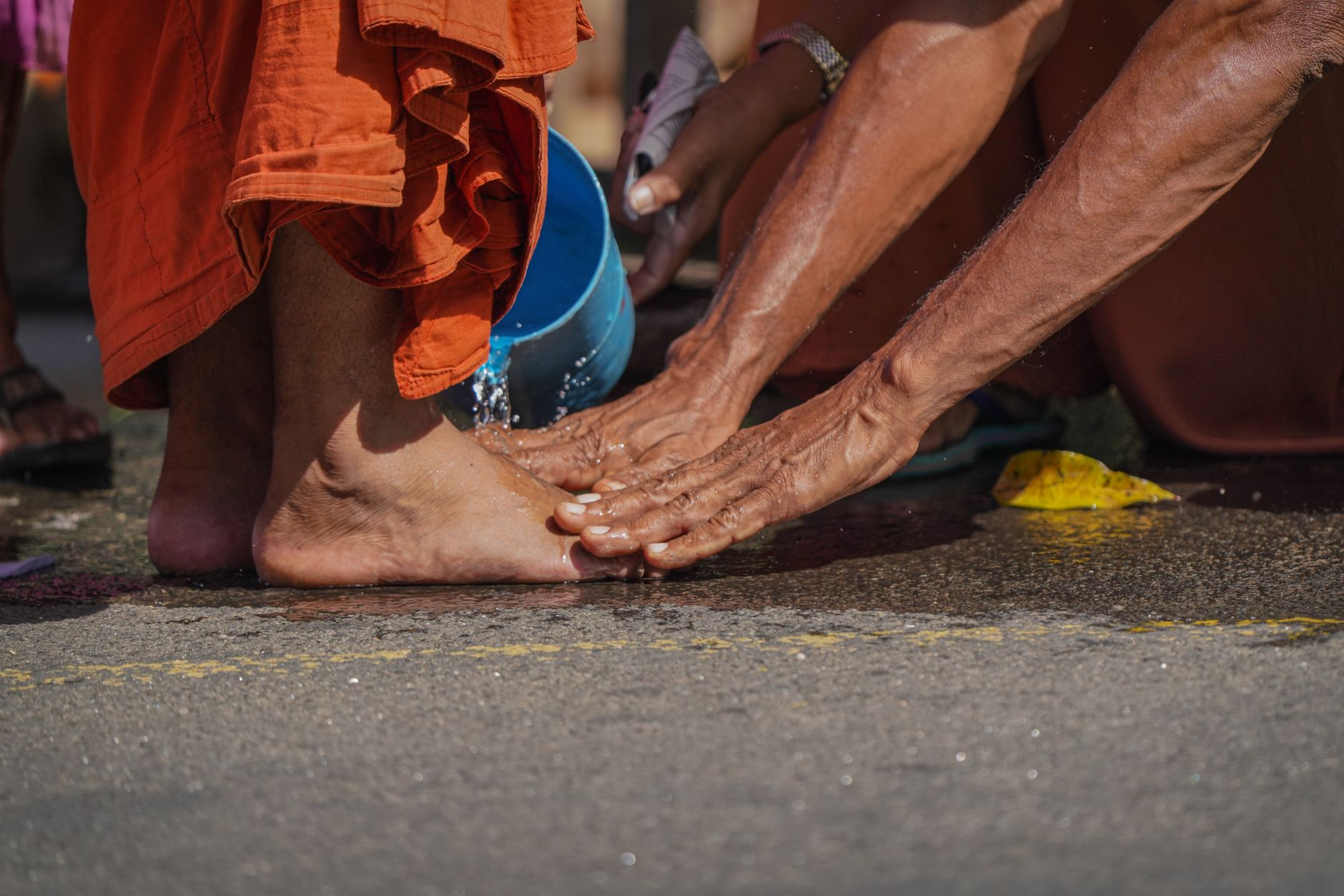
Imagine the scene. It’s late evening. The air is cool. Twelve men are sitting on low couches. Their sandals are off. Now, take those sandals and place them in a basin. Add water. The water will immediately turn brown. It’s not just water; it’s water mixed with the dust of a day spent traveling on dirt roads. It’s the residue of labor.
Jesus takes off his robe. He ties a towel around his waist. This isn’t a fancy, embroidered linen cloth. It’s a worker’s towel. It’s the kind a mason uses to wipe sweat from his face. By wearing it, Jesus is putting on the uniform of the servant class. He is stepping into the role that society assigned to the lowest rung of the ladder.
Then he kneels.
Kneeling was significant. It lowered his eyes to their level. It removed the vertical hierarchy. But the real shock came when he reached for Simon Peter’s foot.
Peter’s reaction tells us everything about how we usually view service. He pulls back. “Lord, are you going to wash my feet?” Peter doesn’t just want his head anointed; he wants his feet cleaned. But the idea of the Master doing it feels wrong. It feels like a category error.
Jesus’ response is blunt: “If I do not wash you, you have no part with me.”
This isn’t a polite request. It’s a condition for community. The implication is that we cannot share in the life of Jesus if we refuse the messiness of his service. We can’t keep our hands pristine while claiming to follow a man who died on a cross, nailed through his palms.
The Vulnerability of Service
I’ll be honest. I’ve struggled with this concept for a long time. For years, I viewed serving others as something I did for them. It was a transactional act. I would help a neighbor move furniture, or drive an elderly friend to her appointment, and then I’d carry that goodwill with me. I felt superior, even if I didn’t realize it. I felt like I was giving them a gift I possessed that they lacked.
But Jesus didn’t serve because he had something extra to give away. He served because he knew what it was like to be dirty.
Think about it. Who was Jesus? He was a carpenter. He built tables, chairs, and doorframes. His hands were constantly stained with wood dust. He was calloused. He was rough. When he washed Peter’s feet, he wasn’t using clean, sterile hands. He was using the hands of a man who had spent his life working with his hands. He was offering his labor to Peter.
That’s the part that gets me. It’s not that he was humble. Humility is good, but it’s easy to fake. What’s hard is admitting that your hands are dirty. That you’ve been working. That you’re tired.
When I look at my own life, I see the same dynamic. I spend hours helping others, but often I’m doing it to prove I’m a good person. I’m doing it to avoid feeling inadequate. If I’m busy serving, I don’t have to sit with the fact that I’m still struggling. I’m still doubting. I’m still waiting for the breakthrough.
Jesus saw through that. He saw that Peter’s resistance wasn’t just about pride; it was about fear. Peter was afraid that if he accepted Jesus’ service, he’d lose his identity. Who was he if the Lord was washing his feet? Was he just a disciple? Or was he something more?
The answer, of course, is that he’s loved. But that’s a hard truth to swallow when you’re used to earning your place.
The Autumn of Our Year
It’s late autumn now. The leaves are turning, the days are getting shorter. There’s a sense of closing in the air. We’re at the end of the cycle.
This is a good time to look at our own feet. To ask ourselves: who is washing them? And are we willing to let them?
Maybe we’ve been so focused on climbing that we forgot we’re standing on someone else’s shoulders. Maybe we’ve been so busy keeping our hands clean that we missed the chance to hold onto something real.
Service isn’t about perfection. It’s about presence. It’s about showing up, even when it’s inconvenient. Even when it’s uncomfortable.
Because that’s where the grace is. Not in the spotlight, but in the shadow. Not in the applause, but in the silence.
So, this week, try this: pick one person you’ve been avoiding. Someone whose needs are different from yours. Someone who challenges your assumptions.
Reach out. Not with a grand gesture, but with a small one. A text. A phone call. A visit.
Don’t worry about what you’re going to say. Just go.
And when you get there, look at their feet. Really look.
You might be surprised by what you see.
You might see your own reflection.
And that’s where the healing starts.
Not with a speech. Not with a solution. Just with a bowl of water. And a pair of dirty hands.
— "And the King will answer, 'Surely I was hungry and you gave me something to eat, I was thirsty and you gave me something to drink, I was a stranger and you invited me in, I needed clothes and you clothed me, I was sick and you looked after me, I was in prison and you came to visit me.'"