Jericho Wasn’t About the Walls. It Was About the Walk.
(ESV) — "This Book of the Law shall not depart out of your mouth, but you shall meditate on it day and night, so that you may be careful to do according to all that is written in it. For then you will make your way prosperous, and then you will have good success... Have I not commanded you? Be strong and courageous. Do not be frightened, for the Lord your God is with you wherever you go."
That’s the anchor. That’s the weight behind the noise.
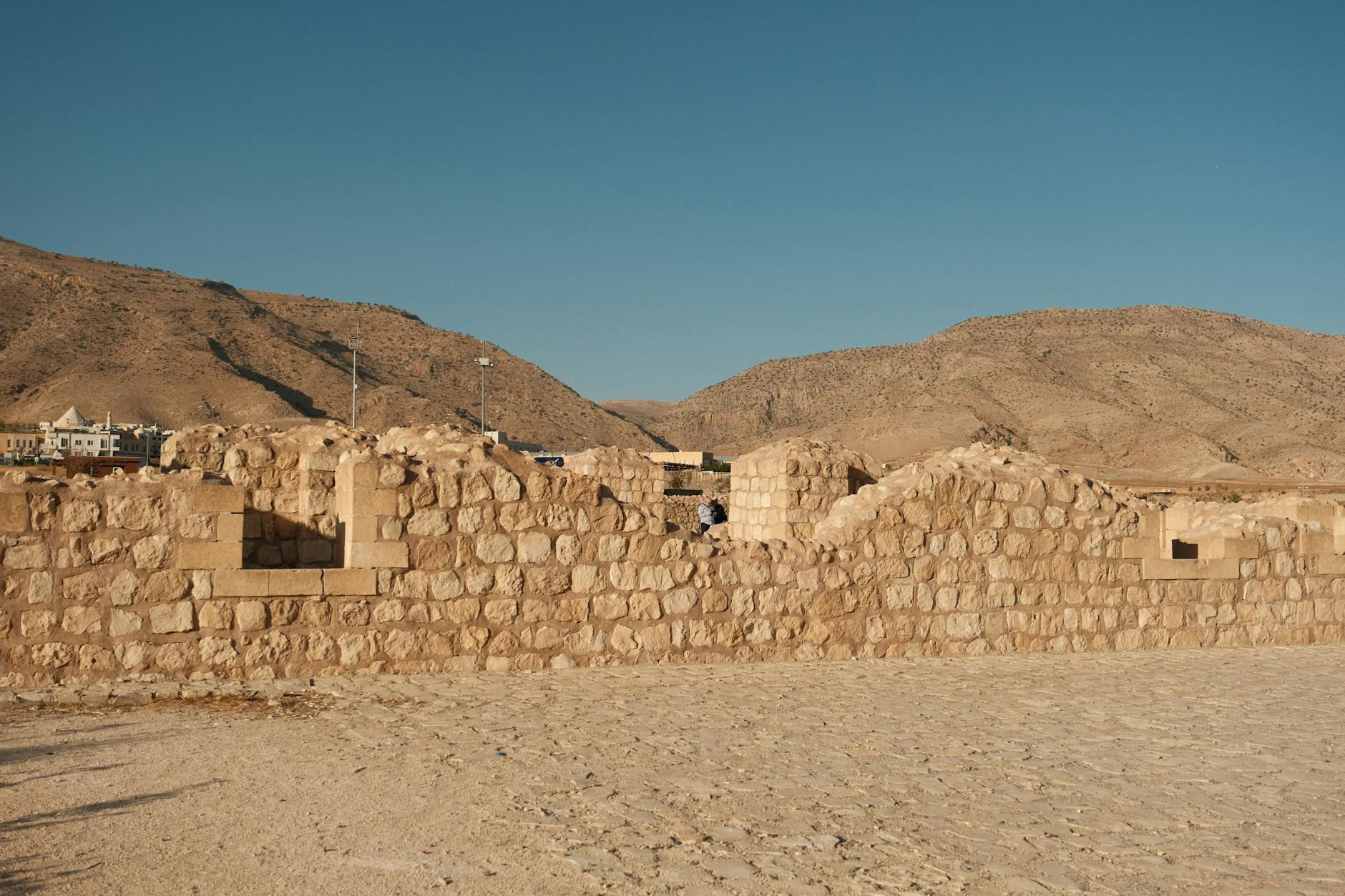
Most of us know the story. We’ve heard it since Sunday School. The Israelites are camped outside Jericho. The walls are high. The gates are barred. The enemy is entrenched. And God gives a command that sounds like madness. Not a siege engine. Not a battering ram. Not a diplomatic envoy.
Walk.
For six days, they circle the city. Once around. In silence. On the seventh day, seven times. Then the blast of the trumpets. Then the shout. And the walls fall.
It’s a beautiful story. It’s a tidy metaphor for "faith in action." But if you’ve ever stood in your own personal Jericho—staring at a medical report, a bank account, a marriage that’s gone quiet, or a career that’s stalled—you know that "faith" rarely feels like a marching band. It feels like waiting. It feels like wondering if you’re the only one who doesn’t get the joke.
Here’s the thing about Jericho that gets missed in the preaching: The battle wasn’t won by the shouting. It was won by the walking.
And honestly? That’s the harder part.
The Logic of the Absurd
Let’s look at the first lens: What actually happened there.
gives the specific instructions. "See, I have given Jericho into your hand... march around the city, pass by it once. This you shall do... seven priests shall bear seven trumpets... When they make a long blast with the ram’s horn, when you hear the sound of the trumpet, all the people shall shout with a great shout, and the wall of the city will fall down flat."
Notice the order. The shout comes after the blowing. The falling comes after the shouting. But the walking? The walking happened in the quiet. For six days, nothing happened. No walls fell. No enemies charged. No divine intervention was visible to the naked eye. Just dust, heat, and the rhythmic thud of sandals on dirt.
In our modern context, we’re addicted to feedback. We check our email for replies within minutes. We track our steps on our wrists. We want to see the wall crack before we believe God is working. But God’s way is often counter-intuitive. It’s absurd.
Think of it like planting a garden in early summer. You put the seed in the ground. You water it. You wait. You don’t dig it up every hour to check the roots. You don’t shout at the dirt to grow. You just tend. You trust the process even when it looks like nothing is happening. The "madness" of Jericho was that God asked them to perform the ritual before the result was visible.
This isn’t about blind faith. It’s about obedient faith.
I’ll be honest, I’ve struggled with this too. I used to read the "shout" part and feel excited. Victory! Noise! Glory! But the "walking" part? That’s the grind. That’s the Tuesday afternoon when you’re praying for healing and your knee still hurts. That’s the Wednesday morning when you’re tithing and the bills still look high. That’s the season of waiting where you feel like you’re just circling the same problem, over and over, while everyone else seems to be moving on.
The Israelites had to trust that the God who promised the land was also the God who commanded the silence. And that trust was tested daily. One circle. Then another. Then another.
The Sound of Surrender
Now, let’s look at the second lens: The role of the people.
The text says they marched in silence for six days. Only on the seventh day did they shout. Why silence?
In the ancient Near East, silence in battle often meant discipline. It meant unity. It meant that the focus wasn’t on the noise of the army, but on the command of the General. If they shouted too early, they might have felt they had already won. If they shouted out of panic, they would have been reacting to the enemy, not responding to God.
The silence was a posture of surrender. It was a declaration that they weren’t fighting in their own strength. They weren’t using their own tactics. They were letting God be God.
There’s a cultural reference I love here. Think of the way a conductor leads an orchestra. The musicians don’t play when they feel like it. They watch the baton. They wait for the cue. The silence before the downbeat is heavy with expectation. It’s not empty; it’s full of potential.
That’s what Jericho was. A heavy, expectant silence.
When we rush to "shout"—to speak, to act, to fix—we often try to force God’s hand. We think if we just pray loud enough, or serve hard enough, or give enough, God will finally show up. But God often waits for us to stop. He waits for us to align our rhythm with His.
This is where the "season" comes in lightly. It’s early summer. The days are long. The light is golden and warm. There’s a sense of abundance in the air. But even in seasons of abundance, we need silence. We need to stop scrolling, stop striving, and just walk.
The silence of Jericho wasn’t passive. It was active. It was a deliberate choice to trust. And that trust was the only thing that could breach the walls.
The Collapse of the Fortified
Finally, let’s look at the third lens: The result.
When the trumpets blew and the people shouted, the walls didn’t just crack. They fell "flat" (or "down to their place," as some translations say). The Hebrew word nipfal implies a complete, catastrophic collapse. The outer wall fell. Then the inner wall fell. The entire defensive structure, designed to keep the enemy out, became the trap that held them in.
But here’s the twist: The walls fell because they obeyed. Not because they shouted louder. Not because they marched faster. But because they kept walking.
We often think of faith as the catalyst for change. But in Jericho, faith was the context for change. The change happened when they were faithful in the small, quiet things.
This is a hard truth for us. We want the shout. We want the breakthrough. We want the wall to fall on Monday morning so we can have a productive week. But God often wants us to walk all week long. He wants us to be faithful in the unseen, in the uncelebrated, in the unappreciated.
I remember a time when I was waiting for a door to open in my career. I prayed. I networked. I updated my resume. I felt like I was shouting. But the door stayed shut. And then, one day, I just stopped trying to force it. I went back to doing the work. I walked. I served where I was. I trusted. And suddenly, the door didn’t just open—it exploded inward.
The walls of Jericho were fortified because they were built by human effort. The collapse came when God’s power met human obedience.
What This Means for Your Tuesday
So, what do we do with this?
We don’t live in ancient Canaan. We don’t have literal trumpets. But we have walls. We have circles to walk.
Maybe your Jericho is a relationship that’s broken. Maybe it’s a fear of the unknown. Maybe it’s the simple, daily grind of loving people when you’re tired.
The lesson isn’t to wait for a miraculous shout. The lesson is to walk.
Walk in obedience, even when it makes no sense. Walk in silence, even when you want to complain. Walk in trust, even when the walls don’t fall immediately.
This week, try this: Pick one "wall" in your life. Just one. And commit to walking around it in faith. Don’t try to tear it down with your own strength. Don’t shout until you hear the trumpet. Just walk.
It might feel like you’re going in circles. It might feel like nothing is happening. But you’re not. You’re aligning. You’re preparing. You’re trusting.
And when the time comes, the walls will fall. Not because you shouted, but because you walked.
Go in peace. Go in strength. Go in the quiet confidence of knowing that God is with you, wherever you go.