“Put out into deep water, and let down your nets for a catch.” ()
I don’t know about you, but I’ve got a mental image of that verse that’s stuck with me for years. It’s not the triumphant haul of fish. It’s the silence. The heavy, wet silence of a net that feels like it’s dragging the bottom of the lake, pulling up nothing but mud and weeds. You stand there, back aching, shoulders burning, wondering if you’re just bad at fishing. Or worse—wondering if you’re just bad at trusting.
It’s summer. The days are long and warm. You’ve got a little more space to breathe, maybe a window cracked open in the house, that lazy feeling where time seems to stretch out. It’s the perfect season for reflection. But it’s also the season where we notice what’s missing the most. We notice the projects that stalled. The relationships that went quiet. The prayers that hit the ceiling and didn’t come back down.
Peter knew that feeling.
You remember the story. Luke 5. It’s not just a miracle story; it’s a resume of failure. Jesus is teaching by the Lake of Gennesaret, and Peter is there. He’s not there to preach. He’s there to work. And he’s worked all night. All night. In the Jewish fishing culture of the first century, night was actually the best time to catch fish. The water was cooler, the fish were more active. Peter was a pro. He knew the currents, the bait, the timing. He’d done it right. He’d done it hard.
And he had nothing to show for it.
Now, imagine the heat of the day. The sun is high. The water is warm. You’ve been pulling your nets in and out for twelve hours. Your arms feel like lead. You’re tired in a way that sleep doesn’t fix. You’re sitting on the shore, watching Jesus talk to the crowds, probably thinking, If I’m going to wait here until He’s done, I might as well get some rest. The fish aren’t coming anyway.
Then Jesus steps into Peter’s boat. Not a majestic entrance on a cloud. Just a man, dusty and tired, leaning against the gunwale of a working skiff. He asks Peter to push out a bit. Just a few yards. To give Him a place to speak to the crowd.
Peter agrees. He’s polite. He’s respectful. But he’s not expecting a miracle. He’s just giving the Teacher a ride.
And then comes the command that makes no sense.
“Put out into deep water, and let down your nets for a catch.”
Think about the absurdity of that for a second. Peter has already fished all night. He’s packed up. He’s cleaned the gear. He’s done the cycle. And now Jesus tells him to start over? In the middle of the day? In the deep water, where the big fish aren’t usually biting?
It’s like telling a writer to delete the manuscript they’ve spent three years on and start a new one before lunch. It’s like telling a CEO to fire their entire board and restructure the company because a consultant walked in. It’s inefficient. It’s illogical. It’s annoying.
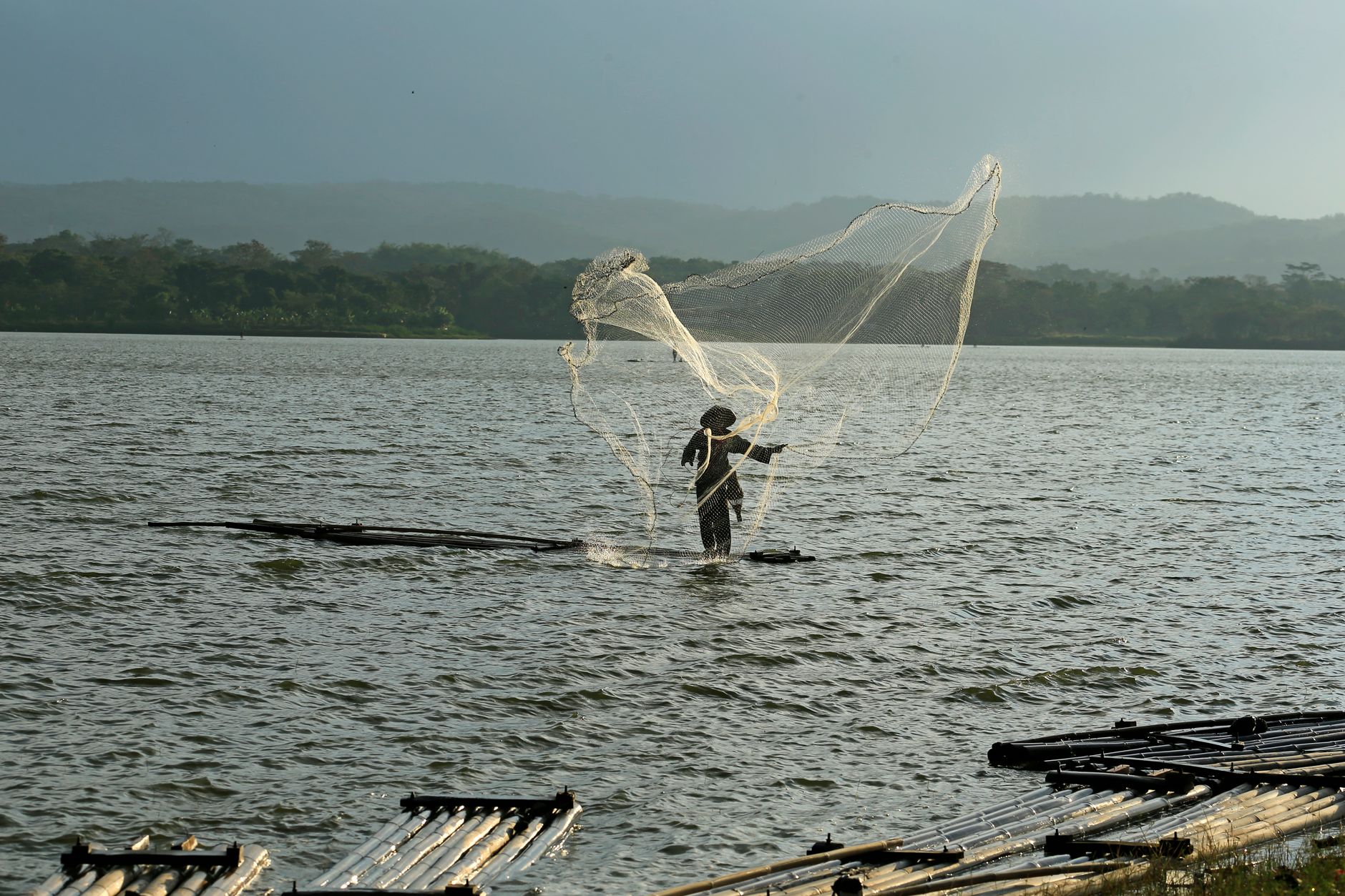
Peter’s response is the kind of answer you give when you’re tired of being polite. “Master, we worked hard all night and didn’t catch anything. But because you say so, I will let down the nets.” ()
Look at that. Because you say so.
He didn’t say, “I believe You can.” He didn’t say, “My faith is strong.” He said, “I’m doing it because You said it, even though my experience tells me it’s a waste of time.”
That’s resilience. Not the kind of resilience that comes from positive thinking or visualizing success. That’s the gritty, stubborn kind. That’s doing the work even when your data says it’s wrong.
So they did it. And the nets broke.
And then they needed help. They dragged in such a huge number of fish that their nets began to break. Then they signaled their partners in the other boat to come and help them, and they came and fill both boats so full that they began to sink. ()
It wasn’t just a catch. It was a collapse. The weight of the blessing was almost too much to handle.
And what did Peter do? He fell down at Jesus’ knees. “Go away from me, Lord; I am a sinful man!” ()
We often read this and think, Oh, Peter is humble. But look closer. Peter isn’t just humble. He’s overwhelmed by the weight of his own inadequacy. He sees the miracle, yes, but he also sees the gap between who he thought he was and who God was calling him to be. The abundance of fish wasn’t just a gift; it was a mirror. It showed him that his empty nets weren’t a failure of skill. They were a setup for grace.
Here’s the thing about summer. It’s easy to feel like we’re supposed to have it all together. The world is green. The coffee shops are full. Everyone is posting about their vacations and their new jobs. It’s easy to look at your own life and feel like you’re the only one dragging up mud.
I used to read this passage and feel nothing but awe for the fish. Now? I feel it for the exhaustion.
I think about the times I’ve prayed for something, waited, watched the clock tick, and heard nothing. I think about the job application that vanished into the void. The relationship that ended with a whisper instead of a shout. The quiet mornings where I sat in my car, engine off, just staring at the steering wheel, wondering if God had forgotten my name.
We tend to think of faith as the ability to predict the outcome. We think, If I just believe hard enough, God will give me the X, Y, and Z. But Peter’s faith wasn’t about predicting the catch. It was about obedience in the face of silence. It was about casting the net again, even when my professional instincts screamed stop.
God didn’t just want fish. He wanted Peter’s routine.
He wanted to break the cycle of “work all night, get nothing, go home, sleep, repeat.” He wanted to interrupt Peter’s autopilot. Because you can’t hear God when you’re just going through the motions. You have to stop. You have to push out. You have to be willing to look foolish.
And that’s where the resilience building happens. Not in the miracle itself, but in the step of obedience that precedes it.
We live in a culture that worships results. If it doesn’t work, it wasn’t faith. If the business fails, you didn’t trust God enough. If the healing doesn’t come, your prayer was weak. It’s a cruel theology. It turns God into a cosmic vending machine: insert prayer, press button, receive blessing.
But the Kingdom of God runs on a different rhythm. It runs on stillness. It runs on the quiet courage to cast your net into the deep water again, even when you’re tired. Even when you’re skeptical. Even when you’re pretty sure it’s just going to be another empty night.
Peter’s nets broke because the blessing was bigger than his capacity. Have you ever noticed that? We pray for breakthrough, but we rarely pray for the strength to handle the breakthrough. We want the fish, but we don’t want the heavy lifting of dragging them in. We want the peace, but we don’t want the surrender that comes with it.
This summer, maybe God isn’t asking you to achieve something new. Maybe He’s asking me to trust Him with what I already have.
Maybe He’s asking you to cast your net into the deep water of your anxiety. Not to fix it, not to solve it, but just to place it there. To say, Lord, I don’t know why this is happening. I don’t know why I’m still alone. I don’t know why this project is stalled. But You said to cast. So I’m casting.
It’s not about the fish. It’s about the position of your heart.
I’ll be honest, I’ve struggled with this too. There are weeks where I feel like I’m shouting into a void. I read the Bible, I pray, I serve, and yet the room feels exactly the same. The silence feels heavy. And I want to pack up the nets and go home. I want to go back to the night shift, where at least I knew what I was doing.
But then I remember Peter. I remember that he didn’t get the miracle because he was perfect. He got it because he was present. He was in the boat. He was listening. And when the command came, he obeyed, even though it didn’t make sense.
Resilience isn’t about never failing. It’s about not staying in the failure. It’s about the willingness to pull the net one more time.
So, if you’re in a season of waiting this summer, don’t rush it. Don’t try to force the harvest. Just push out. Let down the nets. Do the work. Keep the faith.
And when the nets break—and they might, in ways you can’t even predict—you’ll be ready. Not because I’m strong, but because He is.
Let’s pray.
Lord, I confess that I often want the miracle more than I want You. I want the answer. I want the breakthrough. I want the easy path. But today, I’m choosing to push out into the deep water. I’m choosing to cast my nets again, even when I’m tired. Even when I’m unsure. Even when the silence feels loud. Thank You for being the God who catches us when we’re empty. Thank You that Your grace is enough for the deep. Amen.