The First Christmas Wasn’t What You Think
It happened in a place no one expected, under a sky that didn’t sing.
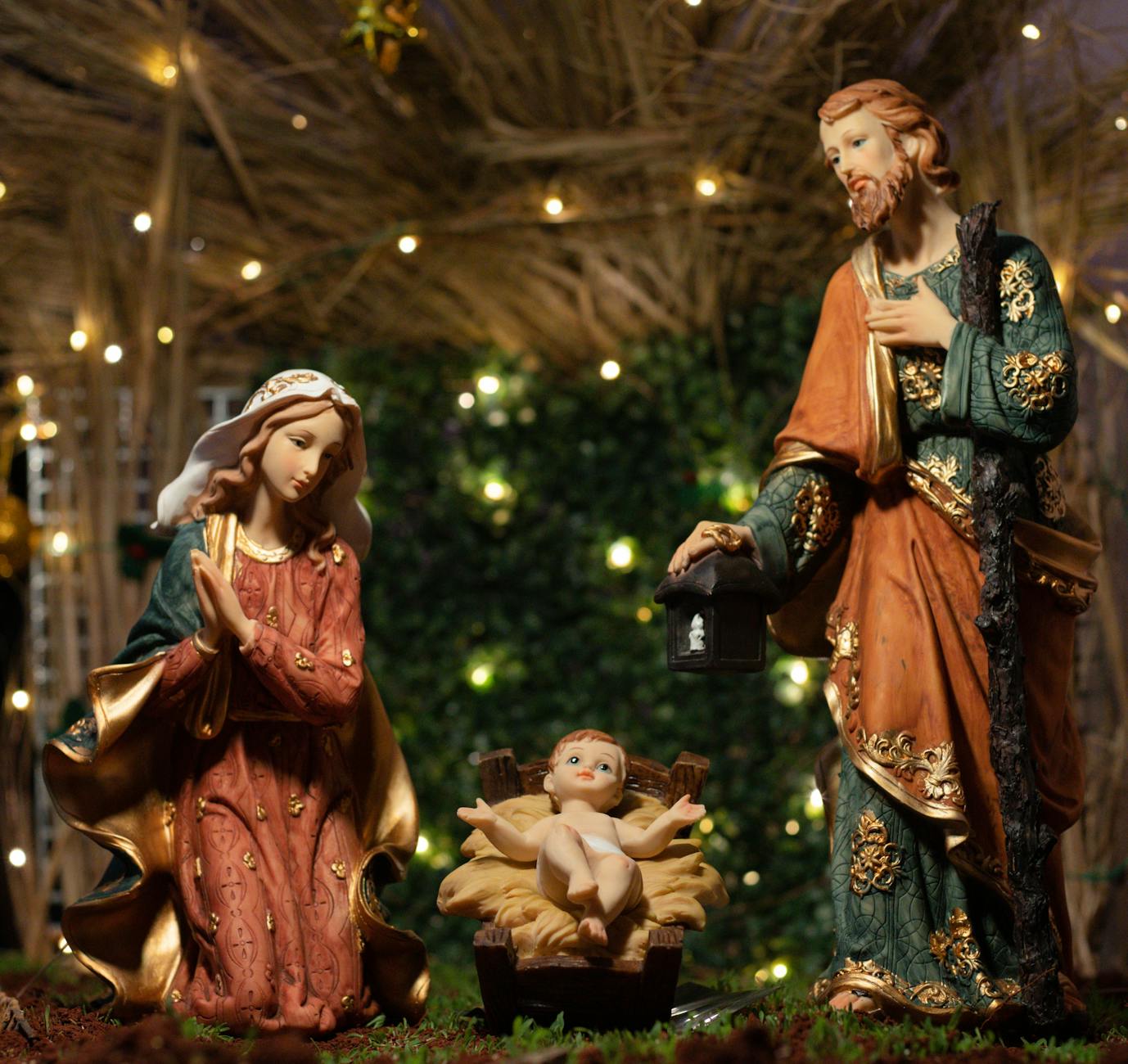
You probably picture the nativity scene from your childhood. Maybe you have a ceramic version on your mantle, or a digital animation that plays on loop during Advent. You see the straw, the animals, the three wise men sliding in from the left. It’s peaceful. It’s tidy. It’s safe.
But if you read the Gospel accounts closely—specifically Luke, who was a historian, a man who actually cared about details—the story hits you with a different kind of force. It’s not just a baby in a box. It’s the collision of the infinite God with a broken, dirty, waiting world. And honestly? It’s way more uncomfortable than the greeting cards.
We tend to sanitize the nativity. We turn it into a metaphor for "peace on earth" and "goodwill toward men," which sounds lovely until you actually try to live it out in a traffic jam or a family argument. But the biblical narrative isn’t about a gentle moment of silence. It’s about a disruptive event. It’s about a promise that didn’t just arrive; it invaded.
Did God Actually Mean for Jesus to Be Born in Obscurity?
Look at the details. Bethlehem wasn’t just a town; it was the "City of David." It was the royal capital. It was the place where the prophets said the ruler would come from (). But when Joseph and Mary arrived, it wasn’t because they wanted to be near the palace. It was because of a census ordered by Caesar Augustus—a political move to tax the populace, not to honor God.
Mary, heavily pregnant, traveled perhaps 90 miles from Nazareth. She didn’t take a first-class carriage. She walked. Or rode a donkey that had probably never carried a queen. And when they got there? The katalyma—the guest room—was full. Not just "busy," but full. The inn was at capacity.
So, they ended up in the phatne. A feeding trough. A manger.
Think about that. The Creator of the universe, the one who spoke galaxies into existence, was laid in a feeding trough for cattle. He didn’t get a palace room. He didn’t even get the main hall. He got the place where the animals ate.
Why? Because God doesn’t just save us from the outside; He saves us by entering our mess. He didn’t wait for the world to clean itself up before sending His Son. He sent Him into the dirt.
This matters because we often think God is waiting for us to get our act together before He moves. We think, "If I just pray harder, give more, read my Bible more, then God will show up in the guest room." But the nativity says otherwise. God shows up in the overflow. He shows up in the cramped, the inconvenient, the overlooked.
Isaiah had predicted this centuries earlier.
— "For to us a child is born, to us a son is given, and the government will be on his shoulders. And he will be called Wonderful Counselor, Mighty God, Everlasting Father, Prince of Peace."
Notice the titles. Mighty God. Prince of Peace. These aren’t titles for a baby who fits in a box. These are titles for a King who disrupts empires. The peace He brings isn’t the absence of trouble; it’s the presence of God in the middle of it.
Was the Silence of God a Sign of Absence?
One of the hardest parts of the Christmas story isn’t the shepherds or the angels. It’s the silence.
For 400 years, the prophets stopped speaking. No new revelation. No direct word from heaven. Just the hum of history, the rise of Rome, the grind of daily life. Then, suddenly, an angel appears to a priest named Zechariah in the temple, and he becomes mute. Then to Mary, a young, relatively unknown woman. Then to the shepherds, rough men watching their sheep by night.
The news didn’t go to the religious elite first. It didn’t go to the High Priest in his gold-embroidered robes. It went to the marginalized. The outsiders. The people who knew what it was to wait.
Why the silence before the noise?
I think it was preparation. If God had burst onto the scene with a thunderclap during the height of the Roman Empire’s glory, with all its marble and power, we might have missed Him. We would have looked for the King in the palace. But by choosing the quiet, the humble, the obscure, God was teaching us how to listen.
You have to be quiet to hear a whisper.
We live in a world that is deafening. Our phones buzz. Our notifications ping. Our to-do lists scream. We are so busy we’ve forgotten how to sit still. But the birth of Jesus demands a kind of holy attention. The shepherds didn’t just glance at the sky; they watched. They were attentive.
And when the angel appeared, the first thing he said wasn’t "Congratulations." It was "Do not be afraid."
That’s the first response to God’s presence. Not excitement. Not even joy yet. Fear. Because when the infinite touches the finite, it’s overwhelming. It’s terrifying. And that’s okay. God doesn’t dismiss our fear; He calms it.
"Peace to you," the angel said. "Good will toward men." ().
But let’s be clear. This "goodwill" isn’t a vague wish that everyone gets along. It’s a specific declaration that God is well-pleased with His Son, and through Him, with us. It’s a reset button on the relationship between Creator and creation.
Did the Promise Actually Fulfill, Or Just Start?
We often treat Christmas as a finished product. A memory. A story we tell once a year to comfort ourselves. But the nativity wasn’t the end of the story. It was the beginning of the end.
The baby in the manger was the same one who would hang on a cross. The one who would rise from the grave. The one who would return. The promise wasn’t just "God is with us" (Immanuel); the promise was "God is for us."
captures this perfectly.
— "What, then shall we say in response to these things? If God is for us, who can be against us?"
This isn’t a guarantee that nothing will go wrong. It’s a guarantee that nothing can separate you from His love. The nativity is the first installment of that promise. It’s the down payment.
Think of it like a seed. When you plant an apple seed, you don’t get an apple tree immediately. You get dirt. You get patience. You get the uncertainty of whether it will sprout. But the potential is already there. The promise is active.
So, when you look at the Christmas story, don’t just gaze at the baby. Look at the trajectory. Look at the cross. Look at the empty tomb. The manger is the starting line, not the finish.
And here’s the thing that trips us up: we want to control the narrative. We want the wise men to arrive on time. We want the census to make sense. We want the world to recognize the King. But God’s timing is never our timing. His ways are never our ways.
He employed a census—a political tool—to bring about a spiritual revolution. He employed a virgin birth—a biological impossibility—to break the power of sin. He employed a manger—a place of lowest status—to elevate humanity to the highest honor.
What Do We Do With This Now?
, sitting here on a Tuesday, maybe with a cup of coffee getting cold, maybe feeling a bit worn down by the week?
It means you don’t have to wait for the "perfect" moment to encounter God. You don’t need a cathedral or a quiet retreat. You just need to be present.
The shepherds went to Bethlehem. They didn’t just listen to the news; they went to see. They left their posts. They risked their sheep. They stepped into the unknown.
And when they found Mary and Joseph, they told everyone what they had heard. And everyone was amazed.
You don’t have to be a theologian to share the story. You just have to be a witness. You just have to say, "God showed up here. In my life. In my mess. In my waiting."
The nativity is a reminder that God is not distant. He is near. Closer than your breath. He entered your human experience. He knows what it is to be hungry, to be tired, to be misunderstood, to be loved, and to be betrayed.
So, this week, try this. When you feel the weight of the world pressing in, don’t try to fix it. Just remember the manger. Remember that the King of Glory chose to start small. He chose to start with you.
And maybe, just maybe, you’ll find that the peace you’ve been looking for isn’t something you achieve. It’s someone you meet.
What part of your life feels like a "full guest room" right now? Where is the space running out?