Have you ever looked at your own spiritual life and felt like a fraud?
You know the feeling. You’re sitting in church, or maybe just lying in bed at 2 a.m. staring at the ceiling, wondering if you actually believe anything. You’ve been taught since childhood that faith has to be big. It has to be roaring. It has to be the kind of faith that moves mountains. And when your belief feels quiet—when it feels shy, hesitant, or small—it’s easy to assume you’re missing out. You might think you need to "try harder" to make it bigger.
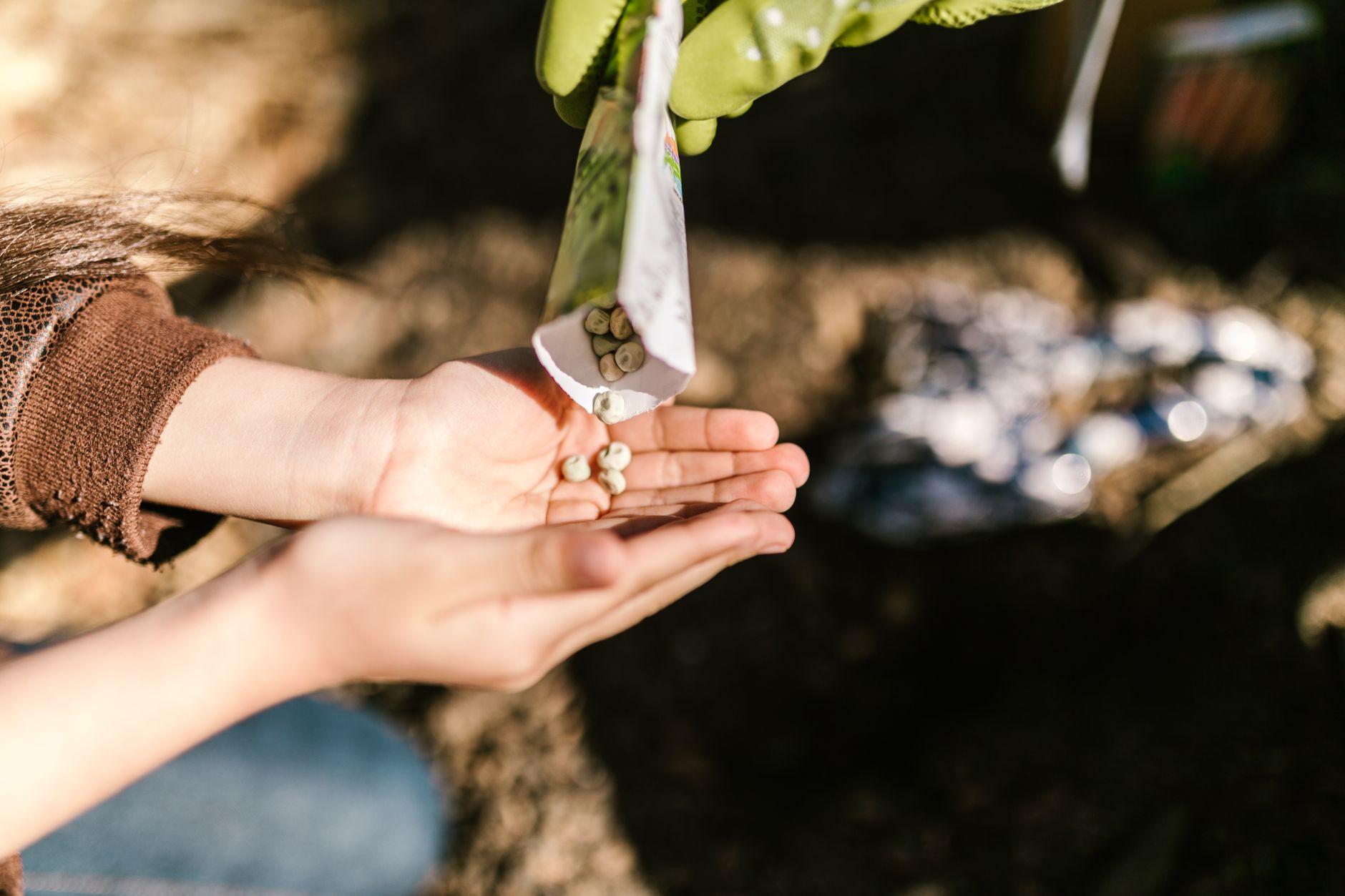
But here’s the thing: the Bible doesn’t promise that your trust in God will grow into a towering oak tree before you meet Him. In fact, Jesus pointed to something much smaller. Something so small it could fit on the tip of your finger.
This is that tiny speck of spice. And it changes everything about how we view our own doubts.
Why Did Jesus Pick Such a Tiny Image?
To understand this, we have to step out of our modern heads. For most of us, a seed of mustard is just... mustard. It’s what you put on a hot dog. It’s a condiment. It’s flavor.
But in first-century Palestine? A seed of that herb was an insult.
Imagine you were a farmer. You had land. You had labor. You had investment. And someone told you, "Your entire harvest will be the size of that tiny seed." You’d laugh. That’s not a crop. That’s dust. That’s failure.
When Jesus used this image, he was taking the most insignificant thing in the agricultural world and elevating it. He wasn’t saying, "Your trust is small, so it’s weak." He was saying, "God specializes in starting with what looks like nothing."
There is a Greek nuance here that helps clarify this. The word for "faith" (pistis) often carries the connotation of trust or reliability rather than just intellectual assent. So when Jesus talks about belief the size of a mustard seed, he isn’t talking about the quantity of conviction. He’s talking about the quality of reliance.
Think of it like a key. A tiny, rusted key might look useless compared to a shiny, master key. But if that little metal piece fits the lock? It opens the door. The dimensions of the key don’t matter. The fit does.
Your conviction might be small. It might be fragile. It might crack under pressure. But if it is true—if it is aimed at the right object—then it works.
I’ll be honest: I’ve struggled with this. There have been seasons where my reliance on God felt less like a roaring fire and more like a flicker in a drafty room. I worried that God saw my wavering and sighed. I wondered if He expected more consistency.
But looking at the parable of the tiny seed (), I realized I was judging the potential by the standard of the mature plant. The seed isn’t supposed to be a tree yet. The seed is supposed to be potential.
In late autumn, as the leaves fall and the year draws to a close, it’s easy to look at our spiritual growth and see only the bare branches. We forget that beneath the soil, the roots are still working. They are still reaching. They are still anchoring.
That tiny speck is not a trophy. It’s a promise.
Does "Small" Faith Actually Move Mountains?
Let’s address the elephant in the room. The verse we usually quote is .
"And he said to them, 'Because of your little faith. For truly I say to you, if you have faith the size of a mustard seed and say to this mountain, “Move from here to there,” it will move. And nothing will be impossible for you.'"
Notice the context. This wasn’t a sermon. It was a private correction. The disciples had just failed to cast out a demon from a boy. They had tried. They had reasoned. They had used their religious training. And it didn’t work.
Jesus didn’t scold them publicly. He pulled them aside. And he gave them a new metric.
"You have little faith," he said. Not "no" faith. Little.
And then he offered the remedy. Trust as tiny as a grain of spice.
Why a mountain? Why not a rock? Why not a pebble?
Because the disciples were facing a mountain of opposition. The demon-possessed boy was just the visible symptom. The real obstacle was the hardened ground of unbelief in Jerusalem. That barrier was the status quo. It was the religious establishment that had boxed Jesus in.
So when Jesus says, "If you have conviction as small as a mustard seed and say to this mountain, ‘Move,’ it will move," he is talking about impossible scenarios.
He is not talking about moving a small rock. He is talking about shifting the tectonic plates of history.
This is where the image of that tiny herb becomes powerful. A seed of mustard is small. But it contains the blueprint for the largest plant in its genus. It has potential that exceeds its current dimensions.
Your modest trust is not a dead end. It is a seed.
And seeds require conditions to grow. They need soil. They need water. They need time.
You cannot rush a mustard seed. You cannot yell at it to become a tree. You have to plant it. You have to tend to it. You have to trust the process.
This is why modest belief can move mountains. It’s not because the conviction is magically big. It’s because the object of that trust is big enough to handle the mountain.
If your reliance is aimed at a finite, limited power, then yes, your tiny trust will fail against a large problem. But if that reliance is aimed at an infinite, unchanging power, then even a speck of trust is sufficient.
It’s like standing in front of a hurricane. If you’re holding a paper cup, the wind will take it. But if you’re anchored by a steel cable, the wind might bend you, but it won’t blow you away. The dimensions of the anchor don’t matter as much as the strength of the material.
Your conviction is the anchor. God is the steel. The mountain is the storm.
And that tiny seed? It’s the proof that the anchor holds.
How Do I Grow From a Seed Without Losing Myself?
This is the practical question. The theoretical part is nice, but how do I actually live this?
How do I nurture a fragile trust without suffocating it? How do I protect it without hiding it?
Here is where the late autumn season becomes really relevant. We are in the "falling" phase of the spiritual year. We are shedding our leaves. We are letting go of things that aren’t essential.
This is the perfect time to prune your belief.
Pruning is painful. It feels like loss. You cut off branches that you’ve grown attached to. But pruning makes room for new growth. It redirects energy to the core.
So, what does pruning look like for a fragile trust?
- Stop comparing your seed to someone else’s forest. This is the biggest trap. Social media is full of "giant" faith testimonies. People who have written books. People who have healed the sick. People who have started ministries. Look at them and think, "They are trees. I am a seed." Stop it. A seed doesn’t envy a tree. A seed knows its job is to become. Your job right now is not to be impressive. Your job is to be alive. Are you alive? Is your trust breathing? Or is it just decoration?
I’ve been guilty of this. I’ve looked at other believers and felt inadequate. I’ve thought, "Why can’t I be more consistent? Why can’t I be more bold?" And in doing so, I neglected the small, daily acts of reliance. I was so focused on the destination that I forgot to enjoy the journey. Pruning means admitting that my "big" moments are rare. And that’s okay. The "small" moments are where the real work happens.
Feed it with truth, not emotion. A common mistake is to rely on feelings to gauge belief. "I feel close to God today, so my trust is strong." "I feel distant today, so my conviction is weak." This is unstable. Feelings fluctuate. Truth does not. The mustard seed grows because of the genetic code inside it, not because of the weather outside. Similarly, your reliance grows because of the truth you’ve absorbed, not because of your emotional state. So, feed your conviction with Scripture. Read it. Meditate on it. Let it soak into your mind. Even when you don’t feel anything, the truth is still working. This is what Jesus did. He relied on the Father’s will, not his own emotions. In Gethsemane, he was sweating blood. He was terrified. But he trusted. That’s mustard-seed conviction.
Plant it in community. A seed planted in isolation is vulnerable. Birds will eat it. Rain will wash it away. Sun will dry it out. But a seed planted in a garden? It has protection. It has nutrients. It has support. Your trust needs community. You need other believers around you. You need people who challenge you. People who encourage you. People who hold you accountable. This is where the communal aspect comes in. Your fragile belief is not just a personal project. It is part of a larger ecosystem. When you grow, you contribute to the whole. Your fruit feeds others. Your shade protects others. Your roots stabilize the soil for others. So, don’t hide your modest trust. Share it. Be vulnerable. Admit your doubts. Ask for prayer. That’s how seeds thrive.
What Does This Mean for the Year Ahead?
We are at the end of the year. The leaves are gone. The branches are bare. It looks dead.
But it’s not dead. It’s resting.
The grain of that herb is buried in the soil. It’s dark. It’s quiet. Nothing is happening on the surface.
But underneath? Everything is happening.
The cell walls are expanding. The enzymes are activating. The DNA is replicating. The embryo is forming.
It’s invisible. But it’s real.
This is what belief looks like in the winter. It’s invisible. But it’s real.
And when spring comes? When the sun warms the earth? When the rain softens the soil?
The seed cracks open.
A green shoot pushes through the dirt. It stretches toward the light. It unfurls its first leaf.
It’s tiny. It’s fragile. It’s barely visible.
But it’s alive.
And it’s growing.
This is the hope for the year ahead. Whatever you’re facing—whatever mountains loom before you—your modest trust is enough. It’s a seed. And it has the power to become a tree.
So, plant it. Water it. Trust it.
Let it grow.
And when it blooms? Share the fruit.
That’s the story of God’s people. We are all seeds. We are all small. We are all fragile.
But together? We are a forest.
And a forest can shelter the world.