The dust in Jerusalem didn’t just sit on the ground; it hung in the air, coating the back of your throat. It was late afternoon, the kind of heavy, golden silence that precedes a storm. On the Via Dolorosa, the crowd wasn’t cheering. They were shuffling. Sandals scraping against stone. A woman turned her face away, not from the sun, but from the man walking ahead of them. He carried a crossbeam so thick his shoulders had already begun to buckle. The wood groaned. The nails—large, iron, rusted with age—were laid out in a basket nearby.
Most of us know this story. We’ve seen the paintings. We’ve heard the hymns. But do we actually see it? Or have we turned the most violent, shocking event in history into a comfortable symbol? A logo on a necklace? A background image on a phone?
In the quiet of early autumn, when leaves are turning and the air feels crisp, it’s easy to forget how high the stakes really were. We talk about "fresh starts" and "harvest." But the foundation for all that hope wasn’t built in a garden. It was hammered into wood.
The Struggle: Feeling Too Ordinary for the Divine
Let’s be honest. If you’re reading this, you’ve probably felt a bit... small.
Maybe you’re sitting in your car after a long day, staring at the windshield wipers wiping away rain that won’t stop. Maybe you’re lying awake at 2 AM, wondering if anyone else is even listening. We live in a culture that tells us to be loud, to be visible, to be the best version of ourselves. But deep down, many of us feel invisible. We wonder: Does God even notice me? Am I significant enough to matter to Him?
This is the problem that the Crucifixion solves. It’s not just a story about a guy dying. It’s an answer to the question of our insignificance.
If you think you’re too ordinary, too broken, too far gone for God to care, look at the cross. Because the cross says the exact opposite. It says that you are so valuable to God that He was willing to pay the ultimate price to save you.
puts it plainly: “Just as Christ was sacrificed once to take away the sins of many people, he’ll appear a second time for their benefit—but not to deal with their sins. Then he will bring them salvation.”
One sacrifice. For many people. That’s a powerful contrast. One man on the hill, but the ripple effect reaches every corner of the earth. Including the place where you are right now.
The Promise: Love That Costs Everything
There’s a difference between kindness and love. Kindness is nice. It’s polite. It’s giving someone a seat on the bus. But love? Love costs. Real love has a price tag attached to it.
When we say God loves us, we often mean it in a warm, fuzzy way. Like a grandparent hugging a grandchild. And that’s true. God is tender. But the Crucifixion adds a layer of depth that changes everything. It tells us that God’s love isn’t just warm; it’s sacrificial.
Think about it. What did it cost Jesus to stay on the cross?
Physical pain, yes. The agony of the nails piercing flesh. The weight of the wood crushing him. But there was more. There was the spiritual weight. The separation from the Father. The shame. The feeling of being abandoned.
Why did He endure it? Not because He had to, but because He wanted to. He chose to step down from glory to stand in our shoes.
is the verse we all know, but let’s look at it through this lens: “For God so loved the world that he gave his one and only Son, that whoever believes in him shall not perish but have eternal life.”
Notice the word "gave." It wasn’t a reluctant offering. It wasn’t a last resort. It was a deliberate act of generosity. God didn’t just send His Son; He gave Him. That implies ownership. That implies value. You don’t give away what you don’t treasure.
So, the promise is this: You are not an accident. You are not a mistake. You are a person so loved by the Creator of the universe that He was willing to die to bring you home.
The Practice: Living Under the Shadow of the Cross
Knowing this is one thing. Living it out is another. How do we actually integrate this truth into our daily lives? How do we stop treating the cross as a relic and start letting it shape our decisions?
Here are three ways to do that.
1. Stop Comparing Your Pain to Others’ "Bigger" Problems.
One of the biggest traps we fall into is the hierarchy of suffering. We think, "My anxiety isn’t as bad as that guy’s cancer diagnosis. My financial stress isn’t as real as that family’s refugee crisis."
The cross teaches us that no pain is too small for God to see. If Jesus bled for your sin, then He also cares about your pain. Your struggle is valid. Your tears matter. Don’t minimize your experience just to make room for someone else’s tragedy. Both are under the shadow of the cross. Both are seen by God.
2. Give Something Away Regularly.
If the cross is about sacrifice, then our lives should reflect that. We tend to hoard. We keep money, time, and energy for ourselves. We wait until we have "extra" to give. But the cross shows us that the giving is the point, not the surplus.
Start small. Pay for someone’s coffee without telling them. Call a friend just to check in, not because you need anything. Donate clothes you no longer wear. The goal isn’t to become a saint. The goal is to break the habit of self-preservation. To remind your body and mind that love involves letting go.
3. Find a Place of Stillness.
The world is noisy. Social media, news cycles, work emails—it’s a constant barrage of information. It’s hard to hear a quiet voice in all that noise.
But the cross happened in a place of relative quiet. It wasn’t in the middle of a battlefield. It was on a hill, away from the main square. There was space. There was silence.
Find a place like that. It doesn’t have to be a church. It could be a park bench. A quiet room in your house. A spot by a window where you can watch the clouds move. Go there regularly. Sit. Breathe. Be still. In that stillness, the truth of the cross can sink in. It can touch the parts of you that are too tired to pray out loud. It can heal in the silence.
A Quiet Close
The autumn light is fading now. The shadows are getting longer. The leaves on the ground are crunching underfoot, a soft, dry sound. It’s peaceful. There’s a sense of completion. Of things being settled.
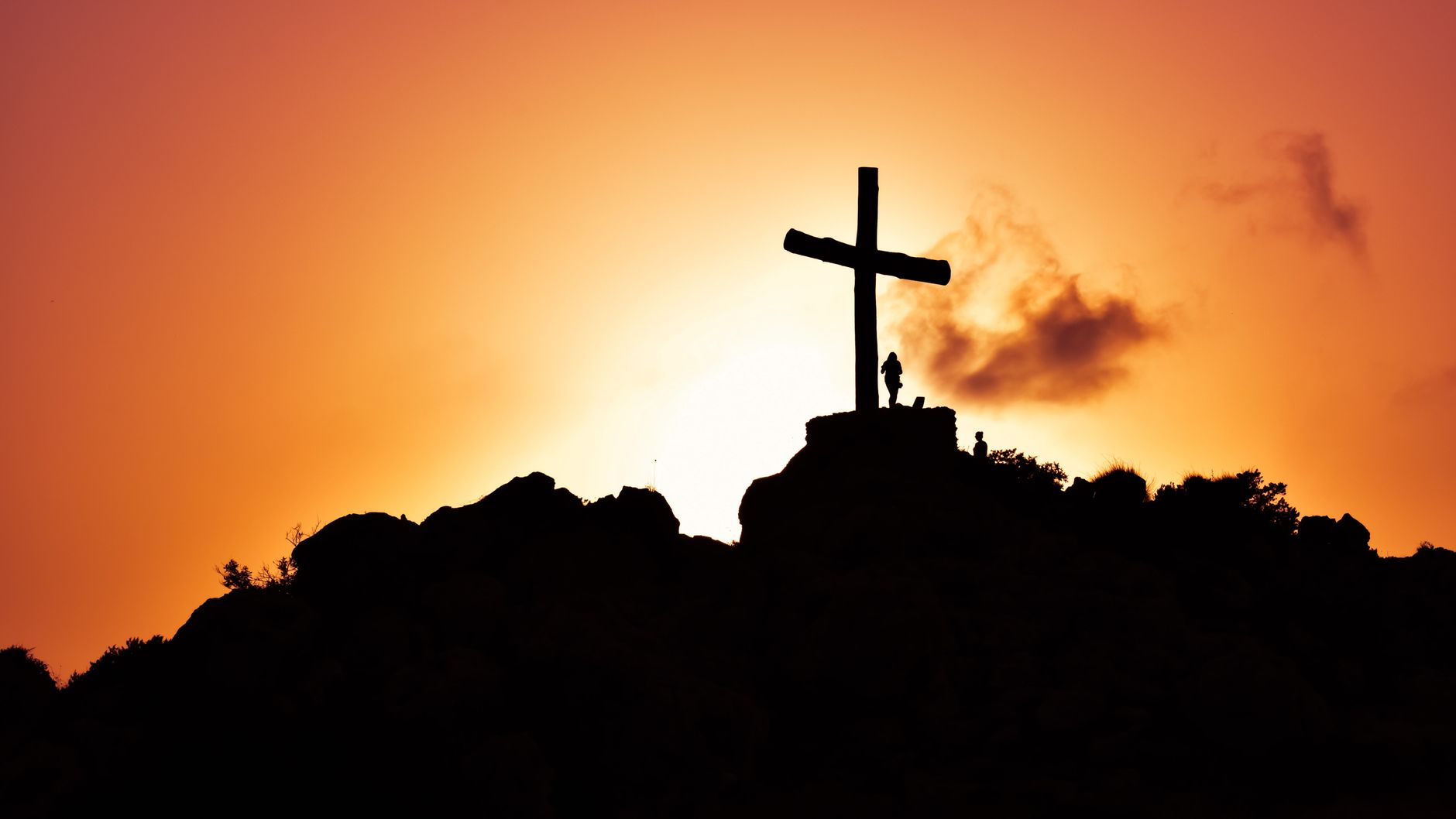
The cross stands in the distance. Not looming. Not threatening. Just standing there. Solid. Real.
It’s enough.
You don’t need to understand everything. You don’t need to have all the answers. You just need to know that you are held. That you are seen. That you are loved.
And that is a good thing.