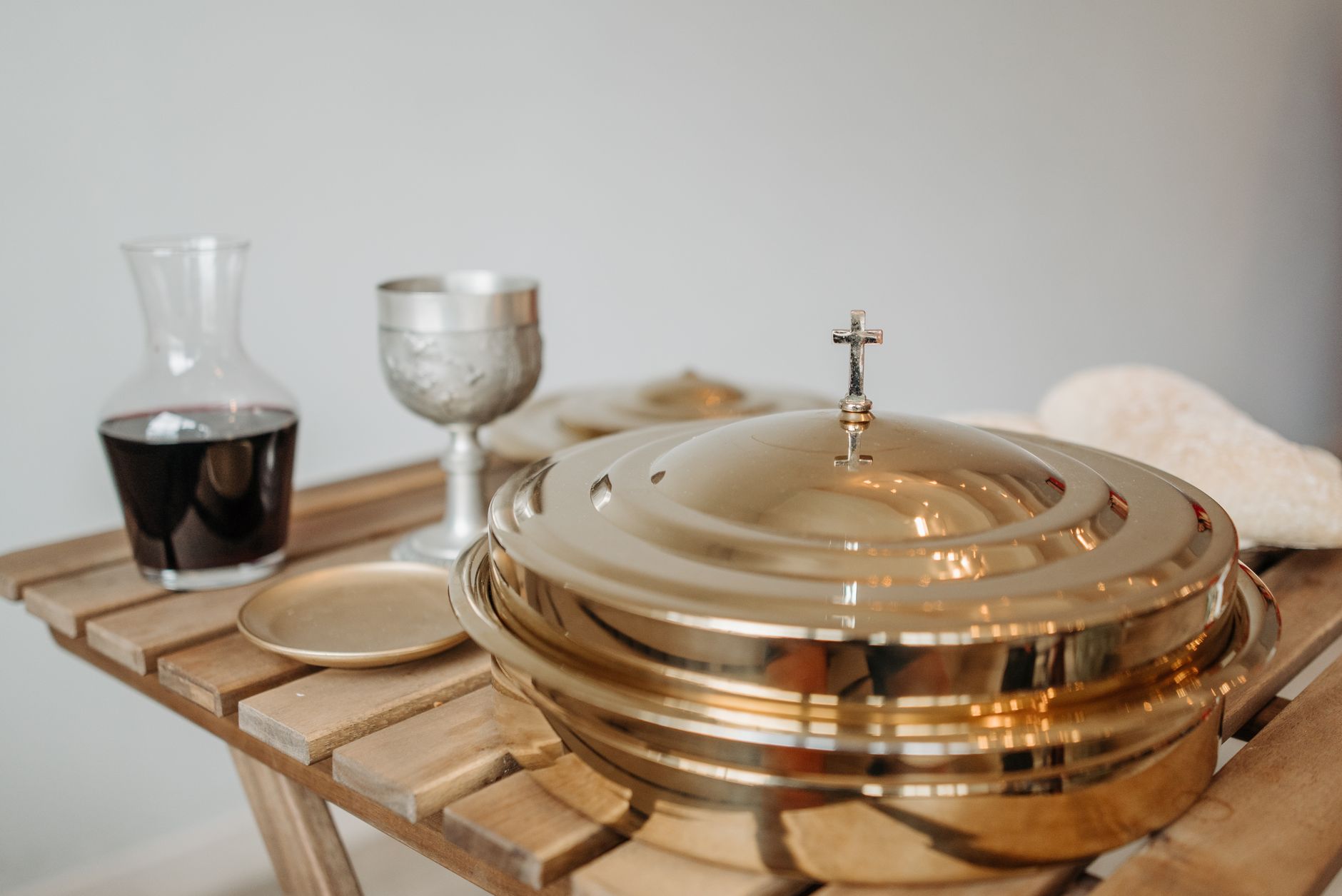
The Last Supper wasn’t a religious ceremony designed to fill your Sunday; it was a radical act of social disruption designed to break down every wall between you and your neighbor.
It’s August. The air outside is thick, humid, and still. Most of us are catching our breath after the rush of summer vacations, the kids’ schedules, the endless emails. There’s a kind of spaciousness in late summer that invites reflection. It’s the kind of quiet where you can actually hear yourself think. And if you’ve been sitting in that quiet, maybe you’ve looked at the simple elements of Communion—the bread, the cup—and wondered if it’s just another box to check on your Christian to-do list.
We’ve all been there. You take the wafer. You sip the juice. You nod along. It feels safe. It feels holy. But it can also feel like a performance.
Here’s the thing about the Last Supper. We tend to flatten it. We turn it into a pretty picture hanging in a church sanctuary, framed in gold leaf and stained glass. We focus on the theology of the bread and the blood. We get the "what" right. But we miss the "who" and the "how." We miss the revolution.
Because when Jesus sat down with his disciples that night, he wasn’t just instituting a sacrament. He was staging a coup against the way the world does power.
The Upper Room Was a Social Lab
Look at the setting. It’s not a temple. It’s not a palace. It’s a private room, rented for a feast. And who is in it? Twelve men. But not just any twelve.
They are a mixed bag of personalities, backgrounds, and temperaments. Peter, impulsive and loud. John, the "son of thunder," probably quiet and observant. Thomas, the skeptic. Matthew, the tax collector who hated his own past. And Judas, the betrayer, the one holding the purse.
Imagine the tension in that room. These men had spent three years following a man who kept saying, "The last shall be first." They knew it, intellectually. But they didn’t live it. They were still arguing about who was the greatest among them. ( says it explicitly: "A dispute also arose among them, as to which of them was to be regarded as the greatest.")
So, Jesus does something strange. He doesn’t give a sermon. He doesn’t quote Isaiah. He picks up a towel and a basin.
In that culture, washing feet was the job of the lowest slave. It was messy. It was humiliating. It was beneath you. But Jesus, the Teacher, the Lord, the Creator, tied the towel around his waist and got down on his knees.
He washed Peter’s feet. Then John’s. Then Judas’s.
He didn’t skip the future betrayer. He didn’t ignore the loudmouth. He washed them all.
This is the first lens: Communion is an act of humiliation, not elevation.
When we lift up the host, when we elevate the cup, we can subtly slip back into the idea that we are approaching God to be served or to receive. But Jesus flipped the script. The King didn’t come to be served; he came to serve. The Last Supper wasn’t about us climbing up to God. It was about God coming down to wash us.
And if you think that’s just a nice story for Easter, look at what he says in :
"So if I, your Lord and Teacher, have washed your feet, you also ought to wash one another’s feet. For I have given you an example, that you also should do just as I have done to you."
Notice the "also." He’s not just talking about feet. He’s talking about posture. He’s talking about how you treat the person sitting across from you at your next dinner table.
I’ll be honest, I’ve struggled with this. For years, I thought Communion was about me and Jesus. It was a moment for my private devotion. But Jesus makes it communal. He says, "Do this in remembrance of me." But he doesn’t just mean "think about me." He means "live like me." And you can’t live like me if you’re still holding your status over your brother.
The Bread Was Broken for the Broken
The second lens is about the bread. Jesus took bread, gave thanks, broke it, and gave it to them.
"And he took bread, and when he had given thanks, he broke it and gave it to them, saying, 'This is my body, which is given for you. Do this in remembrance of me.' And likewise the cup after they had eaten, saying, 'This cup that is poured out for you is the new covenant in my blood.'" ()
Think about the word "broken."
In the ancient world, bread was life. To break it was to share it. To give it away was to give a part of yourself. But Jesus didn’t just break the bread. He was the bread. And he was going to be broken.
But here’s the counter-intuitive part: The bread was broken before the cup was poured. The body was crushed before the blood was shed.
Why does that matter? Because it mirrors the way we experience grace. We don’t get the resurrection without the cross. We don’t get the new covenant without the sacrifice. But more importantly, we don’t get unity without brokenness.
When you break bread with someone, you are admitting that you are incomplete without them. You are admitting that your life is dependent on their life.
In a world that celebrates self-sufficiency, Communion is a radical declaration of interdependence. It’s a weekly reminder that we are not solo Christians. We are a body. And a body only functions when the parts are connected.
I remember sitting in a small house church a few years back. It was just twelve of us. We didn’t have a pulpit. We didn’t have a sound system. We just had a loaf of bread and a cup of wine. And as we passed it around, I looked at the people. I saw the tensions. I saw the people who didn’t get along. I saw the rich guy and the poor guy. The teacher and the laborer.
And suddenly, the bread didn’t feel like a symbol. It felt like a bridge.
Because if the same body is broken for all of us, then the wall between us is an illusion.
This is the second lens: Communion is a declaration of unity, not separation.
We often use Communion to mark our distinctiveness from the world. "We are the church. We are set apart." And that’s true. But Jesus’ primary focus wasn’t separation from the world; it was reconciliation within the body.
If you’re holding a grudge, if you’re excluding someone because they dress differently or speak differently or think differently, you aren’t participating in Communion. You’re participating in a ritual.
Jesus didn’t die to make you right with God so you could stay comfortable in your bubble. He died to make peace with God so you could make peace with your neighbor.
The Meal That Points to the Future
The third lens is the future. Jesus said, "Do this in remembrance of me." But he also said, "For as often as you eat this bread and drink the cup, you proclaim the Lord’s death until he comes." ()
It’s a past, present, and future reality.
Past: His body was broken. His blood was shed. Present: We are united. We are fed. Future: He is coming back.
This is where the "spaciousness" of summer comes in. When you’re rushing through the week, it’s easy to forget the future. We get stuck in the "now." We get anxious about the bills, the health scares, the job security.
But Communion pulls us out of the now and into the then. It’s a foretaste of the Marriage Supper of the Lamb. It’s a promise that the brokenness we experience today—the broken bones, the broken hearts, the broken systems—is not the final word.
There is a feast coming. And it’s not just for the "good" people. It’s for everyone who has been washed by the blood.
This is the third lens: Communion is a promise of hope, not just a memorial of loss.
We don’t just look back at the cross. We look forward to the crown. We eat this bread as a sign that death has been defeated. We drink this cup as a sign that sin has been forgiven. And we do it with joy.
Because if Jesus is who he said he was, then this meal is the most hopeful thing you will do all week.
What This Means for Your Tuesday
So, how do you live this?
It’s easy to make Communion a once-a-month event. But Jesus said, "Do this." It’s an imperative. It’s a command. It’s a rhythm.
But it’s not just about the elements. It’s about the posture.
This week, I want you to try something simple. Don’t just eat the bread. Look at the person next to you. Really look. See them as Jesus sees them. Washed. Broken. Loved.
And then, do something small to break your own "status."
Maybe it’s washing your spouse’s feet. Literally. If you’re feeling brave, do it. If not, serve them in a way that feels beneath your dignity. Make their bed. Do the dishes they hate. Listen to them without fixing their problem.
That’s Communion. That’s the revolution.
It’s not about the wafer. It’s about the willingness to be small so others can be great.
And if you’re sitting alone this week, if you’re feeling disconnected, remember this: The bread was broken for you. The blood was shed for you. You are not an outsider looking in. You are the insider looking out.
So take your time this summer. Breathe. Remember. And then go break bread with someone.