Job’s Silence: When God Doesn’t Answer in Words
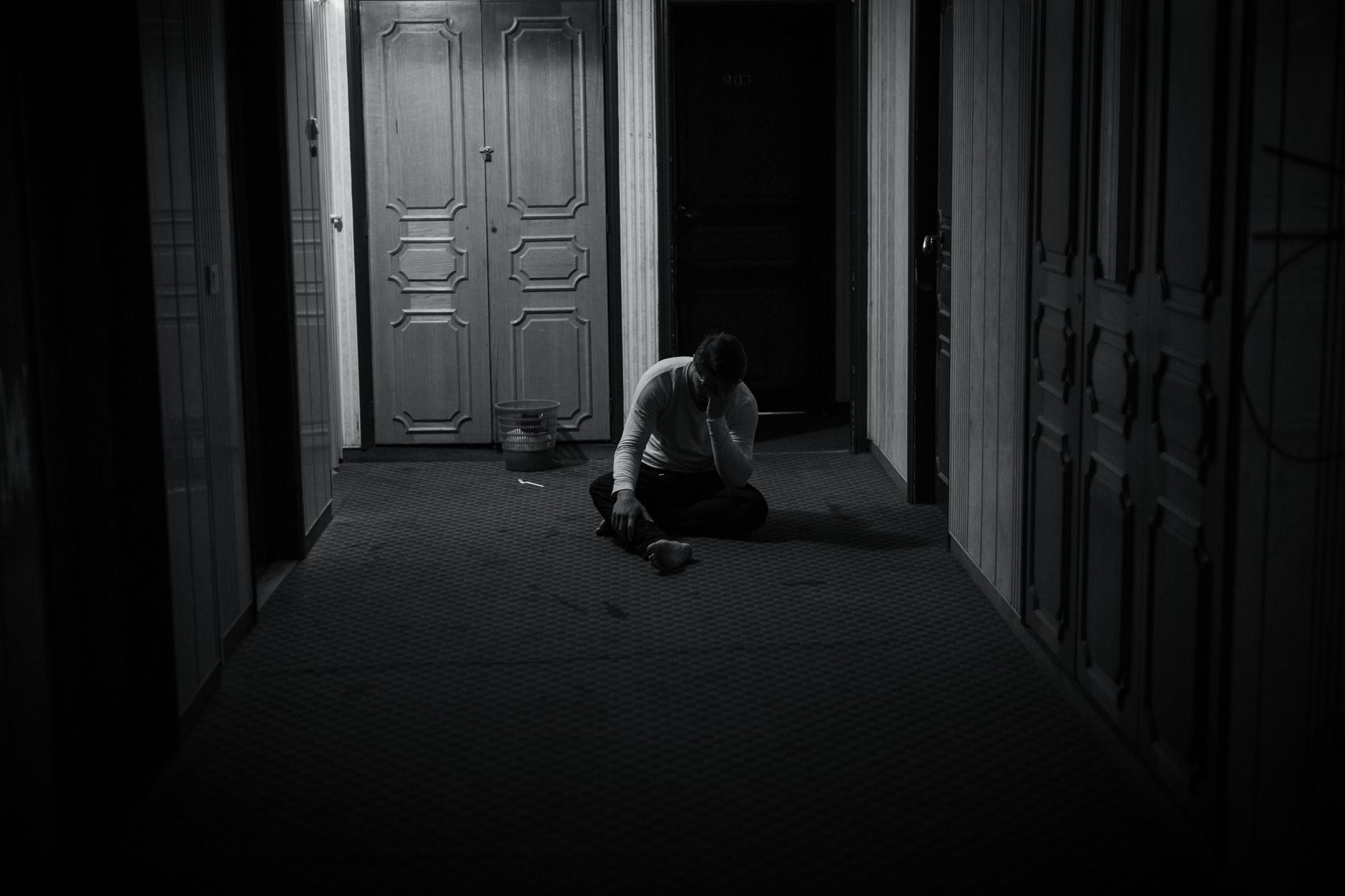
Have you ever sat in a room so quiet you could hear the dust settling, waiting for a phone call that never came? That’s Job.
It’s summer. The days are long, the light lingers late, and there’s this strange, spacious feeling in the air. Most of us use this time to breathe. We step off the treadmill. But for some of us, that spaciousness feels less like rest and more like exposure. When the noise stops, the questions get loud.
And nowhere are the questions louder than in the book of Job.
We’ve read the stories. We’ve heard the sermons. We know the outline: righteous man, God gives permission, Satan attacks, friends show up, God speaks from a whirlwind, Job is restored. It’s tidy. It’s clean. It fits on a Sunday bulletin.
But life isn’t tidy. Life is messy, confusing, and often silent.
So, let’s stop treating Job like a puzzle to be solved and start treating him like a person we’re trying to understand. What happens when God doesn’t fix your pain? What happens when He doesn’t even explain Himself? That’s the real mystery here. Not why bad things happen, but how to stay faithful when the sky is copper-colored and the silence is heavy.
Why Do the Righteous Suffer? (Even When They Aren’t)
The first thing we need to do is kick out the old myth that suffering is always a direct result of personal sin. We’ve all been there. Maybe you dropped a glass of milk, and your mother said, "See? Carelessness." We internalize that. We think if we’re suffering, we must have sinned.
Job knows this. His friends, Eliphaz, Bildad, and Zophar, are the experts on this theory. They show up with their formula: Sin leads to punishment. Repent, and God will restore you. It’s logical. It’s comforting. It’s wrong.
God Himself eventually tells them so.
But Job isn’t just sitting there accepting their logic. He’s arguing. And here’s the thing that trips us up: Job’s friends are mostly right about the general rule, but they’re wrong about him. And Job is mostly right about his innocence, but he’s wrong about God’s character.
Think of it like a storm. You don’t cause the rain by standing outside. But you can choose whether to stand there shivering, or whether to build a shelter. Job’s suffering wasn’t a punishment for a specific sin he committed in that moment. It was a permission slip from God for a spiritual war that had nothing to do with Job’s moral failings.
This changes everything.
If suffering were just a receipt for sin, we could manage it. We could repent our way out of it. But Job shows us that suffering can be a refining fire, not just a penalty box. It’s not about paying off a debt; it’s about revealing a depth of trust that comfort can never produce.
I’ll be honest, I used to read Job’s silence and feel annoyed. I wanted God to say, "Okay, Job, you passed the test." Instead, God gives us a whirlwind. A vortex. Wind and dust. Not a clear sentence. Not a theological essay. Just raw, chaotic power.
Is that fair? Maybe not. Is it loving? That’s the hard part. But it’s honest.
What Does It Mean to "Fear" God When It Hurts?
We use the word "fear" in the Bible, and we usually mean respect. Like, "I fear my teacher" means I respect her authority. But in Job, "fearing God" is more visceral. It’s standing in awe of who God is, even when He doesn’t act like the God you wanted.
says, "The Lord gave, and the Lord has taken away; blessed be the name of the Lord."
That’s the mantra. But notice what he doesn’t say. He doesn’t say, "God is good." He doesn’t say, "God loves me." He just says, "Blessed be His name."
Why? Because when you’re losing everything, "goodness" feels like a cruel joke. But "His name" — His character, His nature, His reputation — that’s still true.
This is where the rubber meets the road. We want God to be good to us. Job learns that God is good in Himself, regardless of what He does to us.
Think of a child and a parent. The child wants the parent to give them candy. That’s "good to me." But the parent is "good" even when they say no to the candy because they know it’ll rot the child’s teeth. The goodness is in the nature of the parent, not just the outcome of the interaction.
Job’s faithfulness wasn’t based on his blessings. It was based on his belief that God was worth trusting, even if God turned out to be a tyrant. (Job thought maybe He was.) He held onto God’s character when he couldn’t hold onto his comfort.
That’s the kind of faith that shakes the heavens. Not the kind that says, "I believe God will fix this." But the kind that says, "Even if God doesn’t fix this, He is still God."
Why Does God Answer in a Whirlwind?
We spend so much time looking for the "why." Why did this happen? Why me? Why now?
God’s answer in Job 38-41 isn’t a "why." It’s a "who."
"Who is this that darkens counsel by words without knowledge? Now prepare yourself like a man; I will question you, and you shall answer Me." (, NKJV)
God doesn’t explain the cosmos to Job. He asks him questions. Can you bind the chains of the Pleiades? Can you lead the Mazzaroth? Do you know the laws of the heavens?
It’s a barrage of creation. The wild donkey. The horse. The hawk. The behemoth. The leviathan.
Why this? Why not just say, "Satan did it, and I allowed it for a purpose"?
Because Job needed to see God’s power, not just His logic. Logic can be debated. Power cannot. When you’re in the eye of the storm, you don’t need a lecture on meteorology. You need to know that the One who holds the storm is bigger than the storm.
God is reminding Job (and us) that the universe is too big, too complex, and too sovereign to be reduced to a simple cause-and-effect equation that fits on a napkin.
And here’s the twist: God doesn’t mention Satan. He doesn’t mention the wager in heaven. He just talks about the raw, untamed world. He shows Job that he is small. Not insignificant, but small. And in that smallness, there is peace.
I remember sitting in a hospital waiting room once, waiting for news that could change my life. I had a list of reasons why things should go a certain way. I was ready to argue with God. Then I looked at the clock. The second hand ticking. The hum of the refrigerator. The sheer, indifferent continuity of the world.
And I realized: God wasn’t ignoring me. He was just… present. In the chaos. Not necessarily fixing it, but holding it together.
That’s what the whirlwind is. It’s God saying, "I am here. And I am big enough to handle your pain."
What Do We Do With the Silence?
So, how do we live this? How do we sit in the summer quiet, or the winter cold, when God feels far away?
First, stop trying to explain Him. We spend so much energy trying to build a theodicy, a defense of God’s goodness, that we forget to just worship Him. says, "I have heard of You by the hearing of the ear, But now my eye sees You."
He moved from second-hand faith to first-hand encounter. You don’t need to understand every detail of your suffering to trust the God who holds it.
Second, be honest. Job didn’t polish his complaints. He cursed the day of his birth. He wished he’d never been born. And God commended him. Why? Because his honesty was directed at God, not away from Him.
Don’t fake it. If you’re angry, say it. If you’re confused, say it. The Psalms are full of it. Lament is a form of worship. It’s saying, "God, You’re big enough to handle my doubt."
Third, wait. Not passively. But actively. says, "For I know that my Redeemer lives, And He stands at last on the earth."
The Hebrew is tricky. It can mean "He stands," or "He will stand," or even "He is standing." The point is, redemption is coming. Even if it doesn’t look like you think. Even if it comes after the fire.
Job got his blessings back. Double. But notice what he didn’t get back. He didn’t get his old life. He got a new one. The same children, but different. The same land, but new. The same God, but deeper.
That’s the promise. Not that the pain goes away. But that God meets us in it. And that He brings something better out of the ashes. Something that comfort could never produce.
So, this week, when the silence gets loud, don’t rush to fill it. Sit with it. Look up. And remember: The God who holds the whirlwind is holding you.
"For I know that my Redeemer lives, And He stands at last on the earth."