“He has shown you, O man, what is good; and what does the Lord require of you but to do justly, to love mercy, and to walk humbly with your God?” (, NKJV).
It’s June. The air is thick enough to chew on, and the cicadas are already tuning up their electric buzzsaws. Most people I know are just trying to survive the humidity, let alone contemplate their moral architecture. We want grace. We want the easy win. We want a God who nods approvingly from a distance while we go about our business.
But Micah doesn’t offer a nod. He offers a mirror.
And honestly? Mirrors are annoying. They don’t flatter you. They just show you what’s actually there.
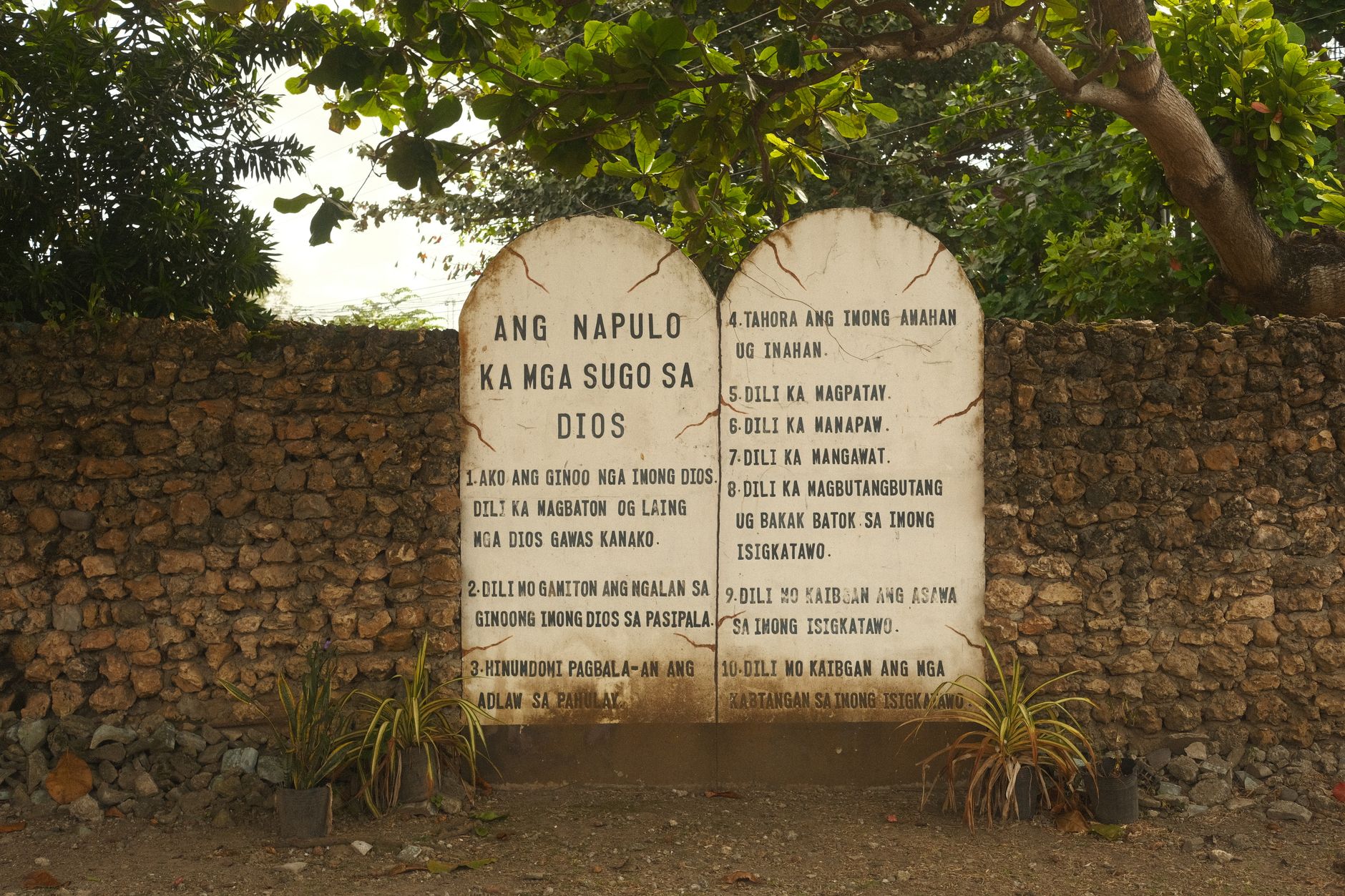
We’ve spent centuries turning the Decalogue into a checklist for saints. You know the drill. Did you murder? Did you steal? Did you lie? It feels clinical. Sterile. Like a doctor checking off boxes on a clipboard. But that’s not what Moses was doing on Sinai. That wasn’t Jesus in the Sermon on the Mount.
This isn’t about compliance. It’s about orientation.
It’s about where your compass is pointing when the battery dies.
The Architecture of Desire
Look at the first few. “You shall have no other gods before Me.” “You shall not make for yourself a carved image.”
We tend to read those as rules about statues. Or maybe about the Virgin Mary if you’re Catholic, or about political parties if you’re American. And sure, that’s true. But it’s shallow.
The real issue isn’t the object. It’s the obsession.
A “god” is simply anything you love, serve, and trust more than God. It’s whatever you look to to save you from anxiety, to give you identity, or to make you feel whole. For some, it’s money. For others, it’s approval. For me, lately, it’s been the quiet, creeping need to be right.
I used to think righteousness was a state of purity I had to achieve. I’d scrub my soul with prayers and good deeds, trying to buff out the dents. But the Law doesn’t buff dents. It reveals them.
Think of it like the foundation of a house. You don’t lay bricks on top of a crooked foundation and expect the walls to stand straight. You fix the base.
The first table of the Commandments (roughly verses 1-4) is vertical. It’s about who holds the throne of your heart. The second table (verses 5-10) is horizontal. It’s about how you treat the people sitting at the table with you.
Here’s the thing most of us miss: You can’t have a healthy horizontal relationship with people if your vertical relationship with God is fractured. And you can’t truly love your neighbor if you’re busy worshipping your own comfort.
When I say “worshipping your own comfort,” I don’t mean enjoying a cup of coffee. I mean the idol of ease. The god of “if only.” The god that says, “If only my boss were nicer, I could be holy.” Or, “If only I had more money, I could be generous.”
It’s the lie that your circumstances, not your Creator, are the source of your peace.
From Rules to Rhythm
So, how do we actually live this? Not just on Sunday, but on a Tuesday in the breakroom?
The Law was given to Israel so they would know who they belonged to. It was a boundary. A guardrail. It wasn’t meant to be a burden; it was meant to be a blessing. It was God saying, “This is what freedom looks like. This is what life looks like when you’re not tripping over your own ego.”
Jesus didn’t come to abolish the Law. He came to fulfill it. And in Matthew 5, He takes those external rules and drags them into the internal chamber of the heart.
“You have heard that it was said, ‘You shall not murder.’ And whoever commits murder will be in danger of the judgment.’ But I say to you that whoever is angry with his brother will be in danger of the judgment...” (, NKJV).
Murder is the endpoint. Anger is the starting point.
Lying is the action. Truthfulness is the posture.
Jesus is saying that righteousness isn’t just about not breaking things. It’s about the health of the engine. It’s about integrity. It’s about being the same person in the dark as you are in the light.
And that’s terrifying. Because if righteousness is internal, I can’t fake it. I can’t perform it for the crowd. I can’t wear a mask of piety while my heart is full of bitterness.
I remember sitting in my car in the grocery store parking lot last week. Just staring at the steering wheel. I was angry. Not a big, shouty anger. Just a low-grade, simmering resentment toward my neighbor who’d let his dog dig up my lawn for the third time.
Technically, I hadn’t murdered him. I hadn’t even yelled. I’d just given him the silent treatment.
But in the economy of the Kingdom? That was a breach of covenant. That was a violation of the sixth commandment. That was idolatry of my own comfort.
The Law showed me the gap. Jesus shows me the Bridge.
The Summer of Grace
Summer is a funny time for reflection. The days are long. The light lingers. There’s a sense of abundance in the air, even when your bank account feels lean.
It’s easy to get distracted by the heat. To focus on the immediate discomfort. But this season also invites us to slow down. To breathe. To observe the garden and see how God provides.
It’s easy to get distracted by the heat. To focus on the immediate discomfort. But this season also invites us to slow down. To breathe. To observe the garden and see how God provides.
Living righteously in the heat of summer isn’t about grinding yourself into dust. It’s about resting in the truth that you are loved.
Think of the Apostle Paul. He didn’t write, “Work harder to keep your salvation.” He wrote, “For the law was added because of transgressions, till the Seed should come to whom the promise referred...” (, NKJV).
The Law was our tutor. It led us to Christ.
Now that we’re led by the Spirit, we don’t live by a checklist. We live by a relationship.
But don’t mistake freedom for license. Don’t think that because you’re saved, you can do whatever you want. Paul asks that same question in Romans 6: “Shall we continue in sin that grace may abound?” (, NKJV).
God forbid.
Grace changes the motive. It doesn’t remove the moral standard. It empowers you to meet it.
It’s the difference between running on a treadmill and running on a road. On the treadmill, you’re going nowhere, burning fuel, exhausted. On the road, you’re moving toward something. You have direction. You have purpose.
The Ten Commandments are the map. Jesus is the driver. The Holy Spirit is the fuel.
Practical Holiness in a Noisy World
So, what does this look like on a Tuesday?
It looks like pausing before you reply.
We live in a world that rewards speed. Speed in communication. Speed in consumption. Speed in judgment. But righteousness requires slowness. “Let every man be swift to hear, slow to speak, slow to wrath...” (, NKJV).
Try this: When you feel that spike of irritation—when the email is rude, when the traffic is bad, when the kid spills the juice—don’t react. Pause.
Ask yourself: Who am I worshipping right now?
Am I worshipping my need for control? My need for validation? My need to be right?
Then, surrender it. Hand it over. Not because you’re strong enough to fix it, but because He is.
It also looks like mercy.
“To love mercy,” Micah says.
Mercy isn’t just being nice. It’s withholding the punishment we deserve. It’s choosing to see the other person as God sees them.
When your spouse forgets to take out the trash, don’t keep score. When your colleague takes credit for your idea, don’t plot revenge. When your friend cancels plans, don’t assume malice.
This is hard. It’s actually really hard. It’s counter-cultural. It’s counter-instinctive.
But it’s the only way to break the cycle of bitterness.
The Big Picture
We often treat the Decalogue as a set of isolated rules. We pick one to concentrate on for the week. Thou shalt not lie. Thou shalt not steal.
But they’re a unit. They’re a symphony.
And the melody is love.
When you look at the whole story of Scripture, from Genesis to Revelation, you see one consistent theme: God is restoring a broken family. He’s redeeming a people for Himself.
The Law was the contract. The Cross was the payment. The Spirit is the seal.
We are not saved by keeping the rules. We are saved by grace, through faith. But we are created for righteousness.
When you live righteously, you’re not just checking boxes. You’re echoing the character of God. You’re showing the world what the Father looks like.
You’re showing them that forgiveness is possible. That truth is trustworthy. That love is relentless.
It’s not about perfection. It’s about direction.
Are you moving toward Him? Or are you drifting?
The summer air is warm. The grass is green. The world is good. And the God who made it all is asking for your heart. Not your performance. Your heart.
Let it be quiet there. Let it be true. And watch how the chaos begins to make sense.