The Kingdom Belongs to the Small and the Silent
The church service is over. The hymns have faded into the hum of the HVAC system. You’re standing by the coffee urn, holding a Styrofoam cup that’s already getting lukewarm, trying to look like you belong in the adult conversation circle. But your eyes keep drifting to the back of the sanctuary.
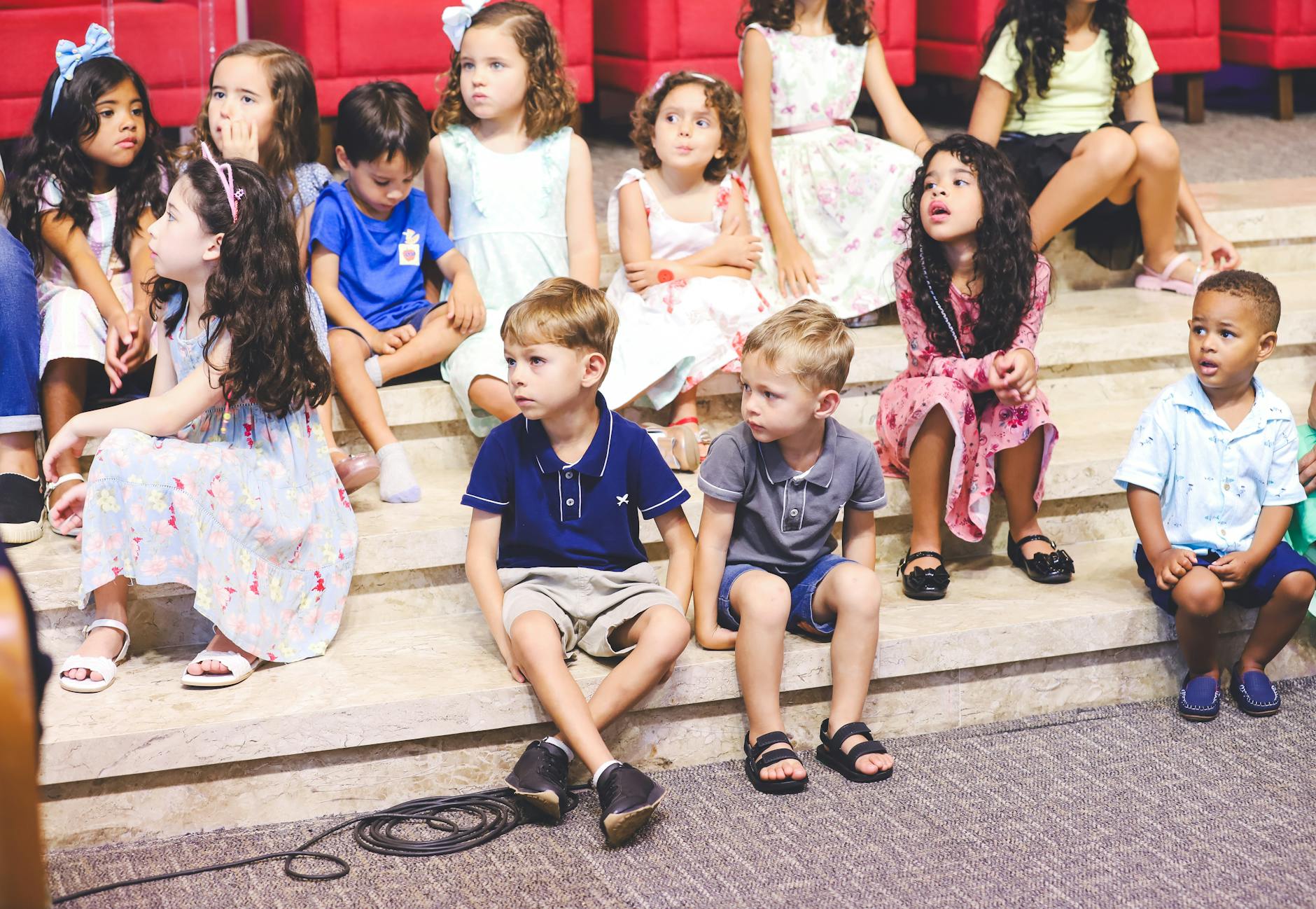
There’s a five-year-old boy named Leo. He’s not sitting still. He’s not whispering prayers in the quiet moments. He’s running. He’s laughing at something only he can see. And then, quietly, he sits down on the polished wood floor, pulls his knees to his chest, and stares at the stained-glass window depicting the Good Shepherd. For a moment, the noise of the world drops away. He is just… there. Small. Present. Waiting.
Most of us glance at him and think, If only he’d sit still long enough to hear the sermon.
But Jesus looked at a child like Leo and saw the blueprint of the Kingdom.
It’s Pentecost. The air is thick with the memory of that upper room, where the wind howled and tongues of fire settled on heads that had been hiding in fear. The Holy Spirit didn’t just descend on the apostles; it descended on the whole household of faith. It was the birthday of the Church, the moment God decided to live inside us, not just above us. But if you read the Gospels closely, you’ll notice something strange about how Jesus prepared His people for that outpouring. He didn’t just teach them doctrine. He didn’t just give them a list of rules. He showed them a different kind of power.
And it looked like a child.
The Upending of Status
In first-century Judea, children were not the cute, center-of-attention creatures they are in modern suburban homes. They weren’t even quite "people" in the full legal or social sense. They were dependents. They had no property. No vote. No voice. They were the ultimate symbols of vulnerability. If you wanted to show someone how small they were, you compared them to a child.
So, when the disciples were arguing about who was the greatest—a question that probably started with ego and ended with a power struggle—Jesus didn’t give them a theological lecture on humility. He didn’t quote Leviticus. He didn’t say, "Love your neighbor."
He called a child over.
"He brought a little child whom he put among them, and taking him in his arms, he said to them, 'Whoever receives one such child in my name receives me, and whoever receives me, receives not me but him who sent me.'” (, ESV)
Look at the physicality of that. Jesus didn’t just point. He didn’t just gesture. He took the child. He put the child among them. He wrapped his own arms around that small, likely dusty, probably slightly restless body.
And then He flipped the script.
The Kingdom of God doesn’t operate on the pyramid of power. We love pyramids. We like to climb. We like to see who’s at the top. But Jesus said the Kingdom belongs to those who are like this child. Not those who act like children (which often means being obedient and quiet). But those who are like children.
That means embracing dependency. Embracing the fact that you can’t save yourself. Embracing the raw, unfiltered trust that comes when you know you are entirely held by someone else.
Why We Miss the Point
I’ll be honest, I used to read this passage and feel a bit of shame. I mean, I’m an adult. I have a mortgage. I pay taxes. I’m supposed to be stable. Why would God want me to be like a toddler who doesn’t fully understand how the world works?
Because that’s exactly what faith is.
We confuse maturity with self-sufficiency. We think spiritual growth means we stop needing help. We think that when the Holy Spirit fills us, we become spiritually independent. But the fruit of the Spirit isn’t independence; it’s love, joy, peace, patience, kindness, goodness, faithfulness, gentleness, self-control. ().
Notice that "gentleness" (or humility) is there. And notice that these fruits flourish in community, not in isolation.
When Jesus said, "Unless you turn and become like children, you will never enter the kingdom of heaven" (), He wasn’t saying we should become childish or immature. He was saying we must become dependent.
Think about it. A child doesn’t try to earn their parent’s love by paying rent. A child doesn’t worry about their reputation when they fall down in the mud. A child cries out, and the parent comes. That’s the relationship God wants with us. Not a transactional contract where we perform to earn favor. But a relational embrace where we rest in the fact that we are held.
In a world that prizes productivity, competence, and control, the child is a scandal. The child is a disruption. The child says, "I can’t do this. I need you."
And that is where the Holy Spirit moves.
The Spirit and the Smallness
Pentecost wasn’t just about speaking in tongues or bold preaching. It was about God breaking into the human experience and making Himself known in the weak, the foolish, and the lowly. Paul reminds us in , "But God chose what is foolish in the world to shame the wise; God chose what is weak in the world to shame the strong."
The Holy Spirit doesn’t just empower the eloquent. He empowers the broken. He empowers the ones who know they are nothing without Christ.
When we try to be "mature" Christians, we often try to be like the disciples before Jesus opened their minds. We try to be in control. We try to fix the world. We try to be the heroes of our own stories.
But when we embrace our "childlike" nature, we stop trying to fix everything. We start trusting the Father who holds us.
This changes how we pray. It changes how we worship. It changes how we treat each other.
If the Kingdom belongs to the child-like, then our value isn’t in our status, our income, or our ability to lead a small group. Our value is in our belonging. We are God’s children. And that means we are His heirs.
A Modern Parable of the Kingdom
Let me tell you about Sarah.
Sarah is a corporate lawyer. She’s brilliant. She’s sharp. She’s the kind of person who walks into a room and owns it. But for years, she felt a hollow ache in her chest. She had everything the world said she should want. But she was exhausted. She was constantly performing. She was constantly proving.
Then, one Tuesday, her car broke down on the highway. Just like that. No amount of planning could fix it. No amount of networking could get it fixed faster. She sat in the silence of the breakdown lane, watching the rain hit the windshield, and for the first time in years, she stopped trying to control the situation.
She prayed. Not a polished prayer. Not a prayer for success. Just a cry. "God, I can’t do this. I’m tired. I need You."
And in that moment, she felt it. Not a thunderclap. Not a vision. Just a deep, quiet peace. The Holy Spirit settled over her like a warm blanket. She realized she didn’t have to be the strong one. She didn’t have to be the hero. She just had to be hers.
That’s the Kingdom. It’s not a place you go when you die. It’s a reality you enter when you let go of your need to control and trust the Father.
The Invitation to Rest
So, what does this look like on a Tuesday morning?
It looks like admitting you don’t have all the answers. It looks like asking for help. It looks like treating the intern with the same respect you treat the CEO. It looks like worshipping God not because you’re having a good day, but because He is good, even when you’re having a bad one.
It looks like letting the Holy Spirit do the work you’ve been trying to do in your own strength.
The disciples were waiting for the Spirit. They were waiting for power. But Jesus showed them that the power of God is made perfect in weakness. ().
We don’t need to become adults to enter the Kingdom. We need to become children again. We need to return to the simple, radical trust that says, "Father, I am Yours. Hold me."
And when we do, we find that the Kingdom is not a distant destination. It is here. It is now. It is in the small, silent moments when we stop striving and start receiving.
The Quiet Close
The boy in the church sanctuary is still sitting on the floor. He’s not looking at you. He’s not performing. He’s just being.
And in that stillness, he is preaching a sermon more powerful than any we could deliver. He is saying, "I am held. I am loved. I am home."
Maybe that’s all you need today. Not a strategy. Not a plan. Not a performance.
Just the quiet confidence that you are held by the same God who called the Spirit down on the upper room. The same God who became a child to save you. The same God who breathes life into your dry bones.
Sit still. Breathe. Trust.
The Kingdom is yours.