Why did God choose a box?
It’s the question that has haunted me since childhood. We grew up singing about the star, the shepherds, the angels. But we skipped over the details that actually make sense of the whole story. We focused on the glory and missed the grit.
The coming of Jesus wasn’t a royal arrival. It wasn’t even a comfortable one. It was messy, cold, and public. And that matters. Because if you look closely at that scene, you see that God didn’t just send a baby. He sent a promise. A specific, tangible, ancient promise that had been waiting for two thousand years to finally land.
This isn’t just history. It’s the foundation. Everything else in the Christian life—grace, forgiveness, hope—hangs from that initial act. So let’s look closer. Let’s look at the problem, the promise, and how we actually live it out.
The Problem: We’re Afraid of the Wait
We are a culture that hates waiting. We want instant downloads, quick fixes, and immediate results. When things don’t go our way, we get anxious. We check our phones. We scroll. We worry.
Spiritually, this anxiety shows up as a lack of trust. We feel like God is far away. He’s sitting in a distant heaven, judging us, ignoring us, or maybe even sleeping. The Bible calls this condition "wandering." We are wandering sheep. We have lost the path. We are tired. We are hungry. And we are alone.
Consider the prophet Jeremiah. He lived during a time when Judah was under pressure from Babylon. The people were praying, but their hands were dirty. They claimed to love God, but they oppressed the poor and ignored the widow. Jeremiah saw this disconnect. He knew the people were waiting for a savior, but they had forgotten who they were waiting for. They had overlooked the covenant. They had missed that God had promised to be with them, not just as a king, but as a father.
That’s the core of the problem. We forget the intimacy of the relationship. We turn God into a taskmaster or a distant deity. We lose sight of the fact that He is near. He is present. And He is working.
The Promise: A Word Made Flesh
So, what is the promise?
It goes back to Genesis. After Adam and Eve fell, God spoke to them. He didn’t just curse them; He gave them hope. He announced that one day, a descendant of the woman would crush the head of the serpent. This is often called the Protoevangelium—the first gospel.
For centuries, this was the thread. The prophets kept pulling on it. Isaiah spoke of a child being born. Micah pointed to Bethlehem. But none of them had the full picture until Jesus walked into the world.
When Jesus arrived, He wasn’t just fulfilling a prophecy. He was becoming the promise. He became the Word made flesh. He stepped into our mess. He entered our poverty, our pain, and our pettiness. And in doing so, He bridged the gap. He showed us that God is not afraid to get close. He is not afraid to get dirty.
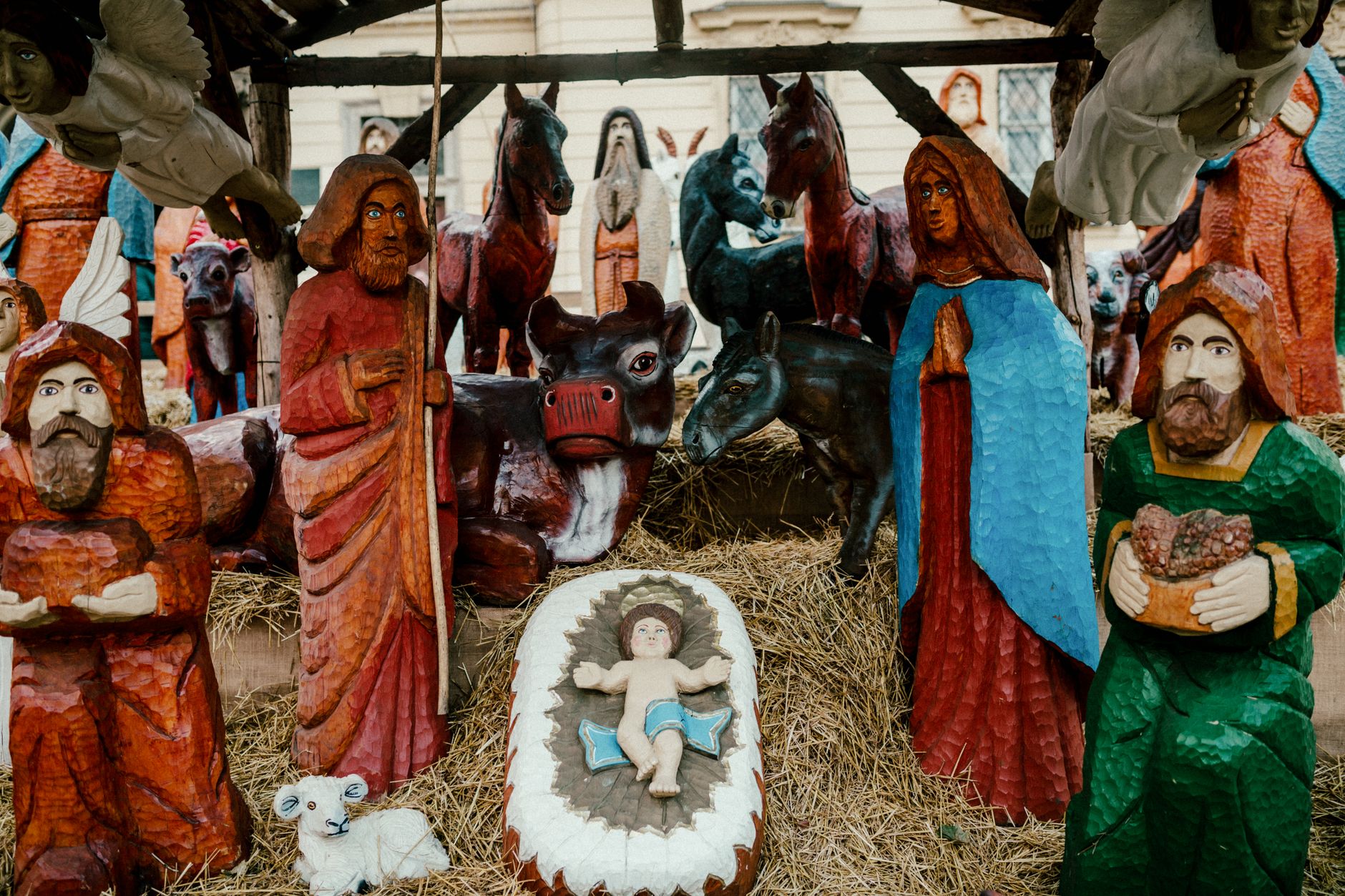
This is why the manger is so powerful. It represents the idea that God meets us where we are. He doesn’t demand we clean up before we come to Him. He comes to us in our low places. He comes to us in our boxes.
— “For unto us a Child is born, unto us a Son is given: and the government shall be upon his shoulder: and his name shall be called Wonderful, Counsellor, The mighty God, The everlasting Father, The Prince of Peace.”
Notice the verbs. "Born." "Given." These are acts of grace. We didn’t earn the child. We didn’t produce the son. He was given to us. That changes everything. It signifies the initiative was His. It indicates the burden was His. It declares the glory belongs to Him.
The Practice: How We Live It Out
Knowing the promise is one thing. Living it is another. How do we actually embody this reality of a God who is near, present, and personal? Here are three concrete ways to practice this truth in your daily life.
1. Practice "Sacred Pauses" in the Mundane
We tend to think spiritual moments only happen in church or during prayer. But the arrival of Jesus happened in a stable, among animals and hay. It was mundane. It was ordinary.
To live out the promise of God’s presence, try incorporating "sacred pauses" into your routine. This doesn’t mean you need to stop everything and meditate for an hour. It means taking ten seconds to acknowledge God’s presence in a small task.
Maybe you’re washing dishes. Instead of just scrubbing, pause for a second. Breathe. Acknowledge that you are washing dishes, but you are also being watched by the One who created water. Maybe you’re driving to work. Stop at a red light. Look around. Realize that the cars next to you are carrying people with the same worries, the same hopes, and the same need for grace.
These pauses aren’t about perfection. They’re about awareness. They serve to remind yourself that the Holy Spirit is with you, even when you’re folding laundry. It’s about realizing that the God who held the universe together is holding you together, one moment at a time.
2. Read the Gospels with a "Who Am I?" Lens
Another practical way to live out the promise is to change how you read the Gospels. Instead of reading them just as a story, read them with the question, "Who am I in this?"
When you read about Jesus healing the blind man, ask yourself, "What is my blindness? What do I refuse to see?" When you read about Jesus feeding the five thousand, ask yourself, "Where am I hungry? Where am I lacking?"
This approach turns the Bible into a mirror. It forces you to confront your own life in light of Jesus’ life. It helps you see that the promises in the Gospels aren’t just for the characters in the story; they are for you. They are for your struggles, your joys, your failures, and your successes.
I’ve found that this method deepens my faith significantly. It moves the Bible from a text about the past to a living dialogue with the present. It helps me see God’s hand in my life, even in the small, unnoticed moments.
3. Serve Someone Who Is "Hard" to Love
Finally, the coming of Jesus teaches us about love. He was born to serve. He came to give His life for many. And that love was radical. It extended to the enemy. It reached the outcast. It embraced the unworthy.
To live this out, try serving someone who is "hard" to love. This could be a coworker who irritates you, a neighbor who is rude, or a family member who is difficult. The goal isn’t to pretend they are perfect. The goal is to extend grace. To offer kindness. To show patience.
Maybe you bring them coffee. Maybe you listen to them without interrupting. Maybe you forgive a minor offense quickly. These small acts of service reflect the heart of Christ. They show that love is not just a feeling; it’s a choice. It’s a decision to see the other person as God sees them—with dignity, with potential, and with hope.
Over time, these practices build a habit of presence. They cultivate your eyes to see God in the ordinary. They shape your heart to respond with grace. And they guide your hands to serve with joy.
A Final Thought for the Season
As the year draws to a close and the leaves fall, it’s a good time to look back. What promises have you seen fulfilled? Where have you seen God’s hand at work?
Don’t just admire the story of Jesus’ birth. Let it change you. Let it humble you. Let it hope you. And let it drive you to live differently, starting today.
Take one small step this week. Pause. Read. Serve. And watch what God does with your obedience.