Think about the last time you walked into a house that felt "off." Maybe the hallway was too narrow, forcing you to turn sideways every time you passed through. Or perhaps the kitchen island was placed so awkwardly that it blocked the only source of natural light. You didn't need an architect to tell you something was wrong. Your body knew before your mind did. You felt cramped, frustrated, and strangely disconnected from the space, even though you were technically safe.
That feeling of being in a place that wasn’t designed for you? That’s what most of us feel when we look at our own lives through a secular lens. We treat ourselves like unfinished sketches—messy, editable, and fundamentally uncertain. We try to optimize our health, fix our anxiety, and curate our identities, but deep down, we suspect we’re just improvising. We are trying to build a life on top of a foundation we didn’t lay.
This is where the story of creation stops being a distant myth about the beginning of time and becomes a mirror for your Tuesday afternoon anxiety.
The Problem: Living as a Chance Occurrence
The modern assumption about humanity is that we are chance occurrences. We are the result of blind evolution, random mutations, and survival of the fittest. This isn't necessarily a bad view scientifically, but it is a spiritually exhausting one.
If you are a chance occurrence, then your value is contingent. It depends on what you produce, how attractive you are, or how well you adapt. You are not designed; you are adapted. There is a huge difference. An adaptation is a reaction to pressure. A design is an intention from a source.
When you live as a chance occurrence, you never really rest. You are always checking to see if you are still holding together. You are constantly reinforcing the walls of your identity, terrified that if you stop pushing, you will collapse into the void. This leads to a specific kind of mental health struggle: the chronic low-grade hum of existential insecurity. You are functioning, but you are never fully at home in your own skin.
You’ve probably sat in your car after work, engine ticking off in the silence, not wanting to go inside yet. You’re tired, but not just physically. It’s that specific fatigue of having to perform your own existence all day long. You wonder if this is all there is. Just maintaining the illusion of a coherent self until the lights go out.
The Promise: The Architect’s Intent
Now, look at what the Bible actually says in Genesis. It doesn't just say, "Stuff happened." It talks about a process. It talks about order emerging from chaos. And when it gets to humanity, it uses a word that changes everything.
— “Then God said, ‘Let us make man in our image, after our likeness. And let them have dominion over the fish of the sea, and over the birds of the air, and over the cattle, and over all the earth, and over every creeping thing that creeps on the earth.’”
Read that again. "In our image." "After our likeness."
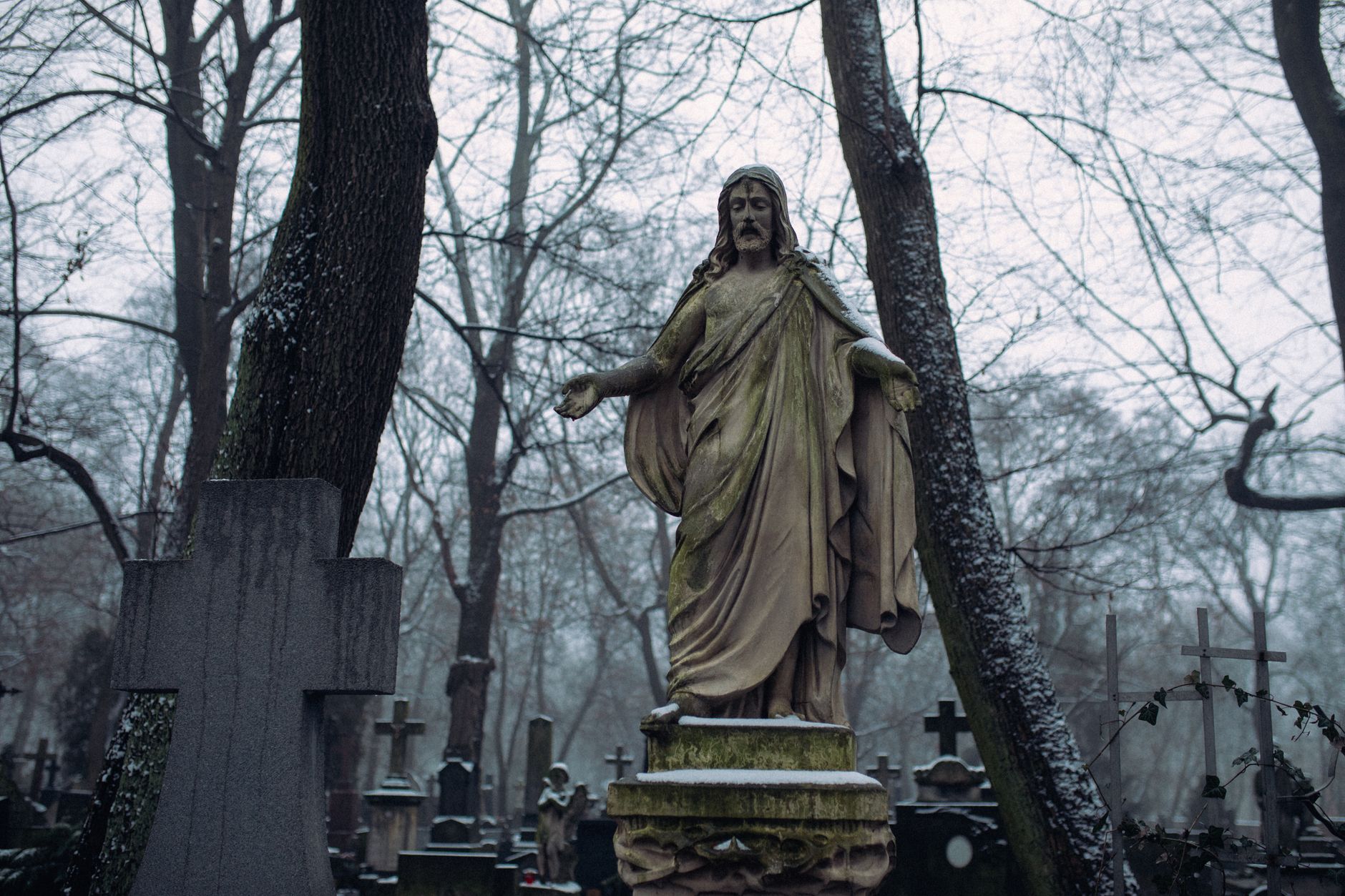
This isn't a metaphor. In the ancient Near East, kings would set up statues of themselves in conquered lands. Those statues weren't just decorations; they were the physical presence of the king’s authority. To touch the statue was to touch the king. To break it was to rebel against him.
When God says He makes humans in His image, He is saying that you are the living statue of Heaven. You are the physical representation of the invisible God. You are not a rough draft. You are a commissioned artwork.
This brings us to a second critical verse, often overlooked because it’s in the second account of creation in Genesis 2. This one is more intimate. It shifts from the cosmic scale to the personal scale.
— “Then the LORD God formed man from the dust of the ground and breathed into his nostrils the breath of life, and the man became a living being.”
Notice the detail: "breathed into his nostrils."
God doesn't just zap you with energy. He forms you from the dirt—reminding you of your humility, your connection to the earth. But then He breathes into you.
This is the key to understanding human dignity. Your body is not a prison. It is not a temporary vehicle you are trapped in. It is the vessel of the Divine Breath.
The Hebrew word for "living being" here is nefesh chayah. A nefesh is often translated as "soul," but it literally means "breathing neck." It refers to the whole integrated person—body and spirit, breath and bone.
So, the promise is this: You are not a random event. You are a specific intention from God. He looked at the dust and saw potential. He looked at the chaos and saw a canvas. And when He made you, He didn't rush. He formed you. He breathed into you. He gave you a purpose that goes beyond mere survival.
You were made to have dominion—not to dominate, but to steward. To care for the earth, for each other, and for the gift of your own life. You were made to reflect God’s character: creative, relational, and purposeful.
The Practice: Reclaiming Your Design
Knowing you are made in God’s image is powerful, but how does that change your actual Tuesday afternoon? How does it help with your anxiety, your health habits, or your sense of purpose?
Here are three concrete ways to live out this truth in early autumn, when the world is shifting and new routines are forming.
1. Audit Your "Design" Against Your Habits
If you are made in the image of a Creator who loves order, beauty, and purpose, do your daily habits reflect that? Or do they reflect chaos, neglect, and aimlessness?
Take one area of your life—maybe your sleep, your diet, or your phone usage—and audit it. Ask yourself: "Does this habit honor the temple I live in? Does it help me reflect peace, or does it feed my anxiety?"
For example, if you know you are made for rest (because God rests on the seventh day), but you spend every night scrolling through social media until 1 a.m., there is a disconnect. You are treating your body like a machine that only needs fuel, not like a sacred vessel that needs stillness.
Try this for a week: Pick one "design principle" from Scripture—like rest, gratitude, or kindness—and intentionally build it into your routine. If you choose rest, set a hard boundary: no screens after 9 p.m. If you choose gratitude, write down three things you are thankful for every morning.
This isn't about perfection. It’s about alignment. It’s about making sure your outward actions match your inward identity. You are not just surviving; you are stewarding the life God breathed into you.
2. Create a "Creation Moment" of Stillness
God created the world in six days, but He rested on the seventh. This sets a precedent: creativity is holy, but so is stillness.
In our busy autumn schedules, we often forget to pause. We keep creating, keeping, caring for, but we rarely just are.
Create a "creation moment" in your day. This is a short period of stillness where you acknowledge that you are not the creator; you are the created. You are dependent on the Breath of God.
This could be five minutes in the morning. Sit quietly. Breathe really. Acknowledge that your breath is a gift. "Lord, I am here because You breathed into me. Thank You for the dust and the breath."
Or it could be a short walk outside. Look at the leaves changing color. Recognize the beauty of the created order. Remind yourself that you are part of this design. You are not separate from nature; you are its pinnacle.
This practice helps combat the anxiety of control. When you sit in stillness and acknowledge your dependence on God, you release some of the burden of having to hold everything together. You let the Architect take a moment to appreciate His work.
3. Voice Your True Self Out Loud
We often know intellectually that we are made in God’s image, but emotionally, we feel like failures. We feel broken, ugly, or useless.
To bridge this gap, you need to voice your true self out loud. This sounds simple, but it’s powerful.
When you wake up, or when you’re feeling particularly anxious, say this out loud: "I am made in the image of God. I am not a random event. I am a specific intention from God. I am dust, but I am also breath. I am humble, but I am also alive."
You might feel silly at first. You might feel like you’re trying too hard. But keep doing it. Over time, these words will sink into your subconscious. They will start to reshape how you see yourself.
You will begin to see your flaws not as evidence of being broken, but as part of the texture of being human. You will begin to see your struggles not as punishments, but as opportunities for growth.
This is especially helpful in the context of mental health. Many people suffer from critical inner voices. They constantly criticize themselves. "I’m stupid." "I’m lazy." "I’m a failure."
Voicing your true self acts as a counter-narrative. It interrupts the cycle of harsh internal dialogue. It gives you a new script to follow.
Try pairing this with a visual cue. Maybe keep a small stone on your desk. Every time you pick it up, remind yourself: "Dust and Breath." It becomes a tactile reminder of your true identity.
A Note on the Season
It’s early autumn now. The harvest is coming in. Schools have started. New routines are settling. There’s a sense of both closure and new beginning.
This is a good time to reflect on what you’ve been "harvesting" in your life. Have you been gathering fruits of purpose? Or have you been gathering weeds of anxiety?
It’s also a good time to plant new seeds. Maybe you’ve been wanting to start a new habit. Maybe you want to deepen your prayer life. Maybe you want to serve someone in your community.
Autumn is a season of release. The trees drop their leaves. We need to release old identities, old fears, old ways of seeing ourselves.
If you’ve been seeing yourself as a random event, maybe now is the time to release that view. Let it fall away like a leaf in the wind. Make room for the truth of your design.
A Conversation with God
I’ll be honest—I used to read and feel nothing. It was just background noise. Part of the story I knew but didn’t connect to my life.
But lately, something has shifted. I’ve started to feel the weight of those words. "In our image." It’s hit me differently this year. Maybe because I’m older. Maybe because I’m tired of the hustle.
I catch myself looking in the mirror and seeing the cracks. The stress lines. The dark circles. And I think, "Who designed this?"
But then I remember: He did. And He didn’t finish the job with the cracks. He finished it with the breath.
So, let’s talk to Him. Not a formal prayer. Just a conversation.
"Hey, God. Thanks for breathing into me. I know I don’t always feel alive, but I’m here. Thanks for making me in Your image. Even when I feel like an unfinished sketch, I’m not. I’m Your work. Help me see that today. Help me live like it. Amen."
Key Takeaways:
- You are not a random event. You are a specific intention from God, formed from dust and given breath.
- Your body is not a prison. It is the vessel of the Divine Breath, a sacred temple to be stewarded.
- Rest is holy. Creativity is important, but stillness is equally necessary. Pause to acknowledge your dependence on the Creator.
- Voice your true self. Counteract critical inner voices by verbally affirming your true worth as God’s image-bearer.
- Use the season for reflection. Autumn is a time to harvest lessons, release old self-images, and plant new habits aligned with your divine design.