The dust in that valley wasn’t just dirt. It was identity.
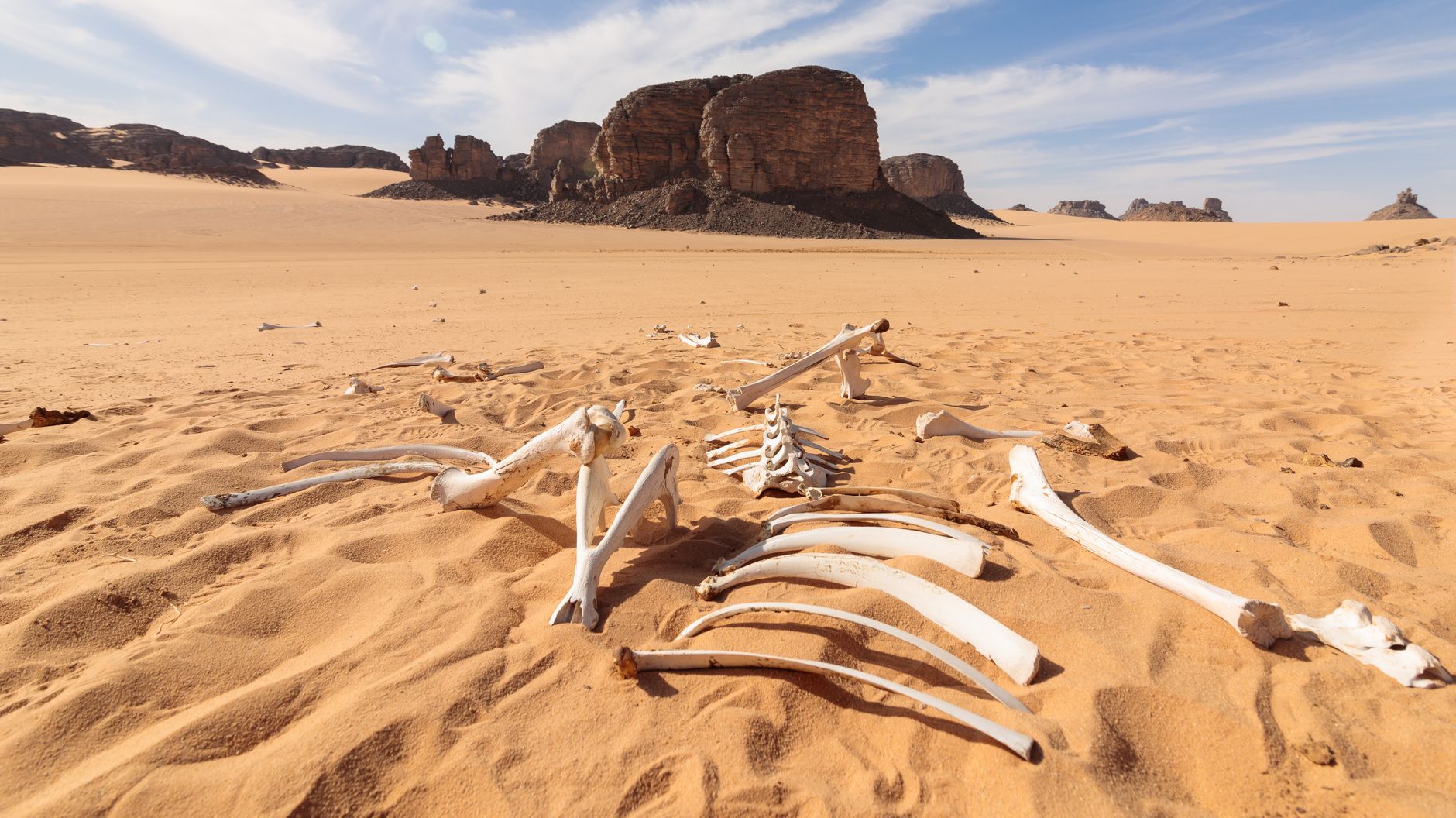
Ezekiel stands there, not in a field, but in a vision so vivid it feels like he’s breathing the grit himself. He looks at thousands of bones. Not skeletons. Bones. Stripped of muscle, sinew, skin. They are scattered. Disconnected. A nation, reduced to its most basic components. And the question that hangs in the air is terrifyingly simple: Are they alive?
This is one of those passages that stops you cold. You’ve probably read it in Sunday school or during a deep dive into prophecy. But have you really sat with the implication? This passage centers on Israel being restored politically, yes. Yet at its core, it concerns the restoration of relationship. It’s about what happens when a community is broken down to nothing, and God decides to build it back up, piece by piece.
In our own lives, we know this feeling. Perhaps it’s a marriage that has gone silent. A friendship that ended without a fight, just... drifting. Or a church community that feels like a collection of individuals rather than a body. We are all, in some way, sitting in that valley. Looking at our dry bones. Wondering if there’s enough left to make a walk.
The Problem: Disconnection is Death
Let’s be clear about what Ezekiel is seeing. The bones aren’t merely dead; they are disconnected.
When you look at a skeleton, you see the architecture. But a pile of bones? That’s chaos. In the context of the Old Testament, this is Israel in Babylon. Exiled. Stripped of their land, their temple, their distinct identity. They were a people who had no people.
Sound familiar?
We often talk about loneliness as an emotional state. But biblically, disconnection is an existential state. If I am not connected to you, I am not fully me. And if I am severed from God, I am not alive at all.
That’s the struggle. We think restoration means fixing ourselves. Yet Ezekiel’s vision reveals that rebuilding is a communal act. God isn’t just blowing breath into one person. He’s building a nation.
I’ll be honest. I’ve struggled with this in my own spiritual walk. There have been seasons where I felt like I was just a bone in a valley. I had the right doctrine. I had the right habits. But I didn’t have the connection. I was serving God, but I wasn’t with Him. And I wasn’t with others. I was efficient, but I was dry.
That’s the struggle. We assume renewal is a solo project. Yet Ezekiel’s vision reveals that rebuilding is a communal act. God isn’t just blowing breath into one person. He’s building a nation.
The Promise: Breath Returns to Bone
So, what is the promise?
It’s found in the middle of the chapter. God speaks to Ezekiel, and the command is strange.
— “Son of man, prophesy to these bones, and say to them, ‘Dry bones, hear the word of the Lord!’”
Ezekiel doesn’t pick the bones up. He doesn’t glue them together. He speaks to them.
Then comes the miracle.
— “And as I prophesied, there was a noise, and a shaking, and the bones came together, bone to its bone.”
Bone to its bone.
This is the key. The reassembly is physical, but it’s driven by the Word. The bones hear the voice, and they move. They find each other. The ribs find the spine. The fingers find the wrist. It’s an intricate dance of reconnection.
And then, the final step.
— “And I saw and beheld, and there was a tendons on them, and flesh came upon them, and skin covered them over, but there was no breath in them.”
They look alive. They have skin. They have muscles. But they’re not moving. Why? Because they lack breath.
— “Therefore prophesy! And prophesy to him, saying, ‘Thus says the Lord God to the breath: “Come from the four winds, O breath, and breathe on these slain, that they may live.”’”
The wind blows. The breath enters. And the army rises.
The promise here is twofold. First, God initiates the reconnection. He calls the bones to each other. Second, He gives the breath of life. Without the breath, the body is just a statue. With the breath, it’s a living person.
For us, this means that renewal involves being connected. To God, yes. But also to each other. We need each other to form the whole picture. My arm is useless without my hand. My eye is blind without my brain. We are interdependent.
This is a radical idea in a culture that celebrates independence. We want to be self-made. We want to stand alone. But Ezekiel’s valley tells us that standing alone is just another word for lying dead.
The Practice: Three Ways to Build Breath Into the Bones
So, how do we live this out? How do we take the promise of Ezekiel 37 and turn it into practice this week?
Here are three concrete ways.
1. Name the Broken Connections
You can’t fix what you haven’t identified.
Take ten minutes today. Sit down with a piece of paper. List the areas in your life where you feel disconnected. Be specific. Don’t just write “community.” Write “I haven’t spoken to Sarah in three months since we disagreed about the budget.” Don’t just write “God.” Write “I pray for five minutes, but I never listen for an answer.”
Naming the fractures is the first step. It’s like Ezekiel looking at the bones and acknowledging, Yes, these are dry. Yes, these are separate.
If you skip this step, you’ll try to apply pressure where there’s no fracture. You might pour out love while still harboring resentment. You could serve diligently yet remain emotionally distant.
Name the bones.
2. Speak the Word to the Separation
Once you’ve named the fractures, you need to speak to them.
Remember, Ezekiel didn’t move the bones. He spoke to them.
What is the Word that applies to your specific separation?
If your bond with God is fractured by guilt, the Scripture might be forgiveness. Read — “Therefore, having been justified by faith, we have peace with God through our Lord Jesus Christ.” Read it aloud. Say it to the bone. I am justified. I am at peace.
If your bond with your spouse is fractured by distance, the Scripture might be presence. Create a ritual of presence. Perhaps it’s a daily ten-minute check-in where you put your phones away. Or maybe it’s a weekly date night where the rule is no talking about kids, chores, or finances—just each other.
If your bond with your community is fractured by isolation, the Scripture might be hospitality. Invite someone in. Or go out. Join a group. Show up.
The key is that the Word must match the wound. Generic prayers won’t heal specific fractures. You need the right medicine for the right bone.
3. Let the Wind Blow
The final step is the hardest: letting the wind blow.
Ezekiel prophesied to the breath. But the breath had to come from the four winds. It had to come from everywhere. It had to be a global movement of air.
In our lives, this means accepting that renewal is not linear. It’s not a straight line from dead to alive. It’s a swirling, chaotic process.
There will be days when you feel like you’re going backward. There will be days when the bones seem to be scattering again. Don’t panic. The wind is still blowing. Even if you can’t feel it, it’s moving the air.
Trust the process. Trust that God is working behind the scenes, even when you can’t see the results.
This is where faith comes in. We believe that the breath is coming. We believe that the bones are moving, even if they’re not standing yet.
A Final Thought
It’s autumn now. The leaves are falling. The year is turning.
There’s something fitting about reading Ezekiel in the fall. We’re in a season of change. We’re preparing for winter. We’re storing up energy. We’re letting go of what’s no longer needed.
Maybe that’s why this story hits harder now. We’re all in a valley of sorts. We’re all waiting for the breath.
But here’s the hope: the breath is coming.
And when it arrives, you won’t just be alive. You’ll belong to something bigger. You’ll belong to a family. You’ll belong to a body.
And that’s what renewal really looks like. Not just surviving. But thriving. Together.
So, this week, pick one bone. Just one. Name it. Speak to it. And wait for the wind.
It might just start to move.