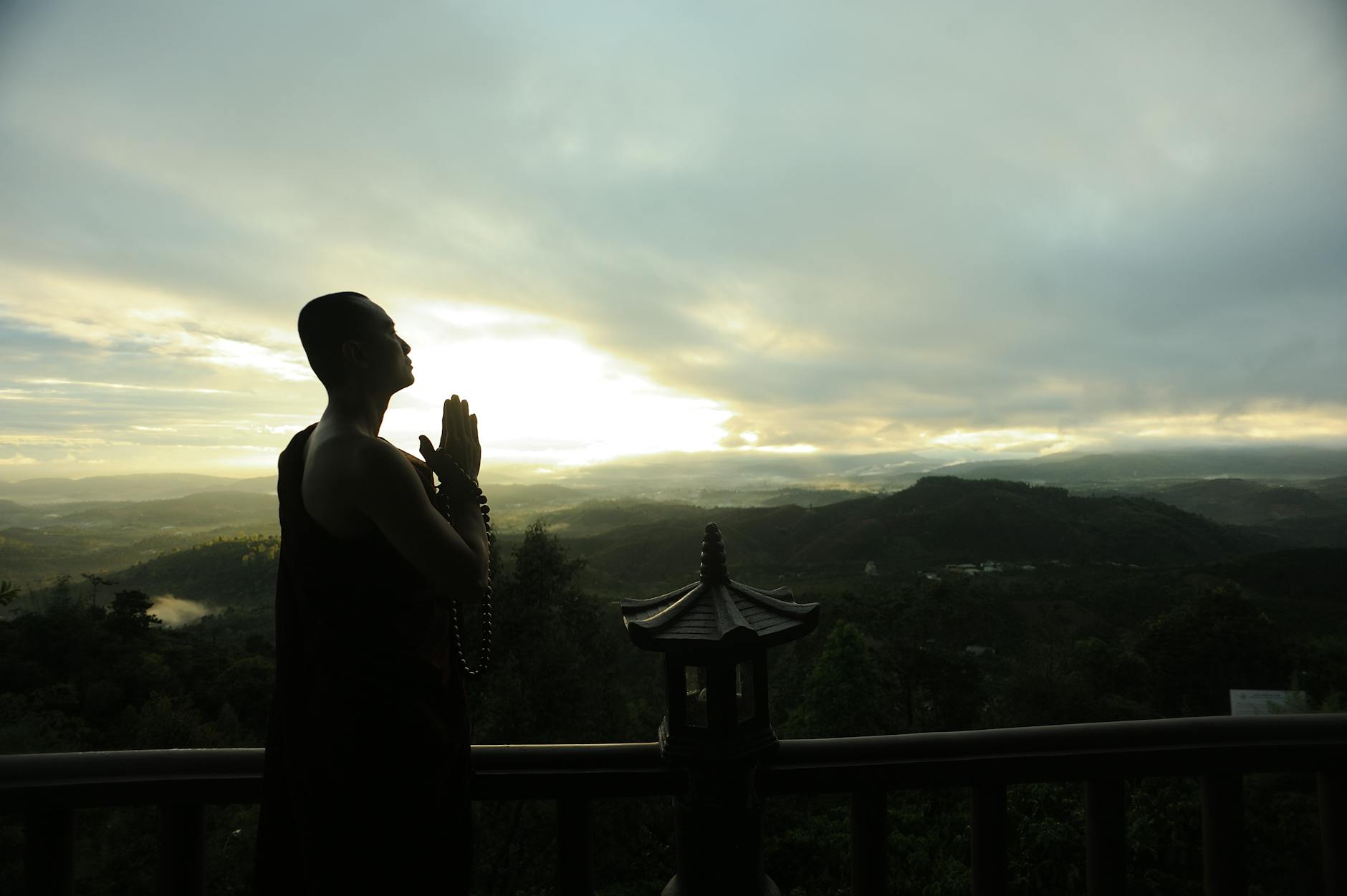
When the Earth Shakes: Finding Peace in Psalm 46
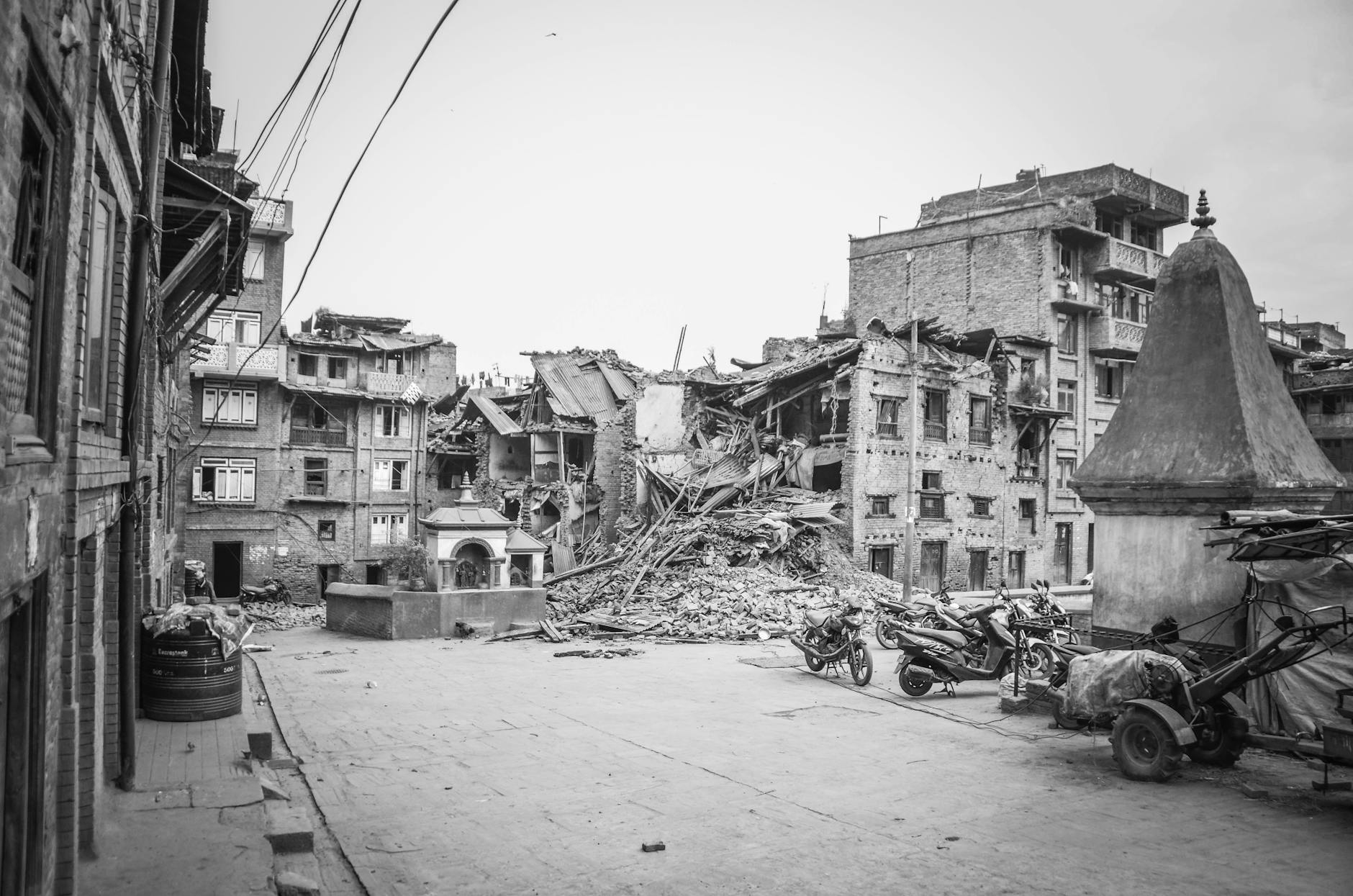
God is not a distant observer waiting for you to get your act together; He is the active, unshakeable fortress in the middle of your chaos.
I’ll be honest, I used to read Psalm 46 and skim right past the famous parts. You know the ones. Verse 10. “Be still, and know that I am God.” We slap that on a mug. We frame it for the living room. We treat it like a spiritual mantra that solves everything the moment we whisper it. But if you actually sit with the Hebrew text, if you let the rhythm of the poem hit you, the context changes completely. This isn’t a gentle lullaby for a quiet Sunday morning. It’s a war cry for when the world is tearing itself apart.
We live in an era of constant notification. Our phones buzz with breaking news, our email inboxes fill with urgent requests, and our minds are perpetually tethered to a global nervous system that never sleeps. We are exhausted by the sheer volume of things we feel we must manage. And when the big shakes happen—the diagnosis, the layoff, the sudden silence of a child’s room, the geopolitical instability that makes the news cycle—we don’t just feel anxious. We feel exposed.
Here is the hard truth: we try to fix the world so we can finally rest. We think if we just pray enough, give enough, work hard enough, and believe correctly enough, we can stabilize our own little corner of the universe. But the earth keeps shaking. And we are tired of being the ones holding up the sky.
Psalm 46 drops us right into that exhaustion. It doesn’t offer a quick fix. It offers a perspective shift. It tells us that the ground beneath our feet is not the foundation. The foundation is elsewhere.
“God is our refuge and strength, a very present help in trouble. Therefore we will not fear though the earth gives way, though the mountains crumble in the heart of the sea; though its waters roar and foam, though the mountains tremble with its tumult.” (, ESV)
Notice the violence in the imagery. The earth giving way. Mountains crumbling into the sea. Water roaring. This isn’t a gentle breeze. This is tectonic failure. This is the collapse of everything we thought was solid. The psalmist isn’t talking about a bad Tuesday. He’s talking about the end of the age as we know it. And yet, he says, “We will not fear.”
How? Not because we have gritted-teeth courage. Not because we’ve achieved some high level of spiritual maturity. But because the One who holds the mountains is the same One who holds us.
This brings us to the season we are in. It’s the weeks after Easter. The resurrection has happened. The tomb is empty. Jesus has conquered death. But we aren’t living in the fullness of that victory yet. We are living in the “already but not yet.” We have the promise of the new creation, but we still drive in traffic. We still pay taxes. We still watch our parents age. We still feel the ache of a world that groans for redemption.
Easter tells us death has been defeated. But it doesn’t always tell us how to live when the funeral home is on the way. That’s where Psalm 46 steps in. It bridges the gap between the cosmic victory of the cross and the daily reality of our fragile lives.
The Noise of the Nations
The psalm moves from the shaking earth to the shaking nations.
“The nations rage, the kingdoms totter; he issues his command, the earth melts.” (, ESV)
We see this in our own time. Look at the headlines. Look at the polarization. Look at how quickly confidence in institutions crumbles. It feels like the whole structure is unstable. We look for stability in politics, in markets, in our careers, in our own moral performance. But these are all “nations raging.” They are temporary. They are noisy. They are fleeting.
The psalmist contrasts this noise with a single, quiet voice.
“He makes wars cease to the end of the earth; he breaks the bow, and shatters the spear; he burns the shields with fire. Be still, and know that I am God. I will be exalted among the nations, I will be exalted in the earth!” (, ESV)
“Be still.” The Hebrew word is raphah. It means to let go. To drop the ropes. To cease striving. It’s not just about sitting quietly with your eyes closed. It’s about stopping the frantic effort to control the outcome.
I remember a few years ago, when my father was in the hospital for the last time. The doctors were running tests. The nurses were coming in and out. The machines were beeping. I sat in that plastic chair, my phone in my hand, refreshing news articles, praying the prayers I’d memorized, trying to figure it out. I was gripping the steering wheel of my own life, knuckles white, waiting for the right answer to appear so I could relax.
But God wasn’t asking me to figure it out. He was asking me to let go.
To be still wasn’t a passive act. It was an active trust. It was saying, “Lord, I can’t fix this. I can’t predict this. I can’t control this. You are God. I am not.”
That’s the promise. Not that the storm won’t come. Not that the mountains won’t crumble. But that God is there in the crumbling. He doesn’t always remove the earthquake. Sometimes He walks through it with us.
The River of God
Then, the psalmist shifts the scenery. From the roaring chaos to a gentle flow.
“There is a river whose streams make glad the city of God, the holy habitation of the Most High.” (, ESV)
It’s interesting. The psalm starts with chaos and ends with a river. But the river is there all along. It’s just hidden beneath the noise.
The “city of God” isn’t just a place in the sky. It’s the community of believers, the church, the people who know the name of Jesus. And what sustains us? Not our own energy. Not our own discipline. But a river.
A river flows. It doesn’t stagnate. It doesn’t depend on us to turn on the faucet. It’s fed by a source outside of itself.
In our daily lives, this looks like grace that just keeps coming, even when we’re tired. It looks like peace that doesn’t make sense to the world. It looks like the ability to love people we don’t like, simply because the Source is flowing through us.
We often try to be the river. We try to generate our own peace, our own joy, our own strength. We burn out. We become dry. We become bitter. But when we stop striving and let the Source flow through us, we become channels, not sources.
This is what it means to walk in the resurrection power. It’s not about us becoming super-spiritual. It’s about us becoming transparent. It’s about letting the life of Jesus flow through our cracks.
The City That Cannot Be Shaken
The psalm concludes with a declaration of stability.
“The Lord of hosts is with us; the God of Jacob is our fortress.” (, ESV)
Wait, the Hebrew text here is tricky. Some translations say “Selah.” But the Masoretic text says “Selah” in verse 7, and verse 8 says, “Make known to me your ways, O Lord.” But the final verse, verse 10, is the clincher. “Be still, and know that I am God.”
And then, verse 11. “The Lord of hosts is with us; the God of Jacob is our fortress.”
It’s a promise of presence. “With us.”
We don’t need a fortress that keeps the world out. We need a fortress that keeps us safe in the world.
Think about a lighthouse. It doesn’t stop the waves. It doesn’t calm the storm. It doesn’t move the mountains. It just stands firm. And because it stands firm, ships know where to go.
God is our lighthouse. He doesn’t always stop the shaking. But He shows us where to anchor.
So, how do we live this? How do we move from reading Psalm 46 to actually trusting it on a Tuesday afternoon when the email comes in?
Three Ways to Live in the Refuge
1. Stop Trying to Predict the Future
We spend so much energy trying to figure out what’s going to happen. We analyze trends. We read books. We pray for specific outcomes. And that’s good. But it becomes idolatry when we think our prediction equals our peace.
Start practicing “strategic surrender.” When you wake up, before you check your phone, say, “Lord, I don’t know what today holds. But You do. I trust You with what I can’t see.”
It sounds simple. It’s actually radical. It means you stop trying to control the narrative. You stop trying to force God’s hand. You just show up.
2. Cultivate Quietness, Not Just Quiet
We live in a noisy world. But “be still” isn’t just about volume. It’s about attention.
Try this: once a day, for ten minutes, do nothing. No phone. No music. No prayer list. Just sit. Breathe. Look at the wall. Let your mind wander. Let the noise of your own thoughts rise up. And then, gently, return to the awareness that God is there.
It’s not about emptying your mind. It’s about filling your attention with His presence. It’s about remembering that you are not the center of the universe. He is.
3. Anchor in Community
The psalm mentions “the city of God.” We aren’t meant to work through the shaking alone.
Find the people who will remind you of the truth when you forget. Who will sit with you in the silence. Who will pray with you without trying to fix you.
We often isolate ourselves when we’re afraid. We think we need to be strong. But the psalmist shows us that strength comes from community. From the river. From the shared life of the Spirit.
Don’t just be a believer. Be a connected believer.
The Promise That Holds
We live in a world that is constantly changing. The news changes. The economy changes. Our bodies change. Our relationships change.
But God does not.
He is not a distant observer. He is not a cosmic force. He is a Person. A Father. A Savior. A Friend.
He is the one who walked through the grave and came out on the other side. And because He lives, we can live.
So, when the earth shakes, don’t panic. Don’t scramble. Don’t try to fix it all.
Just be still.
And know that He is God.
Not just in theory. Not just in Sunday school. But here. Now. In your kitchen. In your office. In your pain.
He is your refuge. He is your strength. He is your fortress.
And that is enough.
What is one thing you’ve been gripping too tightly that you need to let go of today?